
Learning Splunk becomes much more valuable when you can demonstrate how a search identifies suspicious activity, supports an investigation, and produces evidence a SOC analyst can defend. Employers evaluating entry-level cybersecurity candidates increasingly need practical evidence beyond tool familiarity. These ten beginner-friendly projects develop SOC investigation skills, strengthen your cybersecurity portfolio, and create measurable examples for technical interviews. Each project includes a practical detection objective, example SPL, validation guidance, and a deliverable worth showing recruiters.
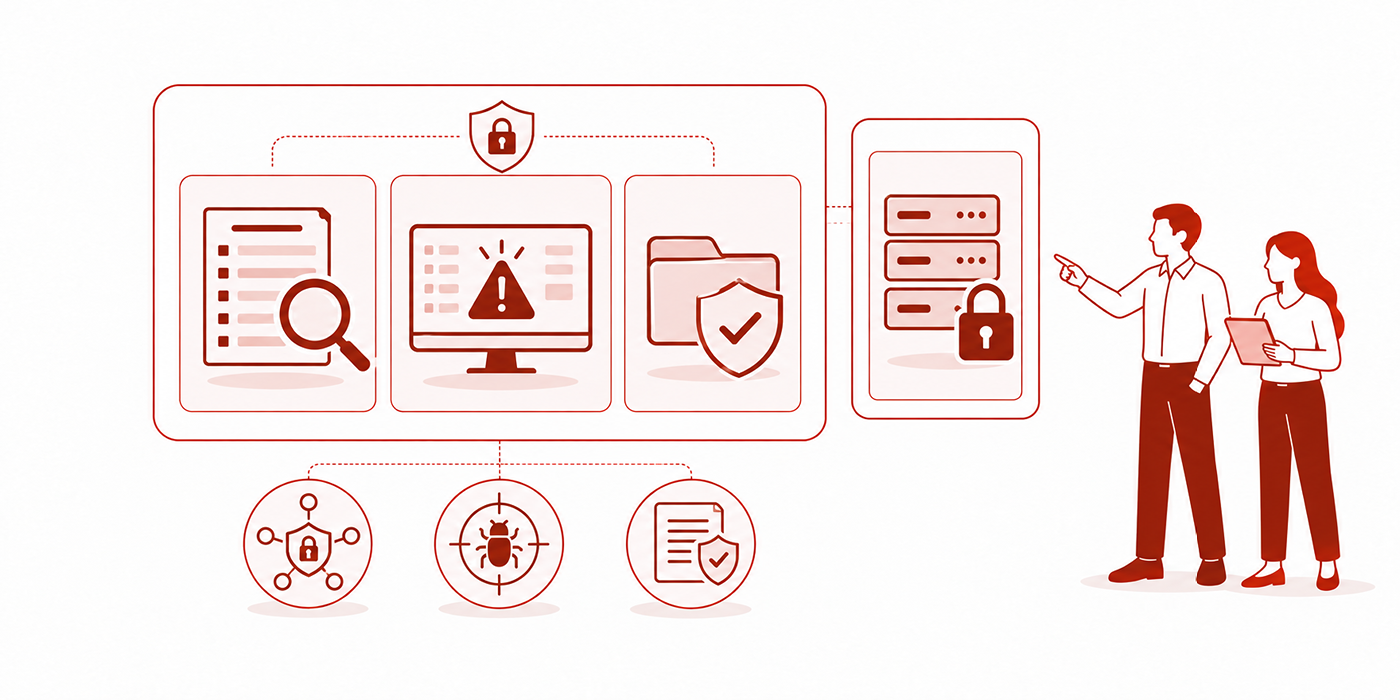
1) Set Up a Splunk SOC Lab That Produces Real Investigation Evidence
A useful Splunk portfolio begins with reliable telemetry. Beginners frequently build dashboards before confirming whether their logs contain the fields necessary to investigate suspicious activity. That creates an embarrassing problem during SOC analyst interviews: a visually impressive dashboard becomes difficult to explain when an interviewer asks which source produced an alert or how its accuracy was validated.
Start with Splunk Enterprise in a permitted local environment or an appropriately provisioned training instance. Use the beginner SOC lab setup approach to organize telemetry, and supplement your environment with public training data such as Splunk's Boss of the SOC datasets. The smaller attack-focused datasets can be useful for investigation exercises, although their pre-indexed formats, storage requirements, and version compatibility should be checked before installation.
For controlled experiments, create a dedicated index named soc_lab. Collect only authorized logs from isolated virtual machines or import synthetic samples. A practical cybersecurity home lab should contain enough event variety to demonstrate why different detection methods succeed or fail.
Prioritize four telemetry categories:
Windows Security events: Use Event ID 4624 for successful authentication, 4625 for failed authentication, and 4688 for process creation when the relevant auditing is enabled. These records support authentication investigations and foundational blue-team skills.
Sysmon telemetry: Process creation Event ID 1, network connection Event ID 3, and DNS query Event ID 22 provide useful endpoint context when enabled through an appropriate configuration. This strengthens endpoint investigation projects and practical security training.
DNS, proxy, and web server logs: These sources help analyze suspicious destinations, repeated requests, and unusual traffic volumes. They support SOC monitoring exercises and provide material for technical portfolio projects.
Cloud audit logs: AWS CloudTrail or comparable authorized cloud activity logs reveal identity and configuration changes. Their relevance increases for candidates considering cloud security careers or identity management specialization.
Before writing detections, run index=soc_lab | stats count as events dc(host) as hosts min(_time) as first_seen max(_time) as last_seen by sourcetype.
Confirm event counts, timestamp accuracy, source coverage, and expected fields. If a dataset uses EventID instead of EventCode, or src_ip instead of IpAddress, normalize those fields or update the searches accordingly. The SPL examples below assume the stated fields exist. They use illustrative thresholds that require testing against each dataset.
A strong beginner cybersecurity resume should point toward verifiable work. Record your configurations, capture search results, and maintain a short investigation journal from the beginning.
Splunk SOC Portfolio: 28-Point Detection and Evidence Matrix
Use this matrix to check whether each detection has the required telemetry, produces an interpretable signal, and supports a defensible analyst decision. It also provides a practical quality-control checklist for security operations portfolios.
Splunk SOC Portfolio: 28-Point Detection and Evidence Matrix
| Validation Check | Required Evidence | SOC Decision Supported | Portfolio Deliverable |
|---|---|---|---|
| 01. Timestamp accuracy | Correct event time and timezone | Can events be placed in reliable order? | Raw-event timeline comparison |
| 02. Source coverage | Host, sourcetype, event counts | Which systems are visible or missing? | Telemetry coverage inventory |
| 03. Field completeness | User, source IP, host fields | Can activity be attributed accurately? | Field-quality assessment |
| 04. Repeated login failures | Windows Event ID 4625 | Is one account receiving repeated attempts? | Failed-login detection |
| 05. Password spray pattern | Distinct accounts per source IP | Is one source targeting many accounts? | Password-spray investigation |
| 06. Post-failure success | Events 4625 and 4624 | Did a successful login follow failures? | Correlated authentication timeline |
| 07. Account context | User type and expected behavior | Is activity normal for this identity? | Contextual triage notes |
| 08. Account lockouts | Windows Event ID 4740 | Are failed attempts disrupting accounts? | Lockout correlation evidence |
| 09. PowerShell logging | Script Block Event ID 4104 | Are suspicious script patterns visible? | PowerShell investigation record |
| 10. Process auditing | Windows Event ID 4688 | Can a process execution be confirmed? | Process execution timeline |
| 11. Parent-child lineage | Sysmon Event ID 1 | Which process launched the child? | Annotated process tree |
| 12. Process command line | Executable path and arguments | Does execution match the stated purpose? | Command-line interpretation |
| 13. Network connections | Sysmon Event ID 3 | Did a suspicious process connect outward? | Process-to-destination mapping |
| 14. DNS query records | Resolver logs or Sysmon ID 22 | Which host queried which domain? | DNS investigation dashboard |
| 15. DNS repetition | Repeated source-domain pairs | Is communication occurring repeatedly? | Query-frequency summary |
| 16. Beacon regularity | Time gaps and interval variation | Is timing unusually consistent? | Cadence-analysis findings |
| 17. Web error bursts | HTTP 404 and source address | Are missing resources being enumerated? | Reconnaissance detection |
| 18. URL diversity | Unique requested URI paths | Does the traffic resemble broad scanning? | Distinct-path analysis |
| 19. Web request identity | User-agent and request context | Is the source a known scanner or visitor? | False-positive comparison |
| 20. Cloud access-key changes | CloudTrail CreateAccessKey | Was credential creation authorized? | Cloud IAM activity case |
| 21. Privilege-policy changes | AttachUserPolicy or PutUserPolicy | Did an identity gain additional permissions? | Privilege-change timeline |
| 22. Cloud actor attribution | Actor ARN and source IP | Who initiated the API activity? | Actor and action evidence |
| 23. Outbound traffic volume | Bytes sent by user or host | Is data transfer unusually large? | Egress-volume dashboard |
| 24. Destination context | Destination, service, prior activity | Could the traffic be an approved workload? | Destination baseline report |
| 25. Detection threshold | Documented count or volume limit | Why does this activity deserve review? | Threshold rationale |
| 26. Negative-control test | Known benign activity sample | Does the rule produce avoidable alerts? | False-positive test record |
| 27. Alert triage workflow | Severity, context, escalation criteria | What should the analyst do next? | SOC investigation runbook |
| 28. Reproducibility | Dataset, SPL, screenshots, results | Can another analyst reproduce the finding? | Complete portfolio case study |
2) Splunk Projects 1–5: Build Core SOC Detection and Investigation Skills
These first five projects develop the log analysis, authentication monitoring, and endpoint investigation techniques commonly evaluated during SOC technical assessments. Complete each project with a working query, a known test case, and an explanation of how the result would influence an analyst's decision.
Project 1: Build a Security Log Health and Coverage Dashboard
Objective: Identify missing telemetry, unusual ingestion gaps, and unreliable event timestamps before those problems compromise security detections.
Create a dashboard showing event volume by sourcetype, active hosts, and the most recent event received from each source. Run this SPL:
Example SPL: index=soc_lab | stats count as events dc(host) as hosts max(_time) as last_seen by sourcetype | eval last_seen=strftime(last_seen,"%Y-%m-%d %H:%M:%S")
The results reveal sources that have stopped producing events or appear under unexpected classifications. Add a time-series panel using timechart span=1h count by sourcetype to expose ingestion gaps. When developing SOC monitoring skills, demonstrate how a missing data source can prevent an otherwise correct detection from firing.
Validation: Stop log forwarding on an authorized lab endpoint, then check whether the source's latest event timestamp becomes stale. Distinguish a genuine ingestion failure from a quiet system with legitimately low activity. This adds operational credibility to your home lab portfolio.
Portfolio deliverable: A three-panel dashboard, a telemetry coverage checklist, and a short troubleshooting record. Explain why detection engineering depends on data quality. This can strengthen an entry-level security resume and support discussions about first-job readiness.
Project 2: Detect Repeated Failed Logins Against One Account
Objective: Identify concentrated authentication failures that warrant investigation for password guessing, misconfiguration, or compromised credentials.
Using Windows Security Event ID 4625, group failures by source IP, targeted username, and ten-minute interval.
Example SPL: index=soc_lab EventCode=4625 IpAddress!="-" | bin time span=10m | stats count as failures by time IpAddress TargetUserName | where failures>=6 | sort -failures
Generate a controlled test involving repeated incorrect passwords against a lab account. Verify that the query identifies the expected username, time window, and source address. This exercise develops the authentication analysis expected in junior SOC positions.
Investigation challenge: Six failures might originate from a forgotten password, an outdated scheduled task, or an application using stored credentials. Compare source consistency, failure status codes, account type, and nearby successful logons before recommending escalation. Understanding these distinctions helps candidates demonstrate practical blue-team competence rather than simply repeating a threshold.
Portfolio deliverable: Save the search, capture the alert output, and document three plausible explanations for the same event pattern. Add a decision tree showing when to close, monitor, or escalate. This evidence strengthens your SOC interview preparation and demonstrates how hands-on labs complement certifications.
Project 3: Identify Password Spraying Across Multiple Accounts
Objective: Detect one source generating failed authentications against numerous accounts within a limited period.
Password spraying requires a different detection strategy from repeated attempts against one username. Focus on the number of distinct accounts targeted by a source address.
Example SPL: index=soc_lab EventCode=4625 IpAddress!="-" | bin time span=10m | stats dc(TargetUserName) as accounts count as failures by time IpAddress | where accounts>=5 AND failures>=8
Create synthetic events representing one source attempting authentication against several lab users. Compare the result with Project 2: an IP that targets eight accounts once each may trigger the spraying detection while remaining below the per-account failure threshold. This distinction matters in SOC analyst technical tests.
Investigation challenge: Shared proxies, identity infrastructure, and centralized authentication systems can make many users appear under one source IP. Investigate network architecture, account distribution, logon type, and authentication outcomes before treating the source as hostile. A convincing security investigation portfolio explains such limitations and shows how to reduce false positives.
Portfolio deliverable: Produce a comparison of single-account password guessing versus multi-account spraying, including their fields, thresholds, and investigation priorities. Include an annotated search result and document a benign test that the rule should exclude. This provides concrete evidence for recruiters evaluating practical skills and helps distinguish candidates pursuing SOC entry pathways.
Project 4: Investigate Suspicious PowerShell Activity
Objective: Identify PowerShell script activity that warrants closer inspection based on execution content and surrounding endpoint behavior.
Enable PowerShell Script Block Logging in an authorized Windows lab and collect Event ID 4104. Search for selected patterns that appear in security investigations.
Example SPL: index=soc_lab EventCode=4104 | where match(lower(ScriptBlockText),"frombase64string|downloadstring|invoke-expression") | table _time host ScriptBlockText
These strings are investigative starting points. Legitimate administration, automation, and software deployment can generate similar activity. To develop stronger detection engineering skills, correlate the script with process creation, account identity, command-line arguments, and network connections.
Validation: Run harmless lab scripts containing the selected functions and examine whether the collected event displays the relevant script block. Confirm whether Script Block Logging was enabled before the activity. An empty result may reflect missing telemetry, so validate the source before concluding that the activity never occurred.
Portfolio deliverable: Build a PowerShell investigation worksheet containing the script indicator, originating host, execution context, and analyst assessment. Explain why encoded or downloaded content requires context before escalation. This supports SOC hiring expectations, improves technical interview readiness, and creates evidence for a cybersecurity resume without employment experience.
Project 5: Detect Suspicious Parent-Child Process Relationships
Objective: Investigate unusual process execution chains using Sysmon Process Create events.
Sysmon Event ID 1 can provide process image paths, parent-process information, command lines, and process GUIDs. Create a rule that highlights office applications launching command interpreters in your lab.
Example SPL: index=soc_lab EventCode=1 | where match(lower(ParentImage),"(winword|excel)\.exe$") AND match(lower(Image),"(powershell|cmd)\.exe$") | table _time host ParentImage Image CommandLine ParentProcessGuid ProcessGuid
Ensure the search is scoped to Sysmon events when the index contains multiple Windows event sources. Field availability depends on the ingestion configuration. This exercise builds the process-context analysis that strengthens endpoint security portfolios.
Investigation challenge: A child process can be legitimate even when the parent-child relationship is uncommon. Examine the executable path, command-line content, user identity, digital signature, and related activity. Use process GUIDs where available to avoid confusing unrelated processes that reuse operating-system process IDs.
Portfolio deliverable: Provide a visual execution tree, annotated event evidence, and two investigation outcomes: one expected administrative action and one suspicious-looking lab scenario requiring further review. This demonstrates stronger analytical judgment than a generic alert screenshot. It also supports practical SOC certification preparation, SOC interview exercises, and job-ready project evidence.
3) Splunk Projects 6–10: Investigate Network, Cloud, and Multi-Stage Threats
The next five projects introduce network behavior, cloud permissions, and incident correlation. They are particularly relevant for candidates evaluating SOC versus cloud security careers, exploring security automation opportunities, or building the investigation depth needed for security engineering progression.
Project 6: Detect Suspicious DNS Beaconing Patterns
Objective: Identify repeated DNS queries with unusually consistent timing that could warrant command-and-control investigation.
DNS logs often reveal communication patterns even when the associated application traffic is encrypted. For this project, use resolver logs containing src and query, or normalize the corresponding fields from Sysmon Event ID 22.
Example SPL: index=soc_lab sourcetype=dns | sort 0 src query time | streamstats current=f last(time) as previous by src query | eval gap=_time-previous | where gap>0 | stats count as intervals avg(gap) as interval_s stdev(gap) as variation_s by src query | where intervals>=8 AND variation_s<10
The query measures the intervals between successive queries from the same source to the same domain. The ten-second variation threshold is illustrative; evaluate timing relative to average interval and expected application behavior.
Investigation challenge: Software updates, monitoring agents, and scheduled applications can generate periodic DNS traffic. Investigate process identity, destination reputation, request timing, and related connections before classifying a pattern as suspicious. This develops the network-analysis skills relevant to SOC hiring assessments and technical security interviews.
Portfolio deliverable: Create a DNS timing visualization comparing a regular query pattern with a variable one. Explain the statistical differences, expected benign causes, and evidence needed for escalation. This strengthens your Splunk investigation portfolio and demonstrates practical detection skills.
Project 7: Investigate Web Reconnaissance and Repeated 404 Errors
Objective: Detect clients requesting many nonexistent web resources within a short interval.
Import authorized Apache, Nginx, or equivalent web access logs containing source addresses, requested paths, status codes, and timestamps. Normalize the fields to clientip, uri_path, and status before running the search.
Example SPL: index=soc_lab status=404 | bin time span=5m | stats count as misses dc(uripath) as distinct_paths by time clientip | where misses>=25 AND distinctpaths>=15
The important distinction is between repeated failures against one URL and requests covering numerous distinct paths. A client making 30 requests for one missing image should be interpreted differently from a client generating 30 failures across unrelated application endpoints.
Validation: Use a synthetic access-log sample representing both patterns. Confirm that the distinct-path requirement separates them. Compare user agents, request methods, successful responses, and known scanner addresses.
Portfolio deliverable: Build a reconnaissance dashboard showing request volume, unique failed paths, and source IPs. Add an investigation note explaining how to differentiate authorized vulnerability scanning from potentially unauthorized enumeration. This provides useful material for SOC entry-level interviews, strengthens defensive security experience, and gives recruiters a verifiable cybersecurity project example.
Project 8: Monitor Suspicious AWS IAM Permission Changes
Objective: Identify cloud identity operations that could alter access privileges or create new credentials.
Import authorized AWS CloudTrail management events and focus on actions such as CreateAccessKey, AttachUserPolicy, and PutUserPolicy.
Example SPL: index=soc_lab sourcetype=aws:cloudtrail eventName IN ("CreateAccessKey","AttachUserPolicy","PutUserPolicy") | eval actor=coalesce('userIdentity.arn','userIdentity.userName') | stats count as events values(eventName) as actions by actor sourceIPAddress
Investigate who initiated each action, where it originated, which identity or resource was affected, and whether the operation matched an approved change. A successful API event and an attempted operation that returned an error require different interpretations; inspect errorCode and the event details.
Investigation challenge: Permission changes may be routine during deployment automation. Correlate the action with the assumed role, change record, expected automation account, and surrounding cloud activity. This exercise is especially valuable for understanding cloud security career requirements and the responsibilities associated with identity and access management.
Portfolio deliverable: Prepare a cloud IAM incident worksheet containing the actor, API action, affected identity, outcome, and authorization assessment. Include an example of a legitimate automated change. This demonstrates the cloud visibility employers may expect in security engineering roles and creates relevant experience for an identity management career.
Project 9: Detect Unusual Outbound Data Transfers
Objective: Identify large outbound data transfers and determine whether they deserve investigation for possible data exfiltration.
Use proxy, firewall, or network-flow records with reliable byte-direction fields. The example assumes bytes_out represents data sent from the monitored internal source toward the destination, measured in bytes.
Example SPL: index=soc_lab sourcetype=proxy | bin time span=1h | stats sum(bytesout) as outbound by _time user dest | where outbound>500000000 | sort -outbound
The 500,000,000-byte threshold is a demonstration value, approximately 500 MB in decimal units. Production thresholds must account for business workloads, endpoint roles, destinations, and historical transfer volumes.
Investigation challenge: Backups, approved uploads, software distribution, and cloud synchronization routinely generate large transfers. Build a baseline by destination and user before treating an outlier as evidence of wrongdoing. Document whether the source logs measure request bytes, response bytes, session totals, or another metric to avoid reversing the traffic direction.
Portfolio deliverable: Create an outbound-volume dashboard, compare one synthetic high-volume transfer against normal traffic, and document a triage decision. Add a paragraph explaining how to validate the destination and transfer context. This demonstrates capabilities beyond foundational cybersecurity certifications and supports progression toward security engineering work.
Project 10: Build a Multi-Signal SOC Incident Investigation
Objective: Correlate several findings into a defensible incident timeline and produce a complete analyst case report.
Start with a controlled scenario involving repeated authentication failures, a successful logon, and subsequent process activity. The first search identifies account and source combinations where failures and successes occur within the same fifteen-minute bucket.
Example SPL: index=soc_lab (EventCode=4625 OR EventCode=4624) IpAddress!="-" | bin time span=15m | stats count(eval(EventCode=4625)) as failures count(eval(EventCode=4624)) as successes by time TargetUserName IpAddress | where failures>=5 AND successes>=1
A returned result indicates that both outcomes occurred within the window. Examine individual timestamps to establish whether the successful authentication followed the failures. Then search for endpoint process events and network connections associated with the same identity and host.
Use a structured investigation sequence: establish the first observed event, identify affected entities, verify event order, compare alternative explanations, assess potential impact, and document the recommended response.
Portfolio deliverable: Produce a complete incident report with a timeline, screenshots, SPL queries, supporting raw events, false-positive assessment, and a clear disposition. Include specific escalation criteria and identify any uncertainty remaining in the evidence.
This capstone is especially valuable for candidates pursuing SOC analyst jobs without prior experience. It combines the evidence required for technical SOC interviews with the documentation discipline behind effective cybersecurity portfolios.
Quick Poll: What's the Biggest Obstacle in Building Your Splunk SOC Portfolio?
Choose the problem that's holding you back from turning Splunk practice into credible SOC interview evidence.
Your selection can guide which portfolio improvement to prioritize next.
4) Convert Splunk Projects Into a Portfolio That Hiring Managers Can Evaluate
Finishing ten Splunk exercises gives you material to work with. The next challenge is organizing that material into evidence that can withstand technical questioning. Candidates who understand cybersecurity resume screening recognize that an employer needs to understand what the candidate independently configured, investigated, validated, and documented.
Build a Reproducible Project Repository
Each project should have a separate repository or clearly organized project folder containing six components:
README.md: Explain the security problem, lab environment, prerequisites, and expected findings.
Data documentation: Identify the dataset, sourcetype, event IDs, field mappings, and any limitations.
SPL searches: Include the initial investigative search, refined detection, and validation queries.
Evidence: Provide screenshots, sanitized sample events, and annotated investigation results.
Detection assessment: Record thresholds, expected false positives, observed limitations, and tuning decisions.
Analyst conclusion: State what the evidence supports, what remains uncertain, and the recommended next action.
This structure makes SOC portfolio projects easier to reproduce and discuss. It also creates material for technical interview questions that require candidates to defend their investigative reasoning.
Measure Detection Quality Instead of Counting Screenshots
A detection that returns 40 results offers limited evidence of quality until you establish how many results are relevant.
Build a small labeled evaluation dataset containing known suspicious scenarios and known benign controls. Track the following:
Test detection rate: The percentage of intentionally constructed suspicious scenarios correctly identified.
False-alert count: The number of benign test cases incorrectly flagged.
Investigation completeness: Whether each alert contains sufficient context to identify the account, endpoint, activity, and time.
Triage time: How long it takes to reach a documented disposition under consistent testing conditions.
Coverage limitations: Which attack variations, event types, or missing fields prevent the detection from working.
For example, suppose your password-spraying project uses 12 labeled scenarios: six spraying cases and six benign authentication cases. If it detects five spraying cases while incorrectly flagging two benign cases, report both outcomes. That means five of six attack scenarios were detected, while two of six benign controls generated false alerts.
Those results describe performance on the small test dataset, and they help you discuss detection trade-offs during SOC analyst hiring assessments. They do not establish how the rule would perform across a production enterprise.
Candidates building security operations skills should also explain what changed between detection versions. Include the original SPL, the reason for a threshold adjustment, and the effect on test results.
Write Resume Bullets Around Evidence
Generic descriptions such as "Created dashboards using Splunk" reveal very little about an applicant's judgment.
A stronger example for a cybersecurity resume without experience would be:
Developed and validated Splunk SPL detections for Windows authentication anomalies using Event IDs 4624 and 4625; tested password-spraying scenarios against labeled benign controls and documented threshold adjustments, false positives, and investigation outcomes.
This wording connects technical activity with measurable evidence. Tailor it to the work you actually completed. Never describe a personal lab as production SOC experience.
For career changers entering cybersecurity, strong project documentation can also help translate experience from IT support, system administration, networking, or troubleshooting into recognizable security responsibilities.

5) A 30-Day Splunk Learning Roadmap and the Mistakes That Weaken SOC Portfolios
A practical thirty-day plan should prioritize working detections and investigation evidence over completing every available tutorial. Beginners attempting to compensate for limited experience by collecting more certifications often overlook the benefits of developing one coherent hands-on cybersecurity skill stack.
Week 1: Build the Lab and Validate the Data
Install Splunk, create your lab index, import permitted event data, and identify the fields required for authentication and process investigations.
Complete Project 1, then start Project 2. Learn search, stats, table, eval, timechart, and basic field filtering. If networking fundamentals are weak, review the connection between networking knowledge and cybersecurity readiness.
Milestone: Two functioning searches, one monitoring dashboard, and verified event-field documentation.
Week 2: Develop Authentication and Endpoint Detections
Complete Projects 3, 4, and 5. Compare authentication patterns, inspect PowerShell activity, and examine Sysmon process relationships.
Practice explaining why each result is suspicious, what evidence would weaken that assessment, and how an analyst should investigate further.
Use SOC interview question practice to identify gaps in your understanding. Candidates transitioning from IT support into cybersecurity can connect these exercises to troubleshooting, authentication support, and endpoint administration.
Milestone: Three documented detections with at least one benign-control test each.
Week 3: Complete Network and Cloud Investigations
Work through Projects 6–9. Prioritize data interpretation over elaborate visualization. DNS timing, web reconnaissance, cloud permission changes, and outbound traffic all require an understanding of expected behavior.
If you are considering a cloud security specialization, spend additional time on CloudTrail actor attribution. Candidates interested in GRC career pathways can focus on documentation, privileged access review, and evidence preservation.
Milestone: Four investigation records with documented thresholds, known limitations, and conclusions.
Week 4: Complete the Capstone and Prepare for Interviews
Finish Project 10, clean up your repository, and prepare a five-minute walkthrough of your strongest investigation.
Practice responding to questions about data quality, detection logic, false positives, and escalation decisions. Use the SOC technical interview preparation guide to test your explanations without relying on notes.
Milestone: One complete incident case study, ten documented project exercises, and three projects polished enough for immediate presentation.
Five Mistakes That Reduce Portfolio Credibility
Copying SPL without validating it: Searches copied from tutorials may depend on unavailable sourcetypes or fields. This is a common weakness in cybersecurity project portfolios. Inspect the underlying events before claiming that the detection works.
Treating every alert as malicious: Security operations require distinguishing suspicious indicators from confirmed incidents. Understanding these distinctions matters for SOC role readiness.
Building dashboards without investigation context: Charts should answer questions about a security event. A chart showing authentication failures becomes more useful when it includes affected accounts, source addresses, and relevant outcomes.
Ignoring test limitations: A query that works against synthetic events may behave differently with noisy production telemetry. Document coverage gaps and assumptions, especially when building recruiter-verifiable project evidence.
Submitting projects without clear explanations: Hiring managers should understand the threat hypothesis, evidence, decision, and limitations. These details help distinguish credible entry-level SOC candidates from applicants whose portfolios mainly reproduce tutorials.
A focused portfolio can also guide subsequent learning investments. Compare your completed projects with the requirements for certifications beyond Security+, then prioritize the credential or technical skill that addresses your largest demonstrable gap.
6) FAQs: Splunk Projects, SOC Skills, and Entry-Level Cybersecurity Careers
-
Three to five thoroughly documented projects can provide stronger interview material than ten unfinished exercises. Prioritize authentication detection, endpoint process investigation, network activity analysis, and a multi-signal incident case.
A strong SOC job portfolio should show different investigative capabilities rather than multiple versions of the same dashboard. If time is limited, complete Projects 2, 4, 6, and 10 first.
For candidates facing the cybersecurity experience catch-22, reproducible investigations offer concrete material for technical conversations. Pair them with a tailored entry-level cybersecurity resume and practice explaining your findings without reading directly from screenshots.
-
Yes. Start with structured datasets and gradually introduce additional telemetry sources. Learn basic networking, Windows authentication, event timestamps, and log-field interpretation alongside SPL.
Candidates exploring cybersecurity without IT experience should initially focus on understanding why events occur. Learning to explain a Windows failed-logon event accurately is more valuable than building a complex correlation rule whose underlying events remain unfamiliar.
Use a step-by-step SOC home lab to develop a consistent environment. Then apply the same evidence-documentation process used in beginner SOC investigation projects.
-
Splunk offers evaluation and limited free-use options, but licensing conditions, ingestion allowances, feature availability, and trial duration depend on the offering and current program terms. Check official Splunk licensing details before selecting your lab environment.
A local lab may be sufficient for basic searches, dashboards, and many detection exercises. Advanced enterprise security workflows can require additional products, licenses, or managed training environments.
Before building your cybersecurity lab portfolio, estimate storage and ingestion requirements. Large datasets can create unnecessary resource constraints. A smaller, well-understood dataset is often easier to investigate thoroughly.
If budget is a concern, compare the skills developed through hands-on training versus certifications before committing money to additional courses.
-
Expectations vary by employer, but useful foundational capabilities include searching indexed events, filtering by fields and time ranges, aggregating activity, building timelines, recognizing suspicious patterns, and documenting investigations.
Employers may also test how candidates investigate authentication failures, suspicious processes, and network connections. The ability to explain false positives and missing telemetry can be especially valuable.
When preparing for SOC analyst technical questions, practice explaining the purpose of stats, eval, timechart, rex, lookup, and streamstats, as well as the circumstances in which each is useful.
Use technical interview labs to build fluency. The goal is to demonstrate investigation reasoning while using the platform.
-
The best sequence depends on your baseline knowledge and intended role.
Security+ helps establish broad security foundations. CySA+ focuses more directly on defensive analysis, while BTL1 emphasizes practical blue-team activities. Splunk projects can complement these learning paths by giving you experience working with security telemetry.
For candidates deciding between BTL1 and Security+, consider whether the immediate gap is foundational knowledge, technical investigation experience, or employer-recognized credentials.
Review the best certifications after Security+ alongside job descriptions in your target market. A balanced certification and practical-lab strategy can help you demonstrate both knowledge and application.
-
Splunk portfolio projects can strengthen an application by providing verifiable evidence of technical preparation. Their usefulness depends on project quality, the employer's expectations, and how well you communicate your decisions.
A candidate who can explain a detection's telemetry requirements, reproduce an alert, identify a false positive, and document an investigation presents clearer evidence than someone listing Splunk familiarity without supporting work.
However, the entry-level cybersecurity job market includes employers seeking IT experience, networking knowledge, or exposure to enterprise systems. Consider related help-desk-to-cybersecurity pathways if direct SOC applications repeatedly stall.
Use your strongest case studies to support cybersecurity resume claims, prepare for practical assessments, and demonstrate the investigation discipline required for a first security operations role.
