
Cybersecurity in Energy & Utilities: Key Predictions & Strategic Recommendations (2026–2030)
Cybersecurity in energy and utilities is not “hard” because the attackers are smarter. It is hard because your environment is older than your security stack, your uptime has real world consequences, and a single misstep can become a safety incident. From 2026 to 2030, the winners will be the teams that treat OT like a living production system, not an IT extension. This guide gives you forward looking predictions and the exact moves to make now so you are not funding firefighting for the next four years.
If you want a simple takeaway, it is this: reduce blast radius, prove control effectiveness, and standardize response before your next incident forces the budget.
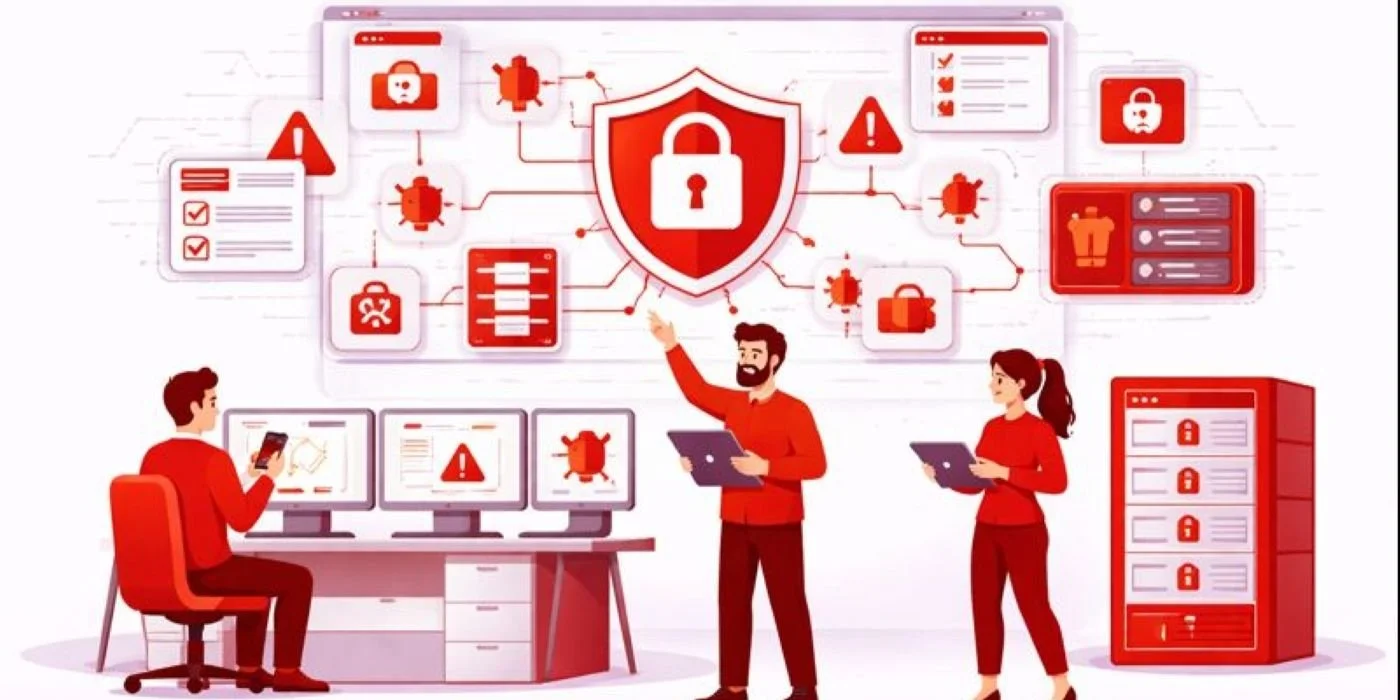
1: Why energy and utilities become a top tier target in 2026 to 2030
Energy and utilities sit at the intersection of money, disruption, and geopolitics. Attackers do not need to “destroy the grid” to win. They only need to create regional instability, force expensive recovery, or make leadership choose between uptime and containment. If you are still treating ransomware as an IT event, review the operational realities in ransomware detection, response, and recovery and the execution discipline required in an incident response plan.
The second reason is exposure creep. Utilities modernize with cloud analytics, remote operations, contractor access, and vendor managed devices. Every one of those “optimizations” expands identity sprawl, telemetry gaps, and dependency chains. If your monitoring program is still tool centered, you will feel the pain described in the SIEM overview and the prioritization problems that come from weak cyber threat intelligence collection.
Third, OT environments are shifting from isolated to reachable. That does not always mean “internet exposed.” It means reachable through jump hosts, vendor tunnels, remote admin tools, and shared identity providers. The fastest path to material risk reduction is segmentation and access control that is designed for OT constraints. Start with clarity on identity and trust anchors using public key infrastructure fundamentals and strengthen data handling with encryption standards.
Finally, the economics of defense are changing. Boards are demanding measurable outcomes. Regulators are demanding evidence. Insurers are tightening requirements. Security teams that cannot quantify improvements will keep losing budget to “urgent” projects that do not reduce risk. Use benchmarking data to frame funding conversations through the global cybersecurity market outlook and workforce planning lessons from the cybersecurity workforce shortage study.
| Prediction / Capability | What Changes by 2030 | Why It Matters in OT | First Moves (2026–2027) | KPI to Track |
|---|---|---|---|---|
| Identity first OT security | Access is enforced by user, device, and session context | Cuts vendor tunnel abuse and shared accounts | Inventory identities, kill shared logins, add session controls | % privileged accounts with MFA + session recording |
| Micro segmentation for critical zones | Zones are enforced with least privilege flows | Limits lateral movement inside substations and plants | Map OT flows, enforce allow lists, monitor violations | Lateral movement attempts blocked per month |
| Continuous asset discovery | Real time visibility replaces spreadsheet inventories | You cannot protect what you cannot see | Passive discovery first, then controlled active checks | % OT assets with owner + criticality |
| Engineering workstation hardening | EWS becomes a defended jump point, not an open admin box | Stops high leverage credential theft | App allow listing, least privilege, USB controls | % EWS on allow listing + patched baseline |
| OT safe vulnerability management | Risk based remediation replaces generic CVE chasing | Prevents downtime from unsafe patching | Exploitability + exposure scoring + change windows | Mean time to mitigate top 10 exposed risks |
| Vendor access governance | Every vendor session is authorized, scoped, and logged | Reduces third party as an intrusion path | Time bound access, PAM, session approval workflow | % vendor sessions with ticket + recording |
| Deception in OT safe segments | Decoys catch intruders before they touch real controllers | Shortens detection for stealthy intrusions | Deploy honey tokens and low interaction decoys | Time from intrusion to first high confidence alert |
| Protocol aware monitoring | Detection understands ICS protocols and normal operations | Finds unsafe commands, not just malware | Baseline normal, alert on command anomalies | False positive rate on OT command alerts |
| Immutable logging for critical actions | Key security and OT changes are tamper evident | Stops attacker cover up and speeds forensics | Write once stores for privileged actions and configs | % critical systems feeding immutable logs |
| Ransomware containment playbooks | Containment is standardized and rehearsed | Prevents panic shutdowns and unsafe recovery | Define OT safe isolation steps and escalation paths | Containment time for priority scenarios |
| DLP for engineering data | Sensitive diagrams and configs are protected in motion | Stops pre staging of sabotage and extortion | Classify OT docs, protect egress, monitor exfil | Blocked exfil attempts of OT sensitive data |
| Secure remote operations | Remote work is controlled without breaking productivity | Remote access is the easiest intrusion bridge | Harden VPNs, add device posture, isolate admin paths | % remote sessions meeting posture checks |
| Supply chain integrity checks | Firmware and updates are verified end to end | Prevents poisoned updates and rogue components | Signed updates, vendor attestations, acceptance tests | % OT updates validated before deploy |
| Botnet resistant edge devices | Edge is hardened against mass exploitation | Utilities are prime DDoS and botnet targets | Default credential eradication + monitoring at edge | % edge devices with unique creds + logging |
| ICS aware IDS placement | Sensors cover critical choke points and command paths | Finds early recon and unsafe commands | Prioritize substations, control centers, vendor ingress | Coverage of critical network segments |
| Incident evidence unification | Events correlate across IT, OT, and identity | Stops slow investigations and missed pivots | Normalize logs, define golden signals, tune correlation | Mean time to understand blast radius |
| Secure backup for OT configs | Config backups are offline, tested, and recoverable | Recovery without paying attackers becomes realistic | Golden images for EWS, controllers, and historian nodes | Recovery time for top 5 OT systems |
| Human factors for control room security | Training aligns with operational stress and real incidents | Reduces error under pressure | Tabletop exercises tied to real OT workflows | Exercise success rate on critical steps |
| Phishing to OT pivot prevention | Email compromise cannot become privileged OT access | Stops initial access from turning into plant impact | Segment identities, protect admin workstations | % high risk accounts protected with strong controls |
| Cloud analytics security guardrails | Cloud ingestion does not leak sensitive operations data | Prevents reconnaissance through exposed telemetry | Least privilege APIs, secrets management, monitoring | Unauthorized API calls detected and blocked |
| Automated containment for IT adjacent zones | Fast isolation without touching safety critical controls | Reduces attacker dwell time | SOAR for identity lock, device isolate, token revoke | Time to lock compromised identity |
| DDoS resilience as a service level | Outage from volumetric attacks becomes rarer | Keeps customer portals and operations stable | Rate limiting, scrubbing, and upstream contracts | Availability during attack simulations |
| Safety aware IR decisioning | Containment choices consider physical impacts | Prevents unsafe shutdown actions | Define OT safety gates and who can authorize | % incidents using approved safety gates |
| Threat hunting for living off the land | Hunting focuses on behavior and tool misuse | Catches stealth intrusions without malware | Build hunts around admin tools and credential access | High confidence hunts per quarter |
| Unified OT and IT risk register | Risk is prioritized by operational impact, not CVSS | Aligns ops leadership and security investment | Define impact tiers tied to service and safety | % budget mapped to top 10 risks |
| Credential theft resistance | Tokens and secrets are harder to reuse and replay | Stops valid login attacks | Phishing resistant auth for privileged groups | Privileged accounts protected with strong auth |
| Forensics readiness by design | Evidence is available even after attacker cleanup | Speeds recovery and legal response | Logging baselines, retention, and chain of custody | % critical logs retained to target window |
| CTI tied to OT scenarios | Intel is mapped to your assets and processes | Moves CTI from news to operational defense | Map threats to substations, plants, and vendors | % intel items converted into detections or controls |
| Regulator proof evidence packages | Audits pull from evidence, not manual screenshots | Cuts audit pain and improves accountability | Control mapping, automated evidence collection | Audit findings severity trend over time |
| Resilience as a board metric | Boards demand proof of reduced outage likelihood | Funding follows measurable outcomes | Define risk reduction metrics tied to operations | Reduction in high impact scenarios year over year |
2: Key predictions that will shape energy and utilities security through 2030
Prediction one is that identity becomes the real perimeter. You will see fewer “malware only” intrusions and more valid login abuse where attackers reuse credentials, steal tokens, and live inside legitimate admin tools. This is why teams that master identity governance outperform teams that buy more detection. Use the mindset from endpoint security effectiveness insights but apply it to privileged identity, remote access, and vendor sessions.
Prediction two is that segmentation becomes a business continuity control, not a network project. When segmentation is weak, you do not get “one incident.” You get a rolling outage where each containment step breaks operations, and each delay spreads compromise. Pair segmentation with detection logic using principles in intrusion detection systems deployment and scale monitoring using a clean architecture from the SIEM overview.
Prediction three is that OT security programs will shift from patching to exposure reduction. In utilities, patch timing is constrained. That reality does not excuse risk. It forces a better method: shrink reachable surfaces, harden administrative paths, and reduce pathways from IT to OT. If you need a disciplined program model, borrow execution patterns from incident response plan development and data protection methods from data loss prevention strategies.
Prediction four is that ransomware remains a top operational risk, but it evolves into multi stage disruption. Attackers will compromise identity, map operations, steal engineering data, and then apply pressure through outages and extortion. Your strategy should not start with negotiation. It should start with rapid containment and recoverability. Align your plan to the operational lens in ransomware detection and recovery and strengthen early stage blocking with lessons in phishing prevention strategies.
Prediction five is that utilities will face more blended attacks that combine volumetric disruption and stealth intrusion. Botnets and denial of service are not “website problems” anymore. They create distraction and divert incident capacity while quiet access expands elsewhere. Review disruption patterns in DoS prevention and how attackers scale infrastructure using botnet disruption methods.
Prediction six is that compliance pressure increases, but compliance alone will not keep you safe. Teams that build controls for audits but not for operations still lose. The winning programs map compliance demands into operationally useful controls. Use the structure of cybersecurity compliance trends and maintain high standards for sensitive sectors through the lens of healthcare compliance, then translate that discipline into the energy context.
3: Strategic recommendations that actually work in OT environments
Start with a two speed security architecture. Speed one is IT and IT adjacent systems, where automation and rapid containment are safe. Speed two is OT safety critical systems, where changes require gates and operational approval. Treating both speeds the same is how you create self inflicted outages. Build governance, then automate only where it is safe, using the operational discipline emphasized in IRP execution.
Next, establish a hardened path for administration. Most major incidents in utilities have an “admin bridge” at the center: engineering workstations, jump hosts, shared credentials, and remote support channels. Lock these down first because they deliver the biggest reduction in blast radius. Combine strong authentication, tight session controls, and cryptographic trust roots. If you need a clean foundation for trust and device identity, anchor it with PKI components and applications and enforce strong data handling through encryption standards guidance.
Then, build a telemetry strategy that reduces noise. Utilities drown in alerts when monitoring is not tied to a decision. The answer is not more dashboards. The answer is a defined set of signals that map to real attacker steps: credential access, privilege escalation, lateral movement, staging, and exfiltration. Use correlation patterns from SIEM fundamentals and enrich prioritization using CTI collection and analysis.
Finally, treat data as a physical risk amplifier. Engineering diagrams, controller configs, and maintenance schedules enable sabotage and extortion. Protecting them is not a paperwork exercise. It is a direct risk reduction step. Prioritize classification, controlled sharing, and egress monitoring using methods in DLP strategies and reinforce secure remote access realities through VPN security benefits and limitations.
4: Incident response in utilities without creating a safety incident
Utilities incident response must be built around one brutal truth: the safest technical action is not always the safest operational action. Teams that isolate first and think later can trigger instability. Teams that think forever lose containment. The answer is a gated playbook where safety critical actions have clear decision owners and pre approved steps. Use the structure from incident response plan development and then tailor the gates to OT.
Your first objective is to stop identity abuse fast. Most high impact incidents are fueled by privileged sessions. That means you need pre built actions to disable accounts, revoke tokens, and cut remote access without touching controllers. Pair this with strong remote access design based on VPN security limitations so containment does not depend on fragile network moves during a crisis.
Your second objective is to confirm blast radius with evidence, not assumptions. Utilities often lose hours because logs are fragmented across tools. Consolidate evidence so analysts can answer three questions quickly: which identity was abused, what assets were touched, and what data moved. The practical architecture is defined well in the SIEM overview and strengthened by protocol and perimeter signals using IDS deployment guidance.
Your third objective is to deny extortion leverage. Attackers win when they can both disrupt and prove they stole sensitive data. Reduce that leverage with data controls, egress monitoring, and strict access to engineering artifacts. Build this with DLP strategies and tools and reinforce cryptographic protection through encryption standards.
Your fourth objective is recovery that is rehearsed. Recovery is not a checklist. It is a performance. If you have never restored engineering workstations, historian nodes, and OT configs under time pressure, you do not have a recovery plan. Use the operational recovery mindset from ransomware detection and recovery and treat each rehearsal as a measurable improvement cycle.

5: Board level strategy and metrics that prove risk reduction
From 2026 to 2030, the best security leaders in utilities will be the ones who translate controls into outcomes. Boards do not fund tools. They fund reduced outage likelihood, reduced recovery cost, and reduced regulatory exposure. If your metrics are purely technical, your program will be treated like an expense. Anchor your narrative in risk and market realities using the global market outlook and the staffing constraints in the workforce shortage study.
Start by defining your top five operational scenarios. Examples include ransomware in billing and dispatch, identity compromise in a vendor support channel, manipulation attempts against OT command paths, data theft of engineering artifacts, and denial of service disruption against customer facing platforms. Tie each scenario to a set of controls and a reduction metric. This turns security into an investment roadmap.
Next, measure speed. In utilities, time matters. Track time to detect, time to scope, time to contain, and time to recover. Do not let those metrics become vanity numbers. Connect them to real operational costs. If you need a blueprint for making response measurable, the structure in IRP execution is a solid baseline.
Then, measure coverage. Coverage means asset visibility, identity coverage, logging coverage, and vendor session coverage. It is shocking how often major incidents exploit “known unknowns.” Push coverage into the board deck because it is a leading indicator of reduced surprise.
Finally, measure control effectiveness. You should be able to show proof that your containment steps work, your backups restore, your segmentation blocks lateral movement, and your phishing defenses reduce initial access. Use exposure reduction logic from endpoint security effectiveness insights and pair it with initial access prevention lessons in phishing prevention.
6: FAQs on cybersecurity in energy and utilities (2026 to 2030)
-
Prioritize actions that shrink blast radius fast. Start with privileged access control, vendor session governance, and segmentation at the highest impact choke points. You will get more risk reduction from limiting lateral movement than from buying one more dashboard. Build a response plan that is executable under pressure using incident response plan development and prepare for ransomware style disruption with ransomware detection and recovery. Then harden the admin path with strong trust foundations via PKI components.
-
Make vendor access time bound, approved, and observable. The goal is not to block vendors. The goal is to ensure every session has a business reason, the minimum privileges needed, and evidence you can review after the fact. Enforce strong authentication for privileged identities, restrict access to controlled jump paths, and record sessions where feasible. Remote access security decisions should be informed by the realities described in VPN security benefits and limitations. When an incident happens, vendor access is often the fastest containment lever.
-
The most common failure is fragmented evidence paired with unclear authority. Teams waste time arguing about what happened, then delay containment because they cannot prove scope. Fix this before the incident by centralizing logs and defining decision owners. The architecture and discipline in the SIEM overview reduces investigation time. The governance and stepwise execution in IRP development prevents decision paralysis. Both are essential in environments where safety matters.
-
Treat engineering data as an operational risk amplifier. If an attacker steals diagrams, configs, and maintenance plans, they gain the ability to extort, sabotage, or accelerate future intrusions. Protecting this data is not an IT only project. Implement classification, access controls, and egress monitoring using DLP strategies and tools. Encrypt sensitive transfers using guidance in encryption standards. If you reduce data theft, you reduce attacker leverage.
-
Compliance helps only when it produces operational controls, not paperwork. A compliant organization can still be compromised if identities are weak, segmentation is missing, and response is slow. Use compliance as a forcing function to build repeatable controls and evidence. Learn how regulatory pressure shapes priorities from cybersecurity compliance trends. Then measure outcomes, not checkboxes. The board will fund what you can prove.
-
Alert fatigue is a design problem. Reduce noise by aligning detections with decisions and building a small set of high confidence signals. Prioritize identity misuse, privileged tool abuse, lateral movement attempts, and data staging behaviors. Then correlate those signals across sources using the model in the SIEM overview. Enrich with context through CTI collection and analysis. You will catch more real incidents with fewer alerts if every alert maps to an action.
-
Report metrics that show risk reduction and resilience. Track coverage of critical assets, privileged access hardening, segmentation enforcement, recovery readiness, and response speed. Tie each metric to top operational scenarios and show movement over time. Use market and staffing context to frame priorities using the global market outlook and the constraints from the workforce shortage study. Boards reward leaders who show progress that reduces outage probability.
