
Predicting Future Cybersecurity Audit Practices: Innovations & Changes (2026–2030)
Audits are changing fast because attackers are moving faster than annual checklists. From 2026 to 2030, cybersecurity audit practices will shift toward continuous evidence, identity centric controls, and automated validation that proves what happened, not what was “supposed” to happen. The audit teams that win will stop chasing screenshots and start building audit ready telemetry with clear ownership, tighter access paths, and incident rehearsals that create defensible proof. This guide predicts the innovations that will define modern audits and the operational changes you need to make them painless.
1) Cybersecurity Audits by 2030: What Will Change and Why It Matters
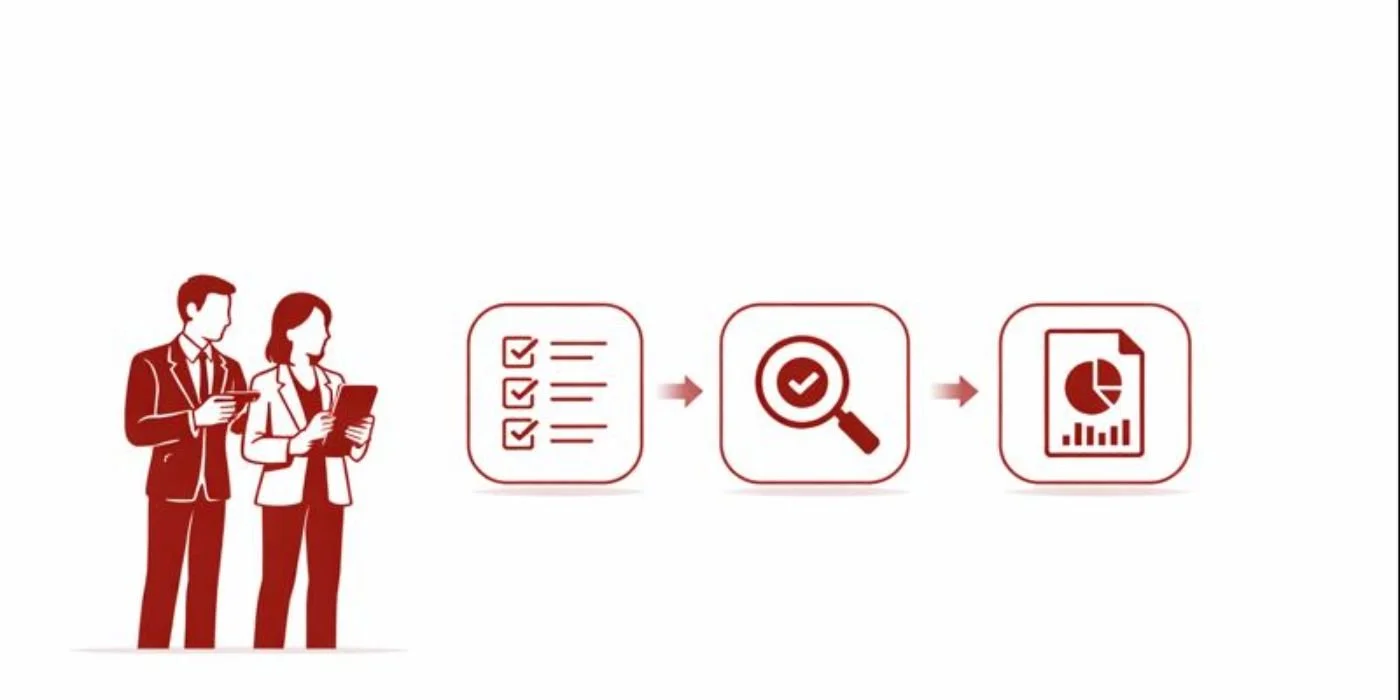
Between 2026 and 2030, the audit conversation will move from “Do you have a policy?” to “Show me operational proof.” That is not a buzzword shift. It is a reaction to repeat breaches, vendor driven exposure, cloud plus endpoint sprawl, and the reality that paper controls do not stop ransomware. Auditors will increasingly ask for evidence that your controls work under pressure, not just evidence that someone wrote them down.
The biggest change is the rise of auditability as an architecture requirement. If your identity design is messy, if logs are fragmented, and if response actions vary by analyst, your audit will be painful and your risk will be real. Strong audit programs will look like strong SOC programs. They will use centralized visibility through a mature security information and event management program, detection content driven by cyber threat intelligence workflows, and recoverability proven through rehearsals based on incident response plan execution.
Expect auditors to focus harder on identity and privileged access, because most modern compromises succeed through valid credentials. Audit practices will favor proof of least privilege, proof of access approvals, proof of credential rotation, and proof that suspicious sign ins trigger containment. Your ability to show that proof improves when endpoint security provides identity context, which is why forward looking teams follow endpoint security advances by 2027 and connect it to analytics from next gen SIEM trends.
Auditors will also demand stronger evidence around encryption, key handling, and device trust, especially as regulators and customers push for measurable data protection. Build that foundation using encryption standards guidance and operational trust patterns from public key infrastructure fundamentals. If your crypto posture is unclear, your audit narrative becomes weak.
Finally, audit teams themselves will become more specialized. Many organizations will formalize the “cybersecurity compliance officer” and “cybersecurity auditor” path because the work is no longer light governance. It is technical validation, evidence engineering, and cross team negotiation. If you are building capability, use role guides like the career pathway for cybersecurity compliance officers and the career guide for cybersecurity auditors.
2) The Audit Evidence Stack: What to Collect Automatically by 2030
Audits get expensive when evidence is manual. From 2026 to 2030, the fastest compliance advantage will be evidence engineering. This means you design your systems so evidence is produced as a byproduct of normal operations. The audit team stops chasing teams for proof, and teams stop fearing auditors because proof is already there.
Start with “single source of truth” evidence. Centralize security relevant logs, enrich them, and retain them with integrity. Mature teams treat SIEM as an evidence factory, not just a SOC dashboard. They also tighten log quality by ensuring timestamps, identity context, and source tagging are consistent. If you cannot connect events to a user session and a device, your audit story becomes weak.
Next is detection evidence. Auditors increasingly ask whether detections exist for high risk scenarios, whether they fire when expected, and whether the response is consistent. That requires threat informed content based on CTI collection and analysis. When alerts are noisy, audits become messy because you cannot prove you can distinguish false positives from real compromise. The modern answer is to link detection coverage to specific attacker behaviors and document your logic.
Then comes incident response evidence. Auditors will want proof that you can execute, not just “have a plan.” That proof is created by tabletop exercises, response drills, containment playbooks, and post incident reviews. Build this using a strong incident response plan and align it with ransomware realities using ransomware detection and recovery guidance. If you cannot show how you isolate endpoints, revoke access, and restore systems safely, your preparedness claims will not survive scrutiny.
Data protection evidence will also become more technical. Auditors will push harder on encryption coverage, key handling, and exfiltration controls. That means you should be able to show which systems are protected and how keys are managed using encryption standards and how device trust is maintained through PKI. For data movement proof, build targeted controls using DLP strategies so you can demonstrate how sensitive data is monitored, blocked, and investigated.
Finally, network control evidence matters more when organizations cannot patch quickly. Auditors will test whether segmentation is real and whether monitoring is meaningful. Mature evidence includes rule reviews and verification tied to firewall configurations and tuned detection from intrusion detection systems. If your segmentation exists only on diagrams, audits will expose it.
3) Continuous Auditing: Moving from Annual Pain to Ongoing Proof
Continuous auditing will define modern cybersecurity programs by 2030 because it aligns with how threats work. Attackers do not wait for annual reviews. They exploit drift, stale access, and exceptions that become permanent. Continuous auditing flips the script. It finds issues early, creates ownership, and prevents “audit season panic.”
From 2026 onward, expect more organizations to implement continuous control monitoring with a “control library” that maps each control to a measurable signal. This reduces debate. Instead of arguing whether a policy exists, you show whether the control is active, whether it is configured correctly, and whether it is producing outcomes. This approach pairs naturally with next gen SIEM capabilities because modern platforms aim to connect telemetry to decisions and automate evidence packaging.
Identity control monitoring will be a cornerstone. Continuous auditing will validate privileged access approvals, session recording, and risky sign in handling. This is why audit teams will increasingly collaborate with SecOps and endpoint teams, especially as endpoint platforms evolve toward identity aware telemetry described in endpoint security trends by 2027. If your endpoints can produce clean evidence about suspicious execution and credential abuse, your audit cycle becomes shorter and more defensible.
Continuous auditing also changes how exceptions are handled. Many organizations carry silent risk debt because “temporary” exceptions never expire. By 2030, audit programs will enforce exception registers with defined owners, review cycles, and compensating controls. The evidence will live in tickets and telemetry, not in spreadsheets. This is one reason cybersecurity compliance roles are rising in importance. Teams that build capability around compliance officer pathways and the cybersecurity auditor career track will be better positioned to run modern programs.
Another key shift is incident driven audit sampling. After an incident, audits will increasingly expand scope to validate the controls that failed, and to verify that remediation truly worked. If you already run mature post incident reviews and link them to incident response execution, you will be ready for this. If you treat incidents as embarrassing events to hide, your audit risk will rise.
4) AI, Automation, and the Future of Audit Testing: Less Sampling, More Validation
AI will change audits by speeding up evidence handling, but the most important change is not AI. It is automation of validation. From 2026 to 2030, audits will shift from “sampling a few systems” to “validating the control across the fleet.” That shift happens when controls are measurable and evidence is machine readable.
Expect more audit teams to request standardized evidence packets. These packets will include configuration state, access histories, detection coverage, response playbooks, and proof of testing. If you have not modernized monitoring, building those packets manually will hurt. This is why organizations will tie audit readiness to SOC maturity and use platforms informed by future SIEM technology direction. The strongest programs will treat evidence packaging as a product with version control, ownership, and quality checks.
Automation will also change how incident response is audited. Instead of asking if you have a runbook, auditors will ask if your actions are consistent and safe. If your containment is manual, your outcomes vary. If your containment is playbook driven with guardrails, your outcomes improve and your evidence becomes stronger. Anchor this in IRP development and execution and connect ransomware drill outcomes to ransomware response and recovery. Auditors love consistency because it reduces dispute and increases trust.
AI will be used in two safe areas. First, summarizing large evidence sets into narratives that humans can validate. Second, highlighting anomalies and drift that deserve attention. The risk is when AI is used to invent evidence or gloss over gaps. That creates catastrophic audit exposure. The practical approach is to keep AI as a helper for navigation, not as the source of truth. The source of truth remains telemetry and records.
This is also where encryption and key evidence becomes more important. Automated validation will expand audit scope to keys, certificates, and trust stores, especially as device identity becomes central. Build defensible crypto programs using encryption standards and strong trust frameworks using PKI guidance. When your cryptographic inventory is clean, automated audits become easier, not scarier.
Finally, audits will become more threat informed. Audit tests will increasingly align to attacker behaviors. That means detection and response evidence will be reviewed using the same mental model the SOC uses. Build that model using CTI collection and analysis and validate visibility across layers with IDS deployment practices, firewall controls, and data movement defenses built on DLP strategies.

5) People, Skills, and Governance: The Audit Team of 2030
By 2030, audit excellence will be a hybrid discipline. Pure GRC without technical depth will fail to validate modern systems. Pure engineering without governance will fail to create consistent evidence and accountability. The winning model is a joint operating system between audit, GRC, SecOps, and platform teams.
The audit function will need evidence engineers. These are professionals who can understand control intent, map it to telemetry, and build reliable evidence flows. They will also need strong stakeholder control because evidence lives across teams. That is why career paths like cybersecurity compliance officer and cybersecurity auditor will grow and become more technical.
SecOps will also have to mature how it documents and measures. Audits will no longer accept vague statements like “we monitor for threats.” They will ask what threats, which detections, what coverage, what tuning, what response, and what outcomes. That pressure often exposes alert overload and weak prioritization. Strengthen operations using SIEM best practices and threat informed prioritization via CTI analysis. If you cannot explain your detection logic, you cannot defend your security posture.
Governance will become more scenario based. Boards and executives care about impact, not control names. From 2026 onward, expect audit reporting to connect control gaps to plausible incidents such as ransomware downtime, data theft, and supplier compromise. Your incident response plan becomes the anchor because it shows you can act under pressure. Build it and test it using IRP execution guidance and validate readiness against ransomware using ransomware recovery strategy.
You will also see a stronger link between regulations and audit methods. New laws and enforcement trends will push audits to emphasize measurable controls like logging integrity, third party access management, and incident reporting quality. If you are tracking regulatory direction, connect your program to broader predictions like cybersecurity legislation impacts for SMBs and evolving control expectations in next generation cybersecurity standards.
The takeaway is simple. If your audit program forces teams into panic, it is failing. By 2030, audit should feel like a steady pulse that improves security, reduces incidents, and creates durable trust with customers and regulators.
6) FAQs: Future Cybersecurity Audit Practices (2026–2030)
-
Continuous evidence pipelines. Instead of collecting proof manually during audit season, organizations will build systems that generate audit proof continuously. This reduces cost, speeds audits, and exposes control drift early. The easiest starting point is centralizing telemetry through a mature SIEM program and aligning it to threat informed validation using CTI workflows. When evidence is automated, audits become less emotional and more factual.
-
They will evaluate consistency and outcomes. Auditors will ask whether containment actions are standardized, whether escalation is clear, whether timelines are captured, and whether lessons learned are implemented. A plan alone will not pass scrutiny. You need rehearsals, playbooks, and proof of execution. Build that maturity using incident response plan development and validate preparedness under pressure using ransomware recovery practices.
-
Because credential abuse is a dominant breach path and it looks legitimate if you do not have context. From 2026 onward, auditors will push for proof of least privilege, privileged session monitoring, vendor access controls, and rapid revocation capability. Strong identity evidence reduces both breach risk and audit disputes. Pair identity control evidence with endpoint telemetry improvements described in endpoint security advances to show clear linkage between user, device, and action.
-
By building a unified control library and reusing evidence. One strong evidence set should support many audits when controls are mapped consistently. This requires centralized telemetry, consistent ticketing records, and clear exception handling. The operational backbone is strong visibility using SIEM foundations and repeatable response evidence using IRP execution. When evidence is unified, audits stop feeling like separate battles.
-
They will demand proof, not promises. Audits will increasingly validate encryption coverage across data at rest and data in transit, along with evidence that keys and certificates are managed safely. Weak key hygiene creates silent exposure. Build defensible crypto programs using encryption standards guidance and scalable trust through PKI fundamentals. When key inventory and rotation are solid, audits become faster.
-
AI will help summarize evidence and highlight anomalies, but it must not become the source of truth. The source of truth must remain telemetry, records, and validated controls. Use AI to reduce time spent reading, not to invent compliance narratives. This approach becomes stronger when evidence is already structured by modern analytics described in next gen SIEM technologies and when detection quality is grounded in CTI analysis.
-
Evidence engineering, technical literacy across identity, logging, encryption, and response, and the ability to map controls to realistic threat scenarios. Auditors who can validate systems and tell a defensible story will be in demand. If you are building a career path, use the cybersecurity auditor guide and complement it with the broader governance focus from the cybersecurity compliance officer roadmap.
