
Retail & e commerce Cybersecurity: Predicting the Future Landscape (2026 to 2030)
Retail security is no longer about defending “a website.” Modern retail runs on identities, APIs, third party scripts, fulfillment systems, and nonstop operational change. From 2026 to 2030, attackers will aim at the highest leverage moments: account access, checkout, gift cards, refunds, vendor portals, and store operations. The brands that win will not be the ones with the most tools. They will be the ones that can correlate identity, endpoint, and transaction signals fast, then contain and recover without pausing revenue.
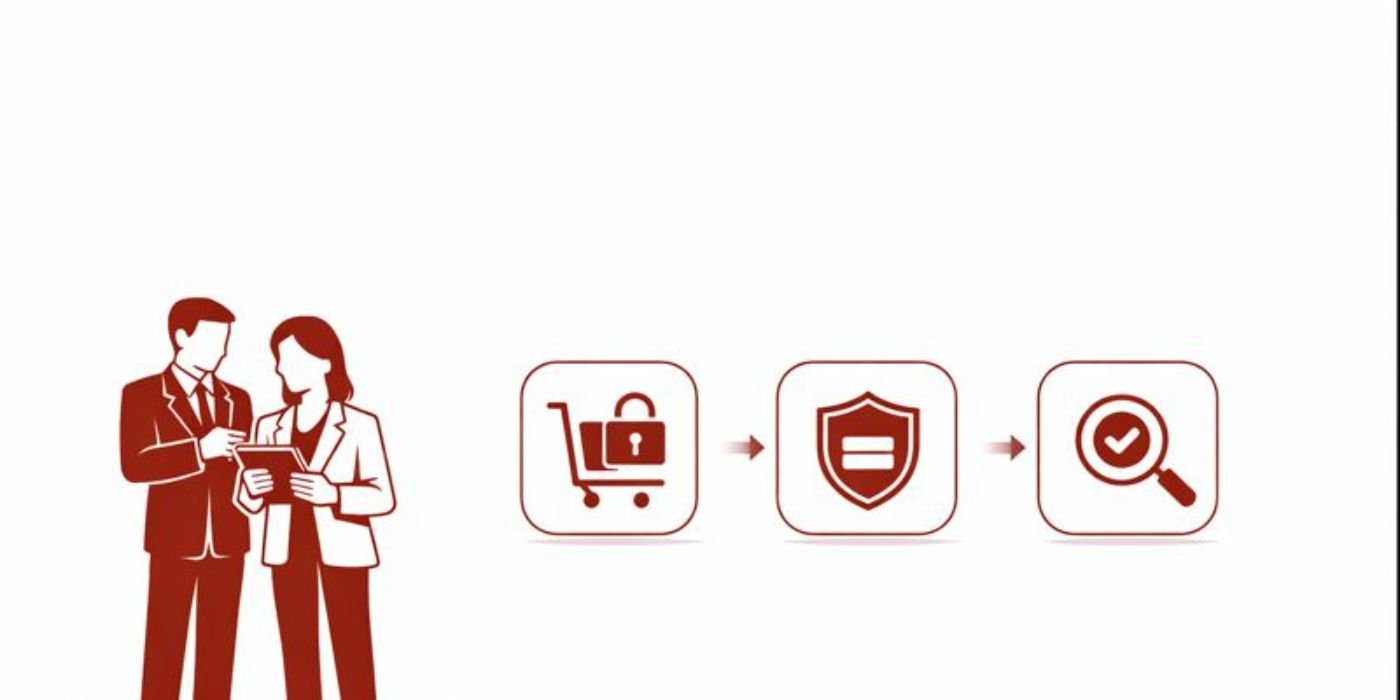
1) Retail & E commerce Cybersecurity in 2026 to 2030: What Changes First and Why Most Teams Fall Behind
Retail security fails when teams defend “systems” instead of revenue workflows. Between 2026 and 2030, attackers will keep choosing the fastest paths to monetization: account takeover, gift card drain, refund manipulation, checkout skimming, and API scraping. The painful truth is that most retailers still cannot answer basic questions in seconds: which identities touched checkout, which device created a refund, which token pulled bulk customer data, and whether that activity was normal or staged. That visibility gap is why alert volume feels endless and why containment feels inconsistent, a theme that becomes obvious once you compare modern correlation stacks like next gen SIEM with scattered logging approaches explained in SIEM foundations.
The next shift is that retail incidents will become multi domain by default. A single campaign will jump from credential stuffing to session replay, then to promo abuse, then to support social engineering, and finally to refunds and chargebacks. If your SOC works separately from fraud and commerce ops, you will waste the only resource that matters: time. The best programs will fuse identity context, endpoint signals, and transaction telemetry into one timeline, taking cues from identity correlated endpoint trends discussed in endpoint security advances and response discipline outlined in incident response execution. That fusion is what turns “we detected it” into “we contained it before value moved.”
Retail will also be hit harder by third party and ecosystem risk. Headless commerce, marketplaces, affiliate tooling, personalization scripts, customer support platforms, and delivery partners expand your attack surface without expanding your security team. Attackers love this because they can compromise one vendor component and touch thousands of sessions without triggering perimeter alarms. That is why standards and governance will become more operational and less theoretical, aligning with the direction covered in future cybersecurity standards. If a third party script can modify checkout, it deserves the same control rigor as a payment processor.
Finally, the 2026 to 2030 era will punish slow response more than imperfect prevention. Retail margins cannot absorb long fraud waves, and operations cannot survive extended outages. That is why mature teams will measure success using time to contain, time to recover, and business impact avoided, not just number of blocked events. This is also why ransomware readiness will be treated as an operations guarantee, supported by practical containment and recovery principles from ransomware detection and recovery and network level hardening via firewall configuration. The future retail security advantage is not “more alerts.” It is fewer blind spots, faster containment, and provable resilience across checkout and fulfillment.
2) The New Retail Attack Map: Where Criminals Will Make Money First
Retail attackers follow revenue. In 2026 to 2030, the fastest monetization paths will concentrate around accounts, checkout, refunds, and gift cards. That changes how you prioritize detections. You do not start with “what alerts exist.” You start with “what flows generate money, inventory control, and trust,” then instrument them with correlated signals, the same approach emphasized in modern monitoring stacks like next gen SIEM and response programs like incident response plan execution.
Account takeover becomes a business logic problem, not a login problem
Credential stuffing is not new. What changes is how attackers complete monetization. Expect more “quiet ATO” patterns: address changes, card add events, loyalty transfer, buy now pay later abuse, refund to new instrument, and social engineering against support. If your evidence is split across security tools and commerce systems, your team will argue about whether it is fraud or security while the attacker drains value. This is why retail teams will increasingly need security telemetry fused with operational context, plus identity aware endpoint correlation similar to trends covered in advances in endpoint security and intelligence alignment discussed in CTI collection and analysis.
Checkout skimming evolves into micro targeting
Client side compromise will shift toward smaller, higher confidence theft. Attackers will target specific scripts, specific device classes, or narrow geographic patterns to reduce detection noise. Retailers that only run periodic scans will miss these short lived injections. The long term fix is continuous script integrity with response playbooks that can pull the emergency brake fast, the same “containment first” mindset you apply to ransomware response and recovery.
APIs become the easiest place to hide abuse
Retail APIs are everywhere: mobile apps, loyalty, catalog, pricing, shipping, returns, and partner integrations. Attackers will exploit broken authorization and over permissioned tokens, then scrape PII or enumerate accounts without triggering classic WAF patterns. You need token level telemetry that can connect identity, endpoint posture, and data movement, supported by DLP strategies and foundational event correlation explained in SIEM overviews.
Supply chain access shifts to vendors and agencies
Retail marketing stacks rely on third parties: tag managers, A B testing, personalization, affiliate tools, and customer support add ons. This is a perfect attack surface because it sits inside trusted flows. By 2030, high maturity retailers will treat vendor access as a privileged identity surface with monitoring and just in time access, and they will adopt stronger governance trends aligned with future cybersecurity standards and compliance oriented roadmaps like cybersecurity compliance officer career pathways.
3) What Retail Security Leaders Will Build: Capabilities That Matter More Than Tools
Retail security programs fail when they over invest in alerts and under invest in outcomes. Between 2026 and 2030, the best teams will focus on capabilities that turn signals into containment quickly. The following priorities are consistent with broader technology evolution discussed in future cybersecurity technologies and workforce shifts explained in automation and the future cybersecurity workforce.
Identity context becomes the core correlation layer
Retail has too many false positives because detections lack context. The future state is identity centric. Every endpoint event, API call, admin action, and data movement should resolve back to “which identity, which session, which device trust level, which authorization scope.” This reduces investigation time and makes containment steps defensible.
Containment playbooks become your profit protection system
Retail is punished more for slow response than for imperfect prevention. High maturity programs predefine containment tiers: isolate endpoints, revoke tokens, force re auth on risky sessions, rotate privileged secrets, quarantine scripts, and restrict refunds until verification. This makes your response consistent, which is critical when team capacity is limited, a pain point that shows up in most orgs adopting incident response execution frameworks.
Data protection shifts from perimeter thinking to exfil path thinking
Retail data theft will often look like “normal export.” Support tools, analytics, and CRM systems are high risk because they enable bulk actions. Retail teams will lean on controls aligned with DLP strategy and tools and strong cryptographic posture explained in encryption standards to reduce breach impact even when access happens.
Store networks demand segmentation and visibility
Physical retail is still a major blind spot. POS, kiosks, cameras, IoT devices, and back office systems create lateral movement paths. Segmentation and network level detection, supported by fundamentals like firewall technologies and intrusion detection systems, will matter more than adding another dashboard.
4) Retail Defense Strategy That Actually Works: A 2026 to 2030 Blueprint
A strong retail program uses layered control, but the key is sequencing. You harden the paths criminals monetize first, then you reduce dwell time, then you protect operations. The strategy below aligns with core controls and best practices across PKI, VPN posture, and modern detection pipelines.
Step 1: Make identity hard to steal and easy to contain
You need phishing resistant MFA for staff, risk based auth for customers, and session protection that can revoke tokens and force re auth on suspicious patterns. Pair identity improvements with endpoint correlation trends described in endpoint security advances so that “valid login” does not become “valid breach.”
Step 2: Instrument checkout and refunds like critical infrastructure
Treat checkout as a protected zone. Monitor script changes, block unknown injection paths, and build immediate rollback capability. Treat refunds and returns as high risk operations, with step up verification and anomaly thresholds. When you see staging or suspicious exports, you need data controls aligned with DLP plus cryptographic hygiene aligned with encryption standards.
Step 3: Build a single investigation timeline
Retail incidents often involve multiple teams: SOC, fraud, support, engineering, and operations. If your timeline is split, you lose. Move toward centralized correlation aligned with SIEM overviews and future focused pipelines described in next gen SIEM. The goal is simple: one narrative, one containment path, one owner.
Step 4: Contain faster than criminals can monetize
Retail needs pre approved containment actions. Isolation for compromised endpoints, rapid credential resets, token revocation, vendor access shutdown, and refund hold policies should be practiced. This is where a mature incident response plan beats an expensive tool stack.
Step 5: Protect stores and warehouses from becoming the outage source
Ransomware and disruption will focus on operations. Segment store networks and ensure monitoring for abnormal traffic, grounded in practical controls like firewall configuration, IDS deployment, and incident containment patterns from ransomware response.

5) What Retail Security Teams Will Need to Change in People, Process, and Proof
From 2026 to 2030, retail security maturity will be judged by proof, not promises. Boards will ask: how fast can you contain? How much fraud loss did you prevent? How many critical flows are covered? That shift tracks broader compliance and standards evolution explained in future cybersecurity standards and the role specialization growth discussed in specialized cybersecurity roles.
You will need tighter alignment between security and commerce stakeholders
Retail cannot afford the classic gap where security does not understand the checkout funnel and commerce does not understand threat tradecraft. Strong programs translate risk into business metrics: conversion impact, refund leakage, chargebacks, downtime risk, and customer trust loss. That language alignment makes it easier to justify investments like segmentation and DLP.
You will need stronger evidence, faster investigations, fewer debates
Retail incidents often devolve into arguments: “is it fraud or security,” “is it a bug or an attack,” “is it isolated or systemic.” Strong programs remove debates by preserving evidence, correlating identity and endpoint context, and using threat intelligence mapped to retail workflows. For a deeper readiness mindset, retail leaders benefit from structured role education like the SOC analyst pathway and the strategic lens from the CISO roadmap.
You will need better governance around third parties
If your most critical pages rely on third party code, then third party governance is core security. Vendor access needs monitoring, least privilege, time boxed access, and session logging. Programs that ignore vendor risk will keep suffering “mystery incidents” that never fully close.
You will need to prove resilience, not just detection
Retail will track “time to contain” as a top KPI. Strong programs run exercises against account takeover, checkout compromise, and ransomware disruption, using playbooks aligned with incident response execution. That is how you prevent chaos when it matters.
6) FAQs: Retail & E commerce Cybersecurity (2026 to 2030)
-
The biggest shift is that attackers will monetize faster, and they will do it through business workflows instead of obvious malware. That means identity and session abuse, API exploitation, and checkout integrity become more important than adding more endpoint alerts. Retail teams will move toward unified correlation pipelines, similar to the direction outlined in next gen SIEM, plus faster containment discipline grounded in incident response execution. If you cannot contain quickly, detection alone will not protect revenue.
-
Because many retail defenses stop at the login screen, while attackers monetize after login. They use session hijacking, token replay, support social engineering, and high value workflow abuse like refunds, address changes, and gift card redemption. MFA helps, but retail needs session level protection and identity context correlation similar to patterns discussed in endpoint security advances. Retail also needs better data movement controls aligned with DLP strategies to prevent quiet bulk theft once access is gained.
-
You protect checkout like critical infrastructure: continuous script integrity monitoring, strict vendor governance, rapid rollback capability, and anomaly detection tied to checkout events. The goal is to catch injection and exfil patterns early without adding friction to every buyer. When issues occur, you need a practiced containment playbook, the same mindset used in fast moving incident programs like ransomware response and recovery. Conversion stays healthy when security is invisible during normal operations and decisive during compromise.
-
Broken authorization and over permissioned tokens. Attackers do not need to “hack” when they can enumerate resources, scrape data, or abuse a token that is valid for too many actions. Retail teams should treat API telemetry as part of security analytics, correlating identity and behavior similarly to SIEM fundamentals and strengthening encryption and trust posture aligned with encryption standards. You win by shrinking token scope, validating access at every object layer, and detecting abnormal token behavior quickly.
-
Stores carry unique lateral movement risk because POS, IoT devices, guest WiFi, cameras, and back office systems often share weak segmentation. Retail resilience depends on segmentation, firewall hygiene, and network detection that can catch abnormal traffic early. Foundational controls like firewall technologies and IDS deployment matter more here than another cloud dashboard. Your store environment should be designed so one compromised device cannot take down operations.
-
Containment of monetization paths. In retail, the first actions should stop theft and prevent spread: revoke sessions, lock risky refund workflows, isolate compromised endpoints, rotate privileged secrets, and restrict vendor access. Then you preserve evidence and recover operations. That is why mature teams invest in clear playbooks and training aligned with incident response development and execution. A strong IR plan is not a document. It is muscle memory that keeps revenue running under pressure.
-
By focusing on the highest leverage controls: identity hardening, secure payment and checkout integrity, basic segmentation for store networks, and a small set of response playbooks that reduce time to contain. Smaller teams benefit from streamlined detection pipelines described in next gen SIEM and from practical incident readiness guidance like ransomware detection and recovery. The goal is not perfect coverage. The goal is to be hard to monetize and fast to recover.
