
Best Cybersecurity Firms Specializing in Financial Services (2026-2027)
Financial services don’t get “cyber incidents.” They get liquidity events, regulatory escalations, customer churn, and board-level panic—all from the same root cause: attackers found a path to money movement, identity, or trust. In 2026–2027, the best cybersecurity firms for banks and fintechs aren’t just strong technically; they’re finance-fluent: they understand payment rails, fraud ops, third-party risk, and how audits and regulators actually behave. This guide shows you how to shortlist the right specialists, pressure-test their claims, and hire them in a way that reduces loss—not just alerts.
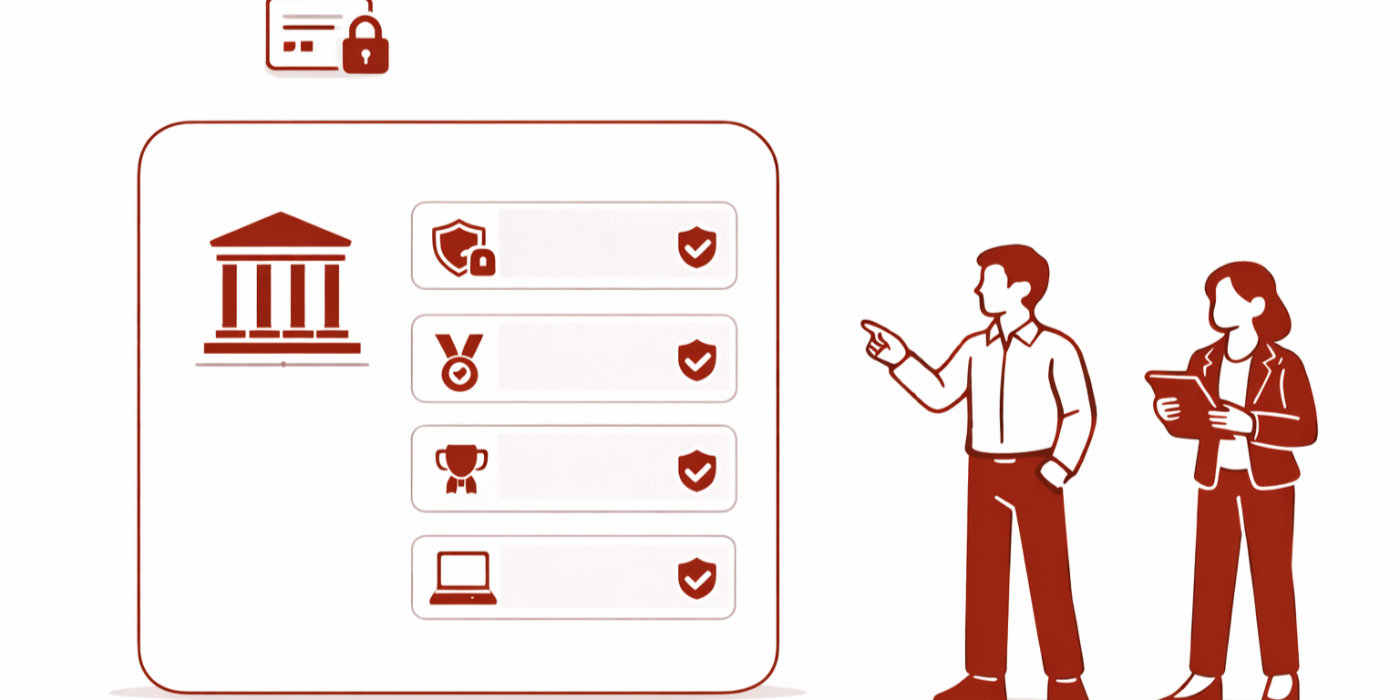
1) What “finance-grade” cybersecurity firms actually deliver in 2026–2027
A “financial services specialist” firm is not defined by a logo wall—it’s defined by repeatable outcomes inside the constraints of banking reality: change windows, legacy cores, vendor sprawl, and zero tolerance for downtime. The best partners show up with playbooks that map directly to financial attack paths: account takeover, session/token abuse, wire/SWIFT fraud, card-data exposure, and ransomware designed to maximize operational disruption. Your first filter is whether they can talk clearly about how money moves and where controls fail.
Start by separating firms into what they truly sell:
Outcome operators (MDR/SOC + response): They run detection and response 24/7 and are accountable for containment speed. If your pain is “we see alerts but can’t act,” you’re buying this category—and you should expect integrated work with your incident response plan (IRP) and your SIEM, not a parallel universe.
Breach-and-fraud responders: They specialize in rapid investigations, attacker eviction, and evidence-grade reporting. These are the firms you want on retainer when you’re dealing with ransomware detection, response, and recovery, extortion playbooks, or stealthy identity compromise.
Finance compliance & audit accelerators: They reduce audit friction by aligning controls to frameworks, creating testing artifacts, and closing gaps without breaking production. You’ll see immediate overlap with security audits: processes and best practices and cybersecurity frameworks (NIST, ISO, COBIT).
Control-engineering specialists (IAM, cloud, appsec): They harden the actual choke points attackers exploit: identity, cloud, endpoints, email, and APIs. If you’ve had “privilege creep” and shadow admin roles, you’ll also revisit access control models: DAC, MAC, RBAC and enforce least privilege like a product, not a policy.
In finance, “best” usually means best fit for your risk. A top-tier IR firm can still be a bad hire if your real issue is misconfiguration-driven data exposure in cloud. Likewise, the strongest MDR can disappoint if your environment needs immediate logging maturity, telemetry normalization, and use-case tuning across the full bank stack. That’s why your shortlist has to be built from signals, not marketing.
2) How to choose a financial-services specialist firm (a due-diligence playbook)
Most “bad hires” in finance happen because buyers evaluate security firms like they evaluate software: features, logos, and price. But you’re not buying a tool—you’re buying judgment under pressure. You need a due-diligence process that exposes whether the firm can operate inside your constraints and still produce outcomes that survive scrutiny from internal audit, regulators, and the board.
Start by running a “day-two” interview: “Assume we have an identity-driven breach right now. Walk us through the first four hours.” If their answer doesn’t immediately reference logging, containment authority, comms, and legal/regulatory coordination, they’re not finance-grade. Tie this to your existing incident response plan and ask them to map actions to your current security audits process. If they can’t translate response into evidence, your recovery will be messy.
Then pressure-test their technical posture with three finance realities:
Reality #1: Identity is the perimeter. If their identity capability is thin, you’ll keep bleeding through account takeover, consent abuse, and privileged access drift. Ask how they enforce least privilege using principles rooted in RBAC and access control models. Ask how they detect abnormal sign-ins and session abuse inside your SIEM. The “best” firm is the one that reduces the probability of unauthorized money movement—not the one with the prettiest portal.
Reality #2: Ransomware is business interruption, not just malware. Ask how they harden the path ransomware uses: initial access, privilege escalation, lateral movement, and backup sabotage. Their answer should naturally connect to ransomware detection, response, and recovery and measurable improvements like segmentation validation, golden image baselines, and recovery time objectives. If their ransomware story is “we deploy EDR,” they’re underselling the actual battle.
Reality #3: Compliance is a forcing function—but not a strategy. The firms that win in financial services don’t treat frameworks as paperwork; they translate NIST/ISO/COBIT into operational control ownership, testing, and remediation. That means they can show you how they reduce audit findings while simultaneously improving detection and response maturity.
Finally, validate delivery by forcing specificity: ask for a redacted report, a runbook, and a sample weekly executive update. If they can’t show you how they communicate risk in plain language, they will fail in the moments that matter most.
3) The 2026–2027 landscape: firm archetypes and where each one wins
Financial services buyers often ask for “the best cybersecurity firm,” but the market is really four overlapping archetypes. The smartest approach is to pick the archetype that matches your most expensive failure mode—then hire the firm that is strongest in that lane.
Archetype A: Incident response & cyber crisis operators. These teams win when you need rapid investigation, containment, and executive-grade crisis handling. They’re built for high-stakes breach events and are commonly structured around retainers and rapid mobilization. Examples of well-known providers with public incident response offerings include Mandiant (Google Cloud Security) , Unit 42 (Palo Alto Networks) , IBM X-Force Incident Response , Microsoft Incident Response , and Kroll . If your pain is “we can’t evict an attacker cleanly,” these are the firms you evaluate first.
Archetype B: MDR/SOC outcome providers. These teams win when your SOC is overwhelmed and your detection-to-action loop is broken. The best MDR providers blend technology with human operators and commit to measurable outcomes, not just alert volume. For context on current MDR market evaluation, Forrester publishes a Managed Detection and Response Wave (Q1 2025) , and vendors like CrowdStrike position MDR offerings around 24/7 managed detection and response . If you’re drowning in alerts, you’re not missing tools—you’re missing an operating model.
Archetype C: GRC, compliance, and control engineering. These firms win when your audit findings keep recurring, your evidence is scattered, and your control owners can’t produce proof under pressure. They work hand-in-hand with your teams to operationalize frameworks and reduce risk drift. This work naturally aligns with your internal security audits program, vulnerability assessment, and architectural maturity.
Archetype D: Specialized control domains (identity, cloud, appsec, fraud). These specialists win when the issue is concentrated: identity privilege sprawl, cloud exposure, API logic abuse, or BEC-driven payment reroutes. If your fraud losses don’t require malware at all, you need specialists who understand identity controls, authorization boundaries, and how to shrink the blast radius.
The point isn’t to pick “the biggest.” The point is to match the firm to your highest-cost scenario—then make them prove they can execute inside your environment.
4) Best cybersecurity firms specializing in financial services (2026–2027): a curated shortlist by need
Below is the most practical way to interpret “best” in financial services: best for your primary scenario. Use these as shortlist starting points, then run the table above like a checklist until the list shrinks to 2–3 serious finalists.
If you need elite incident response + attacker eviction (retain-first)
Look for firms that can mobilize fast, execute containment cleanly, and deliver evidence-grade reporting. Public IR offerings to evaluate include Mandiant Incident Response Services , Palo Alto Networks Unit 42 Incident Response , IBM X-Force Incident Response , Microsoft Incident Response , Kroll Cyber Incident Response , and Sygnia . Your evaluation hinge is not “who’s famous,” it’s whether they can operate within your current telemetry and your IRP without wasting day one asking for basics you should already have.
What to watch for in finance: the firm must understand that containment might require coordination with fraud ops, treasury, and customer support—because stopping the attacker is only half the job. The other half is preventing money movement and restoring trust without telling inconsistent stories.
If you need MDR that actually reduces loss (not just alerting)
Your best-fit MDR partner is the one that can ingest your telemetry, tune detections quickly, and take action with clear approval flows. Market research like Forrester’s MDR Wave highlights how buyers compare providers , and major MDR vendors like CrowdStrike position offerings around 24/7 coverage . The finance-specific test is whether the MDR team can build detections for identity abuse, token anomalies, and high-risk admin actions—then integrate that into your SIEM program so your internal team can verify and learn.
If you’ve been burned before, it’s usually because MDR was deployed like a black box: alerts arrive, but your risk doesn’t drop. Force the provider to show how they tune, how they reduce false positives, and how they document response actions in ways that survive audit scrutiny.
If you need identity and access maturity (where most finance breaches begin)
If your environment has privileged access sprawl, inconsistent MFA policies, and “temporary” admin accounts that never go away, prioritize firms with deep identity advisory and execution capability. Providers like Optiv publicly describe identity advisory services ; regardless of vendor, your must-have is a plan that enforces least privilege grounded in access control models and connects to detection in your SIEM. Identity isn’t a project; it’s an operating discipline.
If you’re heavily regulated and drowning in compliance evidence
You’re not alone: many finance teams aren’t failing security—they’re failing documentation, ownership, and proof. Your best firm here is the one that can translate frameworks into control testing, remediation workflows, and audit artifacts. Anchor your evaluation on how they operationalize NIST/ISO/COBIT and how they modernize vulnerability management so “critical patches” actually correlate to risk.
If you’re trying to get ahead of finance-sector threat evolution
Finance threats keep evolving, and your providers must be able to adapt. Use ACSMI’s forward-looking finance context as internal grounding: cybersecurity trends in finance (predictive insights), the broader top cybersecurity threats predicted by 2030, and the trajectory of AI-powered cyberattacks. The “best” firm is the one that can convert threat evolution into control evolution—before an incident forces it.

5) How to contract, onboard, and measure a firm so you don’t regret it
Most financial organizations lose value at three moments: signing, onboarding, and measurement. Fix those and even a “good” firm becomes great.
Contract like your worst day is guaranteed. In finance, it probably is. Put the scary things in writing: response SLAs, escalation paths, containment authority, and what “done” means in remediation. Require a retainer structure that allows proactive work (tabletops, logging improvements, detection tuning), not only reactive hours. Tie deliverables to your incident response plan so there’s no ambiguity in a crisis.
Onboard with a telemetry-first sprint. If the firm cannot see, it cannot protect. Your first 2–4 weeks should focus on: log sources, identity telemetry, admin activity, cloud audit logs, and critical business apps. Make them map detections to the controls you already claim in security audits. Align vuln and exposure work with your vulnerability assessment approach. The outcome should be fewer blind spots—not more dashboards.
Measure what finance actually cares about. Don’t let the vendor define success as “tickets closed” or “alerts investigated.” Use metrics that reflect loss reduction and resilience:
MTTD/MTTR by incident class (identity, ransomware, third-party, cloud).
Containment speed for credential compromise and privileged access misuse.
Reduction in high-risk permissions and “standing admin” footprint over time.
Detection quality: false positive rate, mean time to tune, and coverage of your top attack paths.
Audit friction: time to produce evidence, number of repeat findings, and closure rate.
If the firm can’t show progress against these, you’re not buying security—you’re buying activity.
6) FAQs: Best cybersecurity firms for financial services (2026–2027)
-
They can map threats to money movement, identity, and third-party dependencies, then prove controls with audit-ready evidence. Generic expertise isn’t enough when your biggest risks involve fraud workflows, regulator scrutiny, and uptime.
-
If you have weak detection and no 24/7 response capability, start with MDR to shorten time-to-containment. If you already detect but can’t evict attackers cleanly (or you’ve had serious events), secure an IR retainer first. Most mature orgs do both: MDR for continuity, IR for crisis depth.
-
Require shared detections, tuning notes, weekly executive summaries, and documented response actions. Ensure your internal team can verify outcomes in your SIEM, not just in the vendor portal.
-
Ask for: a redacted IR report, a real runbook, and a 4-hour breach walkthrough. If they answer with buzzwords, tool names, and vague “best practices” without specifics tied to your environment, they’ll collapse under pressure.
-
Fintechs should over-index on API security, identity, cloud posture, and business-logic abuse. Banks should over-index on identity governance, segmentation, third-party controls, and operational resilience against ransomware disruption.
-
Tie framework controls to operational tests: log coverage, identity governance, vuln prioritization, and incident response rehearsals. Use NIST/ISO/COBIT as structure, not as a substitute for engineering.
-
A prioritized attack-path map, telemetry gap list, top 10 detection use cases deployed/tuned, a containment authority model, and a 30/60/90-day remediation roadmap aligned to your IRP and audit program.
