
Blockchain in Cybersecurity: Top 5 Innovations Predicted by Experts (2026 Insights)
Blockchain is no longer the “cool idea that never ships.” In 2026, it is becoming a security primitive for identity, integrity, and automated trust between systems that do not fully trust each other. If your org is drowning in credential abuse, supply chain tampering, and audit trails that can be rewritten, you are exactly who these innovations are being built for. This guide breaks down the five blockchain innovations experts expect to matter most in 2026, and how to deploy them without creating new attack surfaces. You will also get a practical capability table and a pain point poll.
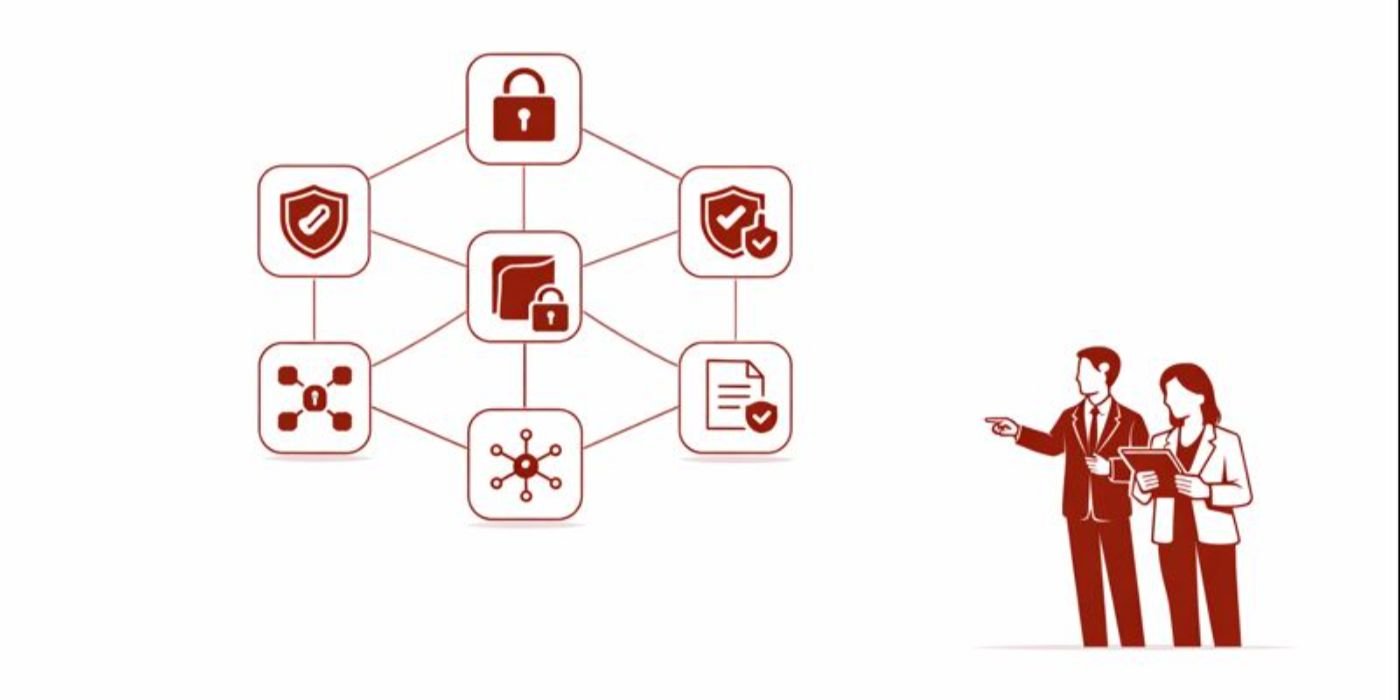
1) Why Blockchain Is Re entering Cybersecurity in 2026
For years, blockchain security talk was trapped in two extremes. Either it was “replace everything with a chain” or “it solves nothing.” 2026 is different because adoption is no longer driven by hype. It is driven by identity collapse, audit pressure, and machine to machine trust needs that older tooling struggles to handle at scale.
The biggest catalyst is the shift from malware to access. Attackers are winning by abusing “valid” identities, tokens, and sessions. That is why modern endpoint stacks are moving toward identity context, not just file telemetry. If you are watching this shift through the lens of endpoint evolution, anchor it with advanced endpoint security trends by 2027, then connect the detection side with next gen SIEM trends and the threat pressure with the state of ransomware analysis.
Blockchain helps when you need a shared truth that survives compromise of one system, one admin, or one cloud account. That matters because modern breaches increasingly include “clean up” steps where logs are altered and evidence is scattered. If that sounds familiar, your baseline should include how breaches move across industries in the 2025 data breach report and why governance pressure is rising in cybersecurity compliance trends.
The second catalyst is interoperability. Security programs now span SaaS, cloud workloads, contractors, and devices you do not fully manage. That is why experts predict more “shared security rails” and new standards. To see where that is headed, pair next generation cybersecurity standards with the compliance trajectory in future cybersecurity compliance by 2030, and the privacy pull in privacy regulations trends 2026–2030.
The third catalyst is automation. Teams cannot scale purely by hiring analysts. The industry is shifting to automated evidence, automated controls, and machine enforceable policy. You can see that macro shift in automation and the future workforce, and the supporting data on tooling adoption in AI in cybersecurity adoption.
Important reality check: blockchain is not a replacement for endpoint controls, IAM, SIEM, or IR. It is an integrity layer and trust coordination mechanism. If you treat it as “the tool,” you create a new attack surface. If you treat it as a verification layer, you gain a durable advantage.
2) Innovation #1: On Chain Identity and Attestation for Zero Trust That Actually Scales
Most orgs say they are “zero trust,” then quietly rely on long lived privileges, stale device inventories, and identity proofs that can be copied. In 2026, experts expect a surge in blockchain backed identity proofs because the threat is not theoretical. The threat is your access layer being treated like a vending machine.
What changes: identity becomes a set of verifiable claims. Instead of trusting a directory entry, systems verify cryptographic proof of role, device posture, and eligibility. That matters when you have contractors, vendors, and temporary access that breaks traditional IAM governance. This is also why “identity aware” security is accelerating in endpoint roadmaps, which you can map back to endpoint security advances by 2027 and how detection infrastructure is evolving in next gen SIEM trends.
Where it delivers immediate security wins
Contractor access that does not rot. Contractors often keep access longer than needed because revocation is messy. With verifiable credentials and revocation registries, offboarding becomes provable. That aligns with the risk pressure described in cybersecurity legislation impact on SMBs and compliance direction in future cybersecurity compliance.
Device trust without brittle MDM dependence. When device health is attested, access becomes conditional. That matters in hybrid environments where unmanaged endpoints sneak in. Pair this with IoT realities in IoT security breaches research and operational needs in cybersecurity in energy and utilities.
Reduced “valid login” attacks. Token theft thrives because tokens are accepted with minimal context. Attestation linked sessions increase friction for attackers without punishing users. Connect this to modern threat patterns in phishing trends and prevention and the broader access shift in future skills for cybersecurity professionals.
How to implement without creating a mess
Start with one trust boundary, not the whole company. A good boundary is privileged access workflows, contractor portals, or production deploy permissions. This also maps cleanly into the governance angle discussed in predicting future cybersecurity audit practices and standards evolution in next generation cybersecurity standards.
Use blockchain as proof storage and verification, not as your identity directory. Your IAM remains your system of record. The chain becomes your tamper resistant verification layer.
Define what “good” looks like using measurable KPIs. For identity, track time to revoke everywhere, privilege hours removed, and percentage of access decisions with cryptographic proof.
If you do not do this, you will keep fighting the same fires. Credential sprawl. Accounts you forgot. Tokens that work after offboarding. And incident timelines that become arguments, not facts. Those pain points are exactly why compliance and privacy pressures are climbing, as laid out in privacy regulations predictions and the future trajectory hinted by GDPR 2.0 evolution.
3) Innovation #2: Immutable Integrity for Logs, Evidence, and Supply Chain Provenance
The uncomfortable truth: many organizations still cannot prove what happened during a breach. They can describe it, but not prove it. Logs are scattered across tools. Evidence moves across people. And attackers increasingly attempt to destroy the trail. That is why experts expect “immutable anchors” to become a mainstream security practice.
To understand why this is accelerating, look at how attackers exploit organizational chaos in the state of ransomware analysis and how breach impact differs across sectors in the 2025 data breach report. When your timeline is weak, your containment is slower, your regulator risk rises, and your legal posture gets ugly.
The 2026 integrity model experts are pushing
Instead of storing everything on chain, you store hashes and receipts that prove integrity. This lets you keep data in your SIEM, data lake, or log platform, while still being able to prove it has not been altered.
High value targets to anchor first
Admin actions and privilege changes. These are the first places attackers try to hide. Anchor these to support governance outcomes aligned with cybersecurity audit practice predictions and NIST adoption research.
EDR and identity event summaries. Not every event, just the timeline critical digests. This pairs naturally with the endpoint future described in endpoint security advances by 2027 and the data correlation direction in next gen SIEM trends.
Software build and release provenance. Supply chain breaches do not require breaking in if the attacker can poison your build flow. This is why provenance and SBOM integrity are expected to mature fast. Pair that with macro tech pressure in quantum computing and cybersecurity research and adoption patterns in AI in cybersecurity data.
The pain points this solves in real life
“We cannot reconstruct the incident.” Immutable receipts reduce argument and speed up conclusions.
“Legal is nervous because evidence could be challenged.” Notarization strengthens chain of custody.
“Audits are expensive because evidence is manual.” Proof receipts make evidence collection repeatable, which aligns with where experts see audits going in future audit practices and compliance pressure in future compliance trends.
Deployment guidance for 2026
Keep it boring. That is how you win. Use a narrow scope, define what to anchor, define who can write receipts, and define how verification is performed during investigations. This also reduces the “blockchain fatigue” risk described in many industry adoption cycles such as blockchain in cybersecurity research and use cases, where over ambition kills projects.
4) Innovation #3: Smart Contract Security Controls That Enforce Policy, Not Just Document It
Most security policy is written like a wish. “Access must be approved.” “Changes must be reviewed.” “Exceptions must be time bound.” Then reality happens. People bypass controls because the process is slow, or because there is no automated enforcement. Experts predict that in 2026, smart contract like enforcement patterns will move from experiments to production in narrow, high value workflows.
This aligns with the broader automation push described in automation and the cybersecurity workforce and the operational tooling evolution shown in next gen SIEM. When teams are understaffed, you either automate or you accept slower containment.
Where smart contract enforcement actually works
Privileged access and production actions are the cleanest first use case because the risk is high and the workflow is discrete.
Time bound access escrow: access exists for a purpose and expires automatically. This directly reduces standing privilege, one of the most abused weaknesses in breaches described in the 2025 data breach report.
Multi approver controls for high impact actions: critical changes require multiple signatures, lowering single admin abuse risk.
Just in time secrets release: secrets are released only after proofs pass. This reduces the chance of credentials being pulled from pipelines and reused, a pattern often fueled by phishing campaigns in phishing trend analysis.
The big misconception to avoid
Smart contracts do not mean “put your whole security program on chain.” They mean make high risk approvals tamper evident and enforceable. Your system of record still lives in IAM, ticketing, or CI. The contract is the enforcement gate and the proof layer.
Practical 2026 rollout strategy
Pick one painful workflow where humans regularly break policy to get work done. The best candidates are emergency production access, deploy approvals, and vendor remote support.
Define the minimum conditions that must be true for access to be granted. Examples: device attestation valid, ticket exists, approver quorum achieved, expiry timestamp set.
Capture a proof receipt so you can audit decisions later. This dovetails with the audit evolution expected in future audit practice predictions and the standards direction in next generation cybersecurity standards.
If you do not move here, your policies remain “paper shields.” And when the next incident hits, leadership will ask the question that burns: “Why did we allow that access?” If you cannot answer with proof, you are exposed.

5) Innovation #4 and #5: Incentivized Threat Intelligence and Cross Organization Incident Trust
The last two innovations are about a reality most teams hate admitting. Your organization cannot see everything. Your vendors cannot see everything. Your ISAC cannot validate everything. In 2026, experts expect more security programs to adopt shared trust mechanisms, not because they love decentralization, but because they need higher quality signals and faster coordination.
To understand why, connect three threads:
Threat growth and operational burden in ransomware threat analysis
Coverage gaps and industry differences in the 2025 data breach report
The standards movement in next generation cybersecurity standards
Innovation #4: Reputation weighted, incentive driven threat intelligence markets
Threat intel sharing has a quality problem. Too many feeds, too many weak indicators, too little verification. Experts predict incentive mechanisms will mature so that high quality intel is rewarded and low quality noise is punished.
Security payoff: fewer false positives, faster prioritization, and better signal confidence. This maps cleanly to the “alert overload” pain that SIEM programs face, which is why next gen SIEM trends emphasize correlation, context, and automation.
How to adopt without drama:
Start by using reputation scoring to filter IOCs, not to auto block them.
Track measurable outcomes: reduced false positives, improved time to triage, improved rate of confirmed malicious indicators.
Tie intel adoption to your existing workflow so analysts do not feel like they are learning a new universe. This aligns with workforce scaling realities in automation and the workforce.
Innovation #5: Shared incident timelines and evidence handoffs across vendors
Cross vendor incidents are where security programs break. The cloud provider says one thing. The endpoint tool says another. The SaaS vendor cannot provide logs quickly. Everyone blames each other. The result is slower containment and weak post incident evidence.
Blockchain backed handoff receipts can create a shared timeline without requiring full data sharing. Think of it as “proof that an event occurred, that evidence existed, and that a handoff happened.” That supports faster coordination, stronger legal posture, and cleaner audits, all aligned with future audit practice predictions and future compliance trends.
Where it matters most:
Highly regulated industries where evidence disputes are costly. See industry pressure in healthcare compliance research and the global shift in privacy regulation trends.
Critical infrastructure, where outages and integrity failures have public impact. Pair this with the ecosystem in cybersecurity in energy and utilities.
Large vendor ecosystems where a single breach spans multiple providers.
The hard truth leaders need to hear
If your program cannot coordinate evidence fast, attackers win twice. First they steal access. Then they steal time. The 2026 winners will treat trust coordination as a capability, not as a hope.
6) FAQs: Blockchain in Cybersecurity (2026)
-
It stops real attacks when used for verification, not as a replacement for tools. The strongest impact is reducing identity abuse and shrinking evidence disputes. When access is gated by verifiable claims, stolen credentials lose power. When logs are anchored with integrity receipts, attackers cannot quietly rewrite history after compromise. This complements the direction of endpoint security advances by 2027 and detection evolution in next gen SIEM. The biggest mistake is trying to “put everything on chain,” which creates complexity instead of reducing risk.
-
Start with one high value workflow where trust breaks today: contractor access, privileged access, or audit evidence integrity. Contractor access is ideal because offboarding gaps are common and risky, especially under rising requirements highlighted in cybersecurity legislation impacts and future compliance trends. Privileged access is next because it reduces standing privilege hours, which lowers breach blast radius. Evidence anchoring is powerful if your SOC struggles with timelines, a pain amplified by incidents described in the state of ransomware.
-
It can, if you introduce it as a new platform without governance. The attack surface comes from key management mistakes, poor integration boundaries, and unclear ownership. The safest model is “minimal chain, maximal proofs.” Store hashes and verification receipts, keep sensitive data off chain, and enforce strong key controls. Treat it like a security control, not a tech experiment. This is consistent with how experts frame future standards in next generation cybersecurity standards and how audits are evolving toward evidence quality in future audit practices.
-
They speed operations when they automate approvals that people already do manually. The key is to encode only the minimum enforcement rules: time bound access, multi approver thresholds, and proof receipts for high impact actions. This reduces bottlenecks because approvals become structured and auditable, rather than “someone said yes in chat.” It also improves incident response because decisions are traceable, which supports the containment and governance direction in next gen SIEM and the workforce scaling reality in automation and the workforce. Done right, it reduces chaos instead of adding friction.
-
Use metrics tied to existing pain. For identity, track time to revoke access across systems, reduction in standing privilege hours, and reduction in “valid login” abuse. For integrity, track evidence completeness during investigations, number of disputed events, and time to reconstruct incident timelines. For supply chain provenance, track unsigned artifact rate and SBOM freshness. These metrics map to executive pain points that show up after breaches, as detailed in the 2025 data breach report and ransomware response failures in the state of ransomware. ROI becomes obvious when response time drops and audit cost shrinks.
-
Blockchain helps AI security by providing verifiable lineage, integrity receipts, and provenance for datasets and models. That reduces poisoning risk, especially as AI adoption grows, reflected in AI in cybersecurity adoption. On quantum, the bigger issue is crypto agility. Blockchain systems must be designed to swap algorithms and protect keys long term, which is why quantum risk planning matters, as explored in quantum computing and cybersecurity. The correct 2026 mindset is not fear. It is readiness: flexible cryptography, strong key governance, and verifiable audit trails.
-
The biggest mistakes are over scope, unclear ownership, and treating blockchain as a system of record. Over scope kills timelines and trust. Ownership confusion kills maintenance. And using blockchain as a database creates privacy and performance problems. The winning approach is narrow first use cases tied to strong governance and audit outcomes. Align your rollout with where audits and standards are heading in future audit practice predictions and next generation cybersecurity standards. If you cannot explain the “proof” value in one sentence, you are probably building the wrong thing.
