
Detailed Guide to Becoming a Cybersecurity Auditor
Becoming a cybersecurity auditor is one of the fastest ways to earn credibility in security without being “the person who breaks things.” But it’s also one of the easiest roles to do badly—because weak audits create a false sense of safety, and false safety is how breaches survive change freezes, budget cuts, and executive optimism. This guide is a field manual: what the job really is, how to build the skill stack, how to run audits that stand up under scrutiny, and how to turn your work into promotions—not paperwork. If you want a career built on proof, not opinions, this is your lane.
1) What a Cybersecurity Auditor Actually Does (and Why Companies Pay for It)
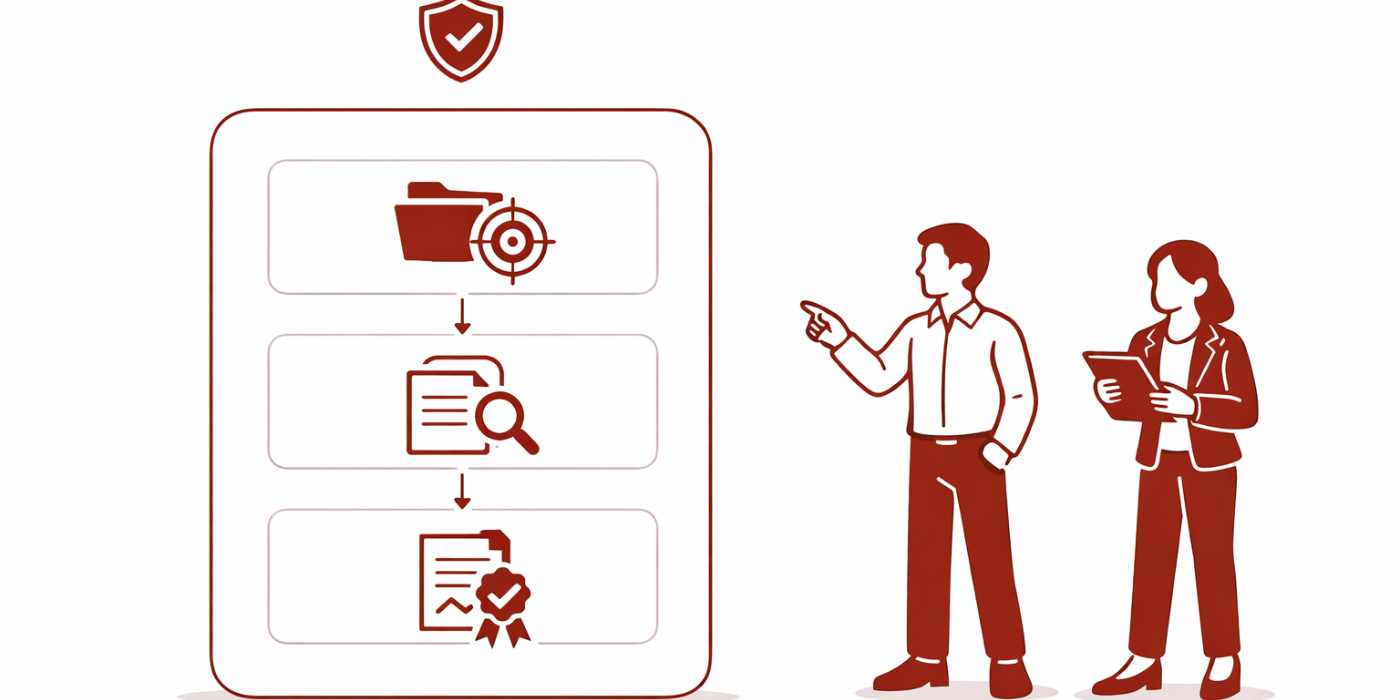
A cybersecurity auditor is a risk translator. You turn “security noise” into defensible statements about whether controls work, where they fail, and what it costs to keep failing. Done well, you’re not a checklist person—you’re the person who prevents leadership from betting the business on assumptions.
The real deliverable: decision-grade assurance
Most organizations drown in tools but starve for assurance. They have logs, dashboards, and a security information and event management (SIEM) but can’t answer basic governance questions like: Are privileged accounts controlled? Can we detect credential replay? Can we recover from ransomware within RTO/RPO? That gap is exactly what audits close.
What you audit in real life (beyond “policies exist”)
You audit evidence flows, not policy PDFs. You’re evaluating whether controls survive reality: contractor access, rushed releases, vendor SaaS sprawl, and “temporary” admin rights that never get removed. Your work often intersects with:
Identity and access proof (MFA, conditional access, session risk, token hygiene)
Detection mechanics (alert logic, coverage, tuning, escalation pathways) using tools like intrusion detection systems
Crypto choices (key mgmt, certificate lifecycles, encryption at rest/in transit) tied to encryption standards and PKI components
Network control posture (segmentation, firewall rules, VPN risks) with firewall technologies and VPN security limits
Resilience readiness (backup immutability, incident playbooks, restore validation) anchored in ransomware detection/response/recovery
Why this role is exploding (and why it stays valuable through 2030)
Security is moving toward evidence-based governance: regulators, insurers, boards, and customers don’t want “we’re secure,” they want “prove it.” That trend is accelerating with future compliance shifts like predicting cybersecurity audit practice changes and broader cybersecurity compliance regulatory trends. If you can produce audit artifacts that survive pushback, you’ll be employable in any industry.
| Control Area | What “Good” Looks Like | Evidence to Collect | How You Test It | Common Failure Pattern | High-ROI Fix |
|---|---|---|---|---|---|
| Identity MFA enforcement | MFA required for all interactive logins; exceptions documented | Conditional access policy export, exception list, auth logs | Sample 30 users across roles; verify MFA challenged & successful | “Break-glass” accounts used daily | Separate break-glass; alert on any non-emergency usage |
| Identity Privileged access | Admin roles time-bound; approvals tracked | Role assignments, JIT/JEA config, ticket approvals | Trace 20 privilege grants to approvals; validate expiry | Temporary admins never removed | Auto-expire privileged roles; weekly review cadence |
| Identity OAuth consent | Apps restricted; risky scopes reviewed | App consent logs, tenant app list, scope inventory | Spot-check high-scope apps; map scopes to business need | Shadow apps with mailbox/drive access | Admin-only consent + scope allowlist |
| Endpoint EDR coverage | All endpoints enrolled; drift monitored | EDR inventory, unenrolled list, last-seen timestamps | Reconcile device list vs CMDB/MDM; investigate gaps | Servers excluded “for performance” | Tiered policy; exclusions require risk sign-off |
| Endpoint Patching SLA | Critical patches within SLA; exceptions tracked | Patch reports, exception tickets, vuln scan deltas | Trend last 90 days; verify exceptions expire | Exception sprawl becomes permanent | Exception TTL + exec dashboard of overdue risk |
| Network Firewall rule hygiene | Rules are least-privilege; reviewed regularly | Rulebase export, change tickets, review attestations | Sample “ANY/ANY” or wide CIDR rules; trace justification | Rules added during incidents, never removed | Quarterly rule recert + auto-detect risky patterns |
| Network Remote access | VPN access scoped; device posture checked | VPN policy, posture checks, access logs | Test access from non-compliant device; verify block | Split-tunnel + unmanaged endpoints | Require managed device + posture for sensitive apps |
| Cloud IAM key hygiene | No long-lived keys; rotation enforced | Key inventory, last-used, rotation policy | Identify keys unused >30 days; confirm removal process | Keys shared in scripts/repos | Move to short-lived creds; secret scanning + vault |
| Cloud Public exposure | Internet-facing assets intentional & monitored | Asset inventory, WAF config, exposure scans | Validate exposure approvals; check alerting for new exposure | Accidental open storage buckets | Policy-as-code guardrails + auto-remediation |
| Logging Centralized logs | Critical sources onboarded; retention meets needs | SIEM source list, retention settings, ingestion metrics | Gap analysis: identity, endpoint, cloud, network | Logging “on” but not ingesting | Alert on ingestion drop; define must-have sources |
| Detection Use-case quality | Alerts map to threats; tuned for actionability | Rule list, false-positive stats, runbooks | Review top 20 alerts; verify triage steps & owner | Noise causes alert fatigue | Kill noisy rules; create high-signal detections |
| IR Ransomware readiness | Backups immutable; restore tested | Backup configs, restore tests, RTO/RPO docs | Witness a restore drill; verify time to recover | Backups exist but restores fail | Monthly restore validation + isolation of backups |
| IR Playbooks | Roles clear; escalation fast | Playbooks, on-call rota, postmortems | Tabletop exercise evidence; validate contact paths | “We’ll call someone” approach | Define decision owners + comms templates |
| Data Classification | Data labeled; handling rules enforced | Classification policy, DLP rules, sample labels | Trace 10 datasets to labels and controls | Everything labeled “internal” | Minimum viable labeling + enforce on crown jewels |
| Crypto TLS & cert lifecycle | Certs rotated; weak ciphers blocked | Cert inventory, expiry alerts, TLS configs | Scan external endpoints; review weak protocols | Expired cert outages | Central cert mgmt + auto-renew + expiry paging |
| AppSec SAST/DAST in CI | Scanning gates risks; exceptions controlled | Pipeline configs, scan reports, exception approvals | Trace 10 merges; verify scans ran and issues tracked | Scans ignored to hit deadlines | Risk-based gating + SLA for critical findings |
| AppSec Dependency security | SBOM + vuln remediation process | SBOM, dependency list, remediation tickets | Sample critical CVEs; track to patch/mitigation | Poisoned dependencies unnoticed | Automated dependency updates + block known-bad |
| Vendor Third-party access | Vendor access limited; monitored; time-bound | Vendor list, access reviews, monitoring logs | Check 10 vendors; verify offboarding completeness | Vendors keep access post-project | Automate vendor expiry + quarterly access recert |
| Governance Risk register | Risks owned; tracked; linked to controls | Risk register, KRIs, treatment plans | Pick 5 top risks; validate progress evidence | Risk doc exists, never updated | Monthly risk review + metrics dashboard |
| Governance Policy-to-control mapping | Policies map to testable controls | Control matrix, test procedures, ownership list | Check 15 controls: are they testable and evidenced? | Policies written for audits, not operations | Rewrite as measurable controls + evidence sources |
| Monitoring Admin activity logging | Admin actions logged; risky actions alerted | Audit logs, alert rules, escalation runbooks | Review last 30 days of admin actions; check investigations | No one watches admin logs | High-risk action alerts (MFA changes, role grants) |
| Email Phishing resilience | DMARC/SPF/DKIM aligned; training measured | Email security configs, phish test metrics | Validate policy alignment; review click-rate trends | “Training done” but no measurement | Role-based training + targeted remediation |
| SOC Triage consistency | Runbooks used; evidence preserved | Tickets, runbooks, analyst notes | Sample 20 incidents; validate steps executed | Inconsistent notes = weak defense | Standard evidence checklist + templates |
| BCP Critical service mapping | Crown jewels defined; dependencies known | Service map, dependency graph, BIA docs | Pick 3 critical services; validate dependency accuracy | Unknown dependencies kill recovery | Maintain service catalog + ownership assignments |
| Metrics KRIs/KPIs | Metrics drive action; not vanity | Dashboards, definitions, decision logs | Check metric → action linkage for top 10 metrics | Metrics exist, nobody uses them | Executive-ready metrics tied to risk and cost |
| Change Emergency changes | Emergency changes reviewed post-fact | Change logs, approvals, post-change reviews | Sample emergency changes; verify retrospective review | Emergency becomes normal | Cap emergency rate + mandate after-action reviews |
| Training Role-based competency | Privileged roles trained; skills measured | Training logs, assessments, role mapping | Check admins/devs have required training evidence | Generic training doesn’t change behavior | Competency-based assessments per role |
2) The Skill Stack You Need (and How to Build It Without Wasting Years)
If you try to become an auditor by “learning everything,” you’ll stall. Auditing is about targeted depth: the ability to test controls, evaluate evidence quality, and explain risk clearly.
Core technical domains you must be literate in (not necessarily expert)
You need enough technical understanding to detect “fake compliance”—controls that look good on paper but don’t work. Prioritize:
Identity & auth flows (session tokens, conditional access, OAuth scope abuse) — this pairs well with future threats covered in AI-powered cyberattacks and deepfake cybersecurity threats because social engineering increasingly targets approvals.
Logging/detection fundamentals via SIEM overview, plus how detections rely on sources staying onboarded and clean.
Network control basics: firewalls, IDS, DoS mitigation, and botnet disruption.
Cloud posture and misconfig risk, especially if you want to audit modern orgs—see cloud security engineer career guide and future of cloud security trends.
Cryptography basics: PKI and encryption standards so you can audit key management instead of rubber-stamping “AES is used.”
The overlooked skills that separate average auditors from elite ones
Most auditors fail because they can’t handle ambiguity, politics, and evidence manipulation. You need:
Evidence skepticism: can you tell if evidence is complete, current, and representative?
Sampling discipline: can you pick samples that expose failures rather than confirm comfort?
Interviewing ability: can you ask questions that reveal reality without triggering defensiveness?
Writing clarity: can you describe complex risk in language a CFO can act on?
The fastest way to build credibility: audit-adjacent roles
If you’re early-career, the shortest path is to start in operational security where evidence exists:
SOC work teaches triage, evidence preservation, and control gaps—see SOC analyst guide and SOC analyst to SOC manager.
Ethical hacking builds threat intuition—but you must translate findings into control improvements (not just exploits): ethical hacker roadmap and CEH pathway.
Compliance roles teach governance, but you must stay technical enough to avoid paper-only assurance—align this with cybersecurity compliance officer roadmap and cybersecurity auditor career guide.
3) A Step-by-Step Career Roadmap (Entry Level → Senior Auditor → Lead/Manager)
Step 1: Choose your audit “arena”
Auditing looks different across internal audit, third-party assurance, and consulting. Pick based on what you want to optimize:
Internal audit / GRC: deep knowledge of one environment; strong stakeholder influence
External audits (SOC 2/ISO): process rigor; strong documentation standards
Consulting: variety and speed; rapid skill compounding, but higher burnout risk
If your long-term goal is leadership, learn how audit links to business strategy—this pairs naturally with leadership roadmaps like CISO pathway and cybersecurity manager pathway.
Step 2: Build a portfolio of “audit proofs,” not certificates
Certs help, but hiring managers want evidence you can:
define scope, 2) test controls, 3) write findings, 4) drive remediation.
Create 2–3 portfolio artifacts (sanitized):
A mini control matrix (control → evidence → test steps → pass/fail criteria)
A sample audit program for identity or cloud exposure
A one-page executive report with prioritized findings and business impact
Use realistic threat angles pulled from forward-looking resources like top 10 cybersecurity threats predicted by 2030 and future cybersecurity standards predictions. That shows you audit against tomorrow’s risk, not yesterday’s templates.
Step 3: Learn to “audit the pathways attackers actually use”
Strong auditors map controls to attack paths:
Credential theft → session replay → privilege escalation
Vendor access → cloud console abuse → data exfiltration
CI/CD compromise → poisoned dependency → production takeover
Tie your learning to modern risk areas like supply chain compromise threats (AI accelerates recon and exploitation) and cloud drift covered in future of cloud security.
Step 4: Promotions come from remediation impact, not “finding count”
Many auditors lose credibility by flooding teams with low-quality findings. Instead:
Prioritize a few high-impact findings (high likelihood + high business impact)
Provide fix paths and verification tests
Track remediation and prove risk reduction over time
This is how you become a lead: you don’t just identify problems—you close them.
Quick Poll: Which Audit Failure Would Hurt You Most Next Quarter?
Pick the one that would create the biggest “we thought we had this covered” moment. Clarity beats perfection.
Use your choice to decide what to audit first—and what evidence you need to demand.
4) How to Run a Cybersecurity Audit That Actually Holds Up Under Pressure
This is where most people fail. They “audit” by collecting screenshots and policy statements. A real audit is a chain of proof that survives questions like: How do you know? How often does it fail? Who owns it? What happens when it fails?
Phase A: Scope design (the difference between useful and useless audits)
A strong scope is:
narrow enough to test properly
important enough to reduce real risk
aligned to business outcomes
Use trigger-based scope selection:
A near-miss incident? Audit the control family that should have stopped it.
A new vendor/merge/new product? Audit third-party access and change controls.
A cloud migration? Audit IAM, exposure, and pipeline controls (reference cloud security engineer guide to understand the architecture realities you’ll face).
Phase B: Build an audit program that can be executed by someone else
This is the “professional auditor” bar: your test steps should be so clear that another auditor could replicate them and get the same conclusion. Every control needs:
Control statement (what must be true)
Evidence sources (systems, logs, tickets, configs)
Test procedure (how to validate)
Pass/fail criteria (objective thresholds)
Sampling method (how you choose examples)
Phase C: Evidence quality rules (avoid the top credibility killers)
Bad audits rely on:
screenshots with no timestamps
exports with no source-of-truth confirmation
hand-written attestations with no independent verification
Strong audits demand:
configuration exports (not UI photos)
log corroboration (event records that match claims)
ticket traceability (approval chain + dates + owners)
For detection controls, you should validate the operational chain using SIEM fundamentals: source onboarded → event normalized → detection rule → alert → triage ticket → resolution steps → lessons learned.
Phase D: Sampling that finds truth, not comfort
If you sample “easy” items, you’ll miss the failure patterns. Use risk-based sampling:
choose accounts with high privilege or unusual access
choose systems with high exposure (internet-facing, sensitive data)
choose changes made during high-pressure windows (incidents, releases)
Phase E: Write findings as “risk stories,” not technical trivia
A decision-grade finding includes:
what failed (control)
where it failed (system/team/process)
how you know (evidence)
what it enables (attack path)
why leadership should care (impact)
what to do next (remediation plan + verification)
When your findings tie to modern threat trajectories—like ransomware evolution predictions or future cybersecurity audit practices—you show you’re not just complying, you’re protecting.

5) Certifications, Tools, and “Career Moats” That Make You Hard to Replace
Certifications: pick based on the kind of auditor you want to be
If you want GRC/internal audit credibility: emphasize audit methodology + control frameworks.
If you want technical audit credibility: pair audit certs with technical depth (cloud, detection, incident response).
Whatever you choose, don’t become a cert collector. Tie every certification study hour to an audit artifact you can produce.
Tools and artifacts auditors should master
You don’t need every tool; you need “audit leverage”:
Control matrices, testing scripts/checklists, evidence catalogs
Log query basics (enough to confirm claims, detect gaps)
Cloud policy reviews (IAM, exposure, secrets handling)
Network evidence (firewall exports, segmentation diagrams)
Ground your technical audit evidence in core knowledge areas like PKI, encryption standards, and IDS deployment so you can audit reality—not buzzwords.
The career moat: become the person who proves security outcomes
Your moat is the ability to connect:
controls → evidence → test results → business decisions
When the board asks “are we safe from X?”, most teams answer with opinions. You answer with proof—and that proof drives funding, priorities, and confidence. That’s why auditors move into leadership roles like director of cybersecurity and eventually CISO.
6) FAQs
-
A penetration tester proves a weakness can be exploited; a cybersecurity auditor proves controls reliably prevent/detect/respond over time. Pentests are snapshots; audits are assurance systems. Many of the best auditors have attacker literacy from paths like ethical hacking, but their job is to turn risk into repeatable control outcomes.
-
You must be technical enough to detect “paper security.” You don’t need to code malware, but you do need to understand identity flows, logs, and common control failures—especially around detection, cloud drift, and ransomware resilience (see ransomware response/recovery and cloud security guide).
-
Start where evidence is produced: SOC, IT operations, cloud operations, or junior GRC with technical mentorship. SOC is especially strong because you learn evidence discipline and incident narratives—see the SOC analyst guide and growth path to SOC manager.
-
Bring solutions. Pair findings with remediation steps, verification tests, and priority logic. Frame findings as “risk reduction opportunities,” not blame. You become trusted when teams realize your audits help them win budget, reduce outages, and prevent career-ending incidents.
-
Start with identity assurance + logging integrity + cloud exposure guardrails. Identity is the front door, logs are how you prove anything, and cloud drift is where “temporary” becomes breach. Tie your approach to modern trajectories like future cloud security trends and future audit practice innovations.
-
Bring a small portfolio: a control-evidence map, a sample audit program, and an executive-ready one-page findings report. Walk through your sampling logic and how you validate evidence quality. If you can explain how your audit would catch risks described in 2030 threat predictions, you’ll sound senior even early-career.
