
Best Cybersecurity Certifications After Security+: Reddit Career Outcomes for CySA+, CCNA, BTL1, CISSP & Cloud Certs
Passing Security+ creates a useful baseline, then the certification path becomes much less obvious. CySA+ deepens defensive analysis, CCNA fixes networking gaps, BTL1 develops practical blue-team investigation skills, CISSP targets experienced professionals, and cloud certifications can redirect a career toward infrastructure security. Candidates already struggling with cybersecurity job-market saturation, entry barriers without IT experience, or Security+ employment outcomes need to choose the next credential according to the weakness preventing interviews, rather than collecting another acronym.
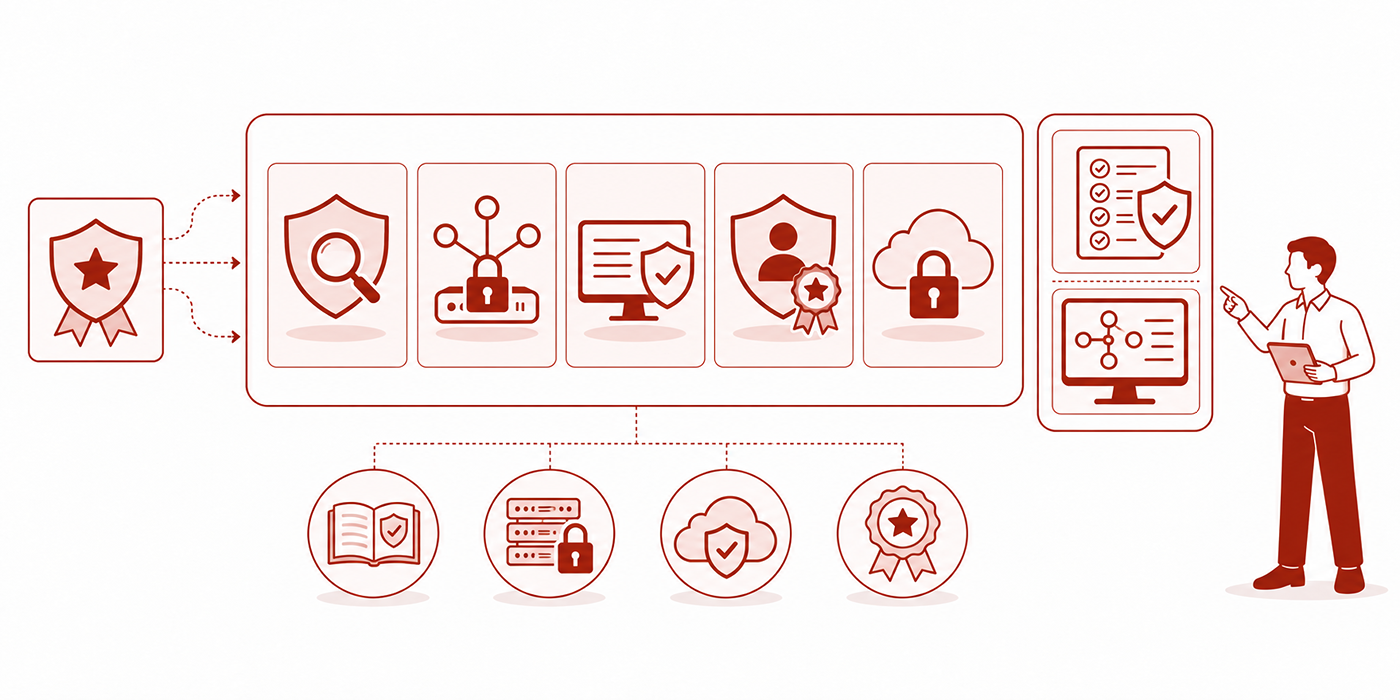
1. What Should You Get After Security+? Start With the Career Problem You Need to Solve
The value of your next certification depends on the gap currently limiting you. Someone who understands security terminology yet struggles to explain TCP sessions, routing, DNS, VLANs, and packet flow has a networking problem. Someone who understands networks but freezes when asked to investigate suspicious authentication events has an analyst-skills problem. Someone with years of Azure administration who wants cloud security has a specialization problem. Someone with six years of security experience who keeps encountering senior postings asking for CISSP has a market-signaling problem.
That distinction is critical in a hiring environment where cybersecurity graduates still struggle to get jobs, candidates debate certifications versus hands-on labs, beginners build cybersecurity résumés without experience, and applicants compete for SOC positions with no prior security role. A second certification has the highest return when it repairs a weakness employers can actually detect.
Reddit discussions repeatedly expose this problem. In a 2026 career-advice thread, a graduate with CCNA-level networking knowledge, several security credentials, Linux, programming, and SOC training was told that his missing component was evidence of how he reasons through an investigation rather than another stack of certifications. Another 2026 candidate with several years of help-desk experience asked whether to do CySA+ and BTL1 after Security+; responders emphasized practical labs and existing work experience before further certificate accumulation. These are individual experiences rather than controlled hiring studies, yet they align with the broader pattern behind what SOC hiring managers want and why home-lab evidence matters.
For a Security+ holder, the five paths in this article solve different problems:
CySA+ develops analyst-oriented knowledge around vulnerability management, security operations, incident response, and defensive analysis. It fits candidates targeting SOC and security analyst work.
CCNA develops networking depth. Cisco's current 200-301 CCNA covers network fundamentals, network access, IP connectivity, IP services, security fundamentals, automation, and programmability. That foundation supports SOC analysis, cloud security, firewall work, incident response, and eventually security architecture.
BTL1 is deliberately hands-on. Its current curriculum covers phishing analysis, threat intelligence, digital forensics, SIEM, incident response, Splunk, Wireshark, PowerShell, Sigma, Windows artifacts, and other defensive tools. The provider describes it as targeted primarily toward people with 0–2 years of experience, and its package includes a 24-hour practical incident-response exam.
CISSP provides a different kind of leverage. It targets experienced professionals across eight security domains and has formal work-experience requirements. It becomes especially relevant when progressing toward cybersecurity program management, security leadership, policy leadership, or senior analyst-to-VP progression.
Cloud certifications make sense when AWS, Azure, identity, infrastructure, or DevSecOps is already the direction of travel. They become substantially more useful when paired with actual cloud administration, IaC, networking, logging, and digital identity expertise.
The correct question after Security+ is therefore: Which missing capability is currently preventing you from performing the job you want?
| Your Current Situation | Strong Next Move | Primary Gap It Addresses | What to Build Alongside It |
|---|---|---|---|
| Security+ with zero IT experience | CCNA or practical IT experience | Infrastructure fundamentals | Networking lab + support experience |
| Security+ + help desk experience | CySA+ or BTL1 | Security operations depth | SIEM investigations |
| Security+ + weak networking | CCNA | TCP/IP, routing, switching | Packet captures and network labs |
| Security+ + Network+ | CySA+ or BTL1 | Defensive specialization | End-to-end incident cases |
| Targeting Tier 1 SOC | BTL1 or CySA+ | Analyst readiness | KQL/SPL + investigation write-ups |
| Targeting SOC in Microsoft environment | CySA+ + Microsoft security practice | Operations + vendor tooling | Sentinel/Defender labs |
| Knows theory, weak in investigations | BTL1 | Practical case handling | Portfolio reports |
| Strong labs, weak résumé recognition | CySA+ where job listings request it | HR screening | Quantified project evidence |
| Networking technician moving into cyber | CySA+ | Security analysis | SIEM + EDR practice |
| Help desk technician wanting network/security options | CCNA | Career breadth | Routing, switching, firewall labs |
| Junior sysadmin | CCNA or cloud administrator cert | Infrastructure depth | Identity and logging projects |
| Azure administrator | SC-500 pathway | Cloud security specialization | Entra, Key Vault, Defender, Policy |
| AWS administrator | AWS architecture → Security Specialty | AWS security depth | IAM, logging, KMS, IaC |
| Cloud beginner with Security+ | Cloud administration/architecture first | Platform understanding | Deploy real cloud workloads |
| Existing SOC analyst | Cloud, CySA+, BTL1 depending gaps | Specialization | Detection engineering |
| SOC analyst seeking Tier 2 | BTL1/CySA+ + deeper labs | Investigation depth | Threat hunts and incident cases |
| SOC analyst seeking cloud security | Platform cloud cert | Infrastructure context | Cloud-native detections |
| SOC analyst seeking detection engineering | CySA+ plus scripting | Detection methodology | Sigma, KQL, SPL, Python |
| Aspiring pentester | CCNA foundation + offensive practice | Network understanding | AD/web exploitation labs |
| Aspiring cloud security engineer | AWS/Azure role-aligned cert | Cloud architecture | Terraform + IAM + logging |
| Aspiring IAM specialist | Cloud/identity certification | Identity systems | SSO, RBAC, conditional access |
| Aspiring GRC professional | Role-specific GRC learning | Risk/control knowledge | Framework mapping projects |
| 3–4 years cybersecurity experience | Prepare toward CISSP eligibility | Broad senior-level framework | Ownership across multiple domains |
| 5+ qualifying years across CISSP domains | CISSP | Senior-market signal | Architecture/leadership evidence |
| Security engineer targeting architecture | CISSP + cloud depth | Breadth and design thinking | Architecture decisions |
| Experienced GRC specialist | CISSP if role market values it | Cross-domain credibility | Risk ownership |
| Already has several entry-level certs | Stop stacking temporarily | Experience deficit | Projects, applications, IT work |
| Getting interviews but failing technical rounds | Hands-on training | Execution | Mock investigations |
| Getting zero interviews | Audit résumé + job requirements first | Market fit | Role-matched proof |
| Unsure which cybersecurity specialty fits | Practical labs before another expensive cert | Career clarity | Test SOC, cloud, GRC and offensive tasks |
2. CySA+ vs CCNA vs BTL1: Three Very Different Returns After Security+
CySA+, CCNA, and BTL1 are often placed in the same “what comes after Security+?” discussion, even though they solve different career problems.
CySA+: strongest when you already know your destination is defensive security
CySA+ fits candidates aiming at analyst work. Its greatest value comes from giving structure to areas Security+ introduces at a broader level: security operations, vulnerability analysis, incident response, threat-related reasoning, and interpreting security information.
For someone targeting SOC analyst positions without experience, studying CySA+ becomes more valuable when every objective turns into a lab. Read about suspicious PowerShell activity, then investigate it. Learn vulnerability prioritization, then write a remediation decision. Study logs, then build a query. Learn incident response, then document an incident timeline. That pairing supports the certification-versus-lab balance, improves resume evidence recruiters can verify, and directly supports the capabilities described in SOC hiring expectations.
A 2026 Reddit certification-planning discussion captured a useful timing insight: responders advised against stacking CySA+ immediately behind Security+ without adding log-analysis practice or internship experience between them. Another March 2026 thread involved a SOC analyst who had Security+, CySA+, practical security training, and 18 months of SOC experience; after promotion to Tier 2, commenters pushed toward practical blue-team depth and more specialized work. The pattern is valuable: CySA+ becomes stronger when real work gives the concepts somewhere to attach.
CCNA: strongest when networking is quietly sabotaging your security progress
A surprisingly large number of aspiring security professionals know malware terminology better than they understand ARP, DHCP, DNS, subnets, routing tables, NAT, VLANs, and the actual path a packet takes.
That weakness becomes painful in interviews.
How can you analyze lateral movement if network segmentation is fuzzy? How can you interpret firewall logs if ports, states, routes, and private addressing remain confusing? How can you progress toward penetration testing, cloud security, security engineering, or security architecture without understanding how systems communicate?
Cisco's current CCNA tests network fundamentals, network access, IP connectivity, IP services, security fundamentals, and automation/programming concepts. For Security+ holders with shallow networking knowledge, this can create broader career leverage than another security-specific exam.
Reddit discussions support that use case. A 2026 IT professional with A+, Network+, Security+, several years of Azure experience, and a new support-engineer role considered CCNA, CySA+, or Azure certification. Their reasoning around CCNA centered on becoming more versatile through stronger networking fundamentals. A separate discussion about CCNA's 2026 value for security careers similarly focused on networking depth as the missing foundation.
The return becomes especially useful for candidates trying to solve the no-IT-experience barrier, broaden opportunities during cybersecurity market saturation, improve their home lab, and avoid depending entirely on junior SOC openings.
BTL1: strongest when theory exceeds your ability to investigate
The current BTL1 curriculum is unusually easy to understand from a career perspective: it is built around defensive execution. The provider lists practical work across SIEM, phishing, digital forensics, threat intelligence, incident response, Splunk, Wireshark, PowerShell, Sigma, Volatility, Windows artifacts, and other tools. The package currently contains browser labs and a 24-hour practical incident-response exam.
That makes BTL1 particularly useful for a Security+ holder who understands terminology yet lacks stories for interviews.
Instead of saying “I understand incident response,” you can discuss how you investigated an event.
Instead of writing “SIEM knowledge,” you can explain the evidence you queried.
Instead of listing “digital forensics,” you can describe artifacts examined and why they mattered.
A recent August 2026 Reddit discussion about BTL1 after Security+ framed precisely this issue. Commenters emphasized choosing practical training according to the investigations and tools it forces you to use. Another June 2026 discussion summarized the market tradeoff: Security+ can help with recognizable screening, while practical blue-team learning develops operational capability.
That distinction matters when building a SOC portfolio, fixing a weak entry-level cybersecurity résumé, dealing with graduate rejection patterns, and preparing for real SOC interviews.
3. CISSP After Security+: Powerful at the Right Career Stage, Premature for Many Beginners
CISSP belongs in a different category from CySA+, CCNA, and BTL1.
ISC2 currently requires five years of cumulative full-time experience across at least two of the eight CISSP domains. A qualifying degree or approved credential can satisfy up to one year of that requirement. ISC2's April 2026 waiver list includes Security+, CySA+, and CCNA among credentials that can provide the one-year waiver. Candidates who pass the exam before completing the required experience can hold the Associate of ISC2 designation while accumulating the remaining experience.
That means CISSP becomes particularly relevant for someone moving toward cybersecurity leadership, cybersecurity program management, security architecture, cybersecurity risk management, or policy leadership. Its scope aligns more naturally with experienced professionals making broader technical and business decisions.
Reddit career outcomes around CISSP are mixed in a useful way.
An August 2026 discussion with hundreds of votes asked experienced professionals what CISSP actually changed. Some commenters described it primarily as an HR gate at certain career stages and emphasized that accumulated experience becomes increasingly important at senior levels. A July 2026 thread similarly contained people reporting limited job-search impact alongside others who considered the credential valuable for roles where employers preferred or required it.
Another 2026 Reddit case shows why context matters more than the letters themselves. One professional who had passed CISSP in 2025 later secured a cybersecurity systems architect position at roughly $124,800 annualized. Their path included military signal work, clearance, graduate education, configuration management, security-process exposure, and years of professional development. They explicitly described the transition as the result of years of preparation rather than an instant post-CISSP transformation.
That is the correct way to interpret the credential.
For a professional already accumulating responsibility in GRC, privacy, security auditing, policy analysis, engineering, architecture, or management, CISSP can strengthen an already credible profile.
For a Security+ holder who still cannot explain DNS, investigate authentication logs, demonstrate Linux competence, or describe an incident, immediate CISSP study leaves the underlying employability problem intact. Time spent building verifiable project evidence, solving the IT-experience gap, learning through hands-on labs, and understanding what hiring managers actually test usually attacks the immediate problem more directly.
4. Cloud Certifications After Security+: AWS, Azure and the Experience Trap
Cloud security attracts Security+ holders because it appears to offer access to higher-value technical work. The path becomes far more credible when the candidate understands cloud infrastructure before attempting to specialize in securing it.
AWS's own current guidance illustrates this clearly. AWS Certified Solutions Architect – Associate is positioned around designing AWS solutions and is presented as a starting point for candidates with cloud or strong on-premises IT experience. AWS says the recommended background is roughly one year of hands-on experience designing cloud solutions.
AWS Certified Security – Specialty sits much further up the ladder. AWS describes it as validating advanced skills in securing AWS workloads and architectures and states that the intended audience includes experienced individuals with substantial IT-security experience and hands-on AWS security exposure. The current SCS-C03 content covers detection, incident response, infrastructure security, IAM, data protection, and security foundations/governance.
That creates a sensible sequence for many candidates:
Security+ → cloud fundamentals/administration → architecture competence → real projects → cloud-security specialization.
A candidate who jumps from Security+ directly into advanced AWS security theory without operating workloads may recognize service names yet struggle with real architecture decisions.
Azure has also changed significantly in 2026. Microsoft's Azure Security Engineer Associate certification tied to AZ-500 retired on August 31, 2026. Microsoft replaced it with the Cloud and AI Security Engineer Associate, tied to SC-500. The current certification covers identity/access/governance, storage, databases, networking, compute, security posture, and security for AI workloads. Microsoft specifically says candidates should have practical experience administering Azure and hybrid environments, including compute, networking, and storage.
This matters because outdated certification roadmaps can send learners toward retired exams.
Cloud candidates should connect certifications to projects that can strengthen a cybersecurity résumé, complement a serious home lab, support progression into cybersecurity automation engineering, and develop knowledge relevant to digital identity careers.
A worthwhile cloud-security portfolio might include:
building a segmented AWS or Azure environment;
designing least-privilege IAM;
enforcing MFA and role separation;
centralizing audit logs;
encrypting storage with managed keys;
configuring secrets correctly;
deploying a deliberately vulnerable resource;
detecting the configuration problem;
documenting remediation;
rebuilding the environment using Terraform;
creating an alert from cloud telemetry;
and explaining the security tradeoffs.
Those deliverables create far more interview material than an exam score by itself.
They also give candidates options beyond SOC. Strong cloud knowledge can support AI security careers, security automation, risk management, privacy work, security architecture, and eventually cybersecurity product management.
The same logic applies to ISC2's CCSP for experienced cloud-security professionals. ISC2 currently requires five years of cumulative IT experience, including three years in cybersecurity and one year in one or more CCSP domains, subject to permitted substitutions and the Associate pathway. Candidates at an early Security+ stage should therefore distinguish cloud-learning credentials from experienced-professional cloud-security credentials.

5. The Best Certification Sequence by Career Goal
The strongest sequence preserves career momentum. Every certification should either expand the jobs you can credibly pursue, strengthen your ability to perform those jobs, or satisfy a recurring employer requirement.
If you want your first SOC job
Security+ → networking fundamentals → practical investigation work → CySA+ or BTL1 according to your gap.
Use the time between credentials to build SOC home-lab projects, improve your no-experience cybersecurity résumé, study SOC hiring-manager expectations, and apply while learning rather than waiting until your credential list feels complete.
One 2025 Reddit poster with nearly eight years of IT experience, Security+, and substantial endpoint/security exposure reported receiving no callbacks for SOC roles and asked whether to pursue CySA+ or focus on labs and portfolio development. The example is useful because even meaningful IT experience plus Security+ did not guarantee immediate conversion into a security role.
If networking is your weakest area
Security+ → CCNA → security labs → role-specific security certification.
This is especially valuable for candidates considering SOC work, penetration testing, security engineering, or architecture. Networking knowledge compounds across all four.
If you want practical blue-team skills
Security+ → BTL1 → documented investigations → targeted applications → CySA+ later if useful for employer screening.
Build case reports around phishing, authentication abuse, suspicious processes, network events, endpoint artifacts, threat intelligence, and incident timelines. That directly supports hands-on hiring evidence, SOC employability, resume credibility, and stronger answers during analyst interviews.
If you want cloud security
Security+ → AWS/Azure administration and architecture → projects → cloud-security specialization.
Candidates already working in infrastructure can move faster because they bring systems knowledge with them. A sysadmin who understands networking, IAM, Windows/Linux, scripting, virtualization, logging, and troubleshooting has a stronger starting point than someone whose entire cloud background consists of multiple-choice exam preparation. This route connects naturally with digital identity management, cybersecurity automation, AI security, and security architecture.
If you already have several years of cybersecurity experience
Security+ → role depth → CISSP when experience and target jobs make it useful.
At this stage, your certification strategy should be driven by actual postings and career scope. Professionals moving into GRC leadership, cybersecurity program management, policy leadership, privacy leadership, and senior security management may gain much more from CISSP than an applicant still trying to obtain a first technical role.
If you already have Security+, Network+, CySA+, and several other beginner credentials
Your next move may be work.
A 2024 Reddit poster had 15 years of IT experience plus A+, Network+, Security+, CySA+, and BTL1 yet reported struggling to get cybersecurity callbacks. The certification list alone had not solved the transition.
That example should matter to anyone facing cybersecurity saturation, wondering whether another certification will unlock interviews, struggling with graduate rejection patterns, or debating whether cybersecurity remains worth pursuing.
A certification should move you toward evidence and opportunity. When it stops doing either, redirect the hours into projects, applications, networking, interview practice, open-source work, internships, IT responsibilities, or adjacent roles that produce real experience.
6. FAQs About the Best Certifications After Security+
-
CySA+ makes sense for candidates targeting SOC, security-analyst, incident-response, or vulnerability-oriented work. Its value increases when the candidate already has networking and operating-system fundamentals and pairs study with realistic SOC labs, verifiable portfolio evidence, SOC interview preparation, and active applications for entry-level analyst roles.
-
CCNA is particularly valuable when networking is your weakest technical foundation. Its current curriculum covers network fundamentals, access, IP connectivity, services, security fundamentals, and automation. Networking depth supports SOC investigations, penetration-testing progression, cybersecurity automation, and eventual security architecture.
-
They provide different forms of value. BTL1 emphasizes practical defensive work and currently includes hands-on labs plus a practical incident-response exam. CySA+ provides a recognizable analyst-focused certification signal. Candidates should review local job postings, identify what employers actually request, then use labs to demonstrate capability, create recruiter-verifiable evidence, and prepare specifically for SOC technical interviews.
-
CISSP is aligned with experienced professionals. ISC2 requires five years of cumulative work experience across at least two CISSP domains, with up to one year waived through qualifying education or an approved credential. Candidates can pass the exam earlier and become an Associate of ISC2 while completing the experience requirement. Beginners usually gain more immediate employability from solving IT-experience gaps, building hands-on projects, and targeting the skills employers actually test.
-
Choose the cloud platform relevant to your target market or current employer, then learn administration and architecture before deep security specialization. AWS positions Solutions Architect – Associate as a starting credential for people developing AWS solution-design capability, while AWS Security – Specialty targets experienced practitioners securing cloud environments. Azure candidates should use current 2026 guidance because AZ-500 retired and Microsoft's Cloud and AI Security Engineer Associate now uses SC-500. Pair the credential with cloud-adjacent automation, identity expertise, and a strong project portfolio.
-
The combination can improve your security knowledge and strengthen screening for some analyst roles. Hiring outcomes still depend on prior IT experience, practical skills, geography, applicant competition, résumé quality, and interview performance. The current cybersecurity job market rewards candidates who combine credentials with practical evidence, an effective cybersecurity résumé, and the capabilities SOC employers test during interviews.
