
Ultimate Guide to Becoming a Chief Security Architect
Chief Security Architect is one of those roles that sounds glamorous from a distance and brutally demanding up close. The title sits at the intersection of engineering depth, enterprise design, risk judgment, and executive influence. This is where security stops being a list of controls and becomes a structure: how identity flows, how trust is granted, how systems fail safely, how data is protected, how platforms scale without opening hidden attack paths, and how business growth avoids dragging security behind it like dead weight.
That is why this path cannot be built on theory alone. A strong Chief Security Architect understands infrastructure, cloud, application design, governance, segmentation, resilience, incident realities, and the political reality of getting large organizations to adopt better patterns. This guide breaks down how to actually grow into that role.
1. What a Chief Security Architect really does inside an organization
A Chief Security Architect designs the security shape of the enterprise. That includes the principles, standards, guardrails, reference architectures, trust boundaries, control patterns, and design decisions that determine whether security is embedded early or patched in after damage is already brewing. In weaker organizations, architecture is treated like a slide deck. In stronger ones, architecture decides how applications authenticate, how environments are segmented, how secrets are handled, how privileged access is constrained, how cloud services are adopted, how monitoring is structured, and how resilience is built into the organization’s technical spine.
The role usually sits above security engineering, cloud security, network security, IAM, application security, governance, and risk functions. It is not a narrower specialist title. It is a role that absorbs multiple domains and then translates them into sustainable design decisions. Anyone aiming for it needs a serious base in core concepts such as cybersecurity frameworks including NIST, ISO, and COBIT, practical design controls through access control models like DAC, MAC, and RBAC, the mechanics behind public key infrastructure components and applications, and how encryption standards such as AES and RSA shape real enterprise trust models.
Day to day, a Chief Security Architect may define security patterns for cloud deployment, review critical designs, standardize network segmentation models, approve identity and secrets management approaches, challenge risky integration plans, align technical standards with regulatory demands, and help leadership decide what should be centralized, automated, isolated, monitored, or redesigned. They are often brought in when a security decision has long-term consequences. Should the enterprise lean into zero trust. How should privileged access be brokered. Which workloads need stronger isolation. How should key management be handled. What logging architecture is required to support detection and investigations. How should third-party integrations be constrained. What compensating controls are realistic when product teams resist friction.
That means the role depends on breadth and judgment more than noise. A weak architect hides behind jargon and produces generic diagrams. A strong one understands both the engineering and the politics. They know why a control fails in practice, which teams will resist, how badly a rushed cloud migration can warp exposure, and which design shortcuts quietly produce future incidents. Anyone serious about this path should already be building through the ACSMI route toward cloud security engineering, strengthening strategic direction through the path to cybersecurity manager roles, and understanding executive trajectory through the roadmap to Chief Information Security Officer.
There is also a business truth that catches many technical professionals off guard. Architecture is not about drawing the safest possible system in isolation. It is about designing secure systems that a real organization can fund, implement, operate, monitor, and defend. That forces tradeoffs. The architect who refuses tradeoffs becomes irrelevant. The architect who makes them carelessly becomes dangerous.
2. The best career paths into security architecture leadership
There is no single mandatory route into this role, but there are patterns that produce better architects. One strong path begins in engineering-heavy work. Professionals grow through infrastructure, networking, cloud, IAM, or application security, then move into architecture once they have enough technical scars to recognize fragile designs early. Another path begins in consulting, where exposure to many organizations creates sharper comparative judgment. A third route grows from governance and audit into technical architecture, though that path requires deliberate strengthening of implementation depth.
For many professionals, the foundation starts with platform reality. Learning how systems behave in production matters. That is why roles involving infrastructure, access, monitoring, hardening, and incident handling often create better architectural instincts than purely theoretical study. ACSMI’s guides on firewall technologies and configurations, intrusion detection systems deployment, security audits and best practices, and SIEM fundamentals all sharpen this base because architecture without operational awareness collapses under real load.
The cloud path has become especially powerful. Modern enterprises are redesigning trust around identity, ephemeral services, APIs, distributed workloads, and shared responsibility models. That makes cloud security architecture a major feeder into senior architecture roles. The ACSMI guide on becoming a cloud security engineer, the analysis of the future of cloud security, and the directory of best cloud security tools help show how deeply cloud decisions now shape enterprise design authority.
Application-heavy professionals can also move into this role, especially if they understand secure design rather than just vulnerability fixing. A future Chief Security Architect should know how software teams cut corners, why insecure trust assumptions keep slipping into product design, how secrets sprawl happens, why business logic abuse is missed, and which controls can actually scale in developer environments. Offensive knowledge helps here too. Reading through the ACSMI guide to becoming an ethical hacker, the route to an OSCP-style penetration testing career, and the guide on vulnerability assessment techniques and tools helps future architects understand how insecure design is exploited in practice, not just how it looks in documentation.
The best path is the one that builds systems thinking. Not control memorization. Not vendor obsession. Not policy recitation. Systems thinking. How identity connects to data exposure. How network architecture affects blast radius. How logging design affects investigations. How key management affects trust. How vendor integrations widen attack surface. How business velocity changes where friction is acceptable. That is the layer where security architecture becomes a real leadership track.
3. The skills, certifications, and strategic judgment you need before the title makes sense
The first pillar is technical breadth. A Chief Security Architect should understand identity, cryptography, cloud, application design, network segmentation, detection architecture, endpoint control logic, secrets management, privileged access, data protection, and incident response dependencies well enough to design defensible patterns. They do not need to be the deepest operator in every niche, but they do need to see how the pieces fit together. That requires constant reinforcement through domains like data loss prevention strategy, endpoint security effectiveness, best PAM solutions, and email security platforms.
The second pillar is design judgment. This is where many solid engineers plateau. They know how to deploy tools. They are less comfortable defining standards, choosing patterns, and defending tradeoffs at enterprise scale. Design judgment means knowing when centralization increases resilience and when it creates concentration risk. It means recognizing where segmentation matters most, where identity needs stronger assurance, where logging should be richer, where a compensating control is truly acceptable, and where the organization is drifting into architecture debt that will become expensive later.
The third pillar is communication and influence. A Chief Security Architect must persuade product, infrastructure, cloud, engineering, compliance, procurement, and leadership teams that certain design decisions matter enough to adopt. That means translating highly technical concerns into operational and business consequences. The architect who cannot explain why a trust boundary matters or why a key management pattern is weak will keep losing decisions to convenience, speed, and budget pressure.
Certifications can help, but only when chosen carefully. This role rewards a blend of technical credibility and broad strategic grounding. A candidate may benefit from architecture-focused learning, cloud credentials, governance-aligned certifications, and security leadership signals depending on the organization. The ACSMI guide to top cybersecurity certifications, the study on career advancement from certifications, and the report on salary growth linked to security credentials can help structure the decision. Yet no certification repairs weak judgment. Architecture roles are won by professionals who can think across domains, explain risk crisply, and shape long-term technical direction without drowning teams in unusable standards.
There is another capability that matters more than many expect: threat-informed design. A future Chief Security Architect should understand how attackers actually move. That does not mean becoming a full-time offensive operator. It means knowing why exposure accumulates, how privilege chains form, where lateral movement becomes easy, how misconfigured integrations become bridges, and how trust models collapse under realistic abuse. ACSMI’s resources on cyber threat intelligence collection and analysis, ransomware response and recovery, state of ransomware analysis, and data breach risks by industry strengthen that layer of judgment.
Quick Poll: What is the biggest obstacle between you and a security architecture leadership role?
Choose the blocker that feels the most real. The roadmap changes once the real bottleneck is visible.
4. What employers look for when hiring a Chief Security Architect
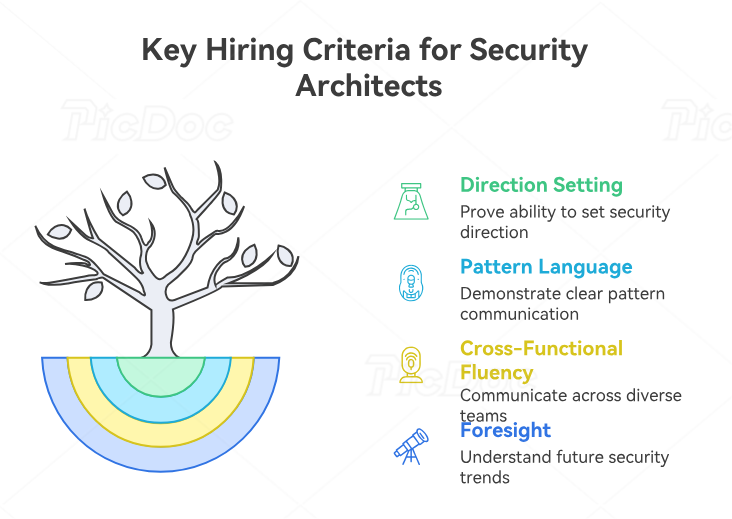
Employers rarely hire this role just to admire technical intelligence. They hire it because their environment has become too complex, too distributed, too regulated, or too exposed to keep making fragmented security decisions. That means they look for evidence that a candidate can establish direction, not just give opinions. A strong resume for this role shows ownership of security patterns, design reviews, cloud guardrails, identity architecture, segmentation strategy, secure platform standards, major transformation programs, or reference architectures used across teams.
Employers also look for pattern language. Can the candidate talk clearly about zero trust, segmentation, tiering, secrets handling, access governance, logging architecture, resilience, vendor risk boundaries, application trust, and key management without sounding generic. Better yet, can they connect those patterns to measurable outcomes like reduced attack paths, faster secure deployment, stronger compliance alignment, cleaner onboarding for engineering teams, and lower architecture drift over time.
Another major signal is cross-functional fluency. The best candidates can speak with infrastructure engineers, platform teams, application leaders, auditors, procurement, privacy counsel, and executives without losing precision. That matters because security architecture is a translation role. It connects the technical and the institutional. Reading ACSMI’s content on cybersecurity compliance trends, GDPR and cybersecurity challenges, healthcare compliance realities, and NIST cybersecurity framework adoption helps show how architecture decisions are tied to real obligations, not just technical elegance.
The strongest candidates also show evidence of foresight. They understand where security design is moving next. Identity-centric control models, cloud-native architectures, security automation, AI-influenced defense tooling, regulatory change, vendor concentration risk, software supply chain scrutiny, and hybrid estate complexity all reshape what architecture leadership must handle. ACSMI’s analyses of AI in cybersecurity adoption, quantum computing and cybersecurity, the next generation of cybersecurity standards, and the future of compliance by 2030 can help future architects think beyond today’s implementation details.
5. A practical 12-to-24 month roadmap to grow into the role
Months 1 through 3 should focus on mapping your current depth honestly. Which domain is strong. Which are weak. Are you strong in cloud but thin in identity. Strong in engineering but weak in compliance language. Strong in infrastructure but weak in application architecture. Strong in tactical delivery but invisible in enterprise design conversations. This diagnosis matters because architecture careers stall when professionals assume one strong domain automatically converts into enterprise readiness.
Months 3 through 6 should build breadth on purpose. Pick two adjacent domains and deepen them. A cloud security engineer should learn IAM and encryption design at a much more serious level. An application security engineer should strengthen infrastructure and segmentation judgment. A network-focused professional should invest in cloud and modern identity architecture. Use the ACSMI resources on best application security tools, network monitoring and security tools, PAM solutions, and security awareness platforms to strengthen familiarity with how architecture choices support broader programs.
Months 6 through 12 should focus on visible architecture work. Volunteer for design reviews. Write reusable security patterns. Help define baseline controls for cloud, identity, logging, network segmentation, secrets management, or third-party integration. Translate standards into implementation-ready guidance instead of abstract policy language. Pair that with stronger exposure to strategic roles through ACSMI’s guides to cybersecurity auditor careers, compliance officer pathways, and the move from security manager to director of cybersecurity. Architecture authority grows faster when you understand how control design, evidence, and leadership expectations fit together.
Months 12 through 18 should push influence. Present architecture decisions clearly. Lead design discussions without turning them into ego contests. Learn how to say no without freezing delivery. Develop reference architectures that product and engineering teams can actually adopt. Build a track record of reducing ambiguity. This is where many future architects separate themselves. They stop being the person with good ideas and become the person whose ideas survive contact with real teams.
Months 18 through 24 should make the next step visible. At that stage, your profile should show cross-domain design thinking, practical standards, strong communication, and evidence that teams implement safer patterns because of your work. That can lead into senior security architect roles, architecture governance leadership, or directly into Chief Security Architect opportunities depending on company size and structure. The key is proof. Better patterns adopted. Fewer fragile designs approved. Stronger trust models in place. Cleaner control alignment across teams. That is what makes the title credible.
6. FAQs about becoming a Chief Security Architect
-
No single person can be the deepest expert in every domain. What matters is strong cross-domain understanding and the ability to design, review, and challenge security decisions with confidence. The role depends on breadth, judgment, and the ability to connect technical domains into a coherent enterprise security model.
-
In many organizations, yes. Cloud decisions shape identity, data exposure, secrets handling, network patterns, logging, and shared responsibility boundaries. A future Chief Security Architect should understand cloud architecture well enough to define secure patterns and review high-impact design decisions responsibly.
-
Yes, but that path requires stronger technical implementation depth. Governance-heavy professionals often understand obligations and control intent well, yet need more practical experience with engineering, platform design, identity systems, cloud architecture, or application environments before they can lead architecture at a high level.
-
Each can work. The strongest background is the one that expands into systems thinking rather than staying narrow. Architecture leadership rewards people who can connect identity, data, application behavior, infrastructure trust, regulatory needs, and operational constraints instead of protecting one technical silo.
-
Certifications help when they support a broader growth strategy. Architecture-focused, cloud-focused, governance-aligned, and security leadership credentials can all contribute depending on the employer. Their value rises when paired with visible proof of design ownership and cross-functional influence.
-
A security engineer builds and implements controls. A security manager often coordinates people, programs, and operational delivery. A Chief Security Architect shapes the design direction behind how controls, platforms, and standards fit together across the enterprise. The role is more structural and long-range.
