
Career Path from IT Auditor to Cybersecurity Auditor
IT auditors already understand evidence, control testing, stakeholder interviews, audit trails, process gaps, and remediation follow-up. The cybersecurity auditor path adds technical depth: identity risk, vulnerability exposure, logging quality, cloud controls, endpoint protection, incident readiness, and regulatory pressure. The move becomes powerful when audit discipline meets security fluency. Professionals who can connect security audit processes, cybersecurity frameworks, vulnerability assessment, cybersecurity compliance trends, and cybersecurity auditor career planning can move faster than candidates starting from zero.
1. Understand the Shift From IT Audit to Cybersecurity Audit
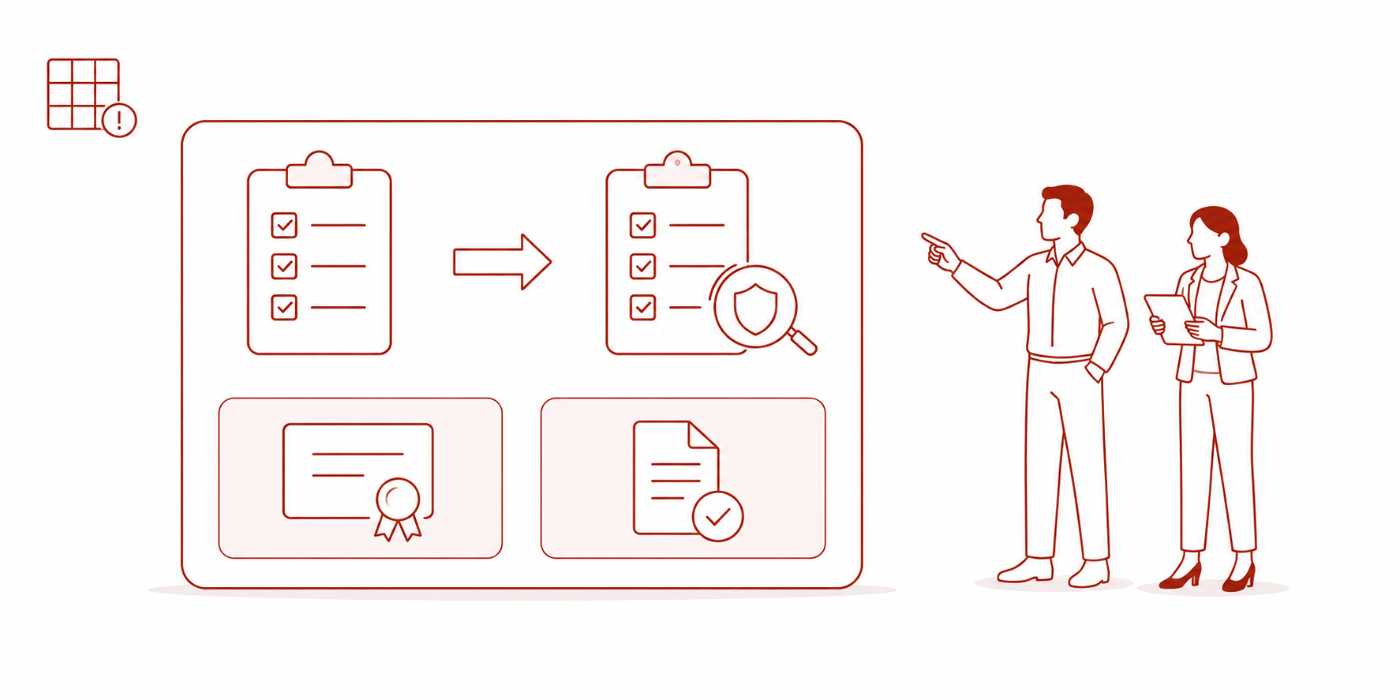
An IT auditor typically reviews systems, processes, access controls, change management, business continuity, policy adherence, and evidence quality. A cybersecurity auditor goes deeper into security control design, control operating effectiveness, threat relevance, technical evidence, and cyber-risk impact. The career shift begins when you stop treating systems as process environments alone and start evaluating how attackers, insiders, misconfigurations, vendors, cloud services, and weak identities could compromise them. This is why the transition connects naturally with access control models, vulnerability assessment techniques, security audits, NIST cybersecurity framework adoption, and cybersecurity compliance officer pathways.
The pain point for many IT auditors is credibility with technical teams. They know how to request evidence, test samples, document exceptions, and write findings, yet they may struggle when an engineer challenges the audit logic behind SIEM coverage, privileged access review, endpoint telemetry, cloud IAM scope, or vulnerability remediation timing. A cybersecurity auditor must be able to ask sharper questions: Which logs are collected? Which privileged roles exist? Which assets are internet-facing? Which vulnerabilities are exploitable? Which compensating controls reduce residual risk? These questions require working knowledge of SIEM solutions, EDR tools, PAM solutions, cloud security tools, and data loss prevention software.
The good news is that IT audit experience gives you a serious advantage. Cybersecurity auditing still depends on scope definition, evidence integrity, sampling logic, control mapping, stakeholder communication, exception writing, remediation tracking, and management reporting. Your job is to add cyber-specific depth to skills you already use. That means learning security frameworks, threat scenarios, security tooling, incident response evidence, identity governance, vulnerability context, and sector-specific compliance expectations. The professionals who make this move well study cybersecurity frameworks, GDPR cybersecurity best practices, healthcare compliance reporting, cybersecurity incident response improvement, and future audit practice changes.
A cybersecurity auditor earns trust by testing whether security controls actually reduce risk. A policy may say access reviews happen quarterly, but the auditor must check whether reviews cover privileged accounts, terminated users, service accounts, shared accounts, cloud roles, and third-party access. A vulnerability process may have patching deadlines, but the auditor must check aging findings, business exceptions, compensating controls, and high-value assets. A logging standard may exist, but the auditor must check whether logs support detection, investigation, and incident reconstruction. This level of work prepares you for cybersecurity risk management, cybersecurity compliance analyst roles, security analyst growth, director of information security paths, and CISO advancement.
IT Auditor to Cybersecurity Auditor: 26-Step Transition Matrix
| Transition Step | What Changes From IT Audit | Proof to Build | Career Leverage |
|---|---|---|---|
| 1. Reframe audit around cyber risk | Move from process adherence to threat-informed control testing | One-page cyber-risk control map | Better alignment with cybersecurity frameworks |
| 2. Strengthen identity knowledge | Add privileged access, RBAC, MFA, service accounts, and joiner-mover-leaver testing | Access review test plan | Stronger evidence around access control models |
| 3. Learn vulnerability context | Test severity, exploitability, asset value, aging, and remediation exceptions | Vulnerability audit sample sheet | Sharper work with vulnerability assessment |
| 4. Study SIEM evidence | Review log sources, detection coverage, alert routing, retention, and investigation support | SIEM control testing checklist | Credibility with SIEM solutions |
| 5. Learn endpoint audit criteria | Review EDR deployment, alert quality, isolation capability, and policy coverage | Endpoint control test sample | Better audits of EDR tools |
| 6. Add cloud audit depth | Test IAM, logging, storage exposure, workload protection, and configuration baselines | Cloud audit evidence request list | Alignment with cloud security tools |
| 7. Understand incident response evidence | Review tabletop testing, containment records, lessons learned, and escalation logs | Incident response audit program | Useful for incident response improvement |
| 8. Learn ransomware readiness testing | Assess backups, segmentation, recovery objectives, and crisis coordination | Ransomware readiness audit memo | Stronger insight from ransomware analysis |
| 9. Add email security controls | Review phishing defenses, mailbox rules, authentication, awareness, and response | Email security control checklist | Relevant to email security solutions |
| 10. Study data protection | Assess classification, DLP, encryption, retention, and sensitive data movement | Data protection audit scope | Useful for DLP software reviews |
| 11. Improve evidence quality review | Validate screenshots, logs, exports, tickets, timestamps, and ownership trails | Evidence quality rubric | Stronger security audit process |
| 12. Map controls to frameworks | Connect audit steps to NIST, ISO, CIS, COBIT, and regulatory requirements | Framework-to-control matrix | Supports NIST framework adoption |
| 13. Learn third-party cyber risk | Review vendor security evidence, SOC reports, data access, and breach obligations | Vendor audit questionnaire | Helps with cybersecurity consulting analysis |
| 14. Build privacy compliance awareness | Assess data handling, retention, consent, breach notification, and privacy controls | Privacy-control audit sheet | Aligned with GDPR cybersecurity practices |
| 15. Practice finding writing | Write findings with condition, criteria, cause, risk, evidence, and action | Three polished audit findings | Interview-ready for cybersecurity auditor roles |
| 16. Add remediation tracking | Follow closure evidence, due dates, risk acceptance, and overdue escalations | Remediation tracker | Useful in compliance analyst work |
| 17. Learn audit sampling for cyber controls | Select samples across critical systems, user classes, risk levels, and time periods | Sample selection rationale | Better control testing under compliance trends |
| 18. Study sector-specific risk | Tailor testing for healthcare, finance, government, education, retail, and energy | Sector-specific audit plan | Helpful for healthcare compliance |
| 19. Build reporting discipline | Summarize control failures, residual risk, trend direction, and management action | Executive audit summary | Useful for cybersecurity manager growth |
| 20. Earn targeted certifications | Choose security, audit, risk, and governance credentials based on target roles | Credential roadmap | Supported by cybersecurity certifications |
| 21. Build technical interview stories | Prepare scenarios around access, logging, vulnerability, cloud, and incident evidence | STAR answer bank | Helpful for job market readiness |
| 22. Target bridge roles | Apply for IT security auditor, cyber compliance analyst, GRC analyst, and technology risk roles | Role-aligned résumé bullets | Connects with compliance officer paths |
| 23. Learn audit automation awareness | Understand continuous control monitoring, evidence exports, dashboards, and GRC tools | Automation-aware audit workflow | Relevant to automation workforce trends |
| 24. Practice audit communication | Explain technical risk to system owners, legal, compliance, and executives | Stakeholder briefing memo | Prepares for security leadership |
| 25. Own an audit area | Lead identity, vulnerability, cloud, incident response, or vendor cyber audits | Full audit workpaper pack | Builds senior-level credibility |
| 26. Move into senior cyber audit or GRC leadership | Lead audit planning, risk committees, control strategy, and assurance programs | Annual cyber audit plan | Supports specialist-to-CISO advancement |
2. Build the Cybersecurity Knowledge Layer Your Audit Background Needs
The fastest way to move from IT auditor to cybersecurity auditor is to build a technical layer around the controls you already test. Start with identity, because access is one of the most common areas where audit and cybersecurity overlap. Review RBAC, least privilege, MFA, privileged access, service accounts, access recertification, password policy, dormant accounts, and third-party access. Then connect those areas to audit evidence: user listings, role definitions, approval records, access review sign-offs, termination samples, admin activity logs, and exception approvals. This connects directly with access control models, privileged access management, security audit processes, cybersecurity frameworks, and cybersecurity compliance trends.
Next, add vulnerability and patch management depth. Many IT auditors review patch policies, change records, and compliance percentages, but cybersecurity auditors examine risk in a more threat-informed way. They look at exploitability, asset criticality, internet exposure, known exploitation, business impact, compensating controls, remediation aging, emergency patch procedures, and accepted-risk documentation. A weak vulnerability audit creates false comfort because it focuses on policy dates while attackers focus on exposure. Build your practical understanding through vulnerability assessment techniques, top vulnerability scanners, penetration testing tools, penetration testing companies, and ethical hacker career roadmaps.
Then study logging, monitoring, endpoint protection, and incident response. A cybersecurity auditor must know whether controls support detection and recovery, not just prevention. For SIEM audits, review log source coverage, retention periods, privileged activity monitoring, alert triage, escalation workflows, and incident linkage. For endpoint audits, review deployment coverage, policy enforcement, detection alerts, isolation procedures, and unprotected asset exceptions. For incident response audits, review tabletop records, response plans, communications evidence, root-cause analysis, and lessons-learned closure. These skill areas map well to SIEM solutions, EDR tools, endpoint security effectiveness, incident responder pathways, and incident response effectiveness reports.
Cloud security is another key upgrade area. Traditional IT audit skills may cover change control, access, backup, and vendor management, but cloud environments add IAM complexity, storage exposure, key management, API access, workload configuration, shared responsibility, container risks, and continuous configuration drift. Learn how cloud logs, security posture tools, identity roles, storage policies, and network exposure affect audit testing. Cybersecurity auditors who can evaluate cloud environments stand out because many organizations still have audit programs built around older infrastructure assumptions. Study cloud security engineer paths, cloud security tools, emerging cloud threats, future cloud security trends, and AI-driven cybersecurity tools.
3. Translate Audit Strengths Into Cybersecurity Audit Deliverables
Your IT audit background becomes valuable when you convert it into cybersecurity-specific work products. The first deliverable is a cyber audit program. Pick a control area such as privileged access, vulnerability management, incident response, SIEM monitoring, cloud security, vendor cyber risk, or data protection. Define objective, scope, risks, control criteria, evidence requests, test procedures, sample method, finding criteria, and reporting format. This proves you can operate beyond theory. It also aligns your experience with cybersecurity auditor guidance, security audit processes, cybersecurity frameworks, NIST adoption research, and future cybersecurity standards.
The second deliverable is a control matrix. This should map framework requirements to controls, evidence, owners, frequency, test method, risk rating, and remediation status. For example, an access control matrix might map user provisioning, privilege approval, MFA enforcement, quarterly access review, service account ownership, and termination removal to specific evidence types. A vulnerability control matrix might map asset inventory, scan frequency, severity thresholds, remediation SLA, exception approval, and retesting evidence. This type of portfolio shows the discipline employers expect in cybersecurity compliance analyst roles, compliance officer roadmaps, cybersecurity risk management, GDPR compliance work, and privacy regulation planning.
The third deliverable is a finding-writing sample. Strong cybersecurity findings are specific, evidence-backed, risk-aware, and action-oriented. A weak finding says access reviews were incomplete. A stronger finding explains that privileged cloud roles for terminated contractors remained active beyond policy limits, evidence from the access export and HR termination sample confirmed the gap, the condition increases unauthorized access risk to production resources, and management should automate deprovisioning validation with monthly exception review. Build samples around PAM solutions, cloud security tools, SIEM solutions, DLP software, and endpoint detection tools.
The fourth deliverable is an executive audit summary. Cybersecurity audit reports can fail when they become too technical for leadership or too shallow for security teams. Your summary should identify the top control gaps, business impact, risk rating rationale, affected systems, management action, due dates, and unresolved decisions. Executives should understand why the finding matters; technical owners should understand what needs fixing; compliance stakeholders should understand evidence and accountability. This communication skill supports growth into cybersecurity manager roles, director of information security paths, security leadership, cybersecurity program management, and CISO career advancement.
Quick Poll: What Is Blocking Your Move From IT Auditor to Cybersecurity Auditor?
Choose the gap that feels most urgent so your next learning move targets the right pressure point.
4. Choose Certifications That Match Cybersecurity Audit Work
Certifications should support the role you are targeting. If you are moving from IT audit into entry-level or bridge cybersecurity audit roles, a baseline security credential can help show that you understand threats, controls, networking, identity, cryptography basics, secure architecture, and incident response concepts. If your target role leans toward technical audit, vulnerability management, detection, or security operations assurance, choose credentials that strengthen defensive security understanding. If your target role leans toward governance, compliance, privacy, and enterprise assurance, choose credentials that validate risk, audit, and control knowledge. Use ACSMI’s cybersecurity certification directory, certification impact report, salary growth analysis, future certification trends, and cybersecurity bootcamp directory to make the choice strategic.
A practical certification path can begin with broad cybersecurity foundations, then move into audit, risk, compliance, or security operations depending on your target. For example, someone aiming for cybersecurity auditor roles in financial services may prioritize regulatory controls, identity governance, data protection, and third-party risk. Someone aiming for cloud cybersecurity audit should prioritize cloud security, IAM, logging, encryption, configuration management, and shared-responsibility models. Someone aiming for healthcare cybersecurity audit should learn HIPAA-related control expectations, protected health data exposure, vendor access, endpoint coverage, and incident reporting. These choices connect with financial services cybersecurity, healthcare cybersecurity firms, government cybersecurity, education cybersecurity, and energy utilities cybersecurity.
Certifications should never become a substitute for audit-ready examples. Hiring teams want evidence that you can test controls, evaluate artifacts, write findings, and communicate risk. Pair every certification with a portfolio artifact. After learning access control, build an access review test plan. After learning vulnerability management, build a vulnerability audit workpaper. After learning incident response, build a tabletop evidence checklist. After learning cloud security, build a cloud IAM and logging audit scope. This approach turns study into proof and makes your résumé stronger for cybersecurity auditor roles, cybersecurity compliance analyst roles, security analyst advancement, IT-to-cybersecurity transitions, and cybersecurity job market trends.
Your résumé should translate IT audit work into cybersecurity language without exaggeration. Replace vague phrases with control-specific outcomes. Instead of saying you performed IT audits, show that you tested access controls, reviewed privileged account approvals, validated evidence quality, assessed patch governance, documented control deficiencies, tracked remediation, and briefed stakeholders on residual risk. Add tool-adjacent language where honest: SIEM evidence, vulnerability reports, identity exports, ticketing records, endpoint coverage, cloud access reviews, and GRC workflows. This positioning supports roles tied to security audits, cybersecurity compliance trends, cybersecurity workforce shortage research, remote cybersecurity salaries, and entry-level to CISO salary progression.

5. Target the Right Roles and Prepare for Cybersecurity Audit Interviews
The best bridge titles include IT security auditor, cybersecurity auditor, security compliance analyst, GRC analyst, technology risk analyst, cyber risk analyst, internal audit cybersecurity specialist, third-party risk analyst, information security controls analyst, and SOC 2 compliance analyst. Read each posting carefully because the same title can mean different work. Some roles focus on internal audits, some focus on regulatory compliance, some focus on customer security questionnaires, some focus on cloud controls, and some focus on technical control validation. Align applications with cybersecurity auditor career guides, cybersecurity compliance officer roadmaps, compliance analyst career planning, security analyst growth, and cybersecurity manager pathways.
Interview preparation should focus on scenarios. Be ready to explain how you would audit privileged access, vulnerability remediation, SIEM logging, endpoint protection, cloud configuration, vendor security, incident response, ransomware readiness, and data protection. A strong answer walks through scope, criteria, evidence, testing method, risk, finding language, management action, and follow-up. A weak answer stays stuck in generic policy review. Build examples using vulnerability scanners, SIEM tools, EDR platforms, cloud security tools, and PAM solutions.
Expect questions about technical credibility. You may be asked how you validate whether a vulnerability is high risk, how you test access removal for terminated users, how you evaluate logging adequacy, how you review security exceptions, how you assess vendor risk, or how you handle pushback from system owners. Answer with evidence and judgment. For example, if a system owner says a vulnerability cannot be patched, ask about asset exposure, compensating controls, segmentation, exploitability, business dependency, exception approval, review date, and monitoring. That level of response shows readiness for cybersecurity risk roles, incident response audits, ransomware readiness reviews, cloud threat analysis, and insider threat prevention.
Long-term, cybersecurity audit can lead into senior cyber auditor, IT audit manager, GRC manager, cyber risk manager, compliance director, security program manager, director of information security, chief security architect, or CISO-track leadership. The differentiator is your ability to connect audit evidence to security strategy. The more you can show how audit findings improve risk posture, budget decisions, control maturity, and executive visibility, the more valuable your profile becomes. Keep building around director of information security pathways, cybersecurity program manager careers, security leadership growth, chief security architect careers, and specialist-to-CISO advancement.
6. FAQs About Moving From IT Auditor to Cybersecurity Auditor
-
Yes. IT audit experience gives you a strong base in evidence review, control testing, stakeholder communication, finding documentation, remediation tracking, and audit reporting. The upgrade is cybersecurity fluency: identity risk, vulnerability management, logging, cloud controls, endpoint protection, incident response, and threat-informed testing. Build that bridge through security audit processes, cybersecurity frameworks, access control models, vulnerability assessment, and cybersecurity auditor guidance.
-
Start with identity and access management, vulnerability management, SIEM logging, endpoint detection, cloud security, data protection, and incident response. These areas appear repeatedly in cybersecurity audits and create the strongest bridge from traditional IT audit work. A practical learning path should include PAM solutions, SIEM solutions, EDR tools, cloud security tools, and DLP software.
-
Target IT security auditor, cybersecurity auditor, GRC analyst, security compliance analyst, technology risk analyst, cyber risk analyst, internal audit cybersecurity specialist, third-party risk analyst, and information security controls analyst roles. Match your résumé to the role emphasis: audit testing, compliance, vendor risk, cloud security, vulnerability management, or control assurance. Use related ACSMI resources on cybersecurity auditor careers, compliance officer paths, compliance analyst roadmaps, cybersecurity job trends, and remote cybersecurity salaries.
-
Build a cyber audit program, framework-to-control matrix, access review test plan, vulnerability remediation audit workpaper, incident response evidence checklist, cloud IAM audit scope, and sample audit finding. Each piece should show scope, criteria, evidence, testing method, risk rating, finding language, management action, and follow-up. Strong examples can draw from security audit processes, NIST framework adoption, vulnerability assessment, incident response improvement, and cloud security trends.
-
Use control-specific, evidence-based language. Mention access control testing, privileged account review, vulnerability remediation tracking, audit evidence validation, control deficiency documentation, remediation follow-up, framework mapping, risk reporting, and stakeholder communication. Add cybersecurity keywords only where they reflect real exposure. This helps your résumé align with cybersecurity auditor roles, cybersecurity compliance trends, security analyst advancement, cybersecurity workforce shortage research, and certification career impact.
-
Prepare for scenario-based questions about privileged access, vulnerability remediation, log monitoring, cloud security, incident response, phishing controls, ransomware readiness, vendor risk, and audit finding pushback. Practice explaining scope, evidence, criteria, testing method, risk, recommendation, and follow-up. Use scenarios from ransomware analysis, phishing trends, data breach reports, cloud threat analysis, and financial cybersecurity incidents.
-
Cybersecurity auditor can grow into senior cybersecurity auditor, IT audit manager, cyber risk manager, GRC manager, compliance director, cybersecurity program manager, director of information security, chief security architect, VP of cybersecurity, or CISO-track leadership. The strongest growth comes from combining audit discipline, cyber technical depth, executive communication, and risk ownership. Plan the next stage with cybersecurity manager pathways, director of information security guidance, cybersecurity program manager careers, VP of cybersecurity growth, and CISO advancement planning.
