
How to Transition from IT Management to Cybersecurity Leadership
IT management gives you a stronger cybersecurity leadership base than many people realize. You already understand infrastructure pressure, vendor friction, uptime expectations, budget limits, user behavior, service delivery, and executive escalation. The transition begins when you stop positioning yourself as the person who keeps systems running and start proving you can protect business operations from risk. Cybersecurity leadership requires stronger governance, sharper incident judgment, deeper compliance awareness, and the ability to turn security priorities into decisions leaders will fund.
1. Understand What Changes When You Move From IT Management to Cybersecurity Leadership
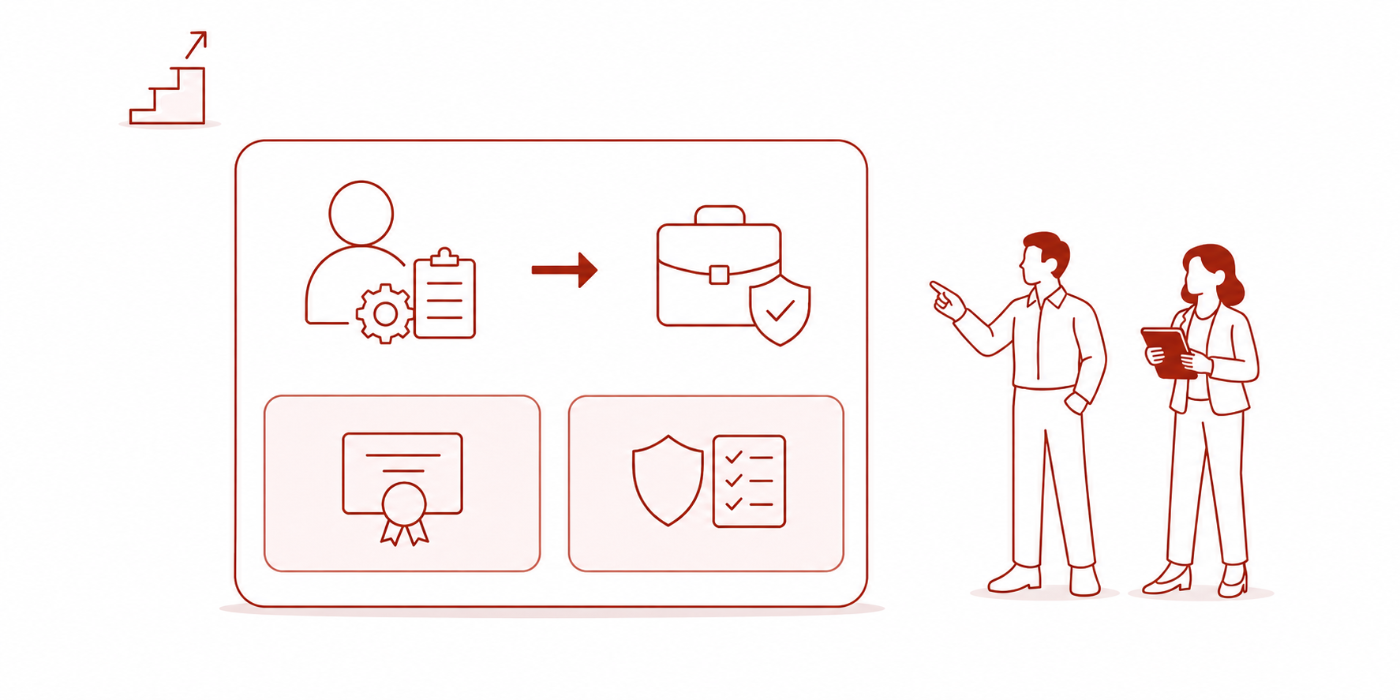
The move from IT management into cybersecurity leadership is a shift from service ownership to risk ownership. An IT manager is often judged by availability, ticket flow, user satisfaction, implementation speed, and cost control. A cybersecurity leader is judged by exposure reduction, control maturity, audit readiness, incident response quality, regulatory resilience, and executive confidence. That means your experience with endpoint security, network monitoring, VPN security, firewall technologies, and security audits must be reframed around risk impact.
The pain point most IT managers hit is credibility. They understand systems, teams, and operations, yet hiring leaders may see them as infrastructure managers instead of security decision-makers. To break that perception, you need visible proof that you can lead security governance, handle incidents, manage compliance pressure, and challenge risky business behavior. Study cybersecurity frameworks, NIST Cybersecurity Framework adoption, cybersecurity compliance trends, incident response planning, and ransomware response as leadership tools, not study topics.
Cybersecurity leaders also think differently about tradeoffs. A server migration delay may annoy business units. A misconfigured identity rule may expose privileged access. A weak vendor review may create legal, financial, and operational exposure. A rushed cloud rollout may multiply risk across identity, logging, encryption, and data movement. Your transition becomes stronger when you can connect familiar IT responsibilities to access control models, data loss prevention, cloud security tools, SIEM operations, and privileged access management.
| IT Management Strength | Cybersecurity Leadership Translation | Proof You Should Build | Best ACSMI Resource Anchor |
|---|---|---|---|
| Infrastructure ownership | Security architecture awareness across systems, endpoints, networks, and cloud environments. | Documented hardening standards and control ownership map. | Endpoint security providers |
| Help desk leadership | User behavior risk management, access discipline, phishing reporting, and security awareness support. | Security ticket categories, trend dashboard, and user-risk reduction plan. | Security awareness platforms |
| Vendor management | Third-party risk, contract controls, security questionnaires, and vendor evidence reviews. | Vendor security checklist and annual review workflow. | Cybersecurity consulting firms |
| Budget responsibility | Risk-based investment planning for controls, monitoring, tooling, staffing, and incident readiness. | Security budget proposal tied to risk reduction and compliance exposure. | Cybersecurity market report |
| Uptime accountability | Resilience leadership across ransomware recovery, continuity planning, and incident response. | Recovery control map and tabletop exercise summary. | Ransomware recovery |
| Patch coordination | Vulnerability management governance, remediation SLAs, exception approvals, and risk prioritization. | Vulnerability remediation dashboard with overdue risk tiers. | Vulnerability assessment |
| Cloud administration | Cloud identity, configuration, encryption, logging, workload ownership, and data protection. | Cloud control baseline and shared-responsibility evidence map. | Cloud security trends |
| Identity administration | Least privilege, role-based access, access reviews, privileged access, and segregation of duties. | Access review calendar and privileged access exception register. | Access control models |
| Service desk metrics | Security metrics, incident trend analysis, control failures, response times, and user-risk patterns. | Security operations scorecard for leadership review. | Incident response effectiveness |
| Network oversight | Segmentation, firewall governance, IDS deployment, VPN controls, and monitoring strategy. | Network security maturity review and control improvement roadmap. | Intrusion detection systems |
| Change management | Secure change approvals, risk review gates, emergency change controls, and audit traceability. | Security review gate added to change advisory process. | Security audit practices |
| Asset inventory | Attack surface management, ownership clarity, vulnerability scope, endpoint control, and compliance evidence. | Asset-to-control mapping for critical systems. | Endpoint security report |
| Disaster recovery | Cyber resilience, ransomware recovery, backup testing, executive communication, and incident command. | Cyber recovery tabletop with lessons learned and owners. | Ransomware threat analysis |
| Policy enforcement | Security governance, acceptable use, access policy, device standards, and exception control. | Policy exception process with risk ratings and expiration dates. | Cybersecurity frameworks |
| Executive escalation | Risk reporting, board-ready communication, business impact framing, and decision briefings. | One-page cyber risk briefing for senior leadership. | CISO roadmap |
| Team management | Security culture, accountability, role clarity, analyst development, and incident readiness. | Security RACI and development plan for technical staff. | SOC manager advancement |
| Procurement support | Security tool evaluation, vendor due diligence, licensing risk, and control coverage comparison. | Security tool selection scorecard tied to business risk. | MSSP guide |
| Email administration | Phishing defense, domain protection, awareness metrics, reporting workflows, and email security controls. | Phishing reduction plan with reporting and control metrics. | Email security solutions |
| Data backup ownership | Recovery assurance, data integrity, ransomware resilience, retention standards, and restoration testing. | Backup restoration evidence and cyber recovery policy. | Data breach report |
| Compliance support | Audit evidence, control mapping, regulatory readiness, policy review, and remediation tracking. | Framework-to-control evidence matrix. | Compliance trends |
| Remote work enablement | Endpoint trust, identity controls, VPN risk, SaaS access, mobile security, and monitoring expectations. | Remote access security standard and control dashboard. | Remote cybersecurity trends |
| Application rollout support | AppSec governance, secure configuration, data flow review, vulnerability testing, and release risk. | Security review checklist for application changes. | Application security tools |
| Documentation discipline | Audit-ready procedures, policy lifecycle management, evidence retention, and control accountability. | Security policy library with owners and review dates. | Compliance analyst roadmap |
| Operations leadership | Security operating model design across people, process, technology, metrics, and governance. | Cybersecurity operating rhythm with monthly leadership reporting. | Cybersecurity manager pathway |
| Incident escalation | Cyber incident command, severity classification, communications, containment, and post-incident review. | Incident response playbook and tabletop report. | Incident response plan |
| Reporting habits | Risk dashboards, control maturity reporting, vulnerability aging, executive summaries, and audit status. | Monthly cyber risk dashboard with business-impact language. | Cybersecurity salary report |
| Business continuity role | Security resilience planning for critical services, incident impact, recovery priority, and crisis decisions. | Critical-service risk register with recovery controls. | Critical infrastructure report |
| Training coordination | Cybersecurity workforce development, awareness adoption, skill pathways, and internal capability building. | Security upskilling plan for IT and business teams. | Free cybersecurity courses |
| Tool administration | Control effectiveness evaluation across EDR, SIEM, DLP, PAM, scanners, and awareness platforms. | Tool coverage map showing gaps, overlap, and measurable value. | Vulnerability scanners |
| Career leadership ambition | Security strategy, promotion readiness, market positioning, compensation leverage, and CISO-track growth. | Cyber leadership portfolio with outcomes and executive-facing artifacts. | CISO salary progression |
2. Convert Existing IT Management Experience Into Security Leadership Proof
Your first advantage is operational memory. You have seen where users bypass process, where vendors overpromise, where legacy systems refuse clean remediation, where budgets create control gaps, and where executives demand speed during risky changes. Those experiences are valuable when you convert them into security proof. Build examples around vulnerability assessment, endpoint detection and response, email security solutions, network monitoring tools, and DLP strategies, because these are areas where IT leadership already touches security outcomes.
Start by rewriting your résumé language. “Managed infrastructure team” becomes “led infrastructure operations supporting endpoint hardening, access control, patch governance, vendor remediation, and incident escalation.” “Oversaw help desk” becomes “improved security reporting, access request discipline, phishing triage, device compliance, and user-risk visibility.” “Managed cloud migration” becomes “coordinated cloud identity, logging, encryption, backup, vendor access, and secure configuration decisions.” This shift aligns your story with cloud security, future cloud security trends, SIEM solutions, encryption standards, and public key infrastructure.
Then build a security leadership portfolio. Include a vulnerability aging report, access review cleanup, endpoint compliance dashboard, vendor risk checklist, policy exception register, incident response tabletop, phishing reporting improvement, backup restoration evidence, and security budget proposal. Each artifact should show the same pattern: risk, business impact, control gap, action taken, metric improved, owner assigned, and next decision needed. ACSMI’s resources on cybersecurity workforce shortage, job market trends, future cybersecurity skills, salary benchmarks, and certification career impact can help frame those artifacts for promotion or job search.
The strongest transition stories usually come from messy operational problems. Maybe patching was delayed because asset ownership was unclear. Maybe privileged access was approved informally because business leaders wanted speed. Maybe cloud logging was inconsistent because nobody owned the standard. Maybe incident escalation failed because the business did not know when to report suspicious activity. Those are cybersecurity leadership opportunities. Use security audit practices, cybersecurity compliance officer guidance, cybersecurity auditor pathways, incident response planning, and phishing attack prevention to turn these problems into proof.
3. Close the Gaps: Risk, Governance, Incident Response, Cloud, and Compliance
Most IT managers need five gap areas before they can credibly compete for cybersecurity leadership roles. The first is risk language. You need to explain risk through likelihood, impact, control maturity, compensating controls, residual exposure, and decision ownership. Practice translating technical problems into business consequences. A missing EDR agent means reduced detection coverage. A stale privileged account means excessive access exposure. A weak vendor review means third-party risk. Use NIST guidance, security frameworks, cybersecurity compliance trends, future compliance regulation, and privacy regulation trends to build that vocabulary.
The second gap is incident leadership. IT managers often join incident response because systems are down. Cybersecurity leaders manage incident severity, containment, evidence preservation, communications, legal escalation, recovery priorities, and post-incident remediation. Build competence through tabletop exercises, severity models, communication templates, and decision trees. Study incident response plans, ransomware response, state of ransomware, data breach mitigation, and cyber incident response effectiveness. Leadership credibility rises when you can stay calm while risk, downtime, legal exposure, and executive pressure collide.
The third gap is security governance. Governance is where many transitions fail because IT managers may be used to fixing problems directly. Cybersecurity leaders build systems that make secure behavior repeatable. That includes control ownership, policy lifecycle, audit evidence, exception approval, risk registers, vendor reviews, and recurring reporting. Strengthen this area with security audits, cybersecurity compliance officer roadmaps, compliance analyst guidance, audit career guidance, and future audit practices.
The fourth gap is modern security specialization. Cybersecurity leadership is moving fast across cloud, AI, identity, ransomware, application security, and data protection. Choose one specialization that matches your IT background. Infrastructure managers often move well into cloud security engineering, IoT security, critical infrastructure cybersecurity, endpoint security, or managed security services. Application-heavy IT managers can move toward application security tools, penetration testing tools, ethical hacking career paths, OSCP pathways, and vulnerability research.
Quick Poll: What Is the Hardest Part of Moving From IT Management to Cybersecurity Leadership?
Pick the blocker that feels most real, because your transition plan should target the gap hiring leaders will notice first.
4. Build Director-Level Security Operating Rhythm
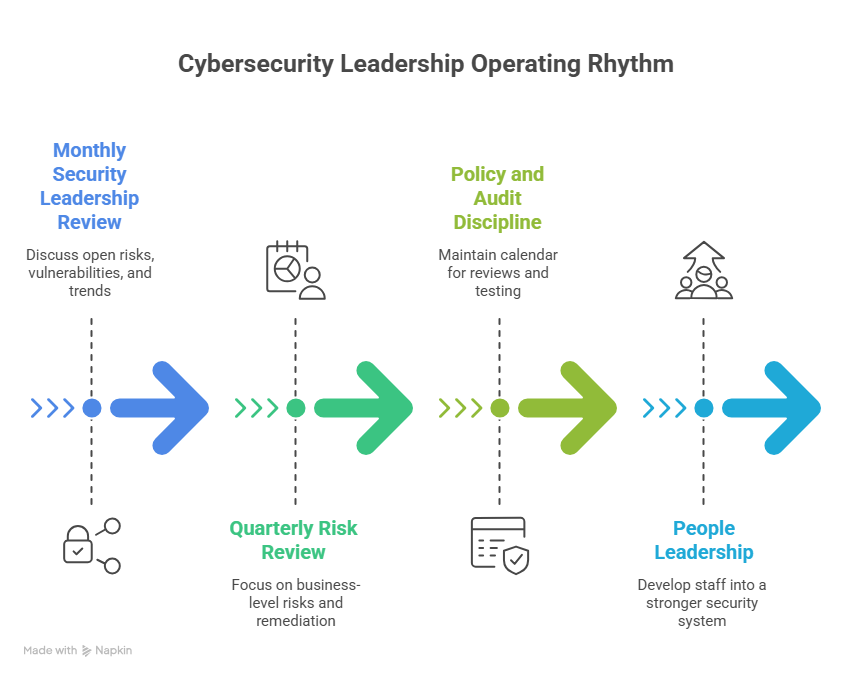
Cybersecurity leadership becomes real when you create repeatable operating rhythms. Start with a monthly security leadership review. Cover open risks, overdue vulnerabilities, endpoint coverage, privileged access exceptions, phishing trends, audit findings, vendor review status, incident lessons, and policy updates. Your dashboard should connect operational data to decisions. Use EDR tools, SIEM solutions, vulnerability scanners, DLP software, and PAM platforms as categories for control visibility.
Then build a quarterly risk review. This meeting should focus on business-level risk rather than tool noise. Present top risks, affected systems, business owners, remediation cost, accepted risk, and deadlines. Include ransomware readiness, cloud misconfiguration, identity exposure, third-party risk, phishing, data loss, and regulatory gaps. Pull insight from ransomware threat analysis, cloud threat analysis, insider threat prevention, phishing prevention, and AI in cybersecurity adoption to keep the conversation current.
Your operating rhythm should also include policy and audit discipline. Maintain a calendar for policy reviews, access reviews, vendor evidence refreshes, tabletop exercises, backup restore testing, vulnerability SLA reporting, and security awareness campaigns. This is where your IT management experience helps because you already know how recurring work collapses when ownership is vague. Tie each recurring item to security frameworks, security audit practices, compliance regulation trends, GDPR cybersecurity practices, and healthcare compliance when your organization faces regulated data obligations.
People leadership is the quiet differentiator. A cybersecurity leader develops analysts, engineers, administrators, and business stakeholders into a stronger security system. Create skill paths for IT staff moving into security operations, compliance, cloud security, incident response, and threat intelligence. Use ACSMI’s SOC analyst guide, SOC manager guide, threat intelligence analyst roadmap, incident responder pathway, and cybersecurity instructor guide to design internal growth paths that reduce dependency on outside hiring.
5. Position Yourself for Promotion, Lateral Move, or CISO-Track Growth
Your transition plan should target three possible outcomes: internal promotion, lateral move into a dedicated cybersecurity leadership role, or long-term CISO-track progression. For internal promotion, make your current leaders see you as the owner of cyber risk reduction. Ask to lead access review cleanup, vulnerability governance, incident tabletop planning, security tool rationalization, or vendor security improvements. Connect your work to cybersecurity manager pathways, security manager to director roadmaps, CISO career planning, entry-level to CISO progression, and cybersecurity leadership salary data.
For a lateral move, target titles that bridge IT management and security leadership: Security Operations Manager, Cybersecurity Manager, Infrastructure Security Manager, GRC Manager, IT Risk Manager, Security Program Manager, Cloud Security Manager, or Director of Security Operations. Your application should highlight control outcomes, stakeholder leadership, incident participation, audit evidence, budget ownership, and team development. Strengthen your positioning with certification directories, salary growth certification analysis, cybersecurity bootcamp directories, free cybersecurity courses, and global training providers.
For CISO-track growth, build breadth across governance, technical controls, threat trends, board communication, privacy, third-party risk, and business resilience. You need enough range to discuss AI-powered cyberattacks, deepfake cybersecurity threats, zero trust security, next-gen SIEM, and future cybersecurity standards without sounding like a trend collector. Senior leaders trust people who can explain which trends deserve money, which require policy, and which need monitoring.
Your 12-month action plan should be direct. In the first 90 days, create a cyber risk inventory from your current IT environment. By month six, lead one security improvement project with measurable results. By month nine, present a risk dashboard to leadership. By month twelve, apply for security leadership roles or request expanded ownership internally. Support that plan with industry awareness from cybersecurity workforce shortage research, remote cybersecurity salary analysis, workforce demographics, future job market trends, and specialized role demand.
6. FAQs: How to Transition From IT Management to Cybersecurity Leadership
-
Yes. IT management is one of the strongest foundations because cybersecurity depends on infrastructure, identity, endpoints, users, vendors, cloud systems, and service continuity. The key is converting operational leadership into risk leadership. Build proof through endpoint security, access control, security audits, incident response planning, and cybersecurity frameworks. Hiring leaders need evidence that you can manage exposure, not only technology operations.
-
Strong bridge roles include Cybersecurity Manager, Security Operations Manager, IT Risk Manager, GRC Manager, Infrastructure Security Manager, Cloud Security Manager, and Security Program Manager. Choose based on your strongest proof. Infrastructure-heavy managers may fit cloud security engineering, SOC management, or security manager pathways. Compliance-heavy managers may fit cybersecurity compliance officer, cybersecurity auditor, or GRC-focused leadership.
-
Choose certifications that validate both security fundamentals and leadership-level governance. Security+, CISSP, CISM, CRISC, CISA, cloud security credentials, and risk-focused credentials can all help depending on your target role. Use the ACSMI cybersecurity certifications directory, certification career impact report, salary growth analysis, future certification value guide, and free course directory before spending money.
-
The biggest gap is proving risk ownership. Many IT managers can run systems, vendors, and teams, but cybersecurity leadership requires documented control maturity, incident judgment, audit readiness, and executive risk reporting. Build evidence through vulnerability management, SIEM visibility, phishing defense, data breach mitigation, and compliance reporting. Your portfolio should show decisions, outcomes, and measurable reduction of exposure.
-
Take ownership of one visible security initiative. Lead privileged access cleanup, patch governance, cloud security baseline work, phishing reporting improvements, incident tabletop planning, vendor security review, backup recovery testing, or policy exception control. Use PAM solutions, vulnerability scanners, cloud security tools, ransomware recovery, and security awareness platforms to structure the project. Capture before-and-after metrics.
-
Hands-on offensive skills can help, especially for security operations and technical leadership, but cybersecurity leadership also depends on governance, incident response, risk management, compliance, communication, and control prioritization. If you want offensive fluency, use ethical hacking roadmaps, CEH guidance, OSCP pathways, penetration testing tools, and penetration testing companies. Leadership value comes from knowing how offensive findings change business decisions.
-
A focused IT manager can build credible cybersecurity leadership positioning in 6 to 18 months if they choose visible projects, document measurable outcomes, earn relevant credentials, and gain executive reporting experience. The timeline depends on current exposure to security controls, compliance, incidents, cloud systems, and governance. Benchmark your path with cybersecurity manager guidance, security manager to director roadmaps, CISO career planning, salary progression analysis, and job market trends.
