
How to Become a Governance, Risk, and Compliance (GRC) Specialist
A Governance, Risk, and Compliance specialist sits where cybersecurity decisions become business decisions. The role rewards people who can translate controls, policies, audits, vendors, incidents, and regulations into clear risk language that leadership can act on. If you are moving from IT support, SOC work, auditing, administration, or security training, GRC can become a powerful career path because it values structured thinking, documentation discipline, and cross-functional communication as much as technical depth.
1. What a GRC Specialist Actually Does in Cybersecurity
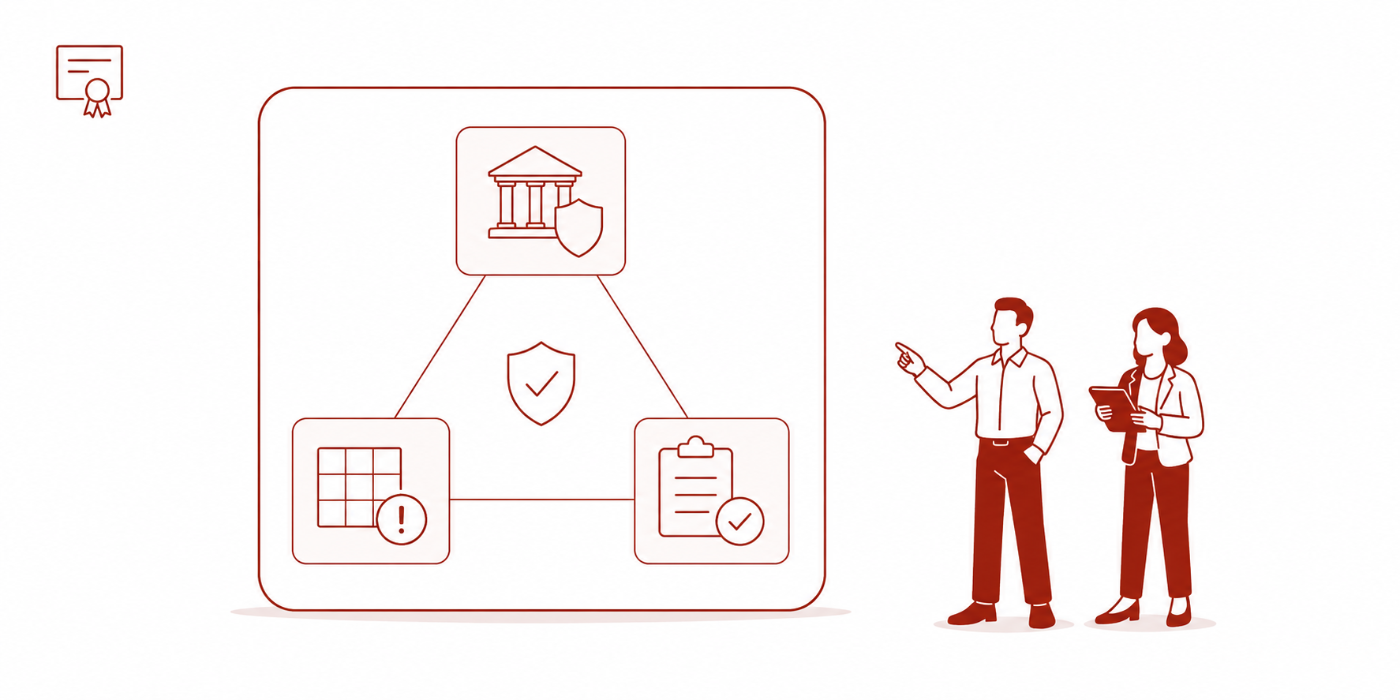
A GRC specialist helps an organization prove that cybersecurity is governed, measured, documented, and continuously improved. In practical terms, that means turning frameworks like NIST, ISO, COBIT, SOC 2, PCI DSS, HIPAA, GDPR, and internal policy requirements into controls people can follow, test, review, and defend. Someone studying cybersecurity frameworks like NIST, ISO, and COBIT needs to understand that frameworks become useful only when they are mapped to real assets, real users, real vendors, and real business risks.
The daily work is usually a mix of risk assessments, policy reviews, control testing, evidence collection, vendor questionnaires, audit preparation, exception tracking, and executive reporting. A strong GRC specialist can read a vulnerability report, connect it to business exposure, compare it against policy, recommend mitigation, and explain the residual risk in plain language. That is why professionals coming from vulnerability assessment techniques and tools, security audits and best practices, access control models, or cybersecurity compliance trends often have a strong foundation for the role.
The pain point most beginners miss is that GRC hiring managers rarely want someone who only knows definitions. They want someone who can show how a policy gets enforced, how a control gets tested, how a risk gets scored, how an exception gets approved, and how evidence gets stored before an auditor asks for it. That is why a candidate who understands cybersecurity auditor career paths, cybersecurity compliance officer roadmaps, security analyst career growth, and cybersecurity job market trends can position themselves much better than someone who only lists frameworks on a résumé.
A good GRC specialist also prevents “audit panic.” Many organizations scramble when auditors request access logs, policy approvals, vulnerability remediation proof, vendor reviews, incident records, or training completion reports. GRC professionals build the systems that make those requests routine. They connect evidence from SIEM solutions, EDR tools, endpoint security providers, cloud security tools, and identity systems into a defensible compliance story.
GRC Specialist Career Readiness Matrix: 26 Skills That Create Hiring Leverage
| GRC Capability | What You Must Be Able to Do | Proof Employers Trust | Best ACSMI Internal Resource |
|---|---|---|---|
| Framework literacy | Explain how NIST, ISO, COBIT, SOC 2, and internal policies convert into measurable controls. | One-page framework comparison with control examples. | NIST, ISO, and COBIT guide |
| Risk assessment | Identify assets, threats, vulnerabilities, likelihood, impact, mitigation, and residual risk. | Sample risk register with scored business impact. | Compliance trends report |
| Control mapping | Map one control to multiple requirements across frameworks to reduce duplicate work. | Control crosswalk matrix. | NIST adoption analysis |
| Audit readiness | Prepare policies, screenshots, approvals, logs, tickets, and remediation notes before review deadlines. | Evidence binder sample. | Security audit process guide |
| Policy governance | Create policy ownership, review cadence, approval trail, version history, and exception rules. | Policy lifecycle tracker. | Compliance officer roadmap |
| Identity controls | Explain least privilege, role-based access, privileged access, access reviews, and termination controls. | Access review checklist. | Access control models |
| Vulnerability governance | Connect scan findings to risk acceptance, remediation SLAs, asset criticality, and compliance exposure. | Vulnerability remediation governance sample. | Vulnerability assessment guide |
| Third-party risk | Review vendor security questionnaires, SOC reports, data access, contract risk, and remediation gaps. | Vendor risk summary memo. | Cybersecurity consulting firm analysis |
| Privacy awareness | Understand data inventory, lawful processing, breach obligations, data subject rights, and privacy-by-design basics. | Privacy control checklist. | GDPR and cybersecurity guide |
| Healthcare compliance | Connect security controls to protected data, access monitoring, incident response, and HIPAA-aligned safeguards. | Healthcare control mapping sample. | Healthcare compliance report |
| Finance compliance | Understand risk tolerance, regulatory pressure, fraud exposure, vendor risk, and audit scrutiny in financial environments. | Finance risk scenario analysis. | Financial services cybersecurity firms |
| Incident governance | Know how incidents affect reporting, lessons learned, control improvement, legal escalation, and evidence retention. | Incident governance checklist. | Incident response report |
| Cloud risk | Evaluate cloud misconfiguration, shared responsibility, identity exposure, logging, encryption, and vendor dependency. | Cloud risk assessment worksheet. | Cloud threat analysis |
| Endpoint governance | Show how device inventory, patching, EDR coverage, encryption, and endpoint exceptions support compliance. | Endpoint control coverage report. | Endpoint security report |
| Email security governance | Connect phishing defenses, awareness training, mail filtering, incident reporting, and executive risk metrics. | Phishing control improvement plan. | Phishing trends report |
| Ransomware risk | Explain backup controls, privileged access, endpoint hardening, incident response, and business continuity implications. | Ransomware preparedness risk brief. | Ransomware threat analysis |
| Data breach readiness | Track detection, containment, notification, root cause, evidence, and corrective action responsibilities. | Breach response compliance checklist. | Data breach report |
| Tool awareness | Understand the compliance value of SIEM, EDR, IAM, DLP, PAM, scanners, ticketing, and GRC platforms. | Tool-to-control mapping sheet. | PAM solutions directory |
| DLP governance | Explain how data classification, monitoring, policy rules, and exception handling reduce leakage risk. | DLP control design sample. | DLP software directory |
| Application security risk | Connect secure development, testing, vulnerability management, code review, and release gates to compliance obligations. | AppSec risk review template. | Application security tools |
| Network monitoring controls | Relate monitoring coverage, alerting, segmentation, logging, and escalation to control testing. | Network monitoring control checklist. | Network monitoring tools |
| Executive reporting | Convert technical risk into trend, impact, ownership, treatment, and decision language. | Board-style cyber risk dashboard. | Cybersecurity market outlook |
| Career positioning | Target roles like GRC analyst, compliance analyst, security auditor, third-party risk analyst, and risk associate. | Role-mapped résumé section. | Compliance analyst roadmap |
| Certification strategy | Choose credentials based on stage, target role, audit depth, risk focus, and management trajectory. | Certification-to-role plan. | Certification directory |
| Salary leverage | Use GRC experience, controls ownership, audit results, and framework expertise as compensation evidence. | Promotion case with measurable outcomes. | Cybersecurity salary report |
| Leadership path | Grow from analyst work into compliance lead, risk manager, security governance manager, director, or CISO-track roles. | Three-year career progression map. | CISO career roadmap |
2. The Core Skills You Need Before Employers Trust You With GRC Work
The first skill is control thinking. A control is a practical safeguard that reduces risk, creates proof, or enforces a requirement. In GRC interviews, you may be asked how multi-factor authentication supports access governance, how vulnerability SLAs reduce exposure, or how EDR coverage supports audit evidence. Your answer should connect technology, ownership, testing, and proof. Study endpoint detection and response tools, privileged access management solutions, network monitoring tools, and DLP software through a control lens instead of a product lens.
The second skill is evidence discipline. Auditors and assessors trust screenshots, ticket histories, access review approvals, vulnerability remediation logs, training completion records, change management approvals, and incident timelines. A beginner often says, “We have a policy.” A stronger GRC candidate says, “Here is the policy, here is the owner, here is the review date, here is the control tied to it, here is the sample evidence, and here is the exception process.” This mindset connects directly to security audits, cybersecurity compliance analyst work, cybersecurity auditor roles, and cybersecurity compliance officer careers.
The third skill is risk communication. GRC specialists are judged by how well they help decision-makers act. A vulnerability on an internet-facing critical asset requires different urgency than a low-risk internal finding on a decommissioning system. A vendor handling customer payment data creates a different exposure than a vendor with read-only access to public marketing assets. Learn to explain risk through asset value, threat likelihood, business impact, regulatory exposure, compensating controls, and deadline pressure. This is where financial sector cybersecurity incidents, healthcare cybersecurity threats, critical infrastructure cybersecurity, and cybersecurity solutions for small businesses give you sector-specific context.
The fourth skill is stakeholder management. GRC work often fails when the specialist writes beautiful documents that business teams cannot use. You will need to chase evidence without sounding accusatory, challenge weak control owners without creating defensiveness, and translate audit findings into practical remediation tasks. A GRC specialist who can work with SOC teams, IT administrators, legal, HR, procurement, cloud engineers, and executives becomes valuable quickly. That is why backgrounds in SOC analyst work, IT support to cybersecurity analyst transitions, cybersecurity manager pathways, and security leadership careers can transfer well into GRC.
3. Step-by-Step Roadmap to Become a GRC Specialist
Start by building a cybersecurity baseline. You need enough technical fluency to understand assets, networks, identity, vulnerabilities, logging, encryption, endpoint protection, and incident response. You do not need to become the deepest engineer in the room, but you must understand what technical teams are proving when they send you evidence. Use free cybersecurity courses and resources, cybersecurity blogs and industry news sites, cybersecurity books, and cybersecurity YouTube channels to build daily vocabulary.
Next, learn one framework deeply before trying to memorize five. NIST CSF is a strong starting point because it helps you organize security work around identify, protect, detect, respond, and recover. ISO 27001 is useful for understanding an information security management system. COBIT helps with governance and accountability. SOC 2 gives you a practical view of evidence and trust criteria. Once one framework feels clear, create a simple control crosswalk that maps similar requirements across multiple standards. This practice makes NIST adoption, cybersecurity standards predictions, future compliance trends, and privacy regulation trends easier to understand.
Then build your first risk register. Choose a sample company, such as a telehealth startup, online retailer, small bank, school district, or SaaS provider. List ten assets, ten threats, ten vulnerabilities, current controls, likelihood, impact, risk owner, treatment decision, due date, and residual risk. This single project forces you to think like a GRC specialist. It also prepares you for industry-specific roles connected to healthcare cybersecurity, retail and e-commerce cybersecurity, government cybersecurity, and education sector cybersecurity.
After that, practice control testing. Pick five controls: access reviews, vulnerability remediation, phishing training, endpoint coverage, and backup testing. For each one, write the control objective, control owner, testing frequency, evidence requested, sample size, pass/fail criteria, exception handling, and remediation follow-up. This gives you interview-ready material because employers can see that you understand the workflow behind compliance. It also connects your learning to phishing prevention, ransomware preparedness, endpoint security effectiveness, and incident response improvement.
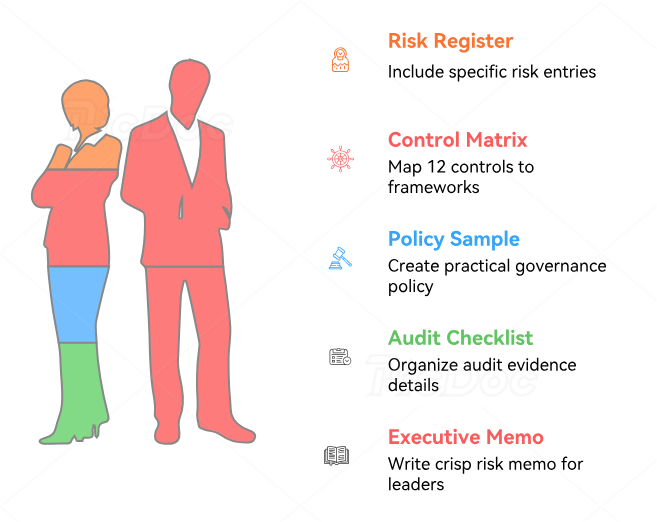
Finally, package your work. A GRC portfolio can include a risk register, control matrix, policy sample, vendor risk questionnaire, audit evidence checklist, executive risk summary, and remediation tracker. Place each project in a clean format and explain the business problem it solves. Hiring managers remember candidates who show artifacts because GRC work is artifact-heavy. This is especially powerful for people moving from security analyst roles, threat intelligence roles, incident responder pathways, or cybersecurity specialist to CISO tracks.
Quick Poll: What Is Blocking Your Move Into a GRC Specialist Role?
Pick the obstacle that feels most expensive right now, because your next learning move should solve the real bottleneck.
4. How to Build a GRC Portfolio That Gets Interview Attention
Your portfolio should make one thing obvious: you can turn messy risk into organized action. Start with a risk register for a realistic company. Include asset name, business process, threat, vulnerability, current control, likelihood, impact, inherent risk, treatment plan, owner, deadline, and residual risk. Make the entries specific. “Weak passwords” is too generic. “Privileged admin accounts lack quarterly access review and create unauthorized access exposure for customer billing systems” feels closer to real GRC work. Tie examples to privileged access management, data loss prevention, cloud security risks, and AI-driven cybersecurity tools when relevant.
Add a control matrix. Pick 12 controls and map them to framework requirements, control owner, evidence type, testing frequency, and remediation workflow. This shows that you understand how one control can satisfy multiple obligations. For example, access reviews can support internal policy, SOC 2, ISO 27001, and privacy expectations. Vulnerability remediation can support risk management, audit readiness, incident prevention, and customer trust. Strong candidates can connect this matrix to cybersecurity certifications, salary growth for security certifications, certifications of the future, and future cybersecurity skills.
Build one policy sample. Choose an acceptable use policy, access control policy, vendor risk policy, incident response policy, or vulnerability management policy. The policy should include purpose, scope, roles, requirements, review cadence, exceptions, enforcement, and related standards. The goal is to show practical governance, not legal decoration. A policy that never defines ownership creates confusion. A policy that never defines evidence creates audit gaps. A policy that never defines exceptions forces teams to hide reality. Connect this thinking to cybersecurity compliance officer careers, cybersecurity program manager roles, policy director pathways, and security leadership advancement.
Create an audit evidence checklist. Include the evidence request, source system, responsible owner, collection method, naming convention, retention location, and review status. This is the artifact that separates polished candidates from abstract learners. Employers know that audit work becomes painful when evidence is scattered across inboxes, screenshots, tickets, spreadsheets, and shared drives. Show that you can reduce that pain. This approach pairs well with knowledge of SIEM solutions, email security solutions, security awareness training platforms, and cybersecurity training providers.
Finish with an executive risk memo. Take one risk from your register and write a short memo for leadership. Explain the risk, business impact, current controls, decision needed, cost of delay, proposed treatment, owner, and deadline. Keep the language crisp. Leadership does not need a textbook; leadership needs a decision. This exercise prepares you for interviews where managers ask how you would communicate a failed control, overdue remediation item, risky vendor, or audit finding. It also helps you align with CISO career paths, director of information security roles, VP of cybersecurity advancement, and chief security architect careers.
5. Certifications, Job Titles, and Career Moves That Speed Up GRC Growth
For entry-level candidates, start with a broad security credential if you need baseline credibility. ISC2 Certified in Cybersecurity, CompTIA Security+, or a structured beginner program can help if your résumé lacks security vocabulary. If you already have IT, help desk, networking, SOC, or system administration experience, use the credential to support your transition rather than letting it carry the entire story. Pair your study with free cybersecurity resources, cybersecurity bootcamps and academies, global training providers, and cybersecurity certification directories.
For audit-focused GRC roles, CISA is highly relevant because it signals comfort with audit process, control evaluation, governance, and evidence. For risk-heavy roles, CRISC is strong because it aligns with enterprise risk thinking. For broader security leadership and mature GRC environments, CISSP can help because it covers governance, risk, security architecture, identity, operations, software security, and management concepts. ISO 27001 lead implementer or lead auditor training can help candidates targeting organizations with formal information security management systems. Privacy credentials can support roles tied to GDPR, data governance, and regulatory work. This connects naturally to GDPR cybersecurity challenges, privacy regulation predictions, future audit practices, and cybersecurity legislation impact.
Target job titles carefully. Search for GRC Analyst, Cybersecurity Compliance Analyst, IT Risk Analyst, Security Governance Analyst, Third-Party Risk Analyst, Information Security Analyst, IT Auditor, Security Compliance Specialist, Vendor Risk Analyst, and Risk Management Associate. Read descriptions closely. Some roles are policy-heavy, some are audit-heavy, some are vendor-heavy, some are technical control-heavy, and some are regulatory-heavy. If you want a more technical route, combine GRC with cloud security engineering, IoT security specialist careers, offensive security engineering, or threat intelligence analysis.
Your résumé should prove outcomes. Replace vague bullets with control-focused language. Instead of saying you “helped with compliance,” write that you “maintained an evidence tracker for 35 access control samples, coordinated remediation owners, and reduced overdue audit requests before the assessment deadline.” Instead of saying you “understand risk,” write that you “created a risk register that ranked cloud identity, vendor access, endpoint coverage, and vulnerability exposure by business impact.” Use language from cybersecurity workforce shortage research, cybersecurity workforce demographics, remote cybersecurity careers, and remote vs on-site salary analysis to understand how positioning affects opportunity.
The fastest route is often lateral. If you are already in IT, volunteer for access reviews, patch reporting, vendor reviews, asset inventory cleanup, policy updates, phishing tracking, backup testing documentation, or audit evidence collection. If you are in a SOC, ask to help with incident postmortems, control failure analysis, detection coverage mapping, and executive metrics. If you are in administration or operations, lean into documentation, process control, compliance tracking, stakeholder coordination, and reporting. GRC rewards people who can create order. This is why professionals moving from SOC analyst to SOC manager, security analyst to engineer, IT manager to security leadership, and cybersecurity specialist to educator can reposition their experience effectively.
6. FAQs About Becoming a GRC Specialist
-
The best first step is to learn one cybersecurity framework and turn it into a practical control checklist. Pick NIST CSF, ISO 27001, or SOC 2, then create sample controls, owners, evidence types, testing frequency, and remediation steps. This gives you a working foundation for cybersecurity frameworks, security audits, compliance analyst careers, and cybersecurity compliance officer roles.
-
You need practical technical literacy, especially around identity, endpoints, vulnerability management, logging, cloud, incident response, and data protection. You do not need to perform every technical task yourself, but you must understand enough to evaluate evidence and ask useful questions. Study EDR tools, SIEM solutions, cloud security tools, and vulnerability assessment tools.
-
Security+ is useful for broad cybersecurity credibility, while CISA is stronger for audit-oriented GRC and CRISC is stronger for risk-focused GRC. ISO 27001 training helps if you want roles connected to management systems, internal audits, and certification readiness. Review top cybersecurity certifications, salary growth for certifications, certification career impact, and future certification value before choosing.
-
Build a risk register, control matrix, audit evidence checklist, policy sample, vendor risk review, and executive risk memo. These projects show that you can do the actual work behind the title. Tie your examples to realistic areas like ransomware risk, phishing prevention, data breach mitigation, and cloud threat analysis.
-
Apply for GRC Analyst, IT Risk Analyst, Cybersecurity Compliance Analyst, Security Compliance Specialist, Vendor Risk Analyst, IT Auditor, Third-Party Risk Analyst, and Security Governance Analyst roles. If direct GRC jobs feel too competitive, build experience through SOC analyst roles, cybersecurity analyst careers, cybersecurity auditor pathways, or cybersecurity compliance analyst roadmaps.
-
Use examples with control ownership, risk scoring, evidence collection, stakeholder follow-up, and remediation pressure. A strong answer explains the business context, the control gap, the evidence reviewed, the risk decision, and the follow-up action. Build interview stories around incident response effectiveness, insider threat prevention, endpoint security effectiveness, and cybersecurity job market trends.
-
GRC can lead to compliance manager, risk manager, governance lead, security program manager, director of information security, VP of security, chief privacy officer, or CISO-track roles because it builds decision-making visibility. The work exposes you to executives, auditors, regulators, legal teams, vendors, and technical owners. Long-term growth connects naturally to cybersecurity manager pathways, director of information security careers, VP of cybersecurity advancement, and CISO roadmaps.
