
Detailed Career Path: Chief Privacy Officer (CPO) in Cybersecurity
A Chief Privacy Officer in cybersecurity sits where data protection, security governance, legal exposure, product design, incident response, and executive trust meet. The role requires fluency in cybersecurity compliance, privacy regulations, security audits, data breach risk, and governance frameworks. This career path shows how to grow from privacy, compliance, legal, security, audit, or risk roles into a CPO position that protects both people and the business.
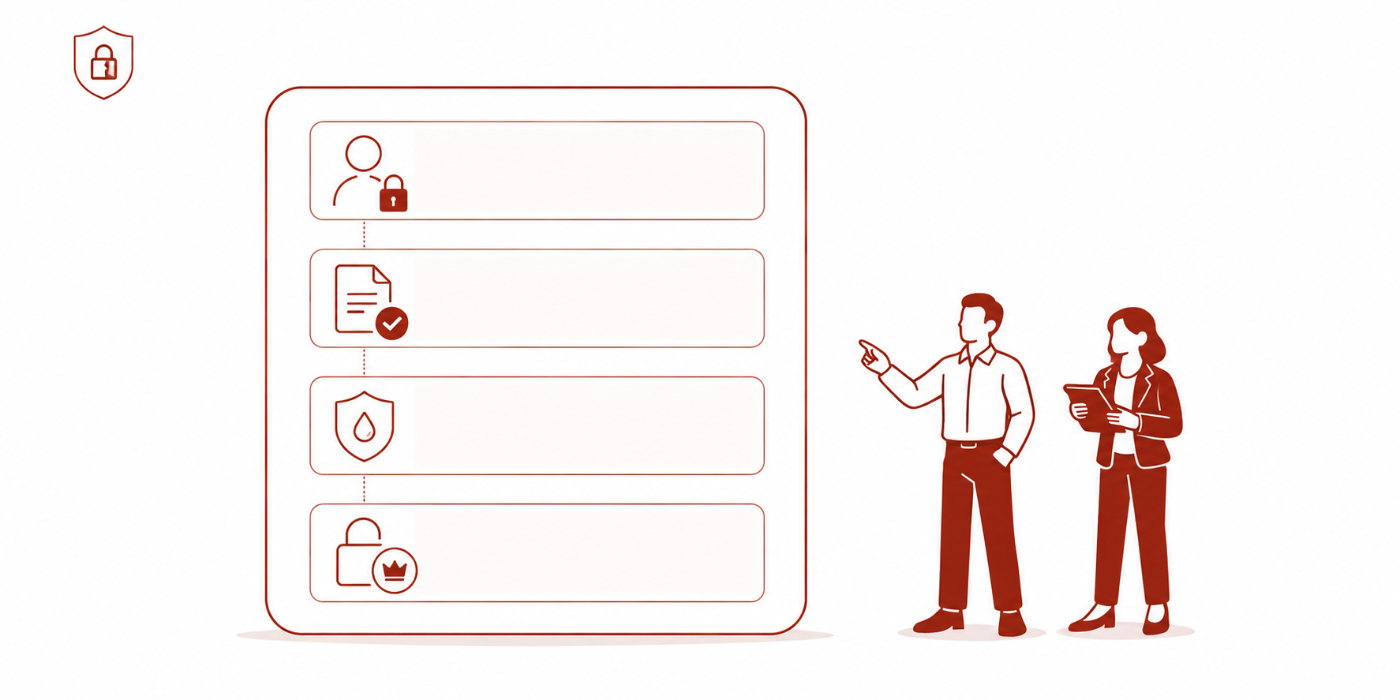
1. Understand What a Chief Privacy Officer Actually Owns in Cybersecurity
A Chief Privacy Officer owns the organization’s privacy strategy, privacy governance model, regulatory readiness, data-use accountability, and privacy risk posture. In cybersecurity-heavy organizations, the CPO works closely with the CISO, legal counsel, compliance teams, product leaders, data teams, and security operations. The job connects GDPR cybersecurity challenges, future compliance trends, NIST framework adoption, incident response planning, and data loss prevention into one executive discipline.
The CPO’s work becomes most visible when personal data is collected, stored, shared, analyzed, retained, deleted, exposed, or transferred across systems. That means a strong CPO must understand the lifecycle of sensitive information across cloud security environments, identity and access control models, encryption standards, PKI trust systems, and endpoint security programs. Privacy leadership depends on knowing where data lives and who can misuse it.
The role also demands executive courage. Privacy creates friction when business teams want faster personalization, product teams want more analytics, sales teams want richer customer data, and AI teams want broader training datasets. A CPO has to challenge risky collection, weak consent flows, poor vendor controls, vague retention policies, and untested breach notification playbooks. This is why the path often overlaps with cybersecurity compliance officer careers, cybersecurity auditor roles, security manager advancement, CISO career pathways, and cybersecurity legislation impact.
| CPO Competency | Why It Matters | Proof to Build | Best ACSMI Resource Path |
|---|---|---|---|
| Privacy governance | Turns scattered privacy duties into an accountable operating model. | Privacy charter, role map, reporting cadence. | Compliance trends report |
| Regulatory interpretation | Helps translate privacy obligations into enforceable business controls. | Regulation-to-control mapping. | Privacy regulations guide |
| GDPR readiness | Builds discipline around lawful basis, rights requests, retention, and transfer risk. | GDPR gap assessment. | GDPR cybersecurity guide |
| Future privacy strategy | Prepares the organization for tighter data-use expectations. | Three-year privacy risk roadmap. | GDPR 2.0 predictions |
| Security framework fluency | Connects privacy promises to cybersecurity control systems. | NIST, ISO, COBIT alignment map. | Cybersecurity frameworks guide |
| Audit leadership | Proves privacy controls can survive evidence review. | Audit evidence checklist. | Security audits guide |
| Data breach response | Determines whether exposure becomes controlled response or reputational collapse. | Breach notification decision tree. | Data breach report |
| Incident response coordination | Aligns legal, privacy, security, communications, and executive action during crises. | Privacy incident response playbook. | Incident response plan guide |
| DLP strategy | Protects sensitive data while reducing business workflow disruption. | DLP policy and exception review. | DLP strategies guide |
| Encryption governance | Supports defensible claims about data confidentiality and protection. | Encryption decision standard. | Encryption standards guide |
| Access control oversight | Reduces privacy exposure caused by excessive internal access. | RBAC review and privilege risk report. | Access control models |
| Cloud data governance | Controls sensitive data across SaaS, cloud workloads, storage, and analytics pipelines. | Cloud data inventory and risk register. | Cloud security tools |
| AI privacy risk | Prevents uncontrolled data use inside AI-assisted products and workflows. | AI data-use review checklist. | AI in cybersecurity report |
| Vendor privacy risk | Extends privacy accountability beyond the organization’s own systems. | Vendor data-processing review matrix. | Financial services cybersecurity firms |
| Healthcare privacy | Requires strict handling of protected health information and patient trust. | Healthcare privacy control map. | Healthcare compliance report |
| Financial privacy risk | Connects consumer data protection with fraud, regulatory scrutiny, and cyber resilience. | Financial data risk assessment. | Financial sector incidents |
| Government data protection | Supports mission, citizen trust, procurement accountability, and public-sector controls. | Public-sector privacy risk register. | Government cybersecurity firms |
| Education data privacy | Protects student records, identity data, research data, and institutional systems. | Education-sector privacy checklist. | Education cybersecurity directory |
| SMB privacy scaling | Helps smaller organizations create realistic privacy controls without enterprise budgets. | Minimum viable privacy program. | Small business cybersecurity solutions |
| Board communication | Converts technical privacy risk into executive decisions and funding logic. | Board-level privacy risk dashboard. | CISO roadmap |
| Compliance career depth | Builds a strong foundation for privacy leadership through control ownership. | Compliance control ownership portfolio. | Compliance officer roadmap |
| Audit career depth | Trains evidence discipline and defensible reporting. | Audit finding remediation tracker. | Cybersecurity auditor guide |
| Security leadership | Prepares CPOs to influence security, product, legal, and operations teams. | Cross-functional privacy operating model. | Security manager to director roadmap |
| Threat awareness | Helps privacy leaders understand how attackers exploit exposed personal data. | Threat-to-privacy impact analysis. | Top cybersecurity threats |
| Ransomware privacy impact | Links extortion, data theft, breach disclosure, and operational recovery. | Ransomware privacy impact playbook. | Ransomware response guide |
| Regional privacy strategy | Adapts privacy programs across North America, Europe, and Asia-Pacific. | Regional regulatory comparison brief. | Europe cybersecurity landscape |
| Career market awareness | Helps candidates understand executive privacy demand and compensation leverage. | CPO career positioning plan. | Cybersecurity job market trends |
| Executive compensation planning | Supports realistic long-term career decisions and negotiation readiness. | Privacy leadership salary benchmark file. | Cybersecurity salary report |
2. Build the Privacy, Security, and Compliance Foundation
The best route into a CPO role starts with command of privacy law concepts, cybersecurity controls, compliance evidence, and business risk. A future CPO should understand data minimization, consent, lawful basis, retention, subject rights, cross-border transfer, breach notification, third-party processing, and privacy-by-design. Those concepts become powerful when they are connected to security frameworks, NIST adoption, security audit processes, cybersecurity compliance trends, and future regulatory change.
A strong CPO candidate must also learn the technical systems that determine privacy outcomes. Personal data may sit inside CRM platforms, HR systems, marketing automation tools, data warehouses, customer support platforms, cloud storage, endpoint devices, application logs, backup systems, and AI workflows. That is why privacy leaders benefit from understanding cloud security careers, application security tools, data loss prevention software, endpoint detection and response, and SIEM capabilities.
The foundation should include incident response because privacy failures become urgent during breaches. A CPO must know when a security event becomes a privacy incident, what evidence is needed, who must be notified, which data categories are affected, which jurisdictions apply, and how communications should be approved. Study incident response execution, cybersecurity incident response effectiveness, data breach mitigation, ransomware recovery, and insider threat prevention to build crisis-ready judgment.
The pain point many candidates miss is evidence. Privacy leadership is full of good intentions that collapse under audit pressure. A policy saying “we protect data” has limited value without access reviews, data inventories, retention logs, vendor contracts, training completion records, encryption standards, breach tabletop notes, and exception approvals. That is why aspiring CPOs should practice turning privacy principles into artifacts: risk registers, DPIA templates, vendor questionnaires, transfer assessments, retention schedules, control matrices, executive dashboards, and audit-ready evidence packs.
3. Choose the Right Starting Path Based on Your Background
A legal or privacy professional should move toward cybersecurity fluency first. The goal is to become the privacy leader who understands how security controls actually work. Start with access control models, encryption standards, PKI components, DLP strategies, and cloud security tools. This path prevents the common weakness where privacy leaders can cite regulations but cannot challenge weak technical implementation.
A cybersecurity professional should move toward privacy governance and regulatory interpretation. Security analysts, engineers, compliance analysts, and managers already understand risk, controls, evidence, and incident workflows. Their CPO gap is usually legal sensitivity, data subject rights, privacy notices, vendor data processing, cross-border transfer logic, and board-level privacy communication. Resources like the cybersecurity compliance officer roadmap, cybersecurity auditor guide, security manager pathway, CISO roadmap, and future compliance analysis can help reframe security experience into executive privacy leadership.
An audit or compliance professional should build broader influence. Audit teaches evidence discipline, control testing, documentation standards, and remediation tracking. To become a CPO, that foundation must expand into product influence, executive reporting, privacy operations, breach decision-making, and regulatory strategy. Study security audit best practices, cybersecurity frameworks, healthcare compliance, GDPR cybersecurity, and privacy regulation predictions to connect controls with strategy.
A product, data, or technology leader should focus on privacy-by-design. These candidates often understand how data is collected and monetized, yet they may underestimate consent design, retention limits, vendor sharing, AI data-use boundaries, and breach obligations. They should study AI in cybersecurity adoption, AI-powered cyberattack predictions, future cybersecurity skills, application security tools, and cloud security trends.
Quick Poll: What Is Your Biggest Barrier to Becoming a Chief Privacy Officer?
Pick the gap that would create the most career risk if you stepped into a CPO-level conversation today.
4. Build the Portfolio and Leadership Proof That CPO Hiring Teams Trust
A CPO candidate needs proof that goes beyond years of experience. Build a privacy leadership portfolio that shows how you think, govern, escalate, and influence. The first artifact should be a privacy governance charter that defines ownership across legal, security, compliance, product, engineering, HR, marketing, sales, and vendor management. Anchor it in cybersecurity frameworks, security audit processes, compliance trends, future compliance regulation, and privacy legislation impact.
The second artifact should be a data inventory and classification model. A CPO cannot protect what the organization cannot locate. Your model should identify data categories, system owners, processing purposes, legal basis, retention periods, access groups, vendors, transfer regions, security controls, and deletion requirements. Connect this artifact to DLP strategies, cloud security tools, access control models, encryption standards, and endpoint security effectiveness.
The third artifact should be a DPIA or privacy impact assessment template. The template should force business teams to explain what data is collected, why it is necessary, how long it is retained, who receives it, whether sensitive categories are involved, how consent or legal basis is handled, and what controls reduce risk. This proves you can turn privacy from last-minute review into design-stage discipline. It also shows readiness for AI, analytics, and product environments shaped by AI-driven cybersecurity tools, AI-powered cyberattacks, future cloud security, application security tools, and zero trust security.
The fourth artifact should be a privacy incident response playbook. Include intake triggers, severity levels, evidence requirements, legal review checkpoints, notification decision logic, regulator communication workflow, customer communication workflow, executive escalation, and post-incident remediation. This is where CPO readiness becomes unmistakable because privacy leadership is tested hardest when data is exposed. Use incident response planning, data breach mitigation, ransomware response, phishing prevention, and insider threat prevention to make the playbook practical.
The fifth artifact should be a board-level privacy risk dashboard. It should show top privacy risks, regulatory exposure, breach readiness, vendor risk, DSAR performance, training completion, open remediation items, data retention exceptions, cross-border transfer issues, and AI data-use concerns. Executives want decision clarity, resource logic, and risk ownership. A strong dashboard converts operational detail into action, especially in industries covered by ACSMI’s healthcare cybersecurity report, financial sector analysis, government cybersecurity predictions, education cybersecurity predictions, and energy cybersecurity guidance.

5. Follow a 12- to 48-Month Roadmap Toward CPO Leadership
During the first 12 months, build your foundation and choose your strongest lane. If you are in compliance, deepen security fluency through NIST adoption, security audits, incident response, DLP strategies, and cloud security. If you are in security, build privacy fluency through privacy regulation trends, GDPR cybersecurity, future compliance, and cybersecurity compliance officer pathways.
During months 13 to 24, seek roles that create ownership. Strong titles include privacy program manager, data protection manager, cybersecurity compliance manager, privacy operations lead, governance risk and compliance manager, security audit manager, or privacy counsel with security scope. Your goal is to own measurable outcomes: lower DSAR backlog, improve vendor review completion, reduce data retention exceptions, mature breach response, map controls to regulations, or build privacy-by-design workflows. Use ACSMI’s cybersecurity job market trends, workforce shortage study, remote cybersecurity career predictions, salary report, and certification impact report to make practical career decisions.
During months 25 to 36, move from execution to leadership. This is where you should own privacy strategy, manage stakeholders, present to executives, negotiate tradeoffs, shape policy, influence product design, and lead privacy incident preparedness. Study adjacent executive pathways like security manager to director, CISO advancement, cybersecurity manager pathways, cybersecurity auditor careers, and cybersecurity instructor pathways to strengthen leadership, communication, and teaching ability.
During months 37 to 48, position for head-of-privacy, director of privacy, VP privacy, deputy CPO, or CPO roles. Your résumé should show enterprise impact, breach readiness, regulatory strategy, privacy operations maturity, cross-functional influence, and executive reporting. The strongest candidates can explain how they reduced privacy risk while enabling business growth. They can defend control decisions using cybersecurity market trends, North America cybersecurity analysis, Europe cybersecurity trends, Asia-Pacific cybersecurity data, and next-generation cybersecurity standards.
6. FAQs About Becoming a Chief Privacy Officer in Cybersecurity
-
A Chief Privacy Officer leads privacy strategy, data protection governance, regulatory readiness, breach-related privacy decisions, vendor data oversight, privacy-by-design, executive reporting, and privacy risk management. In cybersecurity-focused organizations, the CPO works closely with security teams handling incident response, DLP controls, cloud security, access control, and security audits.
-
A legal background helps, especially for regulatory interpretation and breach notification decisions. Strong CPOs also come from compliance, cybersecurity, audit, risk, governance, product, and data protection roles. The real requirement is the ability to connect privacy obligations with enforceable controls, evidence, executive decisions, and business workflows. A candidate can build this through privacy regulation analysis, GDPR cybersecurity guidance, cybersecurity frameworks, and compliance career planning.
-
Strong stepping-stone roles include privacy manager, privacy program manager, data protection officer, cybersecurity compliance manager, GRC manager, security audit manager, risk manager, privacy counsel, security governance lead, and director of privacy. Roles connected to cybersecurity auditing, compliance analysis, security management, incident response, and CISO leadership create especially relevant preparation.
-
The most important skills are privacy law interpretation, cybersecurity control fluency, data governance, incident response coordination, vendor risk management, executive communication, audit readiness, and cross-functional influence. A serious candidate should study DLP, encryption, access control, cloud security, NIST adoption, and incident response.
-
Build a privacy governance charter, data inventory model, DPIA template, vendor risk matrix, breach response playbook, retention policy, DSAR workflow, AI data-use review checklist, and board privacy dashboard. These artifacts show readiness better than vague leadership claims. Tie them to security audits, data breach mitigation, AI cybersecurity adoption, vendor and sector risk, and future privacy regulations.
-
A realistic path often takes several years because the role requires regulatory judgment, security understanding, leadership maturity, crisis handling, and executive trust. A senior privacy, legal, compliance, or cybersecurity professional may move faster with the right portfolio and leadership scope. Career acceleration usually comes from owning outcomes tied to compliance trends, breach response, audit readiness, security leadership, and executive cybersecurity pathways.
-
Create a privacy leadership gap map this week. List your strengths across regulation, controls, breach response, vendor risk, audit evidence, data governance, and executive reporting. Then build one artifact that closes the weakest area: a DPIA template, data inventory, breach playbook, control matrix, or board dashboard. Use ACSMI’s privacy regulation guide, cybersecurity compliance trends, security audit guide, incident response plan, and data loss prevention guide as your first resource stack.
