
Top Network Monitoring & Security Tools Directory (2026-2027 Updated)
Modern network monitoring is no longer just “uptime + bandwidth charts.” In 2026-2027, teams are defending hybrid estates, SaaS-heavy identity flows, cloud egress paths, encrypted traffic, remote endpoints, and API-driven business systems—all while trying to detect attacker behavior before it becomes an outage or breach. This directory is built for that reality.
If your team is drowning in alerts, blind to east-west traffic, or overpaying for overlapping tools, this guide gives you a practical selection framework, a high-value tool directory, architecture patterns, and deployment decisions that reduce risk and improve detection speed.
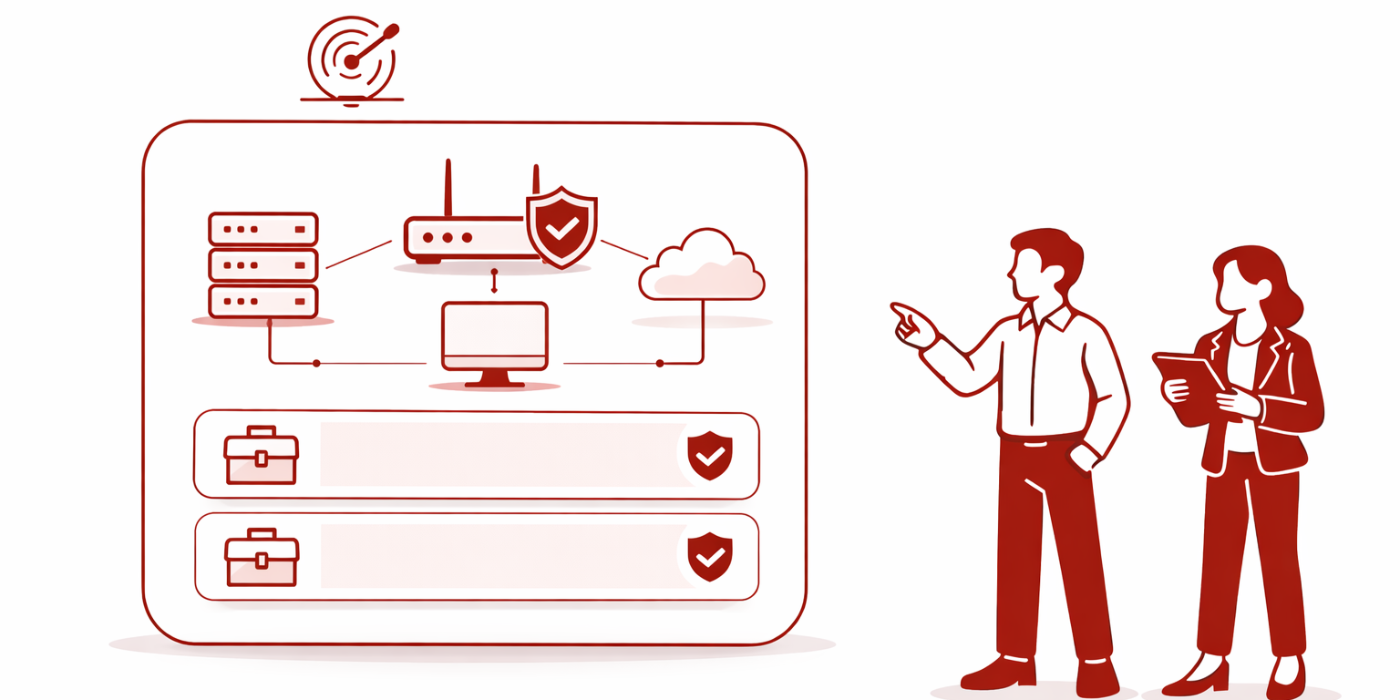
1: What “Good” Network Monitoring & Security Looks Like in 2026-2027
The biggest mistake teams make is evaluating network tools in isolation. A packet analyzer, a flow collector, a firewall manager, and a SIEM can all look “excellent” in demos—yet still leave operational blind spots when stitched into a real environment. The right stack is the one that helps your team see, prioritize, and respond faster across users, devices, workloads, and third parties.
A modern program usually combines telemetry from routing/switching layers, DNS, endpoints, cloud control planes, identity events, and application logs. That is why tool selection should be linked to your broader architecture decisions around SIEM visibility and event correlation, IDS deployment strategy, firewall configuration governance, and incident response execution. Teams that skip this alignment end up with noisy dashboards and weak detection outcomes.
For most organizations, “good” now means:
Coverage across on-prem, cloud, remote, and branch networks.
Flow + packet + log + identity context for investigations.
Meaningful alerting tied to attack paths (not raw thresholds only).
Fast triage workflows that feed CTI analysis processes and vulnerability assessment priorities.
Policy alignment with NIST/ISO/COBIT controls and audit-ready evidence for security audits best practices.
Integration into zero trust and identity-centric defense strategies, especially given the direction outlined in future zero trust predictions and future cloud security trends.
You also need to separate monitoring for operations from monitoring for adversary detection. A network performance monitor can tell you a link is saturated. A network detection and response tool can tell you the saturation is caused by exfiltration over an approved service. Blending those outcomes into one decision plane is where strong teams win.
Another high-impact shift: network monitoring must now account for identity abuse and cloud-native control paths. If your monitoring stack cannot map suspicious traffic to identity events, you will struggle with token misuse, consent abuse, or session replay. That threat convergence is already visible in broader top cybersecurity threat forecasts, AI-powered attack trends, and deepfake-enabled fraud risk.
Finally, do not buy tools to “replace analyst judgment.” Buy them to compress analyst time. The organizations that make the biggest gains are the ones that pair tools with clear workflows, realistic staffing plans, and a roadmap for future cybersecurity skills, specialized role demand, and automation’s impact on the workforce.
2: The Actual Directory — Top Network Monitoring & Security Tool Categories You Should Evaluate
This section is intentionally structured as a buyer’s directory by function, not a hype list of logos. Why? Because many teams start with “Which product is best?” when the real question is “Which capability gap is hurting us most right now?” If you diagnose the gap first, your shortlist gets dramatically better.
1) Network Performance Monitoring (NPM) Platforms
These tools are still foundational. They track device health, interface utilization, jitter, latency, packet loss, and topology dependencies. They matter because performance anomalies are often the first sign of an attack, misconfiguration, or failing control. A DDoS, lateral scan, crypto-miner, or malware beacon storm often surfaces as “performance degradation” before anyone labels it security.
Use these tools alongside DoS mitigation planning, SIEM correlation workflows, firewall tuning guidance, and incident response playbooks so NetOps alerts do not die in isolation.
Selection criteria that matter (not fluff):
Polling efficiency at your scale.
Hybrid topology mapping (cloud + on-prem + SD-WAN).
Root cause features that reduce escalations.
Integration quality into security audits and framework-aligned controls.
2) Flow Analytics (NetFlow/sFlow/IPFIX) Tools
Flow analytics gives you the “who talked to whom, how much, and when” layer without the storage cost of full packet capture. This is one of the highest-value investments for organizations that need broad visibility but cannot justify full PCAP retention everywhere.
It becomes especially powerful when combined with cyber threat intelligence collection, vulnerability scanning prioritization, endpoint telemetry from EDR strategies, and future endpoint security trends.
Best fit: detecting traffic anomalies, exfil patterns, shadow services, and bandwidth abuse in hybrid networks.
3) IDS / IPS and NDR Platforms
This is where many teams get confused. IDS/IPS and NDR are related but not interchangeable.
IDS/IPS excels at known attack patterns and policy-driven network protection.
NDR excels at behavior, anomaly correlation, and lateral movement detection.
A mature program often uses both, then pipelines the evidence into next-gen SIEM workflows, IR execution practices, ransomware recovery response planning, and botnet disruption investigations.
Pain point to avoid: buying a detection product with a flashy dashboard but no practical investigation timeline, no packet pivoting, and poor alert explainability.
4) SIEM / XDR / SOC Correlation Layers
If your network tools cannot feed a correlation engine, your analysts will spend their time copy-pasting across consoles. That is how real attacks survive. You need a central analysis layer that merges network telemetry with identity, endpoint, email, cloud, and application events.
Build your shortlist with awareness of:
5) Cloud, API, and Identity-Centric Monitoring
The network perimeter is no longer the perimeter. Your riskiest “network” events may now be API abuse, token replay, over-privileged service access, or cloud misrouting. This is why modern monitoring decisions must connect to cloud security career and architecture thinking, future cloud security predictions, future compliance trends, and privacy regulation evolution.
6) Supporting Control Layers That Make Monitoring Useful
Monitoring without enforcement and response is expensive visibility. Your stack becomes much more valuable when paired with:
This is also where many teams discover they need external support from training providers, free cybersecurity learning resources, and certification pathways to operate the tooling they already purchased.
3: How to Choose the Right Tools Without Creating Overlap, Noise, or Budget Waste
Buying a strong tool and failing operationally is more common than buying a weak tool. Most failures come from one of five causes: unclear use cases, poor telemetry design, weak ownership, no tuning budget, or no response process. The fix is a selection framework that forces clarity before procurement.
Step 1: Start With Attack Paths, Not Vendor Categories
Define your top attack paths first:
Ransomware ingress → privilege escalation → lateral movement → exfiltration.
Identity abuse → SaaS persistence → mailbox manipulation → fraud.
Cloud/API misuse → token replay → data exposure.
Vendor access abuse → internal pivoting.
Then map which controls detect each stage. This is easier when your team already uses frameworks from ransomware response planning, AI-enabled threat prediction, deepfake threat preparedness, and top 2030 threat forecasting.
Step 2: Define What “Detection Quality” Means for Your Team
Do not accept vague claims like “AI-powered anomaly detection.” Ask:
Can the alert be explained?
Can analysts pivot from flow to packet/log/user/device context?
What is the expected tuning period?
Which detections are out-of-box vs. custom?
How are false positives suppressed without hiding weak signals?
These questions connect directly to SIEM practice maturity, CTI integration quality, vulnerability management prioritization, and future audit innovation expectations.
Step 3: Design for Operations Reality (Not Aspirational Staffing)
If you do not have 24/7 analysts, do not build a stack that requires 24/7 manual triage. Your options:
Simplify and centralize into fewer platforms.
Use managed coverage via MSSPs.
Automate enrichment, not auto-remediation, at first.
Invest in playbooks and escalation thresholds.
This decision also ties to hiring and skills strategy, including job market trend predictions, remote cybersecurity career patterns, future competencies by 2030, and specialized role demand forecasts.
Step 4: Prioritize Integrations That Remove Analyst Friction
A tool is not “integrated” because it can export CSVs. Real integration means:
Shared identity and asset context.
Bi-directional case updates.
Time-synced events.
API support for enrichment and response.
Evidence exports for compliance and audit.
Evaluate integrations against your current stack: SIEM platforms, EDR solutions, email security tools, penetration testing tools, and vulnerability scanner ecosystems.
Step 5: Buy for Evidence and Improvement, Not Just Alerts
The best monitoring stacks do three things:
Detect faster
Investigate faster
Prove control effectiveness over time
That third point is critical for security audits, compliance trend readiness, privacy regulation changes, and sector-specific risk governance in finance, healthcare, manufacturing, retail/e-commerce, government, education, and energy/utilities.
Pick the one issue that causes the most risk or rework in your environment. The goal is focus—not perfection.
4: Reference Architecture — A Practical Network Monitoring & Security Stack for Most Organizations
If you want a stack that survives real-world operations, think in layers instead of products. This prevents overspending and gives you a roadmap for phased upgrades.
Layer 1: Telemetry Collection (Raw Visibility)
This includes:
NPM (availability, device health)
Flow telemetry (NetFlow/sFlow/IPFIX)
Selective packet capture
DNS/proxy/email telemetry
Endpoint and cloud logs
Your objective here is coverage, not sophistication. If coverage is weak, advanced analytics cannot save you. Align this layer with IDS deployment choices, firewall architecture decisions, VPN limitations for remote access visibility, and PKI/certificate dependencies.
Layer 2: Detection & Correlation
This is where SIEM, NDR, IDS/IPS, XDR, and threat intel enrichment operate. Mature teams also add deception telemetry in high-value internal segments.
To keep this layer effective:
Normalize timestamps and identities.
Tag assets by business criticality.
Map detections to response playbooks.
Tune for environment-specific baselines.
This layer gets stronger when connected to CTI programs, ransomware recovery planning, botnet disruption patterns, and DoS response strategy.
Layer 3: Response, Containment, and Evidence
Monitoring is only valuable if it changes outcomes. This layer includes:
Case management / SOAR workflows
EDR host isolation
Firewall or NAC enforcement
DLP policy response
Audit-ready reporting and evidence export
Tie this into incident response development, security audit practices, framework alignment, and future compliance/regulatory trends.
Layer 4: Workforce and Operating Model
Even the best stack fails if ownership is unclear. Define who owns:
Sensor deployment
Detection tuning
Alert triage
Escalation to IR
Reporting to leadership
Vendor renewal and capability reviews
This is where many teams benefit from structured learning paths through cybersecurity training provider directories, free learning resources, certification directories, and role-specific career planning such as cybersecurity auditor, cybersecurity instructor, curriculum developer, and IoT security specialist.

5: 2026-2027 Buying Trends, Mistakes to Avoid, and a Smart Rollout Plan
What’s changing in 2026-2027 (and why it affects tool selection)
The strongest trend is not “more tools”—it is convergence with accountability. Buyers want platforms that can prove detections, reduce analyst toil, and support compliance evidence. That pressure is being shaped by:
At the same time, “AI-powered monitoring” claims are multiplying. Treat AI as a force multiplier for correlation and triage—not a substitute for telemetry quality, detection engineering, or incident response planning. If the raw data is weak, the model output will be confidently wrong.
Expensive mistakes organizations keep repeating
1) Buying duplicate visibility
A team buys NDR, XDR, and SIEM features that all claim similar detections but never defines which platform is primary for alerting. Result: duplicated noise, analyst confusion, and renewal pain.
2) Ignoring asset and identity context
Tools alert on IPs while your business operates on users, apps, and data sensitivity. Without context from access control models, DLP policy strategy, and cloud identity controls, triage becomes guesswork.
3) Underfunding tuning and validation
Many teams budget for licenses, but not for deployment architecture, rule tuning, enrichment, and tabletop validation. You need implementation time tied to security audit readiness, vulnerability validation cycles, and penetration testing/tool validation workflows.
4) Measuring success by dashboard aesthetics
Pretty dashboards do not reduce dwell time. Measure:
Mean time to detect (MTTD)
Mean time to investigate (MTTI)
Analyst steps per incident
False positive rate by use case
Coverage of critical assets and business apps
A smart rollout plan (works better than “big bang” replacements)
Phase 1: Baseline and gap mapping (30-60 days)
Inventory current tools, data feeds, alert volume, and top attack paths. Cross-reference with your existing SIEM, IDS, firewall, and IR plan.
Phase 2: High-fidelity telemetry upgrades (60-90 days)
Add or improve flow analytics, critical packet capture points, DNS logging, and cloud network telemetry. Validate with CTI enrichment, endpoint visibility, email telemetry inputs, and vulnerability scanner outputs.
Phase 3: Detection engineering and response alignment (90-120 days)
Tune detections to your environment, map alerts to playbooks, and define escalation ownership. This is where you connect technical controls to audit best practices, compliance forecasts, and sector risk models like finance and healthcare.
Phase 4: Consolidation and optimization (ongoing)
Retire overlaps, standardize workflows, and review renewals against measurable outcomes. Revisit whether some functions are better handled through MSSPs, or whether in-house capability should expand through training/certification pathways.
6: FAQs — Top Questions Teams Ask Before Choosing Network Monitoring & Security Tools
-
Network monitoring usually focuses on availability, performance, and capacity (latency, loss, utilization, device health). Network security monitoring focuses on detecting malicious or risky behavior (lateral movement, beaconing, exfiltration, protocol abuse, suspicious access patterns). In practice, mature teams combine both and feed results into SIEM correlation, IDS/NDR workflows, and incident response operations.
-
Often, yes—because they solve different problems. A SIEM centralizes and correlates logs across systems, while NDR specializes in network behavior analytics and lateral movement detection. If your team is small, you may start with one platform and expand later, but you should evaluate how it integrates with next-gen SIEM trends, EDR/XDR options, and MSSP support models.
-
You have too many tools when:
Analysts receive duplicate alerts from multiple platforms.
No one can explain which system is the “source of truth.”
Triage requires manual pivoting across 4+ consoles.
Renewal spend increases while detection metrics stay flat.
Use your architecture and process guides—framework mapping, security audit practices, vulnerability management workflows, and CTI processes—to reduce overlap by role and use case.
-
Start with high-value visibility and response fundamentals:
Firewall and secure remote access visibility
Endpoint telemetry (EDR or equivalent)
Centralized log collection/SIEM-lite or MSSP-backed monitoring
DNS/email security telemetry
A real IR plan and testing cadence
This aligns with firewall guidance, VPN limitations, email security solution directories, IR planning, and SMB legislation impact trends.
-
Ask for evidence, not slogans:
Show example detections with explanation.
Show false positive controls.
Show analyst workflow improvements.
Show how models adapt to your environment.
Show what happens when data sources are missing.
Then validate against your environment using penetration testing tools, vulnerability scanner outputs, CTI enrichment, and ransomware/AI attack scenario planning.
-
For most organizations, ownership should be shared but explicit:
NetOps owns connectivity health, topology integrity, and device lifecycle.
SecOps owns detection logic, alert triage, and response coordination.
Platform/Engineering supports data pipelines and integrations.
Governance/Risk/Compliance maps evidence to audit needs.
This model supports security audit readiness, future cybersecurity audit practices, compliance trend preparedness, and sustainable talent growth via training providers.
-
Run a formal review at least annually, and a lightweight review quarterly. Triggers for earlier review include:
Major cloud migration
Remote workforce expansion
New compliance obligations
M&A/vendor onboarding
Rising alert volume without improved outcomes
Repeated incidents in the same detection gap
Tie these reviews to your threat horizon using top threat forecasts, zero trust evolution, cloud security trend analysis, and future skills planning.
