
The Ultimate Guide to Getting Advanced Cybersecurity & Management Certification in Switzerland: Everything You Need to Know in 2026–2027
Switzerland’s financial institutions, pharmaceutical companies, technology providers, public authorities, and critical-infrastructure operators need cybersecurity professionals who can connect technical evidence with regulatory exposure and business continuity. An Advanced Cybersecurity & Management Certification can help candidates build that range, especially when paired with an intentional cybersecurity career transition, a defined risk-management pathway, practical incident-response capability, and credible security-leadership development. This guide explains how to choose, complete, and convert advanced certification into measurable career leverage in Switzerland during 2026–2027.
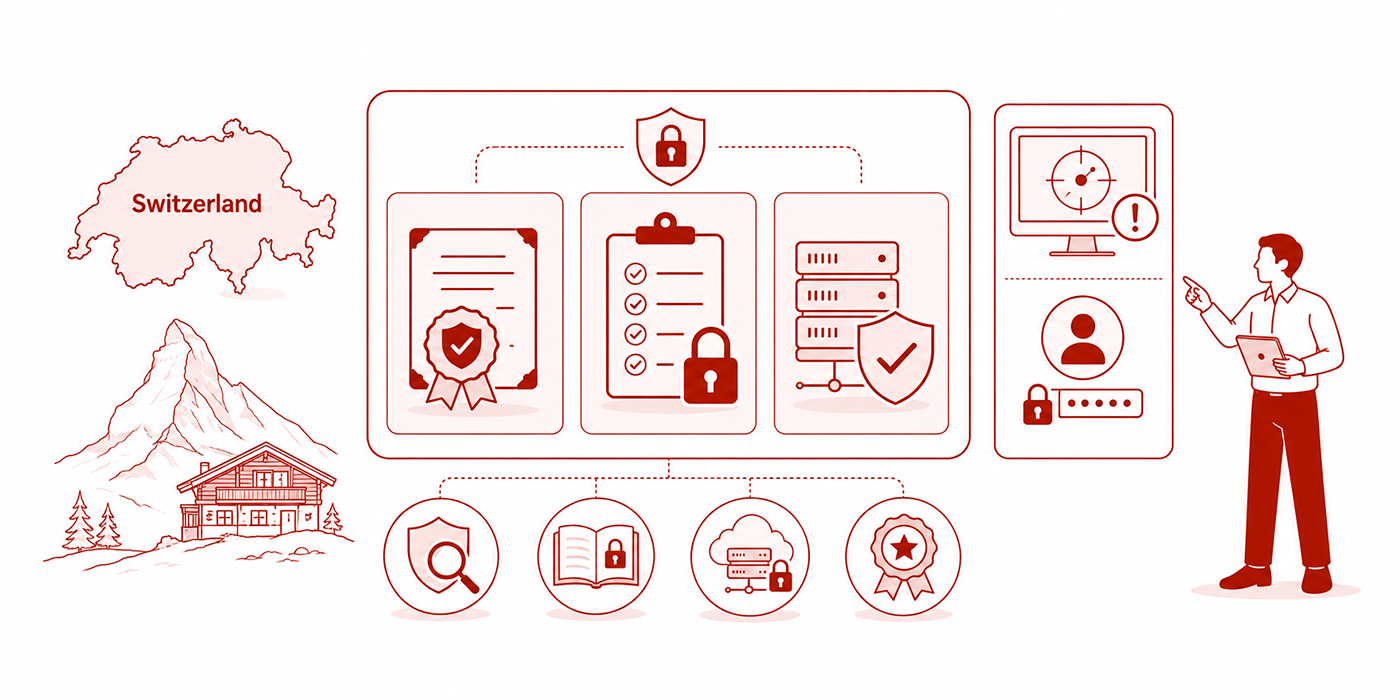
1. Why Advanced Cybersecurity and Management Certification Matters in Switzerland
Switzerland’s cyber environment rewards professionals who understand how threats affect regulated operations. Banks need resilient critical functions, healthcare organizations handle sensitive personal data, pharmaceutical companies protect intellectual property, and manufacturers depend on connected operational technology. Professionals following a cybersecurity analyst pathway, digital identity career roadmap, cybersecurity audit pathway, or security architecture route therefore need enough technical depth to challenge weak controls and enough management judgment to prioritize remediation.
The Swiss National Cyberstrategy establishes five strategic objectives covering empowerment, secure digital services and infrastructure, incident detection and management, cybercrime prosecution, and international cooperation. Its implementation creates demand for professionals who can contribute to resilience across private companies, cantonal bodies, federal institutions, and critical services. A strong cybersecurity program manager must translate those priorities into funded initiatives, while a cybersecurity policy analyst, regulatory specialist, or GRC specialist must connect legal obligations to evidence-based controls.
Since April 1, 2025, designated critical-infrastructure operators have had to report qualifying cyberattacks to the National Cyber Security Centre within 24 hours of discovery, followed by supplementary information within 14 days. Sanctions for reporting failures took effect in October 2025. By the end of 2025, the NCSC had received hundreds of mandatory reports, with public administration, IT and telecommunications, banking, and insurance among the most represented sectors. These requirements raise the value of incident-response leadership, cybersecurity policy direction, security automation expertise, and senior security management. The reporting timeline and covered entities are explained by the Swiss NCSC.
Switzerland’s revised Federal Act on Data Protection has applied since September 1, 2023. It strengthened data-subject rights, controller obligations, breach reporting, and regulatory supervision. Candidates pursuing a cybersecurity privacy analyst career, chief privacy officer pathway, cybersecurity regulatory career, or risk-management specialization should understand privacy by design, data inventories, impact assessments, breach escalation, processors, retention, and cross-border transfers. The Federal Data Protection and Information Commissioner confirms the law’s expanded obligations and supervisory scope.
2. How to Choose the Right Certification Path for the Swiss Market
Start with the role you want employers to consider you for within the next 12 months. A broad program such as the Advanced Cybersecurity & Management Certification can build connected capability across governance, cloud, security operations, incident response, offensive testing, and management. Specialized candidates should then deepen the domain that determines their target role: red-team operations, vulnerability research, cybersecurity privacy, or security automation.
Use four filters before paying for any program. First, verify curriculum coverage against actual vacancies. Second, establish whether assessment requires applied decisions, projects, labs, or scenario analysis. Third, determine whether the provider supplies verifiable completion evidence. Fourth, calculate the total cost, including examination attempts, lab access, renewal fees, travel, and study time. This prevents an expensive collection of credentials that fails to support a coherent penetration-testing career, security architecture pathway, GRC career, or cybersecurity leadership transition.
For technical operations, prioritize network traffic analysis, endpoint telemetry, SIEM investigation, cloud logging, incident containment, and evidence handling. Build toward roles described in the incident responder career guide, offensive security roadmap, ethical-hacking transition plan, and AI security analyst guide. Employers gain confidence when your portfolio shows how you reached a conclusion, verified it, contained the risk, and communicated the remaining exposure.
For governance and leadership, prioritize FADP, ISO 27001, risk treatment, supplier assurance, operational resilience, metrics, policy enforcement, crisis management, and executive reporting. FINMA’s Circular 2023/1, effective since January 2024, addresses operational risks, ICT, critical data, cyber risk, and operational resilience in banking. Professionals considering cybersecurity program management, cybersecurity policy leadership, chief privacy officer development, or VP-level security advancement should study how controls protect critical services through disruption. FINMA’s operational-resilience guidance provides valuable context.
Language can materially affect opportunity. English commonly supports multinational technology, pharmaceutical, consulting, and financial-sector teams. German expands access across Zurich, Basel, Bern, and much of the German-speaking market; French strengthens candidacy around Geneva, Lausanne, and federal or international organizations; Italian is useful in Ticino. A candidate building a research analyst career, security product management pathway, cybersecurity trainer profile, or policy analyst career should treat local-language development as a market-access investment.
3. A Practical 8-Week to 6-Month Completion Plan
During weeks one and two, establish your baseline. Test yourself across networking, operating systems, identity, cloud, governance, risk, incident response, and secure architecture. Choose one primary role and one adjacent role; for example, SOC analyst plus incident responder, GRC analyst plus privacy analyst, or security engineer plus architect. Use the IT-support transition roadmap, risk specialist pathway, privacy analyst guide, and chief security architect roadmap to define the evidence expected at each level.
During weeks three through six, use a learn–apply–explain cycle. After studying a concept, perform a practical task and produce a short artifact. A lesson on IAM should end with an access-review worksheet. Incident-response training should produce a severity matrix and timeline. Privacy instruction should generate a data map and breach-escalation workflow. This method strengthens the capabilities required in digital identity management, incident response, cybersecurity auditing, and regulatory compliance.
During weeks seven and eight, complete a Swiss-relevant capstone. A strong scenario could involve ransomware at a regulated financial institution, unauthorized access to pharmaceutical research, cloud-account compromise at a multinational, or a reportable attack affecting critical infrastructure. Include an executive summary, asset and data scope, attack narrative, regulatory triggers, containment decisions, evidence register, recovery priorities, and lessons learned. Such a project can support interviews for security program management, penetration-testing management, cybersecurity policy direction, and senior security leadership.
Learners using a three-to-six-month schedule should add deeper specialization after the core material. Build detections and automation for a cybersecurity automation role; reproduce vulnerabilities safely for a vulnerability researcher career; analyze smart-contract controls for a blockchain security pathway; or investigate migration risks for a quantum security career. Each project should contain assumptions, tools, decisions, limitations, results, and remediation priorities.
4. How to Turn Certification Into Swiss Career Evidence
A certificate verifies completion. Your portfolio must reveal professional judgment. For every major domain, build one employer-readable artifact: a detection rule with tuning rationale, a risk register with prioritization logic, an incident report with decision timestamps, a cloud architecture review, or a policy mapped to owners and evidence. This approach strengthens applications across the security analyst pathway, incident-response career track, GRC specialist route, and security architecture roadmap.
Create a portfolio case around the Swiss critical-infrastructure reporting obligation. Begin with a fictional attack, determine whether the event affects service functionality, manipulates or leaks information, or involves coercion, and then draft the first 24-hour report. Add the information that would follow within 14 days. This exercise develops evidence relevant to cybersecurity policy analysis, incident-response leadership, security program management, and cybersecurity regulation. The NCSC’s reporting guidance supplies the authoritative trigger and process.
Build a second case around FADP. Map personal data, identify processors, document transfers, evaluate high-risk processing, propose privacy-by-design controls, and create a breach decision tree. Include technical measures such as encryption, privileged-access monitoring, retention enforcement, and secure deletion. This connects the expectations found in a privacy analyst career, chief privacy officer pathway, cybersecurity audit role, and risk-management career. The FDPIC’s cross-border transfer guidance explains adequacy, contractual safeguards, and binding corporate rules.
Rewrite your résumé around outcomes and decisions. “Used Splunk” communicates exposure to a tool. “Created and tuned a suspicious-authentication detection, reduced false-positive drivers, documented escalation thresholds, and mapped response ownership” communicates capability. Apply this evidence pattern to red-team operations, ethical hacking, cybersecurity data science, and AI security analysis. Remove unsupported proficiency claims and replace them with scope, action, result, and business relevance.
Interview preparation should focus on defensible trade-offs. Expect questions about containment versus service availability, immediate remediation versus compensating controls, centralized visibility versus data minimization, and standardization versus local operational requirements. Practice answering through the perspectives of a cybersecurity product manager, penetration-testing manager, cybersecurity program manager, and chief security architect. State the decision, governing constraint, evidence, alternative, and residual risk.

5. Costs, Salaries, Recognition, and Employment Realities
Evaluate cost through total career value. Combine tuition, assessment fees, laboratory subscriptions, renewal requirements, study hours, and lost earning time. Then identify the professional outputs the program will help you produce. ACSMI describes its Advanced Cybersecurity & Management Certification as an online multi-domain program with more than 170 CPD hours, 300-plus interactive modules, practical labs, simulations, and a capstone. Compare these elements with the capabilities needed for cybersecurity audit, security regulation, incident response, and security leadership before enrolling.
Recognition needs careful language. A professional certificate can strengthen continuing education, specialist knowledge, and employer-facing evidence. Academic recognition, regulated-profession recognition, immigration eligibility, and employer acceptance are separate decisions. Switzerland’s State Secretariat for Education, Research and Innovation directs applicants to Recognition.swiss to determine whether a profession or foreign qualification requires formal recognition. Cybersecurity roles are generally evaluated through employer requirements, experience, education, skills, and work authorization, though a specific position may impose additional conditions. Review the SERI guidance alongside your regulatory specialist pathway, cybersecurity trainer route, research analyst career, and security-policy track.
Salary claims should account for canton, sector, seniority, company size, education, language, and management responsibility. Zurich financial-services compensation may differ sharply from an entry-level role elsewhere, while consulting, pharmaceuticals, critical infrastructure, and global technology companies apply different pay structures. Switzerland’s Federal Statistical Office provides the Salarium salary calculator, allowing candidates to estimate a wage range from profile variables. Use it when pricing a move into cybersecurity risk management, digital identity, security architecture, or cybersecurity program management.
International candidates must separate certification planning from immigration planning. EU/EFTA nationals benefit from the applicable free-movement framework and registration requirements. Third-country nationals generally need to qualify as managers, specialists, or other highly skilled professionals; permits are limited, and the Swiss employer normally submits the application and demonstrates labor-market considerations. The State Secretariat for Migration explains these conditions. A portfolio aligned with advanced offensive security, cybersecurity automation, quantum security, or senior security leadership can make specialist value easier to demonstrate.
Your strongest 2026–2027 strategy combines one broad capability program, one target role, one Swiss-relevant portfolio, and one measured employment campaign. Track applications, response rates, screening failures, technical-interview gaps, and language barriers. If interviews expose weak detection knowledge, deepen your analyst and responder skills. If employers question leadership scope, develop program-management evidence. If governance dominates your target vacancies, strengthen your GRC specialization and cybersecurity policy expertise.
6. Frequently Asked Questions
-
It can be valuable when the curriculum supports your target role and produces evidence employers can assess. Professionals pursuing a security analyst career, GRC specialization, incident-response pathway, or security management transition should connect every major learning domain to a portfolio artifact, interview narrative, or workplace improvement.
-
ACSMI presents the program as accessible to beginners, career changers, IT professionals, and aspiring security leaders. A beginner should devote extra time to networking, operating systems, identity, command-line work, and log analysis. The IT-support transition guide, ethical-hacking pathway, research analyst guide, and cybersecurity bootcamp instructor pathway can help learners understand how foundational knowledge develops into professional capability.
-
Employment depends on role fit, practical capability, language, professional experience, labor-market conditions, interview performance, and work authorization. Certification provides a structured signal whose value increases when supported by projects. Candidates should align their evidence with a defined privacy career, security audit pathway, automation engineering role, or chief security architect track.
-
Prioritize the Federal Act on Data Protection, the Information Security Act, the Cybersecurity Ordinance, the critical-infrastructure reporting obligation, and sector-specific requirements affecting your target employer. Financial-services candidates should also study FINMA expectations concerning cyber risk, outsourcing, critical data, and operational resilience. This regulatory knowledge supports careers in cybersecurity policy, privacy leadership, regulatory specialization, and risk management.
-
The answer depends on employer, canton, team, and stakeholder exposure. English may support work in multinational environments, while German or French can materially expand access to local organizations and client-facing responsibilities. Language becomes especially important in cybersecurity policy leadership, security program management, cybersecurity training, and executive security advancement, where communication spans technical and nontechnical groups.
-
Include three to five redacted, fictional, or lab-based artifacts: an incident report, risk assessment, cloud or network architecture review, FADP data-protection case, and executive security briefing. Offensive candidates can add an authorized penetration-test report; defensive candidates can add a detection rule and tuning log. These assets support red-team careers, penetration-testing management, AI security analysis, and cybersecurity data science.
