
Career Guide to Cybersecurity Research Analyst
A cybersecurity research analyst studies threats before they become business damage. This career fits people who enjoy investigation, pattern recognition, technical reading, attacker behavior, vulnerability trends, and evidence-backed reporting. The role connects deeply with emerging cybersecurity threats, cybersecurity incident response, threat intelligence analyst careers, and long-term cybersecurity job market trends. If you can turn messy signals into clear security insight, this path can become one of the most intellectually rewarding careers in cyber.
1. Understand What a Cybersecurity Research Analyst Actually Does
A cybersecurity research analyst helps organizations understand what is changing in the threat landscape, why it matters, and what security teams should do next. This can include tracking malware campaigns, analyzing phishing patterns, studying ransomware behavior, monitoring dark-web chatter, reviewing vulnerability disclosures, comparing attacker tactics, researching cloud exposures, or converting technical findings into executive-ready briefings. The work sits close to threat intelligence analysis, incident responder careers, SOC analyst pathways, and cybersecurity vulnerability research.
The major pain point in this career is ambiguity. A SOC analyst may have alerts, tickets, and escalation rules. A research analyst often has fragments: suspicious infrastructure, incomplete indicators, scattered reports, partial telemetry, vendor claims, public advisories, and uncertain attacker intent. Your value comes from disciplined judgment. You must know when the evidence supports a conclusion, when it only suggests a possibility, and when the business needs a practical recommendation despite imperfect data. This is why strong researchers study security audits, vulnerability assessment techniques, cybersecurity frameworks, and cybersecurity compliance trends together.
A cybersecurity research analyst can work in a vendor research lab, threat intelligence team, consulting firm, managed security provider, financial institution, healthcare organization, government contractor, education sector, or critical infrastructure environment. The career can also expand into malware analysis, vulnerability research, AI security research, cloud security research, cyber policy, security journalism, intelligence briefings, or product research. The strongest candidates build proof through reports, labs, OSINT projects, tool comparisons, and topic-specific research using resources like the cybersecurity research organizations directory, cybersecurity blogs and news sites directory, cybersecurity podcasts directory, and cybersecurity books directory.
2. Build the Technical Foundation for Cybersecurity Research Work
A cybersecurity research analyst needs broad technical literacy before deep specialization. You need to understand networks, identity, endpoints, applications, cloud environments, vulnerabilities, logging, attacker tactics, and defensive controls well enough to ask intelligent questions. Research collapses when the analyst can gather information but cannot interpret the security meaning. This is why early-stage researchers should study access control models, network monitoring tools, endpoint security providers, and cloud security tools as connected parts of one security system.
Start with the analyst base: TCP/IP concepts, authentication, authorization, common ports, logging basics, Windows and Linux fundamentals, web application behavior, malware categories, vulnerability scoring, and basic scripting. Then connect those concepts to the real security workflow through the SOC analyst career guide, the security analyst to cybersecurity engineer roadmap, the senior cybersecurity analyst pathway, and the comprehensive cybersecurity analyst advancement guide. Research becomes sharper when you understand how findings affect frontline teams.
The next layer is threat behavior. A researcher should know how attackers gain initial access, establish persistence, escalate privileges, evade detection, move laterally, exfiltrate data, and pressure victims. You can study this through ransomware analysis, phishing research, cloud incident patterns, AI-enabled attacks, and insider-threat reports. Use the state of ransomware analysis, phishing prevention report, AI in cybersecurity adoption report, and insider threat prevention report to build a habit of connecting behavior with evidence.
The painful beginner mistake is collecting facts without a research question. A weak analyst says, “This report mentions ransomware.” A stronger analyst asks, “Which sector is being targeted, what changed in the access pattern, what controls failed, which indicators matter, and what should a defender do this week?” That question-driven mindset separates useful research from content recycling. It also helps you stand out when applying for roles linked to threat intelligence, incident response, cloud security engineering, and cybersecurity consulting.
3. Develop Research Methods, Evidence Discipline, and Reporting Skill
Cybersecurity research depends on evidence quality. You need to gather, compare, verify, classify, and explain information without overstating what you know. That discipline matters because research reports influence budgets, detection priorities, policy decisions, customer trust, executive briefings, and technical response. If your work is vague, security teams waste time. If your work is sensational, leaders lose trust. If your work is shallow, hiring managers can tell quickly.
Build a repeatable research workflow. Start with the question. Define the scope. Identify source types. Separate primary evidence, vendor claims, public reporting, technical telemetry, advisories, and analyst interpretation. Track uncertainty. Map findings to practical impact. Write recommendations that a security team can actually use. This workflow supports careers in cybersecurity auditing, compliance analysis, incident response, and cybersecurity program management.
Your writing needs to serve multiple readers. Technical teams need indicators, methods, affected systems, severity reasoning, and detection ideas. Managers need risk, priority, business impact, and decision options. Executives need clarity without tool-heavy detail. Researchers who can write across those layers become valuable fast. Practice by creating short reports from the healthcare cybersecurity threat report, financial sector cybersecurity incidents analysis, critical infrastructure threat assessment, and education cybersecurity predictions.
A strong portfolio should include at least four writing samples. First, create a one-page threat brief. Second, write a vulnerability advisory summary. Third, produce a sector risk memo. Fourth, build a technical-to-executive translation of the same finding. Add one tool-comparison piece using the SIEM solutions directory, DLP software directory, privileged access management solutions guide, and application security tools directory. These samples prove more than interest. They prove your ability to produce decision-ready work.
4. Choose a Cybersecurity Research Analyst Specialization
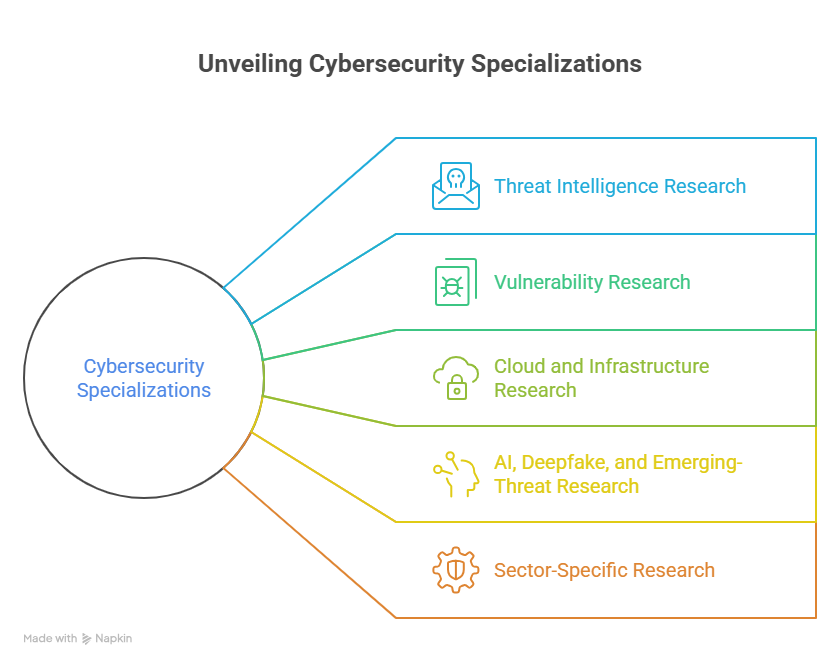
Cybersecurity research is too broad to approach as one giant career category. You need a specialization that makes your learning plan, portfolio, and job applications more credible. Threat intelligence research is one of the most natural paths. It focuses on adversaries, campaigns, indicators, infrastructure, targeting, sector patterns, and defensive recommendations. If this lane fits you, study the threat intelligence analyst guide, detailed threat intelligence roadmap, SOC manager advancement guide, and incident response effectiveness report.
Vulnerability research fits people who enjoy technical depth, software behavior, systems thinking, exploitability, disclosure timelines, and remediation guidance. You do not need to become an elite exploit developer to begin building useful vulnerability research habits. Start by learning how vulnerabilities are discovered, described, prioritized, validated, and communicated. Build practice around the vulnerability researcher career guide, vulnerability assessment techniques, application security tools directory, and penetration testing tools comparison.
Cloud and infrastructure research is valuable because organizations keep moving critical workloads into complex environments. This lane involves identity risk, exposed services, insecure configuration, logging gaps, cloud workload protection, container issues, and shared-responsibility misunderstandings. You can build this specialization through the cloud security engineer career guide, future of cloud security analysis, cloud security tools directory, and next-gen SIEM trends.
AI, deepfake, and emerging-threat research is a strong lane for analysts who enjoy fast-changing questions. This area requires careful thinking because hype can pollute analysis. A useful AI security researcher separates realistic attacker capability, defensive automation, governance risk, model abuse, fraud exposure, and operational constraints. Build your foundation through the AI-powered cyberattacks forecast, AI-driven cybersecurity tools analysis, deepfake cybersecurity threat guide, and automation and the cybersecurity workforce analysis.
Sector-specific research is excellent for analysts who want practical business relevance. Healthcare, finance, education, government, manufacturing, energy, retail, and nonprofits all face different attacker incentives and operational limits. A healthcare-focused analyst studies patient safety, downtime, HIPAA pressure, third-party vendors, and ransomware risk through the healthcare cybersecurity predictions, healthcare threat report, and healthcare cybersecurity tools directory. A finance-focused analyst can use the financial sector cybersecurity incidents analysis, finance cybersecurity trends report, and financial services cybersecurity firms directory.
5. Build a Portfolio, Apply Strategically, and Grow Into Senior Research Roles
A cybersecurity research analyst portfolio should prove judgment, not just interest. Hiring teams want to see how you ask questions, collect evidence, organize findings, explain uncertainty, and recommend action. Build a portfolio with six assets: a threat brief, a vulnerability advisory summary, a sector risk memo, a tool-category comparison, a timeline of an attack campaign, and a technical-to-executive translation. Support that work with the cybersecurity content creator guide, research organizations directory, cybersecurity conferences directory, and cybersecurity books directory.
Your first research job may have a different title. Search for threat intelligence analyst, junior security researcher, cyber threat researcher, vulnerability analyst, SOC research analyst, detection analyst, malware research assistant, security content analyst, cyber risk analyst, product research analyst, or security operations analyst with research duties. If you are coming from IT support, start with the IT support to cybersecurity analyst transition guide and the security analyst advancement guide. If you are coming from ethical hacking, connect your experience to the ethical hacker roadmap and offensive security engineer guide.
A strong résumé should show research outputs, not vague responsibilities. Replace “monitored threats” with “created weekly threat briefs mapping phishing infrastructure, target sectors, and recommended detection improvements.” Replace “worked with vulnerabilities” with “summarized high-priority vulnerability advisories with exploitability context, affected assets, and remediation urgency.” This proof-first framing also helps if you later move into cybersecurity consulting, security architecture, cybersecurity program management, or cybersecurity policy leadership.
Growth comes from moving beyond summaries into original insight. Early researchers report what happened. Strong researchers explain why it matters. Senior researchers identify patterns before they become obvious, influence detection strategy, brief leadership, advise product teams, support incident response, and publish work that shapes industry conversation. To plan long-term advancement, study the future skills for cybersecurity professionals, specialized cybersecurity roles demand forecast, global cybersecurity salary report, and cybersecurity freelance and consulting market report.
6. FAQs About Becoming a Cybersecurity Research Analyst
-
A cybersecurity research analyst studies threats, vulnerabilities, attack patterns, sector risks, tools, reports, and security trends, then turns that information into useful insight. Daily work may include reading advisories, reviewing indicators, comparing incident reports, writing threat briefs, creating vulnerability summaries, supporting SOC teams, or preparing leadership updates. The role overlaps with threat intelligence careers, SOC analyst work, incident response roles, and vulnerability research careers.
-
Coding helps, especially for automation, data parsing, malware research, vulnerability analysis, and tool building, but the required level depends on the specialization. A threat intelligence researcher may need scripting and data-handling ability. A vulnerability researcher may need deeper programming, systems, and exploitability knowledge. A sector-risk researcher may need stronger writing, source evaluation, and business-risk interpretation. Start with scripting, logs, basic Python, web basics, and security tooling while building knowledge through the vulnerability assessment guide, application security tools guide, and cloud security engineer roadmap.
-
Useful certifications depend on your target lane. Entry-level candidates can start with broad security credentials listed in the cybersecurity certifications directory. SOC-focused researchers can benefit from analyst and incident response credentials. Offensive or vulnerability-focused researchers may pursue ethical hacking or penetration testing credentials through the CEH guide, OSCP penetration tester guide, and red-team specialist roadmap. Compliance-focused researchers should study frameworks, audit, and risk.
-
Build public samples around safe, legal, and well-scoped topics. Write a one-page ransomware brief, a phishing trend summary, a vulnerability advisory explanation, a cloud misconfiguration risk memo, a sector-specific threat overview, and a tool-category comparison. Use credible source material and show your reasoning clearly. Your portfolio can draw structure from the ransomware analysis, phishing trends report, cloud threat analysis, and global cybersecurity market report.
-
It can be a strong path for beginners who enjoy reading deeply, writing clearly, investigating patterns, and learning technical concepts carefully. Many beginners enter through SOC analyst, security analyst, IT support, compliance analyst, or junior threat intelligence roles before specializing in research. If you need a practical starting point, use the IT support to cybersecurity analyst guide, SOC analyst step-by-step guide, security analyst advancement guide, and future cybersecurity skills guide.
-
A threat intelligence analyst usually focuses on adversaries, campaigns, indicators, targeting, tactics, and defensive intelligence. A cybersecurity research analyst can cover that area, but may also research vulnerabilities, tools, regulations, market trends, sector risks, AI threats, privacy developments, or security technologies. The overlap is significant, especially in organizations where research supports detection and response. To compare the paths, study the threat intelligence analyst guide, incident responder pathway, cybersecurity compliance trends, and AI-powered cyberattack forecast.
