
The Ultimate Guide to Getting Advanced Cybersecurity & Management Certification in Netherlands: Everything You Need to Know in 2026–2027
The Netherlands enters 2026–2027 with cybersecurity moving deeper into boardrooms, regulated operations, and supplier relationships. Professionals who combine technical judgment with governance fluency can pursue opportunities beyond a single tool or job title. An Advanced Cybersecurity & Management Certification can structure that development, while strong candidates also build evidence aligned with GRC work, incident response, security leadership, and the Dutch regulatory environment.
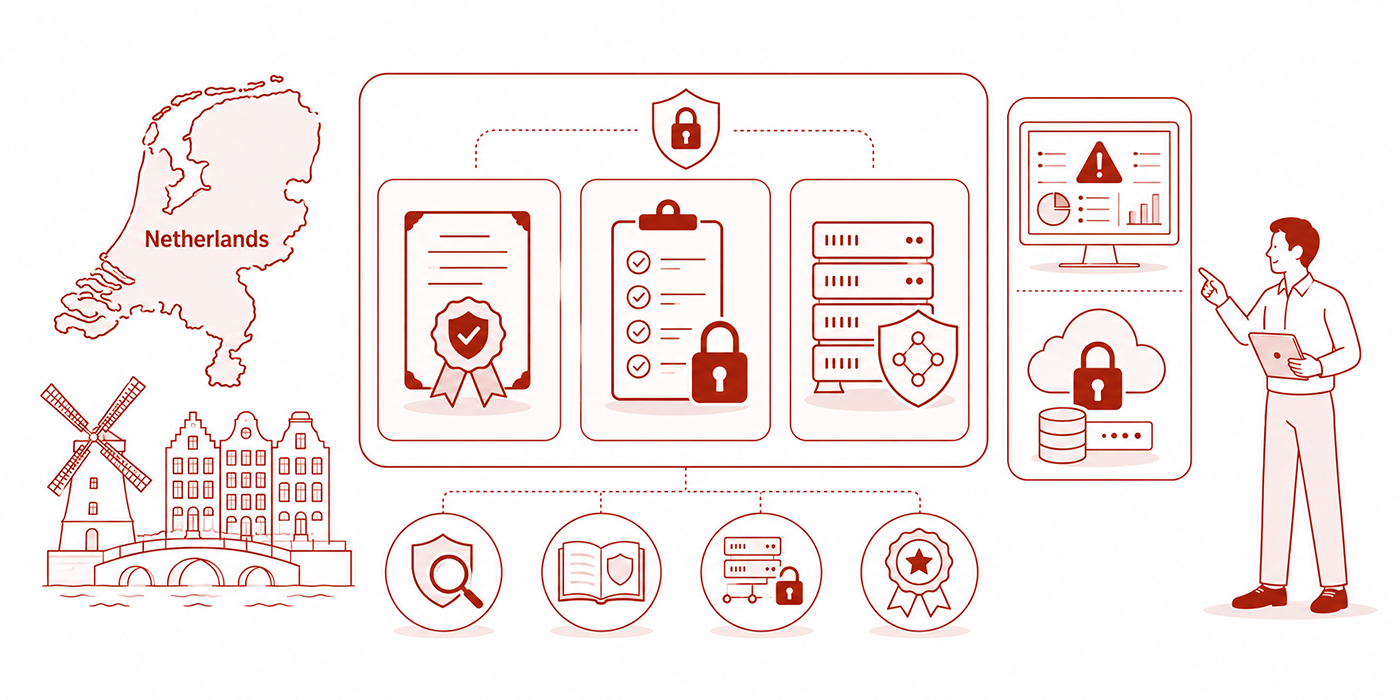
1. Why Advanced Cybersecurity and Management Skills Carry More Weight in the Netherlands in 2026–2027
The immediate market driver is the Dutch Cybersecurity Act, or Cyberbeveiligingswet. According to official Dutch business guidance, it is scheduled to enter into force on 15 August 2026 and transpose NIS2 obligations into national law. Covered organisations gain duties involving risk assessment, proportionate security measures, incident reporting, and regulatory supervision.
That development changes what employers require from cybersecurity professionals. Organisations need people who can connect a technical weakness to service continuity, accountable ownership, supplier exposure, documented controls, executive decisions, and measurable remediation. Candidates developing toward a cybersecurity risk management role, cybersecurity policy analyst career, regulatory specialist pathway, or cybersecurity auditor position therefore gain a clearer commercial use case for advanced training.
NIS2 reaches sectors including energy, transport, healthcare, banking, digital infrastructure, managed ICT services, public administration, manufacturing, food, chemicals, research, postal services, and waste management. The Dutch rules generally capture medium and large organisations in covered sectors, with additional categories entering scope regardless of size.
This breadth creates work across internal security teams, consultancies, managed service providers, audit firms, technology suppliers, and third-party risk functions. A professional who understands cybersecurity program management, digital identity management, privacy analysis, and security architecture can map the same core knowledge to several Dutch hiring lanes.
The management component deserves special attention. NIS2 Article 20 requires management bodies of essential and important entities to approve cybersecurity risk-management measures, oversee their implementation, and complete appropriate training. Engineers may understand a vulnerability in technical detail, while executives need its probable exposure, service impact, treatment options, cost, owner, deadline, and residual risk.
Professionals building toward VP of Security responsibilities, a Chief Privacy Officer career, cybersecurity product management, or policy leadership need practice producing defensible decisions from incomplete information.
The painful gap for applicants is usually proof. “Completed cybersecurity coursework” gives a recruiter limited evidence about how the candidate handles a compromised account, an unpatched internet-facing system, a risky supplier, or an executive demanding a one-page recommendation.
Your certification should become the framework for a portfolio demonstrating triage, control selection, risk communication, and measurable remediation. This is especially important for professionals moving from IT support into cybersecurity, transitioning from network administration, developing toward AI security analysis, or pursuing cybersecurity automation engineering.
2. What the Advanced Cybersecurity & Management Certification Should Teach You
ACSMI describes its Advanced Cybersecurity & Management Certification as a multi-domain programme with 379 lessons, hands-on labs, management training, and preparation touching areas associated with CISSP, CEH, and CySA+. Its published curriculum spans governance, risk, frameworks, IAM, privacy, network defence, cloud, endpoint security, incident response, threat hunting, ethical hacking, and leadership.
That breadth is useful when your target role crosses technical and organisational boundaries, such as cybersecurity research analysis, cybersecurity data science, blockchain security engineering, or quantum security analysis.
Evaluate the programme against four outcomes. First, can you explain why a control exists and which risk it reduces? Second, can you implement or validate that control at a practical level? Third, can you document the result for an auditor, customer, regulator, or manager? Fourth, can you prioritise the work when budgets, staff, and implementation time are constrained?
These outcomes separate accumulated information from operational competence. They also connect the curriculum to offensive security engineering, red-team operations, penetration-testing management, and vulnerability research.
Use the European Cybersecurity Skills Framework as an alignment check. ENISA’s ECSF defines 12 role profiles and gives European employers, training providers, and professionals a shared vocabulary for missions, tasks, skills, and knowledge.
Choose one primary target profile and one adjacent profile. A risk manager might pair with an auditor; an incident responder might pair with a threat intelligence specialist; a security architect might pair with an implementer. This focus keeps a broad course commercially coherent and supports progression toward chief security architecture, cybersecurity programme leadership, GRC specialisation, or privacy leadership.
Treat external exam preparation as a secondary benefit. Hiring managers may recognise major credential names, yet interviews expose shallow learning quickly. A candidate who can defend a network-segmentation decision, build a notification workflow, distinguish inherent from residual risk, and explain why a supplier receives enhanced due diligence will outperform someone who only lists acronyms.
The programme should support a layered credential strategy: broad management capability followed by role-specific depth through incident response development, ethical hacking progression, policy analysis, or digital identity specialisation.
3. Eligibility, Cost Evaluation, Study Planning, and Enrolment from the Netherlands
ACSMI states that the programme accommodates college graduates, career changers, and IT professionals, with no previous cybersecurity experience required, immediate access after enrolment, and flexible completion. Beginners should create a readiness floor before moving quickly: basic networking, operating-system administration, authentication concepts, command-line comfort, and the ability to write a clear incident summary.
Learners coming through an IT support transition, network administrator transition, cybersecurity bootcamp teaching path, or certification training career can use existing experience to accelerate relevant modules.
Assess cost through total career utility instead of the checkout amount alone. Record tuition, taxes or currency-conversion charges, optional lab subscriptions, external exam vouchers, renewal requirements, study hours, and income sacrificed during preparation.
Then identify the deliverables you will retain: portfolio artefacts, interview stories, reusable templates, practical labs, professional vocabulary, and preparation for later credentials. The decision becomes clearer when compared with your route into cybersecurity content education, product security management, risk management specialisation, or security automation.
Build a weekly system around outputs. A strong eight-hour schedule might allocate three hours to lessons, two to labs, one to Dutch and EU regulatory mapping, one to portfolio documentation, and one to retrieval practice or mock interviews.
At the end of each week, produce one item a stranger can assess: a risk register, incident timeline, SIEM detection rationale, access review, supplier questionnaire, cloud control matrix, or board memo. This cadence turns broad learning into evidence for cybersecurity auditing, regulatory work, incident-response roles, and cybersecurity policy positions.
Before enrolling, verify the current syllabus, assessment method, completion requirements, access period, mentorship terms, refund policy, CPD status, and which external examination fees sit outside tuition. Save dated copies of the terms that influence your purchase. During enrolment, use your legal name consistently if you need the final certificate for employer verification.
Create a target-role scorecard on day one and review it monthly. This discipline prevents career changers from drifting across every attractive topic while becoming interview-ready for none. It strengthens routes into AI security, blockchain security, security research, and vulnerability research.
Quick Poll: What Is Blocking Your Cybersecurity Career Progress in the Netherlands?
Choose the obstacle costing you the most momentum. Your answer will reveal the most useful next deliverable.
4. How to Turn the Certification into Dutch-Ready Professional Evidence
Create a portfolio around one fictional organisation operating in a NIS2 sector—for example, a mid-sized managed service provider, food manufacturer, healthcare supplier, or logistics company. Give it realistic services, systems, suppliers, data, and constraints.
Build connected artefacts around that organisation: a scope assessment, asset and service map, risk register, security roadmap, incident playbook, supplier review, access-control design, and executive dashboard. Connected evidence shows how you think across a system, which is valuable for GRC roles, programme management, security architecture, and cybersecurity auditing.
Your risk register should avoid vague entries such as “ransomware risk: high.” Identify the threatened service, attack scenario, exposed assets, existing controls, likelihood rationale, business impact, control gaps, treatment owner, due date, and residual risk.
For incident response, create an early-warning decision tree, severity criteria, evidence checklist, internal escalation route, external notification workflow, and post-incident review template. These artefacts show competence relevant to incident-response careers, policy analysis, privacy analysis, and security leadership transitions.
Add technical validation. Configure a legal lab, generate benign test activity, collect logs, create a detection, investigate the alert, propose containment, and write an executive summary. Offensive learners can document authorisation boundaries, methodology, findings, remediation, and retest evidence. Cloud learners can review identities, public exposure, logging, encryption, backup, and recovery.
These projects strengthen applications for offensive security engineering, red-team operations, penetration-testing leadership, and security automation engineering.
Write every artefact in two layers: a technical appendix and a one-page decision brief. The brief should state the issue, affected service, plausible impact, immediate action, long-term treatment, owner, cost band, and success measure. This is management training in visible form.
Remove client data, credentials, employer-confidential information, copied templates you cannot explain, and exploit details that create misuse risk. A small, defensible portfolio supports movement toward VP-level security work, cybersecurity product leadership, Chief Privacy Officer responsibilities, and cybersecurity policy direction.

5. Career Routes, Hiring Strategy, and a 90-Day Post-Certification Plan
Map your search to role clusters instead of relying on one English job title. Dutch vacancies may use English, Dutch, or hybrid labels, including SOC analyst, security analyst, information security officer, security consultant, cyber risk analyst, GRC consultant, security engineer, IAM specialist, privacy and security analyst, incident responder, and security programme manager.
Search responsibilities and required evidence alongside titles. A vacancy emphasising control testing may align with cybersecurity auditing; one emphasising policies and regulators may fit cybersecurity regulatory work; one emphasising detection and containment may suit an incident responder pathway; and one emphasising IAM lifecycle controls may fit digital identity management.
During days 1–30, select 20 target employers across two sectors and analyse 30 vacancies. Build a spreadsheet of recurring tasks, tools, frameworks, language requirements, experience thresholds, and business problems.
Rewrite your résumé around evidence. “Built a supplier tiering model covering criticality, data access, service dependency, and assurance frequency” carries more information than “knowledge of third-party risk.” Tailor examples toward risk-management careers, privacy roles, security research, or AI security analysis.
During days 31–60, publish three sanitised case studies and run two tabletop exercises with peers. Ask reviewers to challenge your assumptions, ownership assignments, escalation thresholds, and residual-risk decisions.
Prepare six interview stories using situation, constraint, action, evidence, result, and lesson. Include one story about an error or failed assumption because mature security work depends on detecting weak reasoning early. This practice supports cybersecurity programme management, security leadership, cybersecurity training, and cybersecurity education.
During days 61–90, apply selectively, seek referrals through professional communities, and track conversion rates from application to screening, technical interview, final stage, and offer. Diagnose the weakest transition.
Low screening rates usually indicate positioning or résumé-evidence problems. Weak technical rounds expose knowledge gaps. Weak final rounds often point to communication, prioritisation, or stakeholder-judgment problems. Use this data to choose the next project or specialist credential.
Candidates aiming at vulnerability research, blockchain security, quantum security, or penetration testing will need deeper technical evidence than general management candidates.
International applicants should investigate work authorisation early. Non-EU, EEA, or Swiss professionals commonly need an eligible residence route, and the Dutch highly skilled migrant route generally requires an employer recognised as a sponsor plus compliance with current salary and eligibility conditions. Verify thresholds and rules directly with the Dutch Immigration and Naturalisation Service before planning around an offer.
Language expectations vary. English is common in international technology environments, while Dutch can expand access to government, regulated, consulting, and stakeholder-heavy work. Treat language capability as a market-access variable alongside policy expertise, regulatory knowledge, GRC capability, and executive security leadership.
6. Frequently Asked Questions About Advanced Cybersecurity & Management Certification in the Netherlands
-
Yes, especially when a beginner follows a defined role target and produces practical evidence throughout the programme. Start with networking, operating systems, IAM, security fundamentals, and risk language. Then build a small lab and connected portfolio.
The structure can support an IT support-to-security transition, an early SOC and incident-response pathway, a GRC career route, or a cybersecurity policy analyst path. Beginners should supplement lessons with repeated practice, revision, and feedback.
-
Employers assess the full evidence package: transferable experience, technical depth, portfolio quality, communication, role fit, language ability, work authorisation, and interview performance. Use the certificate as verified learning and the portfolio as proof of application.
A candidate pursuing offensive security, cybersecurity auditing, privacy analysis, or security programme management should tailor projects and interview stories to that specific lane.
-
The Act expands cybersecurity duties for covered organisations from 15 August 2026, including risk-management and reporting obligations. NIS2 also places governance and training expectations on management bodies.
Professionals who can translate technical exposure into ownership, priorities, documented controls, service impact, and executive decisions become more useful during implementation. Relevant routes include cybersecurity risk management, regulatory specialisation, security leadership, and Chief Privacy Officer development.
-
ACSMI advertises a flexible range from approximately eight weeks to six months. Choose your pace according to retained competence and completed outputs. A working professional studying six to eight hours weekly may benefit from a longer schedule that includes labs, portfolio writing, revision, and interview practice.
Faster completion may suit experienced practitioners filling defined knowledge gaps. Track mastery through artefacts relevant to security architecture, incident response, cybersecurity automation, and digital identity.
-
Build a NIS2 scoping memo, service-centred risk register, 24-hour incident-escalation workflow, supplier assurance model, cloud control matrix, ransomware tabletop exercise, and board risk briefing. Use one fictional organisation so the artefacts connect and tell a coherent story.
This package demonstrates capabilities useful in GRC, incident response, cybersecurity policy, and programme management. Add a technical lab investigation when targeting SOC, engineering, or architecture positions.
-
Choose the next credential after identifying a recurring vacancy requirement or demonstrated skill gap. Governance candidates may deepen their audit, risk, privacy, or ISO expertise. Defensive candidates may add platform and detection depth. Offensive candidates may pursue a rigorous hands-on assessment. Cloud candidates may add provider-specific security validation.
Your next step should reinforce a defined route such as penetration-testing management, AI security analysis, cybersecurity data science, or security architecture.
