
Detailed Guide: Becoming a Cybersecurity Content Writer & Educator
A cybersecurity content writer and educator does more than explain threats in simple language. This role turns complex security knowledge into articles, guides, lessons, course modules, technical explainers, training scripts, newsletters, workshops, and learning assets that help people make better security decisions. The best path combines technical accuracy, teaching structure, editorial discipline, and audience empathy. If you can translate cybersecurity frameworks, security audits, vulnerability assessment, and career development into usable learning, this career can become a powerful long-term niche.
1. What a Cybersecurity Content Writer & Educator Actually Does
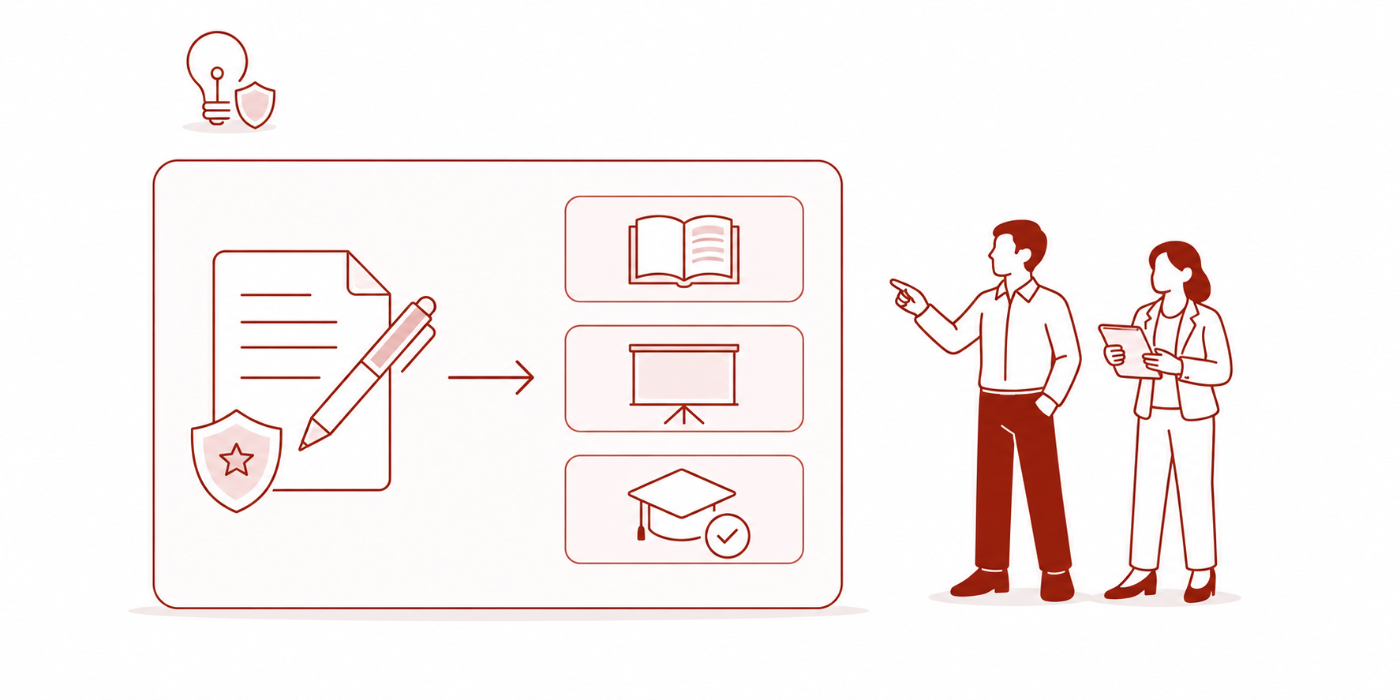
A cybersecurity content writer creates accurate, practical, and audience-specific material about security concepts, tools, threats, careers, compliance, and defensive strategy. A cybersecurity educator builds learning experiences: course outlines, lesson plans, labs, assessment questions, slide decks, tutorials, certification prep resources, and instructor-led training. Many professionals blend both roles by writing long-form guides, teaching workshops, building curricula, and creating resource libraries around topics like SOC analyst careers, ethical hacking roadmaps, cybersecurity compliance, and cloud security careers.
The work carries real responsibility because weak cybersecurity content creates dangerous confidence. A vague phishing article can leave employees exposed. A shallow certification guide can push beginners toward the wrong credential. A poorly structured security awareness module can waste training time while risky behavior continues. A technical tutorial that skips context can make a reader copy commands without understanding impact. Strong writers and educators solve that problem by combining technical truth, learning design, practical examples, and clear decision-making. That is why studying phishing prevention, ransomware impact, data breach mitigation, and incident response effectiveness gives your content a sharper operational edge.
The role can serve several audiences. Beginners need clean explanations of basic security concepts, job pathways, and certification choices through resources like the cybersecurity certifications directory, free cybersecurity courses, and cybersecurity bootcamps. Working professionals need practical breakdowns of tools, threats, controls, policies, and career transitions through guides on SIEM solutions, EDR tools, DLP software, and security awareness platforms. Executives need risk-aware education tied to budgets, compliance exposure, vendor risk, and business continuity.
| Career Skill | What It Means in Practice | Portfolio Proof to Build | ACSMI Resource to Study |
|---|---|---|---|
| Technical Accuracy | Explain security concepts without oversimplifying risk, controls, or attacker behavior. | Write a 1,500-word technical explainer with definitions, examples, and prevention steps. | top cybersecurity threats |
| Career Path Writing | Translate job titles, skills, certifications, salaries, and progression steps into clear roadmaps. | Create a beginner-to-senior career pathway guide. | cybersecurity analyst advancement |
| Curriculum Design | Turn a topic into modules, objectives, practice tasks, quizzes, and assessments. | Build a four-week cybersecurity learning plan. | cybersecurity curriculum developer |
| Instructional Clarity | Teach concepts in the right order so learners avoid confusion and false confidence. | Write a lesson plan with objectives, examples, lab tasks, and review questions. | cybersecurity instructor guide |
| Threat Analysis Writing | Explain current and emerging threats with practical business relevance. | Create a threat brief for ransomware, phishing, or cloud exposure. | state of ransomware |
| Tool Comparison Writing | Compare solutions using features, use cases, limitations, audience fit, and buying criteria. | Build a comparison table for SIEM, EDR, DLP, or vulnerability scanners. | SIEM solutions directory |
| Compliance Education | Explain regulatory concepts through controls, evidence, workflows, and risk ownership. | Write a compliance training module for security teams. | cybersecurity compliance trends |
| Framework Literacy | Use NIST, ISO, COBIT, and control language accurately in educational content. | Map one topic to framework categories and control objectives. | cybersecurity frameworks |
| Security Awareness Writing | Create employee-facing content that changes behavior around passwords, phishing, data handling, and reporting. | Write a security awareness script and quiz. | security awareness platforms |
| Audience Segmentation | Adapt the same topic for beginners, analysts, managers, executives, and nontechnical staff. | Rewrite one topic for three different audiences. | future cybersecurity skills |
| Incident Education | Teach breach triage, containment, escalation, documentation, and lessons learned. | Create an incident response checklist for learners. | incident responder pathway |
| SOC Education | Explain alert triage, escalation, SIEM logic, detection workflows, and analyst growth paths. | Build a SOC analyst beginner lesson pack. | SOC analyst career guide |
| Ethical Hacking Content | Teach offensive security responsibly through scope, authorization, methodology, reporting, and defense value. | Write a penetration testing methodology article. | CEH pathway guide |
| Cloud Security Education | Explain identity, configuration, logging, storage exposure, SaaS risk, and shared responsibility. | Create a cloud security checklist for beginners. | cloud security engineer guide |
| Privacy and Data Protection Writing | Explain personal data risk, retention, access, breach response, and privacy-by-design. | Draft a privacy training lesson for security teams. | privacy regulations trends |
| Cybersecurity SEO | Structure educational content so search engines, learners, and AI systems can understand its value. | Build a keyword map for 20 cybersecurity topics. | cybersecurity blogs directory |
| Editorial Judgment | Decide what belongs in an article, what requires evidence, and what could mislead the reader. | Edit a weak cybersecurity article into a stronger, safer version. | cybersecurity research organizations |
| Certification Prep Content | Build study guides, practice questions, objective maps, and exam-readiness explanations. | Create a mini certification prep module. | cybersecurity certifications directory |
| Lab-Based Teaching | Design safe, guided exercises where learners practice analysis without creating harm. | Create a beginner-friendly log review or phishing analysis lab. | best SIEM solutions |
| Vendor and Tool Education | Explain how tools fit into security operations, budgets, and control programs. | Write a buying guide for EDR, SIEM, DLP, or PAM. | EDR tools guide |
| Executive Education | Turn technical issues into risk, cost, exposure, compliance, and decision language. | Write a one-page board brief on ransomware readiness. | cybersecurity market report |
| Portfolio Strategy | Show range across articles, lessons, scripts, tables, checklists, and course modules. | Publish a portfolio with 8–12 carefully selected samples. | cybersecurity content creator career |
| Industry Specialization | Write for healthcare, finance, education, retail, government, SMB, manufacturing, or energy audiences. | Create one industry-specific cybersecurity education asset. | healthcare cybersecurity firms |
| Salary and Career Reporting | Explain job trends, role progression, salary ranges, and specialization value. | Write a career report using role tiers and advancement signals. | cybersecurity salary report |
| Training Delivery | Facilitate workshops, webinars, recorded lessons, and live Q&A sessions. | Record a 10-minute lesson with slides and a learner handout. | cybersecurity bootcamp instructor |
| Assessment Writing | Create quizzes, scenarios, rubrics, and applied tasks that measure real understanding. | Build 25 scenario-based questions with answer explanations. | cybersecurity instructor or trainer |
| Research Workflow | Use credible sources, update outdated material, and verify claims before publication. | Create a research checklist for every article or lesson. | cybersecurity podcasts directory |
| Thought Leadership | Develop a clear point of view around workforce skills, future threats, AI, compliance, or education. | Write an opinion-led industry analysis with practical recommendations. | automation and cybersecurity workforce |
| Freelance Positioning | Package your writing, training, course design, and technical editing services for clients. | Create a service page and three sample packages. | cybersecurity freelance market |
| Long-Term Authority | Become known for making complicated cybersecurity topics usable, trustworthy, and teachable. | Build a themed content hub around one security niche. | cybersecurity educator career path |
2. Build the Technical Foundation Before You Teach or Publish
The fastest way to lose credibility is to write beyond your understanding. Cybersecurity readers notice weak explanations quickly, especially when an article misuses terms like zero trust, EDR, SIEM, exploit, risk, vulnerability, threat, control, indicator, and mitigation. Start with the core operating language of security. Study access control models, vulnerability assessment techniques, security audit processes, and NIST, ISO, and COBIT frameworks until you can explain them without hiding behind buzzwords.
You need a wide base because cybersecurity content demands range. One week you may write a guide on endpoint security providers; the next week, you may outline a lesson on penetration testing tools, explain cloud security tools, or compare email security solutions. Your job is to know enough to ask better questions, structure safer explanations, and spot claims that sound impressive while adding little value.
Build your foundation through practical clusters. For defensive operations, study SOC analyst careers, SOC analyst to manager progression, SIEM solutions, and incident responder roles. For offensive security, study ethical hacking, penetration testing careers, OSCP-certified penetration testing, and red team specialist paths. For governance and risk, study cybersecurity auditor careers, compliance officer roadmaps, GDPR compliance, and privacy regulation trends.
3. Learn to Turn Cybersecurity Knowledge Into Clear Educational Assets
Cybersecurity education fails when it dumps information without building understanding. A strong educator starts with the learner’s problem. A beginner asking about cybersecurity certifications may secretly fear choosing the wrong path, wasting money, or applying for jobs too early. A manager reading about ransomware readiness may worry about downtime, customer notification, cyber insurance, and executive blame. A student exploring cybersecurity bootcamps needs realistic expectations about portfolio work, labs, interviews, and skill gaps. Write to the hidden anxiety, then teach the solution.
Structure every asset around a learning outcome. An article should answer a real decision. A guide should show sequence. A lesson should define what the learner can do after completion. A quiz should test applied judgment. A comparison table should help readers choose wisely. A career roadmap should connect skill, proof, credential, and hiring signal. You can practice this by rewriting broad topics like AI in cybersecurity, future cloud security, future cybersecurity jobs, and future cybersecurity skills into step-by-step learner assets.
Your writing should also be layered. The first layer explains the concept. The second layer shows why it matters. The third layer gives an example. The fourth layer gives a mistake to avoid. The fifth layer gives a next action. This structure works well for topics like phishing prevention, insider threat prevention, cloud environment threats, and critical infrastructure cybersecurity. It keeps content useful for beginners while still giving professionals something practical.
Quick Poll: What Is Your Biggest Block to Becoming a Cybersecurity Content Writer or Educator?
Pick the gap that feels most urgent, because this career rewards focused proof more than vague interest.
4. Build a Portfolio That Proves You Can Write, Teach, and Structure Learning
A cybersecurity content portfolio should prove range, accuracy, and teaching ability. Start with one long-form guide, one tool comparison, one career roadmap, one threat brief, one training module, one quiz set, one checklist, and one executive explainer. A portfolio with only generic blog posts can look thin. A portfolio that includes applied assets around SOC analyst training, cybersecurity audit best practices, vulnerability scanning tools, and application security tools tells employers or clients you can support real education programs.
Build samples around specific deliverables. Write a “beginner guide to SIEM alerts” using SIEM solution research. Create a “security awareness lesson on phishing” using phishing attack prevention. Draft a “vendor checklist for cloud tools” using cloud security trends. Build a “career roadmap for ethical hacking” using ethical hacker career guidance. Add a “GRC primer” using NIST framework adoption.
Every sample should show your editorial method. Include the audience, learning objective, topic scope, content format, and practical takeaway. For lesson samples, include objectives, prerequisites, explanation, example, activity, knowledge check, and next step. For article samples, include a strong introduction, structured headings, useful tables, examples, mistakes, and decision criteria. For training samples, include facilitator notes and assessment questions. This makes your portfolio relevant for employers hiring cybersecurity instructors, teams building security awareness programs, companies producing cybersecurity blogs, and academies developing cybersecurity bootcamp instructors.

5. Career Paths, Income Leverage, and Advancement Strategy
There are several career routes into this field. Writers may begin as freelance cybersecurity bloggers, technical writers, SEO content strategists, newsletter writers, research writers, or vendor content specialists. Educators may begin as teaching assistants, bootcamp mentors, curriculum developers, security awareness trainers, certification prep creators, or internal training coordinators. Cybersecurity professionals can transition from security analyst roles, threat intelligence analyst roles, incident response roles, or compliance analyst roles into education by turning field experience into teachable systems.
Your niche determines your leverage. Tool-focused writers can specialize in EDR tools, PAM solutions, network monitoring tools, or cloud security tools. Career-focused educators can specialize in cybersecurity salary progression, cybersecurity job market trends, certification impact, and remote cybersecurity careers. Compliance educators can focus on GDPR, HIPAA cybersecurity, future compliance trends, and small business cybersecurity legislation.
To get paid, package your value clearly. Offer article writing, technical editing, course outline creation, quiz writing, slide deck development, certification prep content, security awareness scripts, webinar support, white papers, comparison guides, and content audits. A stronger offer might be “I help cybersecurity training companies turn technical topics into structured course modules,” or “I help B2B security vendors create accurate, buyer-friendly educational content.” Support that positioning with samples around cybersecurity consulting firms, training providers, cybersecurity conferences, and cybersecurity research organizations.
Long-term advancement can lead to senior technical writer, cybersecurity editor, learning experience designer, curriculum lead, security awareness manager, cybersecurity instructor, education program manager, content strategist, analyst relations writer, product education lead, or independent training consultant. The highest-value professionals combine research discipline, teaching design, technical accuracy, and business strategy. They understand how the workforce is changing through automation and cybersecurity jobs, AI-powered cyberattacks, future cybersecurity standards, and specialized cybersecurity role demand.
6. FAQs About Becoming a Cybersecurity Content Writer & Educator
-
Cybersecurity job experience helps, but strong research, technical humility, accurate sourcing, and practical portfolio samples can also open doors. Beginners should focus on foundational topics, career guides, security awareness content, and clearly researched explainers before writing advanced offensive security or incident response material. Studying free cybersecurity courses, cybersecurity certifications, SOC analyst basics, and cybersecurity frameworks gives you a safer starting base.
-
Start with eight assets: a beginner cybersecurity guide, a career roadmap, a tool comparison, a phishing awareness lesson, a compliance explainer, a threat brief, a quiz set, and a checklist. Use strong models from cybersecurity career roadmaps, SIEM tool comparisons, phishing prevention reports, and cybersecurity compliance trends to build samples that feel job-ready.
-
The best niche depends on your strengths. Strong explainers can thrive in beginner education, certification prep, and career roadmaps. Technical writers may prefer cloud security, application security, endpoint security, or penetration testing. Policy-minded educators may prefer GRC, privacy, and cybersecurity audits.
-
Make every piece solve a real decision. Add checklists, tables, mistakes, scenarios, examples, readiness signals, tool-selection criteria, role-specific advice, and next steps. Generic content defines ransomware; valuable content explains readiness gaps, incident roles, backup evidence, tabletop exercises, insurance pressure, and executive reporting. The same principle applies to ransomware analysis, data breach mitigation, cloud security threats, and insider threat prevention.
-
Yes. A strong content portfolio can support roles in security awareness training, bootcamp instruction, course development, certification prep, internal education, and curriculum design. To move toward teaching, build lesson plans, slides, quizzes, labs, rubrics, and learner handouts. Study cybersecurity instructor careers, bootcamp instructor pathways, curriculum developer paths, and cybersecurity educator advancement.
-
Position yourself around a buyer’s pain. Security vendors need accurate buyer education. Training companies need course modules. Cybersecurity blogs need expert content. Bootcamps need lessons and assessments. Consultants need white papers and reports. Build samples tied to those needs and reference expertise around cybersecurity firms, training providers, security awareness platforms, and cybersecurity freelance income trends.
