
Identity and access management sits at the point where cybersecurity becomes operational: who gets access, to what, under which conditions, and for how long. For people questioning whether cybersecurity is still worth entering in 2026, worried about job-market saturation, comparing SOC analyst and GRC careers, or trying to break into cybersecurity without IT experience, IAM deserves serious attention because identity skills transfer across cloud, governance, engineering, privileged access, architecture, and security operations.
1. Why IAM Stands Out in a Crowded Cybersecurity Job Market
IAM is sometimes mistaken for password resets and user provisioning. Mature identity work is much broader. NIST describes identity and access management as a fundamental and critical cybersecurity capability, centered on ensuring the right people and entities receive the right access to the right resources at the right time. That makes IAM relevant whether someone eventually wants to become a digital identity management specialist, move into cybersecurity risk management, build toward security architecture, specialize in GRC, or pursue cybersecurity leadership.
The career advantage comes from how many problems eventually become identity problems. A SaaS migration needs federation. A cloud deployment needs workload permissions. A contractor program needs lifecycle controls. An audit needs evidence showing who approved access. A privileged administrator needs stronger controls than a normal employee. A terminated employee needs access removed quickly and completely. Someone evaluating AI's effect on entry-level cybersecurity, considering cybersecurity automation engineering, studying cybersecurity auditing, or exploring privacy careers eventually encounters these access questions.
Zero Trust strengthens that connection. CISA's Zero Trust Maturity Model treats identity as a dedicated pillar, including stronger authentication, context-aware access, identity risk and enterprise identity management. Consequently, IAM professionals can create value far beyond operating one vendor console. The deeper career moat is understanding authentication, authorization, federation, governance, privilege and lifecycle design. That distinction matters for candidates frustrated because Security+ alone has not produced interviews, graduates facing cybersecurity hiring rejection, applicants debating certifications versus hands-on labs, and career changers deciding between a degree, bootcamp or certification path.
Recent Reddit discussions also reveal a useful distinction. Beginners frequently ask whether they should immediately collect SailPoint, CyberArk, Okta or Microsoft credentials. Practitioners repeatedly steer them toward fundamentals, the technology already available in their job, hands-on practice and then a vendor credential aligned with actual vacancies. One 2026 discussion specifically recommended mastering current tools before expanding into Microsoft Entra, while another emphasized concepts, labs and a locally relevant vendor certification in that order. That closely matches the stronger approach to building a cybersecurity home lab, creating a verifiable cybersecurity résumé, understanding what security hiring managers want, and choosing certifications based on career stage.
| IAM Skill / Domain | What You Need to Understand | Portfolio Proof You Can Build | Where It Creates Career Leverage |
|---|---|---|---|
| Active Directory | Users, groups, OUs, GPO basics and directory structure | Create a small AD domain with role-based groups | IAM analyst, Windows administration, hybrid identity |
| Microsoft Entra ID | Cloud identities, groups, enterprise apps and roles | Build users, groups and access policies in a lab tenant | Cloud IAM, Microsoft security, identity administration |
| LDAP | Directory queries, attributes, DNs and authentication flows | Query a test directory and document the identity schema | Legacy integration and enterprise IAM troubleshooting |
| Single Sign-On | Identity provider, service provider and session flow | Configure SSO between an IdP and test application | IAM engineering, SaaS integration, consulting |
| SAML | Assertions, attributes, metadata, signing and trust | Diagram and troubleshoot a SAML authentication flow | Enterprise application onboarding |
| OAuth 2.0 | Scopes, clients, grants, tokens and delegated authorization | Build an authorization-code-flow demonstration | Cloud, API and application security |
| OpenID Connect | ID tokens, claims, discovery and authentication layers | Integrate a simple application with an OIDC provider | Modern identity engineering and CIAM |
| MFA | Authentication factors, enrollment, recovery and risk | Design MFA requirements for three user-risk tiers | Zero Trust and account-protection programs |
| Passwordless Authentication | FIDO2, passkeys, device-bound credentials and recovery | Create a passwordless migration plan and threat model | Modern authentication programs |
| Conditional Access | User, device, location, risk and application conditions | Design policies for administrators, staff and contractors | Entra security and Zero Trust implementation |
| RBAC | Role design, entitlements and least-privilege assignment | Create a role matrix for a fictional company | IGA, cloud IAM and authorization design |
| ABAC | Attribute-driven policy and contextual authorization | Model department, location and clearance-based rules | Complex authorization and cloud environments |
| Least Privilege | Minimum necessary access and privilege reduction | Review excessive permissions and propose remediation | IAM, PAM, cloud and security architecture |
| Joiner-Mover-Leaver | Provisioning, role changes, termination and ownership | Map an automated employee identity lifecycle | IAM operations and identity governance |
| Identity Governance | Ownership, entitlements, reviews and policy enforcement | Design an access-governance process with escalation rules | IGA analyst, consultant and governance roles |
| Access Reviews | Reviewer selection, evidence, revocation and exceptions | Create a quarterly certification campaign workflow | Audit-heavy and regulated organizations |
| Segregation of Duties | Toxic access combinations and compensating controls | Build an SoD matrix for finance or procurement | GRC, IGA, ERP security and audit |
| Privileged Access Management | Vaulting, elevation, session controls and privileged identities | Design a privileged-account onboarding workflow | PAM engineering and high-value security programs |
| Secrets Management | Application secrets, rotation, storage and retrieval | Demonstrate secret rotation in a test environment | DevSecOps, cloud and machine identity |
| Service Accounts | Ownership, privilege, rotation and operational dependency | Create an inventory and remediation plan | PAM, infrastructure and identity security |
| Workload Identities | Applications, services and non-human authentication | Replace a static credential with managed identity | Cloud security and modern IAM engineering |
| SCIM | Automated provisioning, deprovisioning and attributes | Document a source-to-SaaS provisioning flow | SaaS integration and identity automation |
| REST APIs | Authentication, requests, responses and identity automation | Use an API to create, update and disable test identities | IAM engineering and integration work |
| PowerShell | Directory queries, bulk administration and automation | Automate account or group-management tasks | Microsoft-centric IAM environments |
| Python | APIs, data processing and workflow automation | Create an entitlement-audit or provisioning script | IAM engineering and security automation |
| Identity Logging | Sign-ins, failures, risk events and audit trails | Investigate a simulated suspicious login sequence | Identity detection and SOC collaboration |
| Cloud IAM | Cloud roles, policies, federation and service identities | Build and review permissions in a cloud lab | Cloud security and platform engineering |
| Audit Evidence & Controls | Approvals, access history, exceptions and control evidence | Produce an auditor-ready access-review evidence package | GRC, regulated industries and IAM governance |
2. What IAM Professionals Actually Do and Where the Career Can Lead
Entry-level IAM work often starts with identity lifecycle operations: creating accounts, assigning access, modifying roles, investigating failed provisioning, removing access after termination and validating approvals. Strong analysts gradually stop seeing these as isolated tickets. They learn how HR systems act as identity sources, how directories store attributes, how applications consume those attributes, how roles generate entitlements and where automation can fail. That systems thinking separates a future identity engineer from someone trapped doing repetitive administration. It also explains why hands-on evidence matters beside certifications, why résumé projects must be verifiable, why home labs should produce tangible deliverables, and why entry routes without prior IT experience need practical proof.
An IAM engineer moves deeper into SSO integrations, federation, directories, application onboarding, APIs, provisioning, policy design and troubleshooting. If a SAML integration fails, knowing the product interface is insufficient; the engineer may need to interpret assertions, certificates, attributes, claims and logs. If SCIM provisioning fails, the problem may sit in attribute mapping, API permissions, schema differences or lifecycle logic. Those capabilities create natural bridges into cybersecurity automation, AI security, cloud-oriented cybersecurity work, security architecture, and broader cybersecurity research roles.
Identity governance creates another branch. IGA specialists care deeply about entitlement ownership, role design, access reviews, certification campaigns, segregation of duties, exceptions and joiner-mover-leaver controls. This makes IAM unusually useful for professionals who enjoy technology but also want business-process and stakeholder exposure. Someone interested in becoming a GRC specialist, cybersecurity policy analyst, regulatory specialist, cybersecurity auditor, or privacy analyst can use identity governance experience without discarding the technical foundation.
PAM creates a more privileged-access-focused path. These teams deal with administrator credentials, vaulting, credential rotation, privileged sessions, emergency access and service accounts. Cloud IAM adds another layer because human identities coexist with applications, services, automation and workload identities. Microsoft's current SC-300 blueprint explicitly includes user identities, authentication, workload identities and identity governance, showing how modern identity responsibilities extend well beyond employee passwords. That breadth can later support movement toward cybersecurity program management, cybersecurity product management, senior security leadership, or chief security architecture.
3. The Most Realistic Routes Into IAM for Beginners and Career Changers
The cleanest entry route for many beginners remains IT support → directory administration → IAM. Help-desk work becomes valuable when it exposes you to Active Directory, Microsoft 365, account provisioning, group membership, MFA problems, device access and escalation processes. A 2026 Reddit discussion from an IT technician pursuing IAM reflects exactly this route, while an older but widely discussed career-change account describes progressing from help desk and field support into IAM before moving into higher-paid security work. Candidates comparing this approach with SOC jobs requiring little experience, beginner SOC versus GRC routes, degree-versus-certification strategies, and bootcamp pathways should therefore judge opportunities by exposure, not job title alone.
A second route is IT administration → IAM. System administrators, Microsoft 365 administrators, cloud support staff and application administrators often already understand users, groups, permissions, directories and troubleshooting. Their gap is usually formal identity architecture: federation, lifecycle automation, governance, modern authentication and privileged access. This transition can be considerably more credible than applying cold with five certifications and zero production exposure. The same principle appears in guidance about why cybersecurity graduates struggle to get hired, what employers actually expect from candidates, how practical labs support hiring, and how to construct an evidence-based résumé.
A third path comes through audit, compliance or GRC. Someone already reviewing access controls, termination evidence, privileged accounts or segregation of duties can move toward identity governance, access certification or IGA analysis. Instead of restarting at zero, the candidate should translate existing work into identity language: control ownership, entitlement review, least privilege, access evidence, remediation and lifecycle risk. That approach creates logical overlap with the cybersecurity auditor pathway, GRC specialist career path, risk-management specialization, cybersecurity regulatory work, and privacy-focused security careers.
True career changers need a tighter strategy because collecting generic credentials can become an expensive form of procrastination. Start with networking fundamentals, Windows concepts, directory services, authentication versus authorization, users and groups, MFA, RBAC, SSO and basic cloud concepts. Then build a lab where you can show the entire identity lifecycle: create an employee, place the identity into groups, grant application access, enforce MFA, change the employee's role, review permissions and finally terminate access. That portfolio tells a better story than another line under “Certifications.” It follows the same evidence-first logic behind breaking into cybersecurity without experience, strengthening a no-experience cybersecurity résumé, choosing labs alongside certifications, and avoiding the trap of assuming Security+ guarantees employment.
4. Which IAM Certifications Are Actually Worth Pursuing?
The most important certification rule is simple: choose the job first, then choose the credential. Someone pursuing Microsoft-heavy IAM roles receives more direct value from SC-300 than from randomly accumulating unrelated cybersecurity badges. Microsoft's current Identity and Access Administrator certification covers Entra identities, authentication, access management, workload identities and identity governance, while Microsoft also expects familiarity with Azure, Microsoft 365, Active Directory, PowerShell and KQL. That makes SC-300 particularly coherent for candidates following a digital identity career roadmap, building hands-on cybersecurity evidence, improving a project-driven résumé, or evaluating certification ROI by career stage.
Security+ can still be useful at the beginning because it establishes broad security vocabulary, especially for candidates without a cybersecurity background. Its weakness appears when candidates expect it to demonstrate IAM implementation ability. Employers hiring someone to troubleshoot federation, build lifecycle workflows or administer identity platforms need evidence deeper than generic security knowledge. That is precisely why candidates should understand the limits of Security+ as a standalone hiring signal, compare certifications against practical labs, study actual hiring-manager expectations, and avoid repeating the mistakes behind many graduate job-search failures.
Okta credentials become more relevant when target employers use Okta for workforce identity or customer identity. Okta currently offers Professional, Administrator, Consultant, Architect and Developer certification tracks, with its Professional credential covering areas such as user management, SSO and core security configuration. SailPoint becomes especially relevant for IGA-focused vacancies, while CyberArk experience can strengthen a PAM-focused profile. The mistake is learning all three superficially. Someone targeting GRC and identity governance, risk management, cybersecurity auditing, or regulatory cybersecurity may receive more leverage from IGA depth than from collecting unrelated vendor badges.
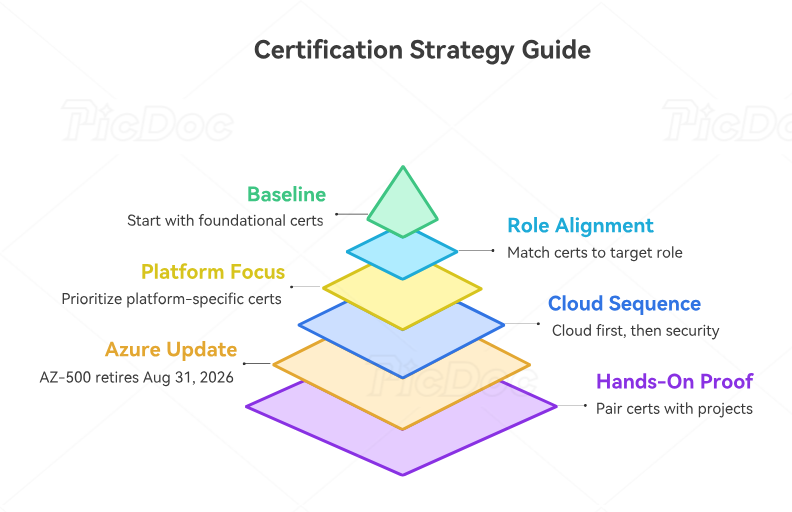
A useful decision sequence is therefore fundamentals → lab → target job descriptions → one relevant vendor ecosystem → certification → deeper projects. This mirrors recent Reddit practitioner advice, where certification value was described as strongest when it validates product knowledge employers are already requesting rather than replacing hands-on competence. Candidates should apply the same discipline used when comparing a degree against cybersecurity certifications, evaluating bootcamp ROI, determining whether cybersecurity still offers worthwhile career returns, and responding to a saturated applicant market.
5. The IAM Skills That Create Long-Term Career Leverage
The first durable skill is identity architecture rather than vendor memorization. Learn the difference between identity proofing, authentication and authorization. Understand directories, federation, SSO, SAML, OAuth 2.0, OpenID Connect, MFA, RBAC, ABAC, provisioning and deprovisioning. NIST's current Digital Identity Guidelines cover identity proofing, authentication and federation as distinct but connected areas, reinforcing why professionals benefit from understanding the underlying system instead of one graphical interface. Those fundamentals remain useful whether your future is digital identity management, security architecture, cybersecurity automation, or cybersecurity program management.
The second is automation. Large identity environments cannot depend indefinitely on humans manually creating accounts, correcting group memberships and chasing access-review spreadsheets. Learn PowerShell or Python, APIs, JSON, SCIM and the logic behind automated workflows. You do not need to become a software engineer before applying for IAM analyst work, but scripting dramatically increases the problems you can solve. It also creates overlap with cybersecurity automation engineering, AI security careers, cybersecurity data roles, blockchain security engineering, and other technically expanding cybersecurity research paths.
The third is governance judgment. An IAM professional eventually has to answer questions a tool cannot decide alone: Who should own this entitlement? Should these two permissions be allowed together? Does a contractor need the same access duration as an employee? Which privileged accounts require stronger controls? Which exceptions are legitimate? What evidence will satisfy an auditor? These questions give technically capable IAM professionals leverage into GRC specialization, policy analysis, regulatory cybersecurity, privacy analysis, and eventually cybersecurity policy leadership.
The fourth is troubleshooting under ambiguity. Identity failures often cross application, network, directory, certificate, policy and cloud boundaries. A valuable IAM engineer can follow the transaction, inspect logs, identify where trust broke and explain the fix to application owners. That capability is difficult to demonstrate through multiple-choice exams alone. Build it through projects, incident reconstruction and real administration wherever possible. The same evidence-driven mindset strengthens a cybersecurity home lab, a no-experience security résumé, applications for SOC roles without previous experience, and any attempt to survive today's more competitive cybersecurity market.
Finally, learn to communicate identity risk in business language. IAM touches HR, legal, application teams, audit, compliance, infrastructure, executives and ordinary employees. The engineer who can explain why an access model is unsafe, design a workable alternative and persuade stakeholders to adopt it becomes useful at a different level from someone who merely knows where a setting lives. That is where IAM can evolve toward cybersecurity program leadership, product management, IT-to-cybersecurity leadership transitions, VP-level security progression, and advanced security architecture.
6. FAQs About Building a Career in IAM
-
Yes. NIST explicitly characterizes identity and access management as a fundamental cybersecurity capability, while CISA places identity among the core pillars of its Zero Trust maturity model. IAM controls who can reach systems and data, how they authenticate, what they are authorized to do and when their access disappears. That creates direct overlap with GRC careers, cybersecurity auditing, risk management, privacy work, and security architecture.
-
Yes, especially when your existing experience touches users, permissions, directories, Microsoft 365, cloud administration, application support, audits or access controls. The key is translating that experience into an identity story and filling genuine technical gaps. A help-desk candidate who administers AD groups and troubleshoots MFA may have a more credible IAM starting point than someone with several certifications and zero practical exposure. Use the strategies for breaking into cybersecurity without IT experience, building a hireable home lab, creating a proof-based résumé, and understanding entry-level employer filters.
-
Choose according to the roles available in your target market. Microsoft-heavy organizations make Entra particularly valuable; IGA vacancies may prioritize SailPoint or similar governance platforms; PAM positions may emphasize CyberArk; and workforce or customer identity roles may request Okta. Your first goal is transferable understanding of SSO, federation, lifecycle management, access models and authentication. Then use vacancy data to choose the platform. This avoids wasting months collecting credentials while ignoring the lessons behind certifications versus labs, certification ROI by career stage, job-market competition, and employer skill expectations.
-
SC-300 can provide a strong Microsoft identity signal, but employers still need evidence that you can apply the concepts. Microsoft's own blueprint reaches across user identities, authentication, workload identities and governance, and assumes familiarity with surrounding Microsoft technologies. Pair the credential with a lab showing Entra users, groups, application access, Conditional Access, lifecycle processes and troubleshooting. That strategy mirrors the stronger approach to cybersecurity certification and lab combinations, portfolio evidence, resume proof, and avoiding reliance on one certification alone.
-
The technical intensity depends on the IAM role. An access-governance analyst may spend more time on reviews, controls and stakeholders, while an identity engineer can work deeply with APIs, scripting, directories, federation protocols, certificates, cloud permissions and application integrations. PAM and cloud identity can become highly technical. People who dislike offensive testing should therefore avoid assuming their only alternatives are penetration testing careers, SOC analyst work, or purely GRC-focused careers. IAM offers several positions between business-heavy governance and engineering-heavy identity architecture.
-
Build one end-to-end employee identity lifecycle rather than ten disconnected screenshots. Create a fictional employee, establish the identity in a directory, assign department-based access, integrate an application, configure SSO and MFA, automate or document provisioning, change the employee's role, perform an access review, remove excessive privileges, then terminate the identity and prove that access disappeared. Document architecture, decisions, screenshots, logs, failure cases and remediation. That project applies the strongest principles from a cybersecurity home lab that helps candidates get hired, a verifiable cybersecurity résumé, the no-experience career-change roadmap, and the broader digital identity specialist pathway.
