
The Ultimate Guide to Getting Advanced Cybersecurity & Management Certification in Sweden: Everything You Need to Know in 2026–2027
Sweden’s 2026 cybersecurity market rewards professionals who can connect technical risk with governance, resilience, compliance, and executive decisions. The country’s new Cybersecurity Act has expanded organizational responsibilities, while Sweden’s national strategy places stronger emphasis on secure supply chains, capable leadership, and systematic risk management. An advanced cybersecurity and management certification can help practitioners convert technical experience into credible leadership evidence. Success, however, depends on choosing the right credential, building Sweden-relevant competencies, and demonstrating how those competencies solve measurable organizational problems.
1. Why Advanced Cybersecurity and Management Certification Matters in Sweden in 2026–2027
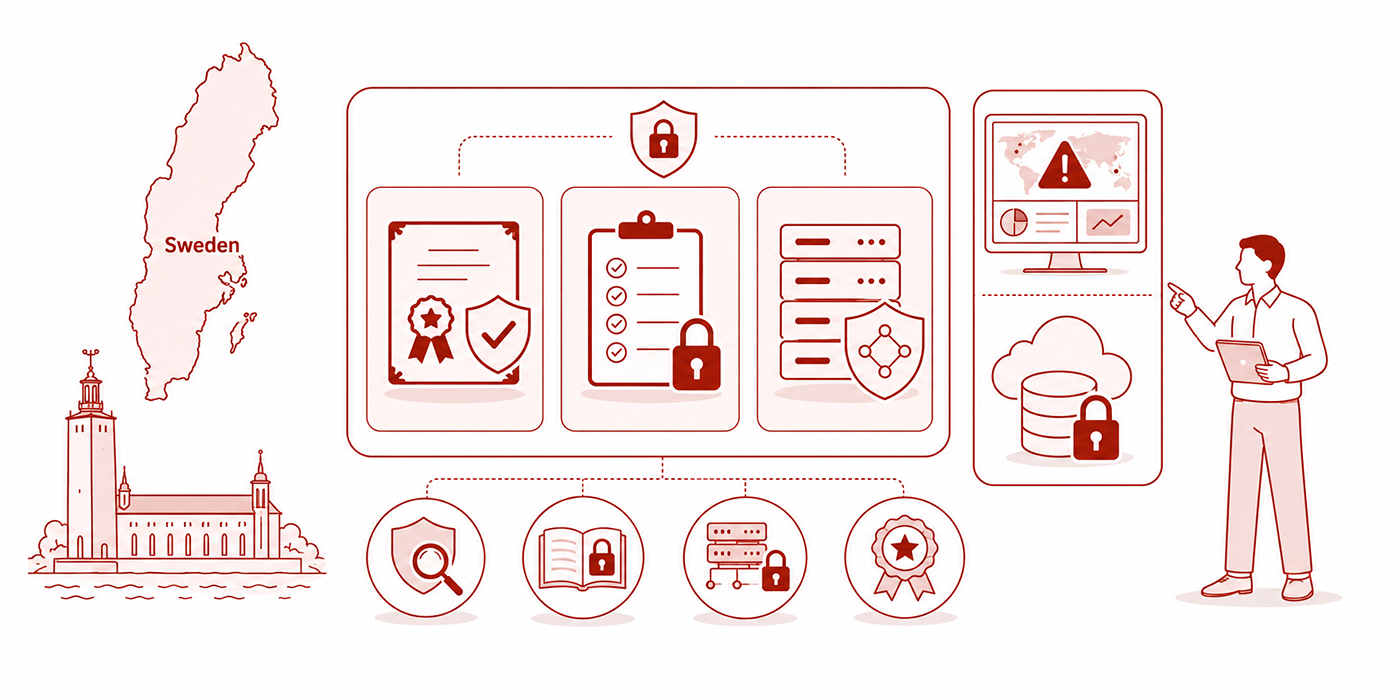
Sweden’s cybersecurity environment changed materially on January 15, 2026, when the national Cybersecurity Act implementing NIS2 entered into force. The legislation introduces clearer expectations around risk analysis, security measures, incident handling, employee education, and management participation. It also extends coverage across 18 sectors and exposes affected organizations to stronger supervisory and financial consequences. Sweden’s National Cybersecurity Centre overview of the Cybersecurity Act confirms these expanded obligations.
This creates a valuable career opening for professionals who can translate security findings into prioritized business action. A technician may discover an exposed service, while a cybersecurity manager must establish ownership, assess operational consequences, allocate remediation funding, communicate exposure to leadership, and verify closure. Professionals moving through the network administrator-to-ethical hacker pathway can use management education to develop this broader decision-making capability. Experienced testers following a penetration testing management career path need the same transition from finding weaknesses to directing enterprise remediation.
The timing is especially important because Sweden’s 2026 implementation occurs in stages. Incident-reporting and information obligations took effect on July 1, 2026, while rules concerning security measures, management training, audits, and security scanning take effect on October 1, 2026. The official Swedish NIS2 implementation timeline gives candidates a precise regulatory context for planning their learning.
Employers therefore need people who can answer operational questions such as:
Which business services qualify as critical?
Which cyber risks require leadership acceptance?
What evidence would satisfy an auditor or supervisory authority?
How should a significant incident be escalated and documented?
Which third-party dependencies create unacceptable concentration risk?
How should management training connect with actual decision authority?
How can security spending be defended through business impact?
These questions create strong opportunities for candidates entering cybersecurity program management, developing toward cybersecurity policy leadership, or building the cross-functional skills required for cybersecurity product management. They also expose a painful weakness in many résumés: candidates list tools, tasks, and certificates without proving ownership, risk judgment, or business impact.
Sweden’s National Cybersecurity Strategy 2025–2029 identifies skills shortages, vulnerable supply chains, fragmented rules, and insufficient systematic security work among the country’s major challenges. Its goal is a resilient Sweden capable of maintaining essential services during severe cyber incidents. This direction makes governance, continuity, supplier assurance, and executive communication commercially useful skills rather than peripheral knowledge. Sweden’s official national cybersecurity strategy provides the policy foundation.
Candidates can compare Sweden’s regulatory environment with the approaches described for advanced certification in Germany, cybersecurity management certification in France, and advanced certification in the Netherlands. These comparisons are particularly useful for professionals supporting Nordic or EU-wide operations.
2. How to Choose the Right Advanced Cybersecurity and Management Certification
Begin with the role you want to perform during the 12 months after certification. A credential creates stronger returns when its assessed competencies match the decisions attached to that role. Someone pursuing a GRC specialist career needs control frameworks, evidence management, policy design, risk treatment, and regulatory interpretation. A practitioner targeting cybersecurity risk management needs scenario analysis, risk appetite, treatment economics, and executive reporting.
Use five tests before enrolling:
Outcome test: Identify the exact role, responsibility, or promotion the credential should support.
Curriculum test: Map every module to a recurring decision in that target role.
Assessment test: Favor applied casework, scenarios, projects, and defensible recommendations.
Evidence test: Confirm that the program produces work you can discuss in interviews.
Delivery test: Check workload, examination rules, support, accessibility, and completion requirements.
A course title containing “advanced” carries limited value when the assessment only tests definitions. Advanced learning should require candidates to reconcile competing priorities: service availability, privacy, cost, regulatory exposure, supplier dependence, recovery requirements, and residual risk. Those entering cybersecurity regulatory specialist roles should be able to interpret obligations and design workable evidence processes. Candidates following the IT auditor-to-cybersecurity auditor transition should be able to test whether controls operate consistently.
Match the credential to your career profile
Technical practitioner moving into leadership: Choose coverage of security strategy, governance, financial prioritization, stakeholder management, assurance, and metrics. A red-team career pathway provides deep adversarial thinking, while management study teaches how to convert findings into enterprise change. A vulnerability research career benefits from similar risk-translation capability.
Manager gaining cybersecurity depth: Prioritize threat fundamentals, architecture, identity, cloud risk, incident response, vulnerability management, and secure development. The IT management-to-cybersecurity leadership guide helps clarify this transition. Your goal is sufficient technical fluency to challenge assumptions, evaluate specialists’ recommendations, and make accountable decisions.
Governance or privacy professional: Select a curriculum covering GDPR security duties, NIS2, ISO/IEC 27001 concepts, third-party risk, incident governance, security auditing, and continuity. The cybersecurity privacy analyst pathway and Chief Privacy Officer career guide show how closely data governance and security leadership intersect.
Senior professional pursuing executive scope: Look for strategy, organizational design, board communication, resource allocation, crisis leadership, culture, supply-chain resilience, and performance measurement. The progression from senior security analyst to VP of Security illustrates the widening accountability. Aspiring architects should also study the Chief Security Architect pathway.
International candidates should assess portability. A Sweden-focused career plan can be strengthened by comparing nearby markets through the Ireland certification guide, advanced certification in Spain, and cybersecurity management certification in France. Cross-market understanding is valuable for consultancies, multinational employers, and vendors serving EU-regulated clients.
3. The Skills Swedish Employers Should Expect From an Advanced Certification
A credible certification should strengthen four connected capability layers: technical understanding, governance judgment, operational execution, and leadership communication. Candidates weaken their employability when they master only one layer. Employers need professionals who can follow a cyber risk from technical cause through business consequence, accountable decision, implemented control, and verified result.
Risk and governance capability
You should be able to build a risk statement containing a threat, vulnerable condition, affected asset or service, plausible consequence, existing controls, and treatment owner. This creates a stronger professional signal than a generic red-amber-green register. The cybersecurity policy analyst career guide strengthens policy reasoning, while the cybersecurity policy director pathway shows how governance expands at leadership level.
Sweden’s Cybersecurity Act requires affected operators to identify their status, register, maintain systematic cybersecurity work, introduce appropriate security measures, train management and employees, and report qualifying incidents. Candidates should practice translating these duties into owners, evidence, deadlines, testing methods, and escalation thresholds. This applied ability supports GRC career development, cybersecurity auditing, and regulatory specialist roles.
Technical and architectural fluency
Management candidates should understand identity and access management, network segmentation, logging, endpoint protection, encryption, secure configuration, vulnerability management, backup integrity, cloud responsibility, application security, and recovery architecture. The aim is decision-grade fluency. An aspiring leader should be able to ask whether privileged access is time-bound, whether logs support investigation, whether backups are isolated, and whether recovery testing reflects the organization’s actual service dependencies.
Practitioners can deepen specific areas through the digital identity management specialist roadmap, blockchain security engineering guide, AI security analyst career guide, and cybersecurity automation engineer pathway. Professionals preparing for emerging risk functions can explore the quantum security analyst career path.
Incident and resilience leadership
Incident expertise includes classification, containment, evidence preservation, legal escalation, operational recovery, stakeholder communication, post-incident learning, and regulatory reporting. Under Sweden’s 2026 rules, practitioners working with affected entities must understand when an event may create a significant disruption and how reporting responsibilities are activated.
A strong portfolio exercise should begin with a realistic event such as compromised administrator credentials at a Swedish transport, healthcare, energy, digital infrastructure, manufacturing, or public-sector organization. The candidate should produce an initial severity assessment, executive brief, containment priorities, decision log, reporting timeline, recovery criteria, and lessons-learned plan. This evidence supports movement into cybersecurity program management, security architecture leadership, and senior security management.
Communication and commercial judgment
Managers earn trust by making risk understandable without stripping away uncertainty. Your certification should require concise board papers, decision memos, policy exceptions, investment cases, and program dashboards. Every recommendation should state the risk reduced, service protected, responsible owner, implementation dependency, cost implication, verification method, and residual exposure.
This communication discipline also creates alternative career options. Professionals who enjoy teaching can examine the cybersecurity certification trainer pathway or cybersecurity bootcamp instructor career. Strong technical communicators can pursue cybersecurity content writing and education or develop toward a cybersecurity research analyst role.
Use your selected blocker as the first measurable objective in the 12-week plan below.
4. A Step-by-Step Plan for Earning the Certification and Building Credibility
A useful certification plan begins with a baseline assessment. Review the published curriculum and rate each competency from zero to three: no working knowledge, conceptual knowledge, supervised application, or independent application. Add one proof item beside every rating. This exposes the difference between familiarity and demonstrable competence.
Weeks 1–2: Define the target and diagnose gaps
Choose one primary target role and collect 15–20 relevant Swedish job descriptions. Extract repeated responsibilities, frameworks, tools, language requirements, sector experience, and leadership expectations. Candidates interested in defensive work can compare those requirements with the network administrator-to-ethical hacker route. Offensive specialists should examine the expectations attached to penetration testing management and red-team operations.
Build a gap matrix with five columns: required capability, current evidence, evidence quality, missing action, and completion date. This prevents candidates from using course completion as a substitute for career preparation.
Weeks 3–5: Build the governance foundation
Study risk assessment, policy architecture, control ownership, assurance, incident obligations, supplier risk, continuity, and management accountability. Use the Swedish Cybersecurity Act as a case environment. Create a mock applicability assessment for an organization in one of the covered sectors, then design an obligation register with owners and evidence.
A candidate pursuing cybersecurity risk specialization should add quantified scenarios and treatment comparisons. Someone targeting a privacy analyst career should connect personal-data risks with access control, encryption, logging, incident response, retention, and supplier oversight.
Weeks 6–8: Apply technical controls to business services
Choose a realistic service such as digital healthcare booking, municipal citizen services, financial payments, industrial production, telecom operations, or cloud software delivery. Map its assets, identities, data flows, dependencies, threat scenarios, controls, recovery requirements, and evidence sources.
Technical candidates can strengthen this phase through the cybersecurity automation engineering guide, digital identity specialist roadmap, or AI security analyst pathway. Managers should focus on control objectives, ownership, verification, exceptions, and residual risk.
Weeks 9–10: Produce leadership-grade deliverables
Create four concise artifacts:
A one-page executive risk brief
A 12-month cybersecurity improvement roadmap
A security metrics dashboard
An incident decision and escalation playbook
Each artifact should help a named stakeholder make a decision. The executive brief should request a specific action. The roadmap should show dependencies and accountable owners. The dashboard should distinguish operational activity from risk-reduction outcomes. The incident playbook should define authority, communications, legal input, reporting, evidence preservation, and recovery approval.
Professionals aiming for cybersecurity product management can replace one artifact with a security-by-design product plan. Future architects can prepare an architecture decision record using the Chief Security Architect career guide.
Weeks 11–12: Prepare for assessment and market conversion
Complete timed practice, revisit weak domains, and explain every major concept aloud through a Swedish workplace scenario. Memorized definitions break down when interviewers introduce cost, conflicting priorities, incomplete evidence, or an urgent operational deadline.
Prepare six STAR stories covering risk identification, stakeholder disagreement, incident handling, control improvement, supplier risk, and measurable program delivery. Career changers should use credible lab, project, volunteer, or consulting examples while clearly describing the scenario’s scope. The IT management-to-security leadership pathway can help structure leadership narratives, while the senior analyst-to-VP roadmap helps experienced candidates frame enterprise impact.

5. How to Turn the Certification Into a Cybersecurity Career Advantage in Sweden
Certification produces career leverage when employers can see where and how you would use the knowledge. Add the credential to your résumé, LinkedIn profile, and applications, then support it with a portfolio, role-specific language, and quantified outcomes.
Replace weak résumé statements such as “responsible for information security” with evidence-based bullets:
Developed a risk treatment plan for 12 critical services and assigned accountable control owners.
Reduced privileged-access review time through standardized evidence collection and automated reporting.
Designed an incident escalation model connecting technical severity with operational and regulatory impact.
Consolidated supplier-security findings into a prioritized remediation program for executive approval.
Created a security dashboard separating activity metrics from risk-reduction indicators.
The exact numbers must remain truthful and explainable. Employers often test inflated claims by asking how the baseline was established, which assumptions were used, who approved the change, and how the outcome was verified.
Build a Sweden-relevant portfolio
A valuable portfolio can contain sanitized or simulated work. Include a NIS2 applicability assessment, risk register, incident-reporting workflow, supplier questionnaire, audit evidence map, business impact analysis, security roadmap, and board briefing. Candidates pursuing GRC roles should emphasize traceability from obligation to control and evidence. Those targeting cybersecurity program manager positions should emphasize dependencies, benefits, budget, resources, and delivery risk.
Technical applicants can add architecture diagrams, detection logic, threat models, remediation plans, and automation samples. The cybersecurity data scientist pathway provides direction for security analytics portfolios, while the blockchain security engineer guide and quantum security analyst roadmap support specialist positioning.
Target sectors where regulation and resilience create demand
Sweden’s Cybersecurity Act covers operators across 18 sectors, making regulated and critical-service environments especially relevant. Candidates should investigate energy, transport, banking, healthcare, drinking water, wastewater, digital infrastructure, public administration, postal services, waste management, manufacturing, food, chemicals, research, space, and digital providers according to the law’s detailed applicability rules.
A strong application connects personal capability with a sector-specific operating problem. Healthcare employers may prioritize availability, sensitive data, medical dependencies, and supplier access. Manufacturers may focus on operational technology, production continuity, remote maintenance, and legacy systems. Public-sector organizations may need structured governance, procurement assurance, incident readiness, and defensible risk acceptance.
Candidates seeking broader mobility can study certification pathways in Ireland, Germany, the Netherlands, and France. Professionals considering work beyond Europe can compare Singapore’s certification market, New Zealand’s pathway, and advanced certification in the UAE.
Evaluate return on investment properly
Calculate certification ROI using four categories:
Direct cost: Tuition, examination fees, retakes, learning resources, and renewal expenses.
Time cost: Weekly study hours multiplied by the economic value of that time.
Opportunity value: Roles, promotions, consulting assignments, or expanded responsibilities the credential may unlock.
Evidence value: Reusable portfolio assets, stronger interview stories, and increased decision-making competence.
Avoid treating a salary increase as guaranteed. Location, experience, Swedish-language ability, sector knowledge, clearance eligibility, technical depth, leadership history, and negotiation all influence compensation. A credible certification strengthens your positioning when it closes an identifiable capability gap and helps an employer reduce a meaningful risk.
6. Frequently Asked Questions About Advanced Cybersecurity and Management Certification in Sweden
-
Swedish cybersecurity roles generally depend on employer requirements, job scope, sector rules, and demonstrated competence rather than one universal certification mandate. Regulated organizations still need suitably capable personnel to fulfill security, governance, incident, training, and assurance responsibilities. A relevant credential can provide structured evidence of knowledge, especially for candidates entering cybersecurity regulation, cybersecurity auditing, or GRC specialization.
-
Yes. The law increases management participation in organizational cybersecurity and requires affected operators to train management and personnel. Detailed Swedish rules concerning management training and security measures take effect on October 1, 2026, according to the official NIS2 implementation schedule. Candidates pursuing cybersecurity leadership should understand risk accountability, oversight, escalation, and evidence.
-
A beginner can succeed with sufficient foundations in networking, operating systems, identity, cloud concepts, security controls, and risk terminology. The larger challenge involves applying those concepts to organizational decisions. Beginners should complete foundational study and practical labs before advanced management assessment. The network administration-to-ethical hacking pathway offers one technical route, while the cybersecurity research analyst guide supports analysis-focused development.
-
Requirements vary by employer and role. International technology companies may operate substantially in English, while public-sector, regulated, client-facing, policy, and leadership positions may require Swedish for legislation, internal governance, stakeholder communication, and official documentation. Candidates should evaluate each vacancy individually and treat Swedish-language development as a career multiplier when targeting policy analyst, regulatory specialist, or senior management work.
-
The strongest choice matches your existing advantage with a documented market need. Technical professionals may progress into security architecture, cloud security, incident leadership, identity, offensive security, or automation. Governance professionals may target GRC, audit, privacy, policy, NIS2 implementation, and supplier assurance. Emerging-technology candidates can explore AI security analysis, cybersecurity automation, digital identity management, or cybersecurity data science.
-
A focused professional with solid foundations may build an effective preparation plan over 10–14 weeks, while career changers may need several additional months for technical fundamentals and practical evidence. Curriculum depth, assessment format, work schedule, and prior experience determine the realistic timeline. Use competency ratings and proof items to measure readiness. Calendar time alone offers weak evidence.
