
The Ultimate Guide to Getting Advanced Cybersecurity & Management Certification in Singapore: Everything You Need to Know in 2026-2027
Advanced cybersecurity credentials carry the most value in Singapore when they connect technical depth with governance, business risk, cloud architecture, incident leadership, and regulatory accountability. Employers increasingly need professionals who can interpret threats, guide investment decisions, communicate with executives, and operate within Singapore’s evolving digital-security environment. This guide explains how to select, fund, complete, and convert a certification into measurable career progress while avoiding expensive credentials that add letters to your résumé without improving your hiring or promotion prospects.
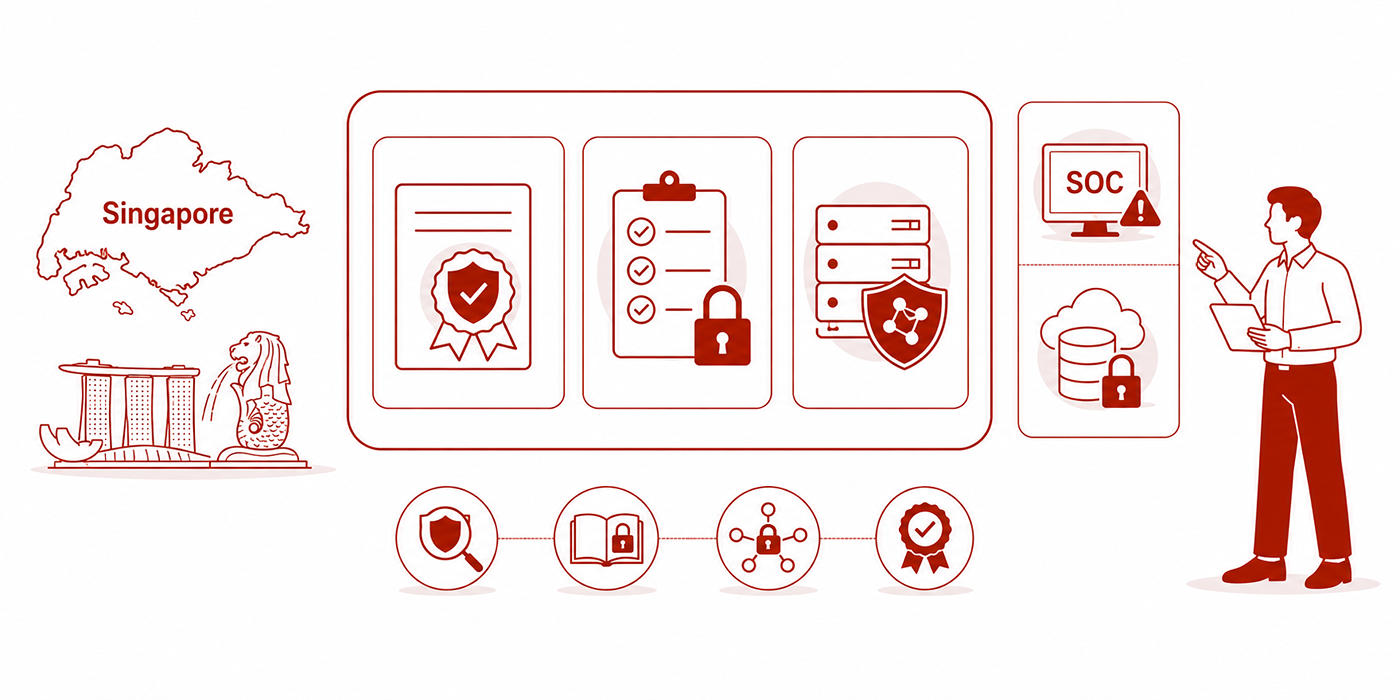
1. Why Advanced Cybersecurity and Management Certification Matters in Singapore in 2026–2027
Singapore’s cybersecurity environment rewards professionals who can work across technical operations and organizational risk. A security manager may need to understand alerts from a next-generation SIEM, evaluate weaknesses discovered through vulnerability assessment techniques, explain exposure to senior leadership, and coordinate remediation across cloud, infrastructure, legal, and business teams.
That combination has become more important since key provisions of Singapore’s Cybersecurity (Amendment) Act took effect on October 31, 2025. The expanded framework strengthens oversight of important computer systems and introduces obligations affecting additional classes of regulated entities, including major digital infrastructure providers. Professionals working around critical information infrastructure, cloud platforms, data centres, public services, or strategically important systems therefore benefit from stronger competence in cybersecurity compliance, security audits, incident reporting, supplier risk, and operational resilience.
The strongest certification strategy begins with the job you want. A professional pursuing SOC leadership needs a different portfolio from someone targeting cyber risk, penetration testing, privacy, cloud security, or executive management. Reviewing a SOC analyst career pathway, a security analyst-to-engineer roadmap, or a CISO advancement plan before paying an exam fee can prevent months of misdirected study.
Singapore’s Skills Framework for Infocomm Technology gives individuals and employers a structured way to identify ICT roles, career pathways, and the skills attached to them. Cybersecurity candidates can use that framework alongside a future-skills analysis and current cybersecurity job-market trends to determine whether their next gap involves technical depth, architecture, governance, communication, or leadership.
A certification becomes genuinely advanced when it helps you perform higher-value work. That may involve designing controls, leading investigations, defending budgets, briefing boards, managing security programmes, evaluating third parties, or translating a technical weakness into financial and operational consequences. Candidates should therefore evaluate credentials through career leverage rather than popularity alone.
Cybersecurity Certifications and Career Impact: 30-Credential Advancement Matrix
| Certification or Pathway | Best Career Stage | Most Valuable Career Use | Evidence to Build Alongside It |
|---|---|---|---|
| ISC2 Certified in Cybersecurity | Entry level | Foundational transition into security | Home lab, ticket analysis, basic risk register |
| CompTIA Security+ | Entry level | Broad defensive-security baseline | Network hardening and incident documentation |
| CompTIA CySA+ | Early career | SOC, detection, triage, analysis | SIEM investigations and detection rules |
| CompTIA PenTest+ | Early career | Vulnerability testing and assessment | Sanitized assessment report and lab evidence |
| CompTIA SecurityX | Mid career | Advanced enterprise security practice | Architecture proposal and control decisions |
| ISC2 SSCP | Early to mid career | Operational security administration | Access reviews and operational procedures |
| ISC2 CISSP | Experienced practitioner | Security leadership and broad governance | Risk decisions, programme ownership, metrics |
| ISC2 CCSP | Mid career | Cloud-security governance and architecture | Cloud control matrix and reference design |
| ISC2 CSSLP | Mid career | Secure software lifecycle leadership | Threat model and secure-SDLC workflow |
| ISC2 ISSMP | Senior career | Enterprise security management | Strategy, governance calendar, executive KPIs |
| ISACA CISM | Mid to senior career | Security programme and risk leadership | Business-aligned security programme plan |
| ISACA CRISC | Mid career | Technology and enterprise risk | Risk scenarios, treatment plans, KRIs |
| ISACA CISA | Mid career | IT audit and control assurance | Audit programme and finding validation |
| ISACA CGEIT | Senior career | Enterprise technology governance | Board reporting and governance model |
| ISACA CDPSE | Mid career | Privacy engineering and data governance | Privacy impact assessment and data map |
| EC-Council CEH | Early to mid career | Structured ethical-hacking knowledge | Legal lab exercises and technical reports |
| EC-Council CHFI | Mid career | Digital forensics and investigations | Evidence-handling and investigation timeline |
| OffSec OSCP | Technical mid career | Hands-on penetration testing | Lab methodology and remediation-focused reports |
| OffSec OSEP | Advanced offensive | Evasion and mature enterprise testing | Attack-chain narrative and control lessons |
| OffSec OSWE | Advanced offensive | Web application exploitation | Code review and vulnerability write-ups |
| GIAC GSEC | Early to mid career | Practical enterprise defence | Hardening baseline and response checklist |
| GIAC GCIH | Mid career | Incident handling and containment | Incident playbook and after-action review |
| GIAC GCIA | Technical mid career | Network traffic and intrusion analysis | Packet analysis and detection logic |
| GIAC GPEN | Mid career | Professional penetration testing | Scope, evidence, findings, and retest records |
| ISO/IEC 27001 Lead Implementer | Mid to senior career | Information-security management systems | Statement of Applicability and implementation plan |
| ISO/IEC 27001 Lead Auditor | Mid to senior career | Control assurance and certification audits | Audit plan, evidence map, corrective actions |
| AWS Certified Security – Specialty | Cloud practitioner | AWS security engineering | Secure landing zone and logging architecture |
| Microsoft Cybersecurity Architect Expert | Cloud-security professional | Enterprise and Microsoft security architecture | Zero-trust design and identity architecture |
| Google Professional Cloud Security Engineer | Cloud practitioner | Google Cloud security operations | IAM model, controls, monitoring, and encryption |
| Certified Kubernetes Security Specialist | Cloud-native specialist | Container and Kubernetes security | Cluster-hardening and workload-policy lab |
2. How to Choose the Right Certification for Your Career Target
Start with a role-gap analysis. Write down your target role, five recurring responsibilities from relevant job descriptions, the technologies employers mention, the experience requirements you already satisfy, and the capabilities you still need to prove. Someone targeting a security operations role may prioritize CySA+, GCIH, or GCIA alongside hands-on SIEM solution experience, endpoint detection knowledge, and documented incident investigations.
A penetration-testing candidate should build a different stack. OSCP, GPEN, PenTest+, or another practical credential becomes more persuasive when supported by clear testing methodology, reproducible findings, remediation guidance, and familiarity with leading penetration-testing tools. Comparing penetration-testing companies can also reveal how commercial assessments are scoped, communicated, and positioned for clients.
Professionals moving toward management should prioritize credentials that develop governance, programme ownership, risk treatment, stakeholder communication, and decision-making. CISM, CISSP, CRISC, ISO/IEC 27001, CGEIT, and cloud-governance credentials commonly align with those needs. Study them alongside a cybersecurity manager pathway, a security manager-to-director roadmap, and a cybersecurity programme manager guide.
A certification’s name should also match the problems you expect to own. Singapore employers in financial services may place greater weight on risk, resilience, auditability, cloud controls, and third-party oversight. Candidates interested in that sector can study the financial-sector incident landscape, compare leading financial-services cybersecurity firms, and strengthen their grasp of cybersecurity risks in finance.
Healthcare candidates need fluency in sensitive-data protection, identity controls, ransomware resilience, third-party risk, and uninterrupted service delivery. A useful development plan may combine governance certification with analysis of healthcare cyber threats, healthcare security providers, and healthcare-specific security tools.
Singapore’s PDPA establishes baseline requirements governing the collection, use, disclosure, and care of personal data. Organizations must designate at least one Data Protection Officer and make the DPO’s contact information publicly available. Candidates pursuing privacy, governance, audit, risk, or security-management roles should therefore understand data inventories, retention, access, breach assessment, vendor processing, and accountability.
That environment can support credentials such as CDPSE, CISA, CRISC, CISM, CISSP, or ISO/IEC 27001, depending on the intended role. Pairing certification study with a cybersecurity compliance-officer roadmap, a cybersecurity auditor guide, and an understanding of major cybersecurity frameworks creates a much stronger professional profile.
Cloud security deserves special attention. Singapore’s expanded cybersecurity framework and dependence on major digital infrastructure increase the strategic value of professionals who understand shared responsibility, identity, logging, encryption, workload protection, resilience, and supplier concentration. CCSP, cloud-provider security credentials, and security-architecture qualifications can support this path when combined with a cloud-security career roadmap, a comparison of cloud-security tools, and research into emerging cloud threats.
3. Eligibility, Funding, Training Providers, and Preparation Costs
Before enrolling, separate four expenses: training fees, examination fees, practice resources, and retake exposure. A low-priced course can become expensive when it leaves you unprepared for the exam or fails to produce practical competence. An expensive programme can also underperform when its schedule, teaching method, or target audience conflicts with your background.
Confirm the certification body’s current experience requirements, endorsement rules, exam format, renewal obligations, continuing-education expectations, and rescheduling policies directly before payment. Some advanced certifications require documented professional experience. Others allow candidates to sit an examination before they have completed every experience requirement. Your planning should reflect the exact rules in force when you register.
Singapore residents should check whether the chosen programme appears on MySkillsFuture and whether the provider is registered for relevant support. SkillsFuture Singapore states that course-fee funding is available to eligible self-sponsored individuals who enrol directly with registered training providers. Singapore Citizens aged 40 and above may also qualify for enhanced subsidy arrangements when the underlying programme meets the relevant conditions. Funding eligibility, subsidy percentage, claim procedure, and course status should be verified for the specific intake.
Funding should improve the economics of a sound choice. It should never become the sole reason for choosing a credential. Compare each programme against reputable cybersecurity training providers, established cybersecurity bootcamps, and accessible free cybersecurity learning resources.
A credible provider should disclose the intended learner level, instructor background, total guided hours, lab access, mock-exam quality, support period, refund terms, and whether the examination voucher is included. Ask how recently the material was updated. Cloud, AI, regulation, incident-response practices, and vendor platforms change quickly, so outdated slides can create false confidence.
The instructor should also be able to connect theory with operational decisions. A management-course trainer should explain how to prioritize risk, measure control effectiveness, challenge weak evidence, brief executives, and handle disputed remediation ownership. A technical trainer should demonstrate methodology, troubleshooting, evidence preservation, reporting, and safe lab practice. Reading leading cybersecurity research organizations, following credible cybersecurity industry sites, and using respected cybersecurity books can expose gaps in a provider’s curriculum.
Build a preparation calendar backward from the desired exam date. Reserve the first phase for concepts, the second for applied work, the third for timed questions and scenario analysis, and the final phase for weak-domain repair. Candidates balancing full-time employment should protect several shorter weekly sessions rather than depending on exhausting weekend cramming.
Every major topic should produce an artifact. Risk students can build a treatment register. Audit students can write a control-testing plan. Cloud candidates can design a secure reference architecture. Incident responders can create an escalation matrix and after-action review. Aspiring managers can produce a one-page executive dashboard. These artifacts turn study into demonstrable capability and prepare candidates for scenario-based interviews.
Quick Poll: What Is Blocking Your Cybersecurity Career Progress in Singapore?
Choose the obstacle costing you the most time, money, or career momentum.
4. Step-by-Step Certification Plan for Singapore Candidates
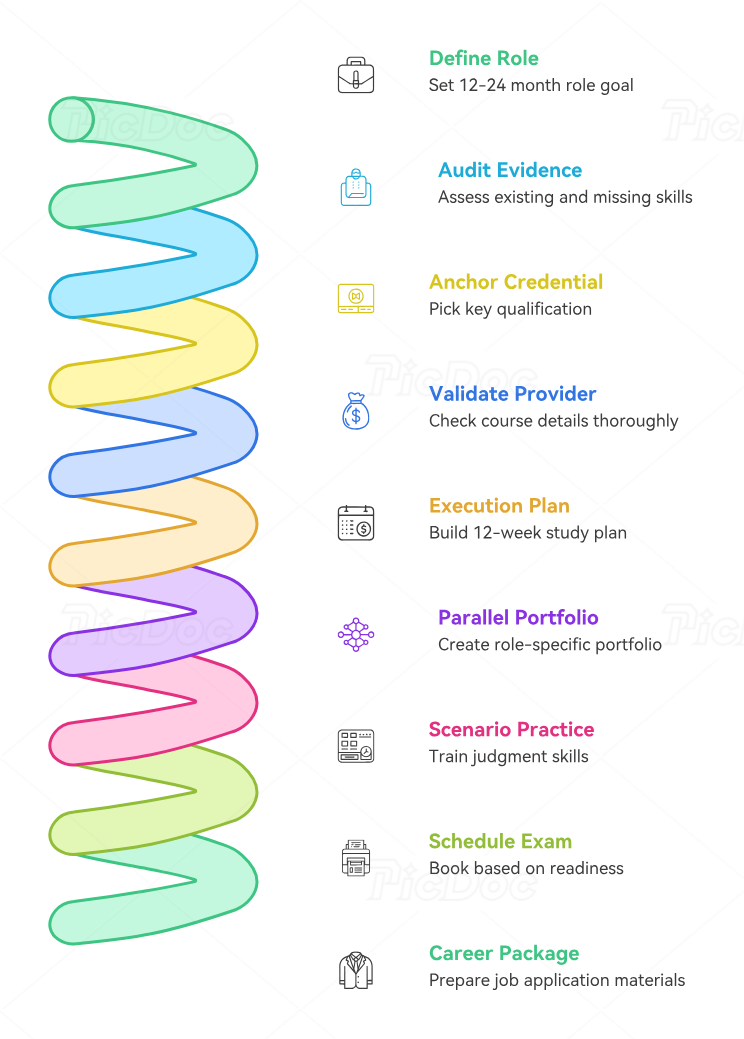
Step 1: Define the role outcome. Choose one primary destination for the next 12 to 24 months. Examples include SOC analyst, incident responder, cloud-security engineer, penetration tester, compliance analyst, security manager, consultant, or security architect. A candidate pursuing incident response should examine an incident-responder pathway, current incident-response effectiveness research, and the skills required for senior security analysis.
Step 2: Audit your evidence. List what you can already demonstrate through employment, projects, labs, volunteering, internships, or formal study. Then identify the two or three missing capabilities that repeatedly appear in target roles. An IT-support professional may need stronger networking, Linux, security monitoring, scripting, and incident triage. The IT support-to-cybersecurity transition guide, SOC analyst roadmap, and network monitoring tools directory can help structure that bridge.
Step 3: Select one anchor credential. Your anchor should be the qualification most closely connected to the role. Add supporting credentials only when they close a distinct gap. A cloud-security candidate might select CCSP or a provider-specific security certification as the anchor, then add Kubernetes security or ISO/IEC 27001 when the intended role includes cloud-native operations or governance.
A management candidate may use CISM, CISSP, CRISC, or ISO/IEC 27001 as the anchor. Their supporting work should include access-control models, NIST framework adoption, supplier assurance, incident governance, and measurable security outcomes.
Step 4: Validate the provider and course status. Request the full syllabus, trainer biography, delivery schedule, lab information, exam-voucher details, support arrangements, and refund policy. Confirm subsidy information through the relevant Singapore platform before committing funds. Search for independent evidence that previous learners received the depth of instruction promised.
Step 5: Build a 12-week execution plan. Allocate weeks by examination domain and performance gap. Track hours completed, practice accuracy, lab completion, weak areas, and revision backlog. Avoid measuring progress through videos watched. Measure concepts explained from memory, scenarios solved, controls selected, logs interpreted, and decisions justified.
Step 6: Create a parallel portfolio. A defensive candidate can document an alert investigation using a safe dataset, produce an incident timeline, recommend containment, and map improvements to a framework. An offensive candidate can complete legal labs and produce professional reports informed by the penetration-tester career roadmap and the OSCP penetration-testing pathway. A governance candidate can develop an audit-ready risk and control pack using insights from the cybersecurity auditor career guide.
Step 7: Practise scenario reasoning. Advanced examinations and senior interviews often test judgment under imperfect conditions. Practise explaining which action comes first, which stakeholder owns the risk, what evidence is required, what could fail, and how the decision supports business continuity. Use case studies from ransomware analysis, insider-threat research, and data-breach reporting to deepen this judgment.
Step 8: Schedule the exam around readiness evidence. A booking should follow stable practice performance, completed labs, and successful weak-area review. Pressure created by an exam date can support discipline, while an unrealistic date can encourage superficial memorization.
Step 9: Prepare the career-conversion package before passing. Rewrite your résumé around outcomes, responsibilities, scale, and evidence. Prepare six interview stories covering risk identification, technical troubleshooting, stakeholder conflict, incident handling, process improvement, and leadership. Compare your positioning with the cybersecurity salary progression, certification salary-growth analysis, and certification career-impact research.
5. How to Turn the Certification Into Employment, Promotion, or Salary Growth
Certification completion creates a time-sensitive opportunity. Update your résumé, professional profile, portfolio, and interview examples while the knowledge remains fresh. State the credential accurately, include the awarding body, and avoid presenting course attendance as equivalent to professional certification.
Your résumé should connect the credential to capabilities. Replace vague claims such as “knowledge of cybersecurity” with precise evidence: created a cloud-threat model, analyzed authentication logs, mapped controls to a framework, developed an incident-escalation matrix, tested access permissions, or produced a management risk dashboard.
Candidates pursuing a first security role should reduce the employer’s perception of beginner risk. A hiring manager wants evidence that you can follow scope, preserve confidentiality, document clearly, escalate correctly, and learn unfamiliar systems. A small portfolio informed by security operations practices, endpoint-security research, and leading endpoint-security providers can answer those concerns.
Mid-career candidates should show expanded ownership. Explain how the certification improves your ability to lead risk reviews, coordinate remediation, design controls, mentor analysts, manage vendors, or brief decision-makers. Professionals moving from technical work into leadership can use a specialist-to-CISO roadmap, an IT management-to-security leadership guide, and a director of information security pathway to identify the next responsibility gap.
Salary conversations should focus on expanded contribution. A credential alone rarely provides a persuasive compensation argument. Stronger leverage comes from showing that you can handle more complex risks, reduce external consulting dependency, improve audit readiness, shorten incident response, lead an implementation, or support regulated clients. Review remote and on-site salary patterns, the wider global cybersecurity salary landscape, and emerging specialized-role demand before setting expectations.
Singapore candidates should also develop sector fluency. A security professional serving government, energy, transport, manufacturing, healthcare, finance, or retail needs to understand how operational priorities change the risk conversation. Researching public-sector cybersecurity providers, energy and utilities security, manufacturing security solutions, and transportation cybersecurity firms helps candidates speak the language of target employers.
Leadership candidates should demonstrate commercial awareness. They should be prepared to explain risk appetite, prioritization, assurance, resilience, third-party exposure, board communication, and the consequences of delayed remediation. Studying the global cybersecurity market, the cybersecurity workforce shortage, and the changing effect of automation on security careers can sharpen these conversations.
6. Frequently Asked Questions
-
ISC2 Certified in Cybersecurity and CompTIA Security+ are common starting points for broad foundational knowledge. Your strongest choice depends on the target role and current experience. A candidate moving from IT support should combine foundational certification with networking, operating systems, ticket analysis, and a small defensive-security portfolio. The IT support transition roadmap, SOC analyst career guide, and cybersecurity courses directory provide useful preparation routes.
-
CISM and CISSP frequently suit professionals pursuing security management, while CRISC supports technology-risk specialization and ISO/IEC 27001 credentials support management-system implementation or auditing. CGEIT can fit experienced professionals focused on enterprise technology governance. Compare the content against the responsibilities described in a cybersecurity management roadmap, VP of cybersecurity pathway, and chief security architect guide.
-
Eligible self-sponsored individuals may receive course-fee funding when they enrol directly with an SSG-registered training provider for a qualifying programme. Additional arrangements may apply to eligible mid-career Singapore Citizens. Course status, individual eligibility, funding amount, and claim procedures can vary, so candidates should verify the exact listing and intake before registering.
Funding works best when the programme also meets your career criteria. Compare the subsidized option with global cybersecurity training providers, relevant bootcamp programmes, and independent cybersecurity learning channels.
-
Many advanced credentials include professional-experience requirements or are designed for candidates with established responsibilities. Review the awarding body’s current rules before registration. Even where an examination can be attempted earlier, practical context improves comprehension and career value.
Candidates without formal security employment can develop relevant evidence through authorized labs, internal projects, governance documentation, cloud environments, secure coding, incident simulations, and volunteer work with clear scope. Offensive-security candidates can follow an ethical-hacking transition guide, while defensive candidates can build toward an incident-response career or threat-intelligence role.
-
CISSP generally covers a broad range of security domains and can support architecture, consulting, engineering leadership, and management pathways. CISM concentrates heavily on information-security governance, risk, programme development, and incident management. Professionals performing broad technical and managerial work may prefer CISSP first. Candidates already leading programmes, risk decisions, or governance activities may find CISM especially aligned.
Some professionals eventually complete both because the bodies of knowledge reinforce different aspects of leadership. The decision should reflect target job descriptions, existing experience, and the capabilities you need to demonstrate. Use the certification-impact report, certification directory, and future certification analysis to compare long-term fit.
-
CCSP is useful for broad cloud-security concepts, governance, risk, architecture, operations, and legal considerations. AWS, Microsoft, and Google Cloud security credentials can demonstrate platform-specific capability. The Certified Kubernetes Security Specialist supports candidates working with containerized and cloud-native environments.
A strong cloud profile also requires evidence in identity architecture, network segmentation, encryption, secrets management, logging, posture management, incident response, resilience, and shared-responsibility decisions. Review the future of cloud security, leading cloud-security platforms, and the cloud-security engineer pathway.
