
The Ultimate Guide to Getting Advanced Cybersecurity & Management Certification in Japan: Everything You Need to Know in 2026–2027
Japan’s cybersecurity market needs professionals who can protect complex systems while explaining risk to executives, auditors, suppliers, and operational teams. An advanced credential can strengthen progression into cybersecurity program management, enterprise security architecture, governance, risk, and compliance, or cybersecurity leadership. The strongest results come from matching certification study with Japanese business expectations, practical evidence, regulatory awareness, and a clearly defined career destination.
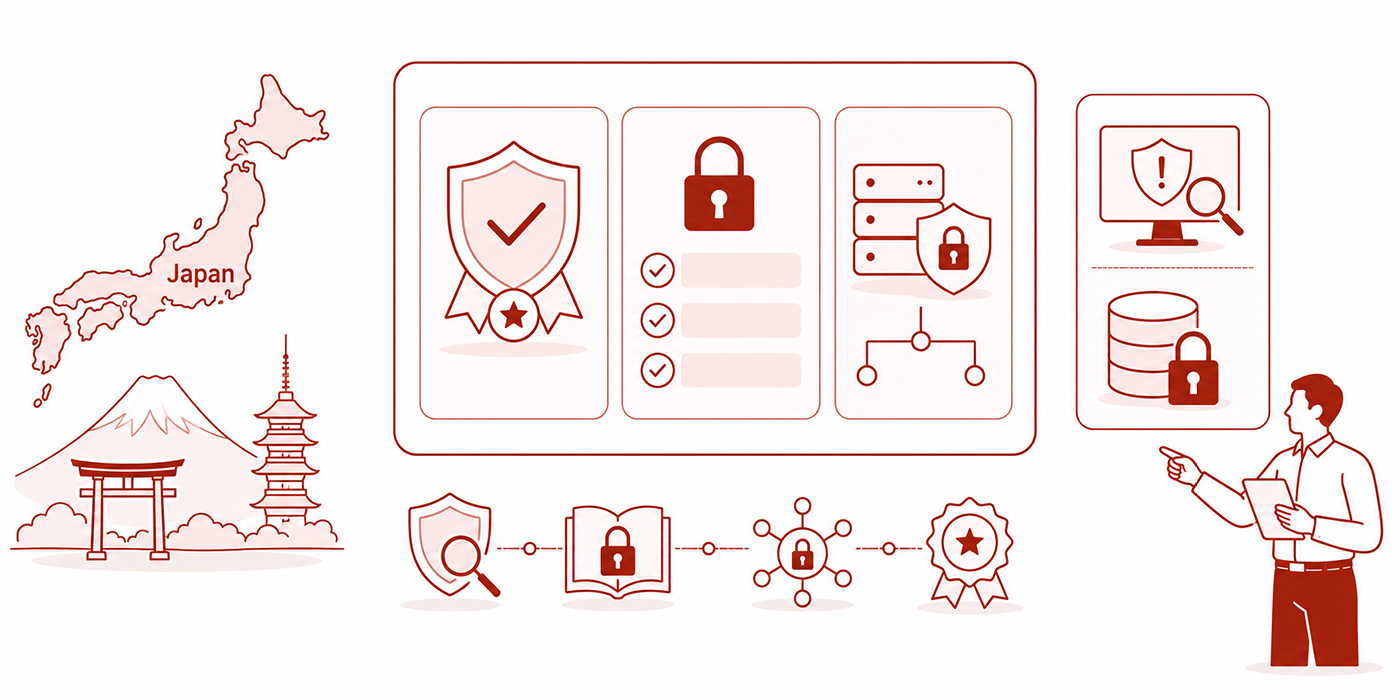
1. Why Advanced Cybersecurity and Management Skills Are Valuable in Japan
Japan’s cybersecurity opportunity extends beyond security operations centers and penetration-testing teams. Manufacturing, automotive, finance, healthcare, telecommunications, cloud services, government, logistics, energy, and technology supply chains need professionals who can translate cyber risk into operational decisions. This creates pathways into cybersecurity risk management, cybersecurity auditing, privacy analysis, regulatory specialization, and security policy analysis.
The labor need is substantial. Japan’s Ministry of Economy, Trade and Industry reported in 2025 that a private survey estimated a domestic shortage of approximately 110,000 cybersecurity professionals. METI’s policy work emphasizes development across several levels, including highly skilled experts, organizational security leaders, and personnel helping smaller businesses improve their defenses. That environment rewards candidates who bring technical credibility together with management judgment.
Japan also treats cybersecurity as a management responsibility. METI’s Cybersecurity Management Guidelines are directed toward executives across industries and company sizes, emphasizing management involvement before incidents occur. A professional who can convert those principles into budgets, accountable ownership, supplier controls, incident escalation, and measurable improvement can pursue security program leadership, cybersecurity policy direction, Chief Privacy Officer development, and the senior analyst-to-VP pathway.
The 2026–2027 period also places greater attention on software suppliers, managed services, infrastructure providers, and supply-chain accountability. In March 2026, METI and Japan’s National Cybersecurity Office published guidelines describing expected roles for organizations that develop, supply, and operate software. The guidance provides a reference framework for improving the effectiveness of security measures across providers and customers. Candidates who understand secure procurement, vulnerability handling, software lifecycle governance, contractual controls, and shared responsibility can position themselves for cybersecurity product management, security architecture, automation engineering, and blockchain security engineering.
An advanced cybersecurity and management certification should therefore demonstrate more than knowledge of threats. Employers need evidence that the holder can:
evaluate business exposure instead of describing vulnerabilities in isolation;
prioritize controls when time, staffing, and budgets are limited;
coordinate legal, privacy, engineering, operations, procurement, and leadership teams;
challenge weak assumptions without creating unnecessary organizational resistance;
document decisions in a form that survives audits, incidents, and executive scrutiny;
explain technical uncertainty in commercially usable language.
These capabilities support careers in digital identity management, AI security analysis, cybersecurity data science, vulnerability research, and red-team operations. Each destination requires a different balance of management, technical, regulatory, and communication depth.
The hardest pain point is often professional translation. A candidate may possess years of infrastructure, audit, software, project, or compliance experience yet describe it in language that sounds unrelated to cybersecurity. Advanced study should help convert existing work into security evidence: change management becomes control governance; vendor reviews become third-party risk; system administration becomes identity and configuration assurance; project leadership becomes security-program delivery.
Compare each credential by career stage, hiring signal, strongest application, and the proof you should build alongside it.
| Certification or Qualification | Best Career Stage | Primary Career Signal | Where It Can Create Leverage |
|---|---|---|---|
| Advanced Cybersecurity & Management Certification | Mid to senior career | Connects technical risk with governance and leadership | Cybersecurity leadership transitions, program ownership and executive reporting |
| Registered Information Security Specialist | Experienced or advancing professional | Japan-specific national cybersecurity qualification signal | Domestic credibility, advisory work and progression toward security architecture leadership |
| Information Security Management Examination | Entry to early career | Establishes foundational security-management knowledge | Internal security coordination and preparation for GRC specialization |
| Fundamental Information Technology Engineer | Entry level | Demonstrates broad computing and engineering foundations | Technical entry routes before pursuing security automation engineering |
| Applied Information Technology Engineer | Early to mid career | Signals broader applied IT judgment | Systems, operations and movement toward security program management |
| Network Specialist Examination | Technical practitioner | Deepens network design and operational credibility | Detection, infrastructure defense and a future red-team pathway |
| Database Specialist Examination | Technical practitioner | Strengthens data-platform and database competence | Data protection, access governance and cybersecurity data science |
| Systems Architect Examination | Mid to senior technical career | Supports enterprise design and architecture positioning | Secure system design and the Chief Security Architect route |
| IT Service Manager Examination | Mid career | Links operations, service quality and management | Incident governance and IT-to-cybersecurity leadership |
| System Auditor Examination | Mid to senior career | Builds assurance and audit credibility | Control evaluation and the move from IT auditor to cybersecurity auditor |
| Project Manager Examination | Mid career | Demonstrates delivery and stakeholder coordination | Security transformation and cybersecurity program delivery |
| ISC2 Certified in Cybersecurity | Entry level | Reduces beginner-risk perception | Entry security roles and preparation for an international certification pathway |
| CompTIA Security+ | Entry to early career | Validates broad vendor-neutral fundamentals | Junior security, infrastructure defense and progression toward identity management |
| CompTIA CySA+ | Early career | Supports defensive analysis specialization | Monitoring, triage and progression from security analyst to leadership |
| CompTIA PenTest+ | Early career | Supports offensive-security positioning | Assessment, testing and a future penetration-testing manager role |
| CompTIA SecurityX | Experienced practitioner | Signals advanced enterprise security capability | Complex architecture, engineering and technical security leadership |
| ISC2 CISSP | Experienced professional | Provides broad senior-level security coverage | Consulting, architecture and the VP of Security pathway |
| ISACA CISM | Mid to senior career | Strengthens governance and management credibility | Security management and program leadership |
| ISACA CRISC | Mid career | Deepens technology-risk and control knowledge | Risk treatment and cybersecurity risk specialization |
| ISACA CISA | Early to mid career | Supports audit and assurance positioning | Evidence testing and cybersecurity audit careers |
| ISC2 CCSP | Mid career | Strengthens cloud-security credibility | Cloud governance and regional cloud-security opportunities |
| OffSec OSCP | Technical practitioner | Provides hands-on offensive-security evidence | Exploitation, testing and red-team operations |
| ISO/IEC 27001 Lead Implementer | Mid career | Demonstrates ISMS implementation capability | Governance design and GRC implementation |
| ISO/IEC 27001 Lead Auditor | Mid career | Strengthens management-system assurance | Certification readiness and regulatory assurance work |
| ISO 22301 Business Continuity | Mid to senior career | Connects cyber incidents with operational resilience | Continuity, crisis leadership and cross-functional program management |
| PMI Project Management Professional | Mid career | Strengthens delivery, budgeting and stakeholder control | Transformation programs and security product management |
| AWS Certified Security – Specialty | Mid career | Signals AWS-focused security expertise | Cloud architecture and cloud-security automation |
| Microsoft Cybersecurity Architect Expert | Mid to senior career | Supports Microsoft-focused architecture positioning | Enterprise identity, cloud strategy and digital identity leadership |
Important: This matrix supports career planning and does not represent official equivalence between Japanese national qualifications, private certificates, vendor credentials, academic awards, or regulated licenses. Confirm current examinations, prerequisites, languages, fees, renewal requirements, and provider policies before enrolling.
2. How to Select the Right Certification Route for the Japanese Market
Begin with a career destination instead of a certificate title. Analyze at least 15 target vacancies and extract the responsibilities, technical platforms, management expectations, language requirements, sector knowledge, and qualifications appearing repeatedly. This reveals whether you need an advanced management credential, a Japanese national qualification, a cloud specialization, an audit pathway, or a technical examination.
A future penetration-testing manager needs evidence of offensive methodology, remediation communication, project control, client trust, and team leadership. A candidate targeting cybersecurity policy leadership needs governance analysis, regulatory interpretation, executive communication, and implementation planning. The route into AI security, quantum security, or blockchain security demands another competency mix.
Assess whether you need Japanese or international recognition
Japan operates established national IT examination and qualification systems through IPA. The Information Technology Engineers Examination includes national examinations through which METI certifies that candidates meet defined knowledge and skill standards. IPA also administers the Registered Information Security Specialist framework, which was introduced after legislative changes and is described as a national qualification for highly skilled cybersecurity professionals.
An international or private advanced certificate can still support professional development, especially for candidates working in multinational teams, pursuing international cybersecurity leadership, comparing opportunities in Singapore, exploring the Hong Kong market, or building experience across the UAE cybersecurity sector. Describe each credential according to its actual awarding status and learning outcomes.
Apply a seven-part provider test
Before enrolling, verify:
Provider identity: Confirm the awarding organization’s legal identity, contact channels, governance information, and certificate-verification process.
Curriculum depth: Look for governance, risk, cloud security, identity, incident management, privacy, supplier security, resilience, metrics, and executive communication.
Assessment integrity: Determine whether completion requires a supervised examination, scenario work, applied assignments, or another credible assessment.
Career level: Check whether the material serves beginners, technical practitioners, managers, or executives.
Delivery conditions: Confirm access duration, language, scheduling, technical requirements, and instructor support.
Retake and refund rules: Read the terms before paying, particularly when assessment attempts are limited.
Maintenance: Identify expiration dates, continuing-education requirements, renewal costs, and verification rules.
A certificate becomes difficult to defend when the candidate cannot explain how it was assessed. Professionals pursuing cybersecurity regulation, security auditing, privacy leadership, and risk management should treat provider due diligence as their first governance exercise.
Evaluate Japanese-language requirements realistically
English can support work inside multinational corporations, international consulting teams, global technology providers, and some technical environments. Japanese proficiency can significantly expand access to domestic documentation, local stakeholders, internal governance discussions, employee awareness work, public-sector environments, and supplier relationships.
Avoid overstating language ability. Record separate capability levels for reading technical material, writing business documents, participating in meetings, interviewing stakeholders, and presenting to management. A professional targeting cybersecurity policy analysis, program management, privacy analysis, or security training may need stronger communication capability than someone working in a narrowly defined technical role.
3. Step-by-Step Process for Earning the Certification and Proving Competence
Step 1: Write a role-specific outcome
Create a one-sentence objective that connects the certification to a real position:
Within 12 months, I will be ready to compete for cybersecurity governance and program-management roles involving supplier risk, incident escalation, management reporting, and security improvement planning in Japan.
A goal focused on GRC specialization produces a different study plan from one targeting vulnerability research, red-team operations, security product management, or cybersecurity research analysis.
Step 2: Map your current evidence
Create a competency inventory covering governance, risk, infrastructure, cloud, identity, incident response, privacy, supplier security, resilience, project delivery, budgeting, metrics, and executive communication. Score each area from zero to four:
0: no usable knowledge;
1: understands terminology;
2: can contribute with supervision;
3: can perform independently;
4: can lead, review, and defend decisions.
Record evidence beside every score. “Understands risk” has little hiring value. “Built a supplier-risk register covering 35 vendors, assigned treatment owners, and established annual reassessment triggers” is defensible. This exercise supports candidates moving toward cybersecurity auditing, risk specialization, security architecture, and senior security leadership.
Step 3: Build a study schedule around decisions
Use three weekly learning blocks:
Knowledge acquisition: Study new concepts and condense them into decision-focused notes.
Applied practice: Build an artifact, solve a scenario, or map a control to a business process.
Retrieval practice: Explain the material without notes and answer timed questions.
Passive rereading creates dangerous confidence because familiar words can feel like mastered knowledge. A future cybersecurity program manager, policy director, Chief Privacy Officer, or identity-management specialist must make defensible decisions when information is incomplete.
Step 4: Study Japanese management expectations
Use METI’s Cybersecurity Management Guidelines as a management lens. Practice converting broad expectations into assigned owners, deadlines, budgets, evidence requirements, escalation rules, and performance indicators. Japan’s Industrial Cyber Security Center of Excellence also runs a year-long program designed to develop core professionals who can lead cybersecurity initiatives while working with management and operational teams, illustrating the value placed on cross-functional leadership.
For example, “strengthen supply-chain security” should become:
classify suppliers by operational dependency and data access;
establish minimum security requirements by supplier tier;
require evidence during onboarding and renewal;
define vulnerability and incident-notification clauses;
assign exceptions to accountable risk owners;
track remediation deadlines and unresolved exposure;
establish contingency options for critical providers.
That applied structure is useful in regulatory-specialist roles, security policy work, cybersecurity product management, and security-program leadership.
Step 5: Produce an eight-artifact portfolio
Build fictional or sanitized documents that show how you think:
enterprise cybersecurity risk register;
supplier-security tiering model;
incident escalation and communication matrix;
cloud shared-responsibility assessment;
privileged-access review plan;
twelve-month cybersecurity roadmap;
board-level cyber-risk dashboard;
post-incident corrective-action register.
Never expose internal diagrams, customer information, source code, vulnerabilities, audit findings, employee data, credentials, or employer-owned templates. Recreate the methodology using synthetic information. Ethical handling strengthens credibility for privacy analysis, cybersecurity auditing, risk management, and research careers.
Step 6: Prepare for scenario-based assessment
For every practice question, record:
the strongest answer;
the management principle behind it;
why each alternative is weaker;
what missing fact could change the decision;
who holds decision authority;
what evidence should be retained.
Suppose a supplier reports active exploitation affecting software used by a Japanese manufacturer. Immediate technical containment may be necessary, yet effective management also requires asset identification, operational-impact assessment, supplier coordination, legal review, executive escalation, evidence preservation, customer communication, and recovery planning. The strongest response depends on sequence, authority, exposure, and business continuity.
Step 7: Package the qualification correctly
After completing the assessment, save the certificate, transcript, verification information, syllabus, and governing terms. Use the exact credential name and awarding body on your résumé. Add three or four learning outcomes and connect them to your portfolio.
A useful résumé entry could read
Completed advanced cybersecurity and management certification covering governance, risk, supplier security, incident leadership, cloud controls, and executive reporting. Produced a security roadmap, supplier-risk framework, incident-escalation matrix, and board dashboard using a fictional Japanese manufacturing environment.
That presentation supports movement into cybersecurity leadership, GRC, program management, and security architecture.
4. How to Convert Certification Into Career Leverage in Japan
Your credential must answer an employer’s central question: What responsibility can this candidate handle more safely after completing the program? A certificate title alone leaves that question unresolved. Your résumé, portfolio, professional profile, networking strategy, and interviews should communicate one consistent professional identity.
A positioning statement can follow this structure:
Cybersecurity governance professional with infrastructure and project-delivery experience, focused on supplier risk, incident governance, cloud controls, and management reporting for Japanese and international organizations.
The statement can be adapted for a cybersecurity risk specialist, privacy analyst, security automation engineer, cybersecurity product manager, or security architect.
Rewrite experience around decisions and outcomes
Replace weak résumé language such as “responsible for cybersecurity policies” with:
Mapped 48 security requirements to accountable owners, identified 13 evidence gaps, prioritized remediation by operational exposure, and established quarterly management reporting.
Replace “assisted with vendor security” with:
Developed supplier tiers, onboarding controls, incident-notification requirements, exception rules, and reassessment triggers for high-dependency technology providers.
Useful evidence includes systems assessed, suppliers reviewed, stakeholders coordinated, findings resolved, recovery scenarios tested, access rights removed, policies mapped, or decision time reduced. Candidates pursuing audit careers, program leadership, regulatory specialization, and privacy leadership should quantify scale without inventing financial results.
Connect your portfolio to Japan’s current priorities
METI’s cybersecurity-industry strategy aims to strengthen the domestic market for security products and services. Japan has also expanded work around IoT product security through the JC-STAR labeling scheme, while 2026 guidance places clearer attention on software and cyber-infrastructure providers. These developments increase the value of professionals who understand product assurance, secure development, procurement, vulnerability disclosure, supplier governance, and customer responsibility.
A candidate interested in cybersecurity product management, AI security, blockchain security, or vulnerability research can build a portfolio project around a fictional connected device. Include threat modeling, software-component inventory, vulnerability intake, supplier requirements, update policy, customer communication, and end-of-support governance.
Privacy competence also deserves attention. Japan’s Personal Information Protection Commission administers the country’s personal-information protection framework, and its 2026 publications included a system-reform policy under the periodic review of the Act on the Protection of Personal Information. Professionals working with security incidents, cloud services, analytics, AI, employee data, and international transfers should monitor current guidance rather than relying on an old compliance summary.
This creates practical overlap between cybersecurity privacy analysis, Chief Privacy Officer preparation, cybersecurity policy analysis, and GRC specialization. A strong candidate can explain how security controls support lawful data handling, incident assessment, retention, access limitation, supplier oversight, and defensible accountability.
Prepare eight interview stories
Develop examples covering:
a serious risk that stakeholders initially underestimated;
a control that failed despite appearing compliant;
a supplier that resisted security requirements;
an incident requiring fast escalation;
a project where security conflicted with delivery pressure;
an executive who challenged security spending;
an exception that required formal risk acceptance;
a decision you would handle differently today.
Each story should identify the context, constraints, stakeholders, evidence, available options, decision, outcome, and lesson. This method helps candidates pursuing security leadership, program management, policy direction, and the VP of Security path.
Network through professional questions
Avoid sending broad messages asking strangers to find you a job. Ask questions that reveal role expectations:
Which portfolio evidence best distinguishes a credible security-governance candidate from someone who has only studied the frameworks?
Where do international candidates most often misunderstand supplier-risk expectations inside Japanese organizations?
Which communication skill becomes most important when moving from security engineering into management?
Focused questions can generate useful market insight while demonstrating preparation. Professionals comparing Japan with Australia, Singapore, India, or the Philippines should compare role requirements, language expectations, qualification systems, and employer structures separately.

5. Mistakes to Avoid and a Practical 90-Day Plan
Mistake 1: Choosing prestige before role alignment
A respected certification can still be the wrong investment when its curriculum does not close your largest career gap. A technical specialist moving toward penetration-testing management may need management, reporting, and client-governance evidence. An auditor moving toward security architecture may need stronger infrastructure, cloud, and design knowledge.
Choose the credential that makes your next responsibility easier to trust. The same principle applies to quantum security careers, cybersecurity data science, automation engineering, and digital identity management.
Mistake 2: Confusing documentation with control effectiveness
A policy can look complete while leaving ownership, enforcement, exceptions, evidence, and review mechanisms undefined. A risk register can contain dozens of entries while failing to trigger a single management decision. A supplier questionnaire can collect answers without testing their credibility.
For every document, ask:
Who performs the action?
Who owns the risk?
What evidence proves completion?
What triggers escalation?
How are exceptions approved?
When does reassessment occur?
What happens when the control fails?
These questions strengthen work in GRC, cybersecurity auditing, regulatory compliance, and policy analysis.
Mistake 3: Ignoring technical depth because the target is management
Security managers require enough technical understanding to challenge incomplete remediation, detect unrealistic project claims, evaluate dependencies, and recognize when a control addresses appearance instead of exposure. Study identity, logging, segmentation, cloud responsibility, vulnerability management, backups, software dependencies, encryption, secure configuration, and recovery.
This technical fluency supports movement into security-program management, cybersecurity leadership, security product management, and enterprise architecture.
Mistake 4: Expecting certification to erase an experience gap
A credential can improve credibility, structure learning, and support interviews. Employers still evaluate judgment, delivery evidence, communication, language capability, sector knowledge, and role fit. Build practical artifacts, volunteer for internal security responsibilities where appropriate, participate in controlled projects, and study real organizational constraints.
Candidates developing careers in cybersecurity education, certification training, bootcamp instruction, or cybersecurity research should also build public evidence appropriate to their field.
Your 90-day execution plan
Days 1–15: Select one target role, analyze 15 vacancies, score your competencies, verify the provider, and create a study calendar. Decide whether a Japanese national qualification, an international credential, or a combined route offers the strongest progression.
Days 16–35: Complete the first curriculum block and build a risk register plus supplier-security model. Practice explaining each decision in concise business language. Review routes into cybersecurity risk management, GRC, policy analysis, and regulatory specialization.
Days 36–55: Study incident governance, cloud responsibility, identity, privacy, resilience, and management reporting. Produce the incident-escalation matrix, cloud assessment, and privileged-access review plan.
Days 56–70: Complete timed practice assessments and maintain an error log. Classify every incorrect answer by knowledge gap, misread wording, sequencing error, governance misunderstanding, or weak risk judgment.
Days 71–80: Finish the twelve-month roadmap, board dashboard, and corrective-action register. Rebuild weak areas and sit the assessment when performance is stable.
Days 81–90: Verify the certificate, update your résumé, publish sanitized portfolio summaries, prepare eight interview stories, and begin focused applications. Align those applications with a defined route such as penetration-testing management, cybersecurity program leadership, Chief Privacy Officer development, or security architecture.
6. Frequently Asked Questions
-
A universal certification requirement does not apply across every cybersecurity job. Employers set their own expectations according to role level, sector, contractual obligations, customer requirements, and organizational risk. Japan also has national examinations and the Registered Information Security Specialist qualification administered through IPA, which may carry particular relevance for domestic career positioning.
Review each vacancy carefully. A multinational cloud company, domestic manufacturer, public-sector contractor, financial institution, and consulting firm may prioritize different evidence. Candidates targeting cybersecurity audit, regulatory specialization, security policy, or privacy leadership should investigate sector-specific conditions before applying.
-
International candidates can pursue a professional certificate when they meet the provider’s enrollment and assessment rules. Career usefulness depends on the employer’s familiarity with the credential, the candidate’s experience, the assessment method, portfolio quality, work authorization, language capability, and target role.
Explain the certification clearly instead of assuming brand recognition. State the awarding body, assessment format, major learning outcomes, verification process, and applied projects. This approach supports candidates comparing Japan with Pakistan, India, Singapore, or Hong Kong.
-
Language requirements vary by employer and role. Some international teams operate substantially in English, while positions involving domestic executives, local suppliers, policy documents, employee interviews, awareness training, audits, or public-sector stakeholders may require stronger Japanese.
Assess language capability by task rather than using one broad label. A candidate may read technical Japanese effectively while struggling to negotiate risk acceptance during a live meeting. Language can become especially important in cybersecurity program management, policy direction, privacy analysis, and security training.
-
Preparation time depends on the curriculum, assessment difficulty, prior experience, weekly availability, language, and the depth of portfolio work. Calculate the schedule from required outputs instead of selecting an arbitrary completion date.
Divide the work into learning, applied exercises, portfolio production, retrieval practice, timed assessment, and weak-area remediation. A technical practitioner moving into cybersecurity leadership may need additional governance and communication work. An auditor pursuing security architecture may need deeper cloud, infrastructure, and design preparation. A manager targeting AI security may need stronger model, data, and software-risk foundations.
-
Compensation and promotion decisions depend on role scope, employer needs, experience, language, measurable performance, interview quality, location, sector, and negotiation. A certification strengthens the case when it supports responsibilities the organization values and when the candidate provides evidence of improved capability.
Build a promotion dossier containing the credential, completed portfolio, new responsibilities, security improvements, stakeholder feedback, and a proposed next-level role scope. This method can support progression into penetration-testing management, cybersecurity program management, privacy leadership, or the VP of Security pathway.
-
A supplier-security and incident-governance project provides broad value because it connects technical exposure, business continuity, procurement, software responsibility, executive escalation, and evidence management. Create a fictional Japanese manufacturer that depends on cloud systems, connected equipment, outsourced software, and overseas suppliers.
Build a supplier-tiering model, minimum security requirements, vulnerability-notification workflow, incident-escalation matrix, contingency plan, executive dashboard, and twelve-month roadmap. Add realistic constraints such as legacy systems, limited downtime, incomplete asset records, small security teams, and supplier resistance. The project can support careers in GRC, cybersecurity risk, program management, security architecture, and cybersecurity product management.
