
The Ultimate Guide to Getting Advanced Cybersecurity & Management Certification in Brazil: Everything You Need to Know in 2026–2027
Brazil’s cybersecurity market in 2026–2027 rewards professionals who can connect technical controls, business risk, LGPD obligations, incident response, and executive communication. An advanced credential should produce evidence you can use during interviews, audits, cloud reviews, SOC escalations, and leadership discussions. This guide explains how Brazilian learners can use Advanced Cybersecurity & Management Certification as a broad capability foundation, select complementary credentials, build a Brazil-relevant portfolio, control training costs, and pursue credible pathways into GRC, cloud security, incident response, architecture, privacy, and security management.
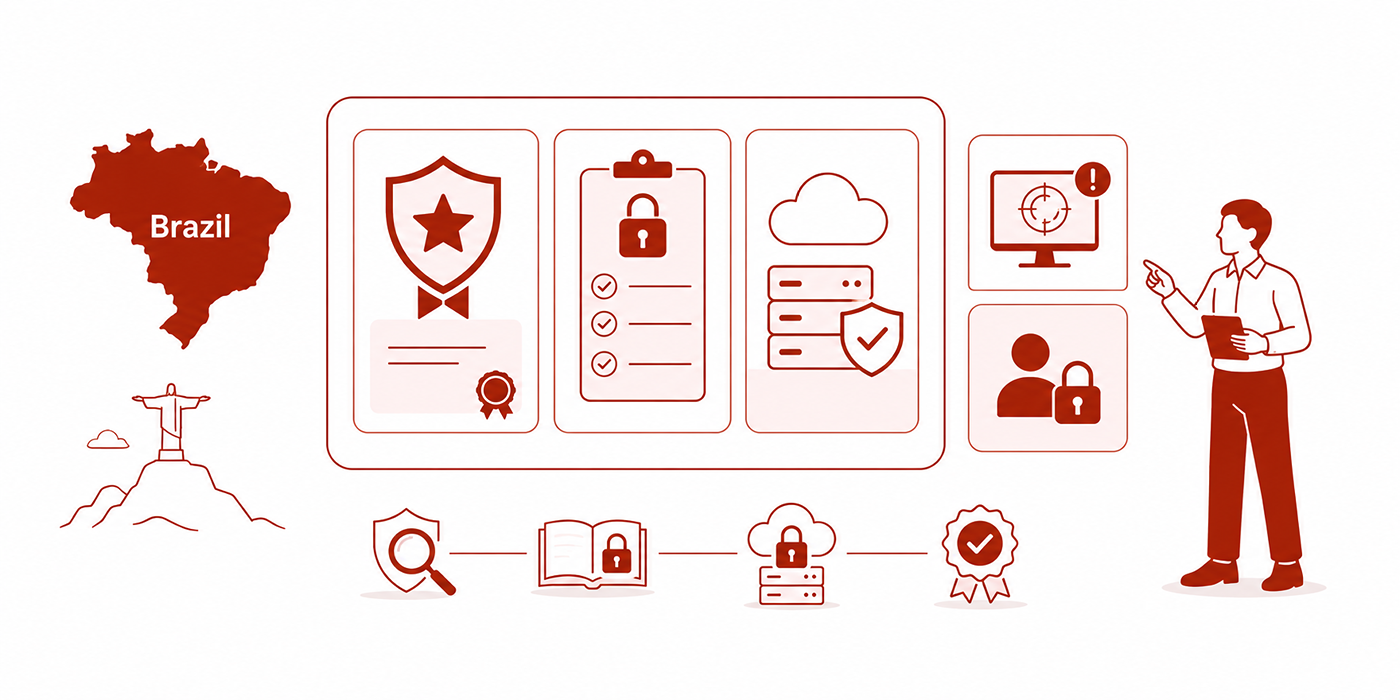
1. Why Advanced Cybersecurity Certification Has Become More Valuable in Brazil
Brazil’s 2026–2027 cybersecurity environment demands more than isolated knowledge of firewalls, malware, or compliance terminology. The country’s second National Cybersecurity Strategy, E-Ciber, was instituted through Decree No. 12,573 on August 4, 2025. Its priorities include governance, risk management, essential-service protection, professional education, incident communication, innovation, international cooperation, and emerging technologies. These priorities create direct career relevance for professionals developing toward cybersecurity program management, security architecture, policy leadership, and cybersecurity risk management.
This shift exposes a painful weakness in many candidates: they can describe controls individually, yet they struggle to connect those controls to operational risk. A hiring panel may ask how identity failures affect cloud exposure, how a ransomware incident changes business-continuity priorities, or which evidence proves that a vendor has implemented an agreed safeguard. Learners who only memorize definitions frequently lose credibility at this point. Professionals preparing for senior security analyst advancement, IT-to-cybersecurity leadership transitions, security product management, or cybersecurity audit roles need a connected decision-making model.
The Advanced Cybersecurity & Management Certification, or ACSMC, is designed as multi-domain training spanning governance, risk, compliance, network defense, cloud security, SOC operations, incident response, threat hunting, ethical hacking, malware analysis, and security management. ACSMI describes the program as containing more than 300 interactive modules and over 360 lessons, with flexible online completion formats. Learners can therefore use it as a broad capability base before pursuing deeper specialization in penetration-testing management, red-team operations, vulnerability research, or cybersecurity automation.
The strongest Brazilian candidate will also understand LGPD-related incident responsibilities. ANPD regulations require controllers to notify the authority and affected data subjects when an incident may cause relevant risk or damage. The assessment can involve sensitive information, financial records, authentication data, children’s data, protected information, or large-scale exposure. The standard reporting period is three working days after the controller becomes aware that personal data was affected. This makes privacy analysis, regulatory specialization, cybersecurity policy analysis, and Chief Privacy Officer development operationally important career directions.
A certificate alone rarely resolves the candidate’s deeper problem. Recruiters need evidence that the learner can investigate, prioritize, document, communicate, and defend a recommendation. Your certification plan should therefore produce five career assets:
A credible multi-domain knowledge base.
A clearly defined target role.
Practical artifacts connected to that role.
Interview stories showing how you make decisions.
Brazil-specific awareness covering LGPD, incident communication, risk governance, and organizational accountability.
Brazil Cybersecurity Certification and Career Impact: 28-Credential Decision Matrix
| Certification | Best Career Stage | Primary Capability Signal | Where It Creates Leverage in Brazil | Evidence You Should Build |
|---|---|---|---|---|
| ACSMC | Entry to leadership | Multi-domain technical and management readiness | SOC, GRC, cloud, consulting, risk and leadership pathways | Risk register, SOC workflow, cloud baseline and management briefing |
| ISC2 Certified in Cybersecurity | Entry level | Security concepts and foundational vocabulary | Junior security, support and internal-transition applications | Home-lab diagram and basic incident checklist |
| CompTIA Security+ | Entry level | Broad security foundation | Analyst, infrastructure and managed-service roles | Control-mapping sheet and vulnerability report |
| CompTIA Network+ | Entry level | Networking fundamentals | Infrastructure security and SOC preparation | Segmented network design and traffic-analysis notes |
| CompTIA CySA+ | Early career | Defensive analysis and detection | SOC and analyst advancement | Alert-triage matrix and threat-hunting hypotheses |
| CompTIA PenTest+ | Early career | Structured offensive assessment | Penetration-testing pathways | Authorized assessment report with remediation priorities |
| CompTIA SecurityX | Experienced practitioner | Advanced enterprise security judgment | Senior engineering and technical-lead positions | Enterprise architecture review and control trade-off memo |
| ISC2 SSCP | Early to mid-career | Operational security administration | Access, monitoring, infrastructure and operations roles | Access-review procedure and operational security plan |
| ISC2 CISSP | Experienced professional | Broad senior-level security knowledge | Architecture and leadership progression | Executive risk brief and enterprise security roadmap |
| ISACA CISM | Management track | Security governance and program leadership | Cybersecurity program management | Program charter, metrics dashboard and governance calendar |
| ISACA CRISC | Risk and GRC track | Technology-risk identification and treatment | Cyber-risk specialization | Risk register with owners, treatment plans and residual-risk logic |
| ISACA CISA | Audit track | Information-systems audit | Cybersecurity auditing | Audit program, evidence request list and findings report |
| ISACA CGEIT | Senior leadership | Enterprise IT governance | Director and VP-level progression | Governance operating model and investment-prioritization framework |
| EC-Council CEH | Early offensive track | Ethical-hacking concepts and tools | Red-team preparation | Attack-path narrative and remediation-focused assessment |
| EC-Council CHFI | Investigation track | Digital-forensics methodology | Incident investigation, fraud and evidence-support roles | Chain-of-custody form and forensic examination report |
| OffSec OSCP | Technical specialist | Hands-on penetration-testing execution | Testing and vulnerability research | Sanitized lab reports with exploitation and remediation logic |
| ISC2 CCSP | Cloud security track | Cloud architecture, governance and controls | Banking, SaaS, enterprise-cloud and consulting environments | Cloud responsibility matrix and secure-reference architecture |
| AWS Certified Security – Specialty | Platform specialist | AWS security implementation | Cloud engineering, DevSecOps and managed-cloud work | AWS IAM review, logging plan and misconfiguration checklist |
| Microsoft SC-100 | Architecture track | Microsoft security architecture | Microsoft-heavy enterprises and consulting projects | Zero-trust design and identity-governance blueprint |
| Google Professional Cloud Security Engineer | Platform specialist | Google Cloud security engineering | Cloud-native and data-intensive organizations | GCP security baseline and monitoring design |
| ISO/IEC 27001 Lead Implementer | GRC and implementation | ISMS design and operation | GRC and compliance projects | ISMS scope, risk methodology and Statement of Applicability |
| ISO/IEC 27001 Lead Auditor | Audit and assurance | ISMS audit methodology | Internal audit, consulting and supplier assurance | Audit plan, interview questions and nonconformity report |
| ISO/IEC 27701 Training | Privacy and GRC | Privacy-information management | LGPD-supporting privacy operations | Privacy-control map and processor-assessment template |
| IAPP CIPM | Privacy management | Operational privacy-program management | Privacy leadership development | Privacy governance map and incident-escalation workflow |
| COBIT Foundation | Governance track | Control objectives and governance structure | Audit, regulated enterprise and executive reporting | Governance-objective map and accountability matrix |
| ITIL 4 Foundation | Service-management track | IT service-management vocabulary | Security operations integrated with enterprise IT | Security incident workflow aligned with service management |
| GIAC GCIH | Incident-response specialist | Incident handling and attacker techniques | SOC, DFIR and high-responsibility response roles | Incident timeline, containment plan and lessons-learned report |
| GIAC GSEC | Technical generalist | Applied security administration | Technical defense, consulting and security engineering | Hardening baseline and validation checklist |
2. How to Choose the Right Certification Path for Your Brazilian Career Goal
The most expensive certification mistake is choosing a credential before choosing a role. A learner may spend months preparing for advanced penetration testing while applying for LGPD governance jobs. Another may collect management credentials while lacking enough technical evidence to handle a SOC interview. Start by selecting one primary destination: analyst, offensive security, cloud security, GRC, privacy, audit, architecture, program management, or executive leadership.
For SOC and defensive-security careers, combine a broad foundation with detection, triage, and incident-response evidence. ACSMC can establish multi-domain context, while Security+, CySA+, GCIH, or a platform-specific credential can sharpen the operational signal. Build a SIEM triage workflow, severity matrix, escalation tree, incident timeline, and management summary. Candidates exploring security analyst progression, cybersecurity automation engineering, AI security analysis, or cybersecurity data science should also demonstrate how they reduce alert noise and improve decision speed.
For GRC, audit, privacy, and risk roles, pair ACSMC with ISO 27001, CISA, CRISC, COBIT, ISO 27701, or privacy-management training. Your portfolio should include a risk register, control-evidence matrix, third-party assessment, incident-communication workflow, and remediation tracker. These artifacts strengthen applications for GRC specialist roles, cybersecurity regulatory careers, policy analyst positions, and cybersecurity auditing.
ANPD’s international-transfer regulation also creates an important learning area for Brazilian professionals working with global cloud providers, multinational employers, overseas processors, or cross-border SaaS systems. Resolution CD/ANPD No. 19/2024 addresses mechanisms including adequacy decisions, standard contractual clauses, specific contractual clauses, and binding corporate rules. A strong candidate should understand how data flows, vendor responsibilities, contracts, encryption, access controls, and incident handling connect across jurisdictions.
For cloud-security careers, select the platform that appears most frequently in your target vacancies. Add AWS Security, Microsoft SC-100, CCSP, or Google Cloud security training after building sound fundamentals in identity, networking, logging, encryption, vulnerability management, and incident response. Learners considering digital-identity management, blockchain security engineering, quantum-security analysis, or security architecture need especially strong architectural reasoning.
For leadership, avoid building a résumé containing only strategic terminology. Leadership candidates need evidence that they can translate technical weakness into operational exposure, budget priorities, measurable treatment plans, and accountable ownership. Combine ACSMC with CISM, CISSP, CRISC, CGEIT, or ISO 27001 experience while studying IT-management transitions, program management, security product management, and security-policy leadership.
3. The Brazil-Specific Skills and Portfolio Evidence Employers Need
A Brazilian cybersecurity portfolio should prove that you can operate inside a real organization. Screenshots of completed quizzes provide little decision-making evidence. Build documents, diagrams, reports, and simulations that show how you approach ambiguity, incomplete information, competing priorities, and executive pressure.
Begin with a fictional Brazilian company handling customer identity data, payment information, employee records, cloud workloads, and third-party services. Create a practical risk register containing assets, threats, vulnerabilities, existing controls, likelihood, impact, risk owners, treatment actions, deadlines, and residual risk. This single project can support applications for risk-management specialization, GRC careers, policy analysis, and regulatory-security roles.
Next, produce an LGPD-focused incident-response pack. Include:
An incident-classification checklist.
A three-working-day decision timeline.
Roles for security, privacy, legal, communications, and executives.
A data-subject impact assessment.
A regulator-notification preparation form.
A containment and evidence-preservation checklist.
A post-incident corrective-action tracker.
This pack demonstrates the relationship between privacy operations, Chief Privacy Officer responsibilities, cybersecurity audit evidence, and program-level governance. ANPD’s regulation expects incident reports to address affected data, impacted people, protective measures, risks, mitigation steps, relevant dates, involved parties, and incident causes where identifiable.
Technical candidates should build an equally disciplined body of evidence. A defensive portfolio could include a detection rule, alert-triage decision tree, endpoint-containment checklist, packet-analysis summary, cloud-logging baseline, and threat-hunting hypothesis. An offensive portfolio could contain sanitized lab reports showing scope, methodology, evidence, impact, remediation, and retesting. This approach supports progression toward red-team operations, penetration-testing management, vulnerability research, and automation engineering.
Language can also become an advantage. Develop concise Portuguese explanations for Brazilian stakeholders and English versions for multinational teams. Practice explaining a ransomware decision, privileged-access weakness, cloud misconfiguration, supplier risk, or unresolved vulnerability without hiding behind acronyms. Professionals pursuing research analysis, cybersecurity content education, certification training, or bootcamp instruction gain additional leverage from bilingual communication.
Quick Poll: What Is Blocking Your Cybersecurity Career Progress in Brazil?
Choose the obstacle consuming the most time, money, or confidence right now.
4. Step-by-Step Certification Roadmap for Brazil in 2026–2027
Step 1: Audit your current capability. Score yourself from one to five across networking, operating systems, identity, cloud, governance, risk, compliance, incident response, vulnerability management, security operations, business communication, and leadership. A network administrator may already possess infrastructure depth while lacking formal risk documentation. An auditor may understand evidence and governance while needing stronger technical confidence. This audit prevents wasted study and helps you compare your needs with pathways such as digital identity, cybersecurity audit, cloud-oriented architecture, and security leadership.
Step 2: Analyze 30 target vacancies. Collect jobs from several employers, industries, and Brazilian locations. Record recurring responsibilities, frameworks, tools, experience requirements, language expectations, and certifications. Separate frequently requested capabilities from occasional preferences. This turns job descriptions into a personalized curriculum. Someone targeting AI security will find a different pattern from someone pursuing privacy analysis, policy direction, or cybersecurity product management.
Step 3: Select one foundation and one specialization. ACSMC can serve as the multi-domain foundation because its curriculum spans technical operations and management. Add one specialization once your target vacancies justify it: CySA+ for defensive analysis, OSCP or PenTest+ for offensive work, CRISC for risk, CISA for audit, ISO 27001 for GRC, CCSP for cloud, or CISM for management. ACSMI’s international program is delivered online and includes written, video, audio, lab, scenario, and assessment components. Its international-student information describes flexible participation without residency or in-person attendance.
Step 4: Build one artifact every two weeks. A twelve-week plan could produce six high-quality outputs:
Weeks 1–2: Network and asset diagram.
Weeks 3–4: Risk register and treatment plan.
Weeks 5–6: IAM review and access-governance workflow.
Weeks 7–8: Incident-response and LGPD communication pack.
Weeks 9–10: Cloud-security baseline.
Weeks 11–12: Executive security briefing.
These outputs support program-management interviews, GRC applications, security-architecture discussions, and senior-analyst progression.
Step 5: Convert your artifacts into interview stories. For each project, explain the context, risk, constraints, evidence reviewed, decision made, stakeholder impact, and next action. Avoid claiming production experience when the work came from a simulation. Ethical transparency strengthens credibility. Candidates targeting penetration-testing leadership, red-team work, vulnerability research, or blockchain security should describe authorization boundaries, evidence quality, business impact, and remediation.
Step 6: Run a 90-day application campaign. Create role-specific résumé versions instead of sending one general résumé everywhere. Use a technical résumé for analyst or engineering vacancies, a governance résumé for GRC and audit positions, and a management résumé for program or leadership opportunities. Measure application-to-screening, screening-to-interview, and interview-to-offer conversion. Weak screening rates usually indicate targeting or résumé problems. Weak interview conversion points toward insufficient examples, unclear communication, or capability gaps.
Brazilian candidates can also study how certification strategies differ across markets by reviewing ACSMI’s guides for Australia, Singapore, Hong Kong, and India. This comparison helps globally mobile professionals recognize which skills travel well across jurisdictions.

5. Costs, Study Planning, Career ROI, and Expensive Mistakes to Avoid
Calculate certification cost as a complete investment. Include training, exam fees, practice materials, laboratory subscriptions, retakes, renewal charges, continuing education, foreign-currency movement, payment fees, and the value of study time. A course that appears inexpensive can become costly after several fragmented add-ons. A higher-priced program can provide stronger value when it replaces multiple disconnected purchases and produces usable portfolio evidence.
Use a three-part ROI test before enrolling:
Vacancy relevance: Does the credential appear in your target role family?
Capability relevance: Will the curriculum close a real performance gap?
Evidence potential: Can you produce projects, reports, diagrams, or workflows from the training?
A credential passing only one test deserves lower priority. This framework is useful whether you are pursuing cybersecurity research analysis, automation engineering, quantum-security analysis, or data-science security roles.
Working professionals should use a sustainable weekly system. A practical schedule includes three 60–90-minute learning blocks, one longer laboratory session, one revision block, and one portfolio session. Track outputs instead of video hours. “Completed access-control matrix” provides a stronger progress measure than “watched four modules.” ACSMI explicitly recommends treating its program as a portfolio-building system and suggests artifacts such as risk registers, governance maps, IAM designs, SOC workflows, incident-response checklists, cloud baselines, and vendor-risk templates.
Several mistakes repeatedly destroy certification ROI:
Collecting overlapping credentials: Security+, SSCP, and another broad foundation may repeat too much content.
Ignoring job eligibility requirements: Some senior certifications require documented experience.
Studying without labs: Conceptual confidence can collapse during technical interviews.
Building projects without reports: Employers need to see how you analyze and communicate.
Applying too broadly: A résumé targeting SOC, privacy, red team, audit, and management at once creates a confused professional identity.
Waiting for perfect readiness: Career movement requires controlled application practice alongside study.
Ignoring Portuguese communication: Local stakeholders need clear explanations of risk, accountability, and remediation.
Ignoring English development: Multinational documentation, tools, research, and cross-border teams frequently operate in English.
Treating certification as guaranteed employment: Hiring results depend on role fit, evidence, experience, communication, market timing, and application quality.
Professionals considering international opportunities can compare Brazil with certification planning in the UAE, Saudi Arabia, Qatar, Oman, and Bahrain. Use these comparisons to identify transferable frameworks, cloud skills, leadership capabilities, and governance experience.
6. Frequently Asked Questions About Advanced Cybersecurity Certification in Brazil
-
Yes, provided the learner follows the curriculum sequentially and builds foundational technical skills alongside the management content. Beginners should spend extra time on networking, operating systems, identity, cloud concepts, logs, vulnerabilities, and basic incident response. ACSMC’s multi-domain structure can help a learner understand how these areas connect, while the digital-identity career roadmap, security-analyst pathway, GRC specialist guide, and cybersecurity privacy pathway can help narrow the eventual specialization.
-
Employers set their own education requirements, and vacancies can vary significantly. Some organizations prioritize degrees, while others place greater weight on technical experience, certifications, portfolios, communication, and role-specific competence. Candidates without a directly related degree should strengthen the evidence under their control: verified training, laboratories, portfolio artifacts, professional writing, networking knowledge, cloud exposure, and interview preparation. Pathways such as cybersecurity content education, bootcamp instruction, certification training, and research analysis also reward demonstrated expertise and communication.
-
A high-value combination includes broad cybersecurity training, practical LGPD knowledge, and a governance or privacy specialization. ACSMC can provide the cross-domain security foundation. ISO 27001 Lead Implementer, ISO 27001 Lead Auditor, CRISC, CISA, COBIT, ISO 27701, or CIPM can then deepen the target signal. Build a control-evidence matrix, risk register, data-flow map, vendor-risk review, incident-notification workflow, and management report. These outputs align strongly with regulatory-specialist careers, privacy analysis, cybersecurity auditing, and privacy leadership.
-
Your timeline should reflect prior knowledge, weekly availability, practical goals, and retention. A focused learner may complete structured training within several weeks, while a full-time professional may need several months to study carefully and produce strong artifacts. ACSMI presents flexible completion pathways, including shorter structured formats and longer self-paced options. Protecting retention and practical application creates stronger career value than chasing the fastest completion date.
A useful rhythm is one domain per week, one practical exercise per domain, and one integrated project every two weeks. Candidates pursuing program management, security architecture, penetration-testing leadership, or AI security should reserve additional time for specialization.
-
Yes. ACSMI states that its international program is delivered online for international schedules and working professionals. The learning format includes written materials, videos, audio, interactive labs, scenario-based tasks, assessments, and operational workflows. The program does not require a visa, residency, or in-person attendance. Learners should confirm current tuition, payment options, assessment rules, technical requirements, and completion conditions directly before enrolling.
This accessibility can be useful for learners comparing cybersecurity education across Pakistan, the Philippines, Kuwait, and Singapore.
-
Certification can strengthen access to interviews, specialist responsibilities, promotion discussions, consulting opportunities, and internationally oriented roles. Compensation improves when the credential supports a capability that the employer genuinely needs. A cloud-security certificate creates stronger leverage when you can review identity architecture, logging, encryption, workload exposure, and incident readiness. A management credential creates stronger leverage when you can prioritize risk, assign accountability, justify investment, and report progress.
Measure career return through increased interview conversion, broader responsibility, stronger project ownership, improved job mobility, and access to higher-value role families. Professionals pursuing VP-level security growth, cybersecurity program leadership, Chief Security Architect roles, or cybersecurity policy direction should connect every credential to measurable organizational outcomes.
The most effective 2026–2027 strategy is focused: choose a target role, build a multi-domain foundation, add one justified specialization, produce Brazil-relevant evidence, and practice explaining your decisions in Portuguese and English. That combination gives employers something far stronger than a certificate line—it gives them a clear view of how you would operate when systems, data, customers, and executive trust are at risk.
