
The Ultimate Guide to Getting Advanced Cybersecurity & Management Certification in India: Everything You Need to Know in 2026-2027
India’s cybersecurity career market is moving from “learn the tools” into “prove you can reduce risk.” In 2026-2027, the strongest candidates will combine technical skill, management judgment, compliance awareness, and portfolio evidence that hiring teams can trust.
This guide gives you a practical certification roadmap for India, with role targets, proof assets, career timing, salary leverage, and internal ACSMI resources for deeper planning through the cybersecurity certifications directory, cybersecurity job market trends, future cybersecurity skills, and certification career impact report.
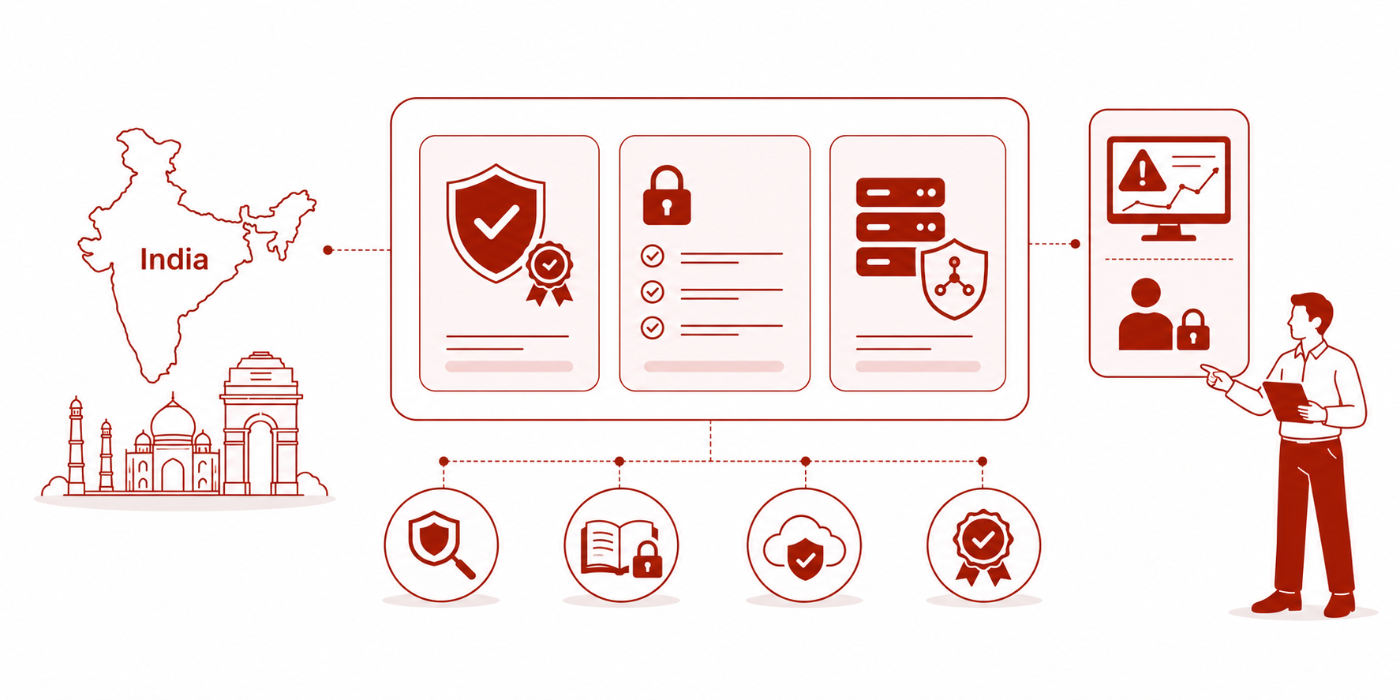
1. Why Advanced Cybersecurity & Management Certification Matters in India in 2026-2027
India’s cyber market rewards candidates who can connect security controls to business consequences. A candidate who can explain cloud identity exposure, incident timelines, audit evidence, privacy obligations, endpoint detection, phishing workflows, and executive risk has stronger career leverage than someone who only lists tools. That is why Indian professionals should connect certification planning with the SOC analyst career guide, cloud security engineer roadmap, cybersecurity compliance analyst path, and cybersecurity manager pathway.
The pain point is sharp for Indian candidates: many resumes say “cybersecurity trained,” “SOC course completed,” or “ethical hacking certified,” while hiring managers still struggle to see job-ready proof. In Bengaluru, Hyderabad, Pune, Delhi NCR, Mumbai, Chennai, Noida, Gurugram, and remote GCC hiring, candidates need evidence that they can investigate alerts, prioritize vulnerabilities, document controls, brief leadership, and manage risk. Use the security analyst to engineer roadmap, incident responder pathway, cybersecurity auditor guide, and CISO career roadmap to turn training into role-specific advancement.
India’s compliance pressure makes management-level cybersecurity knowledge especially valuable. CERT-In’s Section 70B directions cover information security practices, procedures, prevention, response, and reporting of cyber incidents, while MeitY’s Digital Personal Data Protection Rules, 2025 page lists the official rules, enforcement timeline, and corrigendum. That means Indian candidates should treat cybersecurity compliance trends, security audit best practices, cybersecurity frameworks, and privacy regulation predictions as career infrastructure.
The skills shortage also gives serious candidates an opening, especially those who can show depth beyond exam preparation. DSCI’s Indian Cyber Security Skilling Landscape 2025-2026 reports limited availability of skilled cybersecurity candidates among both enterprises and providers, and Reuters reported in July 2026 that AI hiring in India’s IT sector rose while overall IT recruitment declined, showing stronger demand for specialized technology capability. For career planning, connect that shift with AI in cybersecurity adoption, AI-powered cyberattack predictions, automation and the cybersecurity workforce, and specialized cybersecurity role demand.
| Career Target in India | Best Certification Focus | What Employers Need to See | ACSMI Career Resource |
|---|---|---|---|
| IT support to cybersecurity analyst | Security fundamentals, access review, ticket-to-risk thinking | You can turn support experience into alert triage, endpoint checks, identity review, and basic risk documentation. | IT support to cybersecurity analyst roadmap |
| Fresher to junior SOC analyst | SIEM, phishing triage, endpoint alerts, escalation notes | You can read alerts, enrich evidence, reduce noise, and escalate with clear reasoning. | SOC analyst step-by-step guide |
| SOC analyst to SOC manager | Queue metrics, analyst coaching, incident workflow, reporting | You can improve triage quality, escalation consistency, handoffs, and leadership visibility. | SOC analyst to SOC manager path |
| Cybersecurity compliance analyst | GRC, control mapping, DPDP evidence, policy review | You can translate obligations into owners, proof, exceptions, timelines, and remediation actions. | compliance analyst roadmap |
| Cybersecurity auditor | Audit testing, control operation, evidence quality | You can test whether controls actually work and write exceptions leaders can act on. | cybersecurity auditor guide |
| Cloud security engineer | IAM, cloud logging, workload protection, misconfiguration review | You can secure identities, detect public exposure, review risky permissions, and improve cloud visibility. | cloud security engineer guide |
| Cloud threat analyst | Cloud incident patterns, SaaS exposure, API abuse | You can explain cloud attack paths involving identity, tokens, storage, APIs, and logging gaps. | cloud threat analysis |
| Incident responder | Containment, timeline building, evidence handling, recovery | You can document what happened, what spread, what was contained, and what recovery requires. | incident responder career path |
| Threat intelligence analyst | Threat research, intelligence writing, sector risk | You can convert threat signals into warnings useful to SOC, executives, vendors, and business teams. | threat intelligence analyst guide |
| Penetration tester | Recon, exploitation safety, report writing, remediation clarity | You can test within scope, validate findings responsibly, and write fixes that engineering teams understand. | OSCP penetration tester guide |
| Red-team specialist | Adversary emulation, detection gaps, purple-team reporting | You can test realistic attack paths and give defenders specific detection improvements. | red-team specialist guide |
| Vulnerability management analyst | Scanner interpretation, exploitability, asset criticality | You can separate urgent exposure from backlog noise and prioritize remediation by business impact. | vulnerability assessment techniques |
| Application security analyst | Secure SDLC, SAST/DAST workflow, developer communication | You can help developers fix exploitable flaws and reduce release risk. | application security tools directory |
| Endpoint security specialist | EDR tuning, endpoint hardening, malware response | You can detect suspicious host behavior, reduce alert fatigue, and support containment. | EDR tools guide |
| Email security owner | Phishing defense, reporting workflow, awareness loops | You can reduce credential compromise through filtering, reporting, training, and fast response. | email security solutions directory |
| IAM and access control specialist | Least privilege, RBAC, PAM, identity governance | You can clean access sprawl, reduce privilege abuse, and defend access decisions to auditors. | access control models guide |
| Data loss prevention analyst | DLP policy tuning, sensitive-data movement, insider risk | You can protect regulated data while preserving normal business workflows. | DLP software directory |
| Healthcare cybersecurity professional | Patient data, uptime, vendor access, compliance controls | You can protect clinical systems, patient records, connected devices, and downtime-sensitive operations. | healthcare cybersecurity threat report |
| Financial-sector cybersecurity analyst | Fraud risk, identity security, incident response, audit evidence | You can connect security controls to account takeover, regulatory risk, and transaction trust. | financial cybersecurity incident analysis |
| Manufacturing cybersecurity lead | OT awareness, segmentation, IoT risk, resilience | You can discuss uptime, plant-floor risk, vendors, legacy systems, and connected-device exposure. | manufacturing cybersecurity solutions |
| Retail and e-commerce cybersecurity analyst | Payment risk, customer accounts, fraud, web security | You can protect online transactions, customer data, loyalty platforms, and web applications. | retail e-commerce cybersecurity guide |
| Education-sector cybersecurity professional | Identity, student data, awareness, budget-conscious controls | You can protect learning platforms, student records, faculty accounts, and research data. | education cybersecurity directory |
| Government or public-sector cybersecurity | Policy, governance, documentation, incident coordination | You can create evidence, coordinate stakeholders, and align security work with public accountability. | public-sector cybersecurity firms |
| SMB cybersecurity consultant | Affordable controls, backups, MFA, endpoints, awareness | You can build realistic security roadmaps for smaller companies with limited budgets. | small business cybersecurity solutions |
| Cybersecurity manager | Risk ownership, vendors, metrics, policy, team delivery | You can turn scattered security tasks into a managed program with owners and measurable improvement. | cybersecurity manager pathway |
| Director or VP of cybersecurity | Budget, operating model, governance, executive communication | You can connect security strategy to continuity, legal exposure, risk appetite, and board reporting. | VP of cybersecurity guide |
| CISO-track professional | Enterprise risk, resilience, regulatory exposure, security strategy | You can own cybersecurity outcomes across technology, legal, operations, finance, and leadership. | CISO career roadmap |
| Security architect | Architecture patterns, cloud strategy, identity design, control selection | You can design secure systems, evaluate tradeoffs, and guide engineering teams before incidents happen. | chief security architect guide |
| Security awareness leader | Human risk, phishing behavior, training metrics | You can reduce risky behavior through targeted education, reporting loops, and behavior measurement. | security awareness platforms |
| Cybersecurity instructor or trainer | Teaching, labs, curriculum, workforce assessment | You can convert industry skill into structured learning for students, employees, and career switchers. | cybersecurity instructor guide |
| Cybersecurity program manager | Project delivery, stakeholder control, roadmap execution | You can coordinate technical teams, vendors, legal, compliance, leadership, and business owners. | cybersecurity program manager guide |
| Freelance cybersecurity consultant | Niche services, client reports, pricing, trust-building proof | You can package risk assessments, cloud checks, awareness reviews, or compliance support into paid offers. | freelance cybersecurity income report |
2. Choosing the Right Advanced Cybersecurity & Management Certification Path in India
Start with the job family, then choose the credential. Freshers and IT support professionals usually need security fundamentals, networking fluency, alert triage, endpoint awareness, and résumé proof that shows operational readiness. Working professionals in cloud, audit, development, infrastructure, or IT operations should choose a lane that turns existing experience into a cybersecurity story. Compare the top cybersecurity certifications directory, free cybersecurity courses directory, cybersecurity bootcamps directory, and global cybersecurity training providers before choosing an exam.
For SOC and incident-response candidates, the strongest path is detection plus documentation. You need SIEM fluency, EDR understanding, phishing investigation workflow, authentication-log review, ticket writing, escalation judgment, and incident timeline discipline. Your study plan should connect the SOC analyst career guide, SIEM solutions directory, endpoint detection and response tools guide, and phishing prevention report with practical mini-reports you can discuss in interviews.
For GRC, audit, privacy, and management candidates, the strongest path is control ownership. DPDP readiness, audit evidence, incident reporting, vendor reviews, access governance, data retention, logging, policy exceptions, and executive summaries should appear in your learning plan. A serious candidate should pair certification with the cybersecurity compliance trends report, GDPR cybersecurity compliance guide, future cybersecurity compliance predictions, and security audit process guide. This lane is especially useful for Indian professionals in BFSI, SaaS, healthcare, insurance, consulting, telecom, and global delivery teams.
For cloud, AppSec, offensive security, and architecture candidates, choose certification based on the systems you want to defend or test. Cloud candidates need IAM review notes, logging coverage checks, workload hardening plans, secrets exposure examples, and cloud incident response scenarios. AppSec candidates need secure SDLC recommendations, vulnerability reproduction notes, developer-friendly remediation, and tool awareness. Offensive candidates need scoped testing reports, impact explanation, and remediation clarity. Build those lanes through the cloud security tools directory, application security tools reviews, penetration testing tools comparison, and ethical hacking roadmap.
3. Skills and Portfolio Proof Indian Employers Will Respect
The best Indian cybersecurity candidates prove investigation, prioritization, communication, and ownership. Investigation means following evidence across logs, endpoints, identity systems, cloud events, email headers, network alerts, vulnerability findings, and user behavior. Prioritization means explaining why one issue needs urgent remediation while another can wait. Communication means briefing analysts, developers, auditors, customers, vendors, and managers in language each group can act on. These capabilities support the senior cybersecurity analyst pathway, incident response career guide, cybersecurity consultant advancement path, and security architect progression.
Build four proof assets before expecting certification to carry your career. First, create an alert triage report showing trigger, user, source, affected asset, enrichment steps, false-positive checks, impact, and escalation decision. Second, create a vulnerability prioritization sheet using asset criticality, exploitability, internet exposure, data sensitivity, and compensating controls. Third, create a DPDP-aware incident communication outline for suspected personal data exposure. Fourth, create a one-page risk register for a fictional Indian fintech, hospital, SaaS company, manufacturer, university, or retail platform. These assets connect directly to vulnerability scanner rankings, data breach mitigation strategies, incident response effectiveness research, and healthcare compliance cybersecurity.
Management-track candidates need evidence that shows control over people, process, budget, vendors, and recurring risk. Create a quarterly security dashboard, a vendor-risk checklist, a tabletop exercise summary, and a control-improvement roadmap. A cybersecurity manager in India may need to coordinate engineering, IT, legal, procurement, HR, finance, customer success, auditors, MSSPs, and executive leadership. Build that operating judgment through ACSMI’s cybersecurity manager pathway, security manager to director roadmap, director of information security guide, and cybersecurity program manager roadmap.
AI is also becoming part of the cybersecurity career conversation in India. Reuters reported that AI hiring in India’s IT sector rose 16% year on year in June 2026, while overall IT jobs declined 3%, according to Naukri’s JobSpeak report based on listings from more than 150,000 firms. Cybersecurity candidates should respond by learning where AI helps detection, triage, fraud analysis, vulnerability review, phishing defense, policy drafting, and incident summarization. Keep that learning grounded with AI-driven cybersecurity tools, deepfake cybersecurity threats, future threat predictions, and next-generation cybersecurity standards.
Quick Poll: What Career Result Are You Chasing With Cybersecurity Certification in India?
Choose the pressure point that feels most urgent. Your certification path should match the outcome you need employers to believe.
4. A 90-Day Certification and Career Proof Plan for Indian Professionals
Days 1-15 should lock your target role. Choose SOC analyst, cloud security engineer, compliance analyst, incident responder, penetration tester, AppSec analyst, cybersecurity manager, security architect, or cybersecurity auditor. Pull 20 job descriptions from Indian employers, GCCs, MSSPs, SaaS companies, fintechs, banks, hospitals, consultancies, telecoms, e-commerce firms, and remote-first teams. Mark repeated requirements and compare them with ACSMI’s cybersecurity job market trends, future certification value guide, remote cybersecurity career predictions, and specialized role demand forecast.
Days 16-35 should build core security language. Learn how identities, endpoints, networks, applications, cloud assets, logs, vulnerabilities, backups, vendors, incidents, and policies connect. Study one breach scenario per week and write what happened, what controls failed, what evidence mattered, what recovery required, and what leadership should measure. Use the state of ransomware report, data breach report, IoT security breaches report, and critical infrastructure cybersecurity report to sharpen scenario judgment.
Days 36-60 should produce portfolio assets. Create one detection artifact, one risk artifact, one compliance artifact, and one communication artifact. For detection, write a suspicious-login triage note. For risk, create a vulnerability prioritization worksheet. For compliance, build a control-evidence tracker covering access control, logging, incident response, vendor review, privacy requests, and retention. For communication, write a 200-word executive incident brief. These assets strengthen applications tied to the senior cybersecurity analyst pathway, cybersecurity compliance officer roadmap, offensive security engineer guide, and chief security architect roadmap.
Days 61-75 should turn exam preparation into operational judgment. Use practice questions to identify weak domains, then write explanations for every missed answer in your own words. Management-track learners should convert each missed concept into a decision: who owns the risk, what proof is needed, what deadline is realistic, what stakeholder needs communication, and what metric proves improvement. Technical-track learners should convert every concept into a scenario. Support this stage with the cybersecurity books directory, cybersecurity blogs and news directory, cybersecurity YouTube channels, and cybersecurity podcasts directory.
Days 76-90 should convert learning into applications, interviews, promotion cases, and salary conversations. Rewrite your résumé around outcomes: triaged suspicious activity, prioritized vulnerabilities by asset value, mapped controls to evidence, reviewed cloud identity permissions, improved phishing reporting, supported incident timelines, or documented audit exceptions. Then align LinkedIn and interview stories with entry-level to CISO salary progression, global cybersecurity salary benchmarks, certification salary growth analysis, and remote versus on-site cybersecurity salaries.

5. Career Outcomes: Interviews, Promotions, Salary Growth, and Leadership Credibility
Certification works when it changes how employers classify you. For a fresher, it should move you from “course learner” into “candidate with usable security evidence.” For an IT professional, it should move you from “operations support” into “security-capable operator.” For a manager, it should move you from “technical supervisor” into “risk owner.” Each move needs proof connected to ACSMI’s career advancement survey insights, cybersecurity workforce demographics, freelance cybersecurity income trends, and cybersecurity gender pay gap analysis.
For interviews, prepare five stories before applying: a detection story, a vulnerability story, a compliance story, a conflict story, and a learning story. Each story should include context, evidence, action, decision, result, and next-step improvement. Indian employers across BFSI, SaaS, healthcare, IT services, consulting, telecom, manufacturing, insurance, e-commerce, and public-sector work value candidates who adjust examples to the industry. Shape those answers with the financial sector cybersecurity incidents analysis, healthcare cybersecurity tools directory, manufacturing cybersecurity predictions, and government cybersecurity predictions.
For promotions, build an internal business case. Document the security work you already perform, the risks you reduce, the certification you completed or are pursuing, the responsibilities you can own next, and the metrics leadership can use to evaluate you. The best promotion case reads like an operating plan: current risk, current gap, proposed ownership, expected improvement, and reporting cadence. Strengthen it with the IT manager to security leadership guide, security manager to director roadmap, director of information security guide, and cybersecurity VP leadership guide.
For salary leverage, tie certification to costlier problems. Salary growth usually follows responsibility for incident response, cloud security, identity governance, application security, audit evidence, fraud prevention, ransomware readiness, third-party risk, and privacy exposure. A candidate who can show proof in those areas has stronger negotiation language than someone relying on exam completion alone. Use the global cybersecurity salary report, CISSP, CEH, and Security+ salary analysis, job market salary predictions, and remote cybersecurity salary report to frame the conversation.
Leadership credibility comes from calm, specific judgment. A manager-level candidate should be able to explain the risk, the control, the owner, the timeline, the tradeoff, the reporting metric, and the executive consequence. That is where certification becomes a career accelerator rather than a profile decoration. Keep building with the top cybersecurity consulting firms, leading endpoint security providers, best cloud security tools, and privileged access management solutions.
6. FAQs About Advanced Cybersecurity & Management Certification in India
-
The best path depends on your target role. SOC candidates should prioritize detection, SIEM, EDR, phishing triage, and incident documentation. GRC candidates should prioritize DPDP readiness, audit evidence, risk registers, control mapping, vendor review, and access governance. Cloud candidates should prioritize IAM, logging, workload protection, misconfiguration review, and cloud incident response. Management candidates should prioritize policy, metrics, budget, vendors, and executive reporting. Start with the top cybersecurity certifications directory, future employer-valued certifications, cybersecurity manager pathway, and cloud security engineer guide.
-
Freshers can compete when certification is paired with proof. Build a small portfolio with alert triage, vulnerability prioritization, phishing analysis, cloud misconfiguration notes, and a simple risk register. The goal is to show how you investigate, document, prioritize, and communicate. Freshers should use the free cybersecurity courses directory, SOC analyst guide, cybersecurity bootcamps directory, and global training provider directory.
-
Strong options include SOC analyst, cloud security engineer, cybersecurity compliance analyst, incident responder, AppSec analyst, vulnerability management analyst, penetration tester, IAM specialist, cybersecurity auditor, security awareness lead, cybersecurity manager, security architect, and program manager. The right choice depends on your background and proof assets. Compare the SOC analyst career guide, compliance analyst roadmap, incident responder pathway, and ethical hacker roadmap.
-
Cybersecurity management certification is useful for Indian IT professionals who already understand systems, networks, cloud, support, audit, operations, or delivery and want to move into risk ownership. The credential should help you speak about governance, incidents, controls, vendors, metrics, compliance, business continuity, and executive tradeoffs. Pair it with the IT manager to security leadership guide, cybersecurity manager pathway, director of information security guide, and CISO roadmap.
-
Candidates should learn privacy basics, breach response, data mapping, consent operations, vendor risk, logging, retention, access control, request handling, and evidence collection. Build a DPDP readiness tracker with data categories, owners, processors, security safeguards, breach process, request workflow, deletion requirements, and audit evidence. Use ACSMI’s privacy regulation predictions, cybersecurity compliance trends, security audit best practices, and cybersecurity frameworks guide.
-
A focused 90-day plan works for many candidates who study with role clarity. Use the first 15 days to select the target role, the next 20 days to build core concepts, the next 25 days to create proof assets, the next 15 days to drill weak exam areas, and the final 15 days to prepare resumes, LinkedIn, applications, and interviews. Support the plan with the cybersecurity books directory, cybersecurity blogs directory, cybersecurity podcasts directory, and cybersecurity YouTube channels.
