
The Ultimate Guide to Getting Advanced Cybersecurity & Management Certification in Philippines: Everything You Need to Know in 2026-2027
The Philippines needs cybersecurity professionals who can protect systems, interpret regulation, lead incident response, manage teams, and explain digital risk to decision-makers. That combination makes an advanced cybersecurity and management certification especially useful for professionals comparing cybersecurity certification options, career advancement outcomes, cybersecurity salary growth, and emerging cyber roles. The smartest 2026-2027 strategy is to choose a credential that supports a specific job target and then surround it with Philippine regulatory knowledge, practical evidence, and leadership-ready communication.
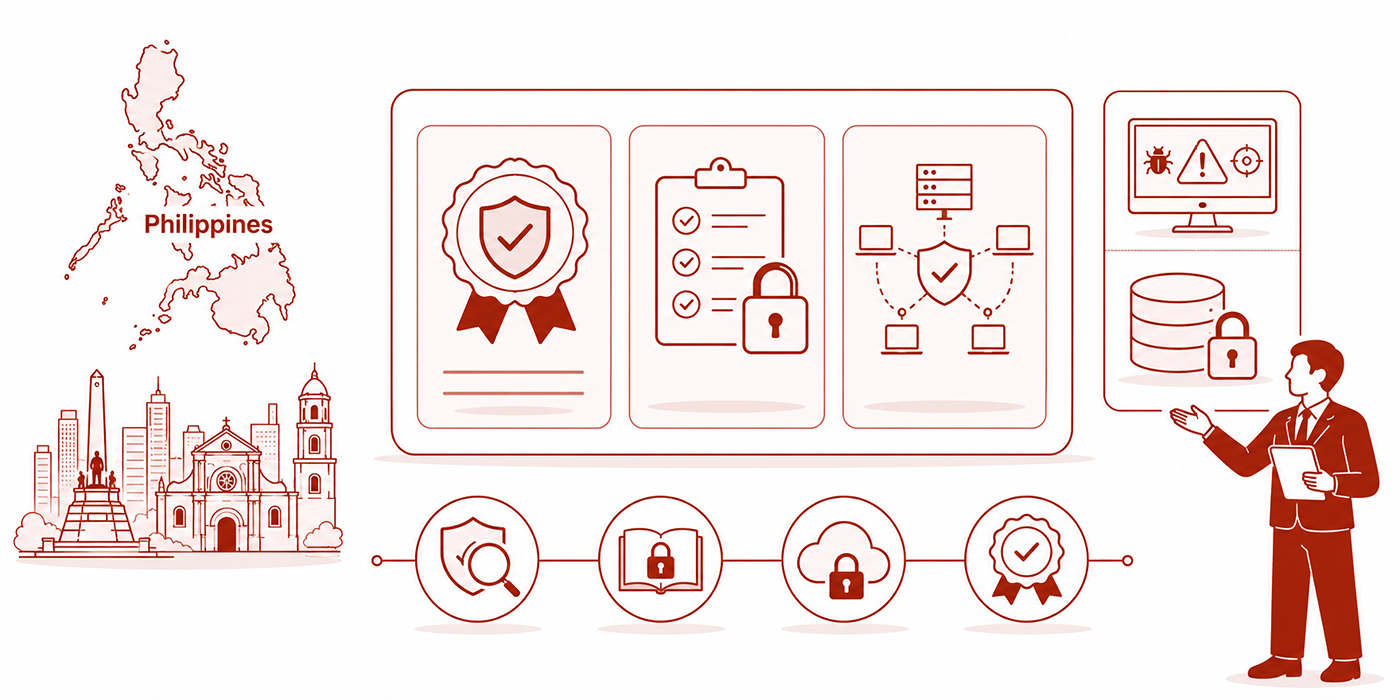
1. Why Advanced Cybersecurity & Management Certification Matters in the Philippines
Cybersecurity work in the Philippines increasingly sits at the intersection of national resilience, digital government, personal data protection, financial trust, cloud transformation, and business continuity. The Department of Information and Communications Technology’s National Cybersecurity Plan 2023-2028 provides the strategic direction for building a cyber-resilient Philippines and aligns cybersecurity with broader national development and security priorities.
That environment creates opportunities for professionals who understand cybersecurity frameworks, security audit processes, incident response operations, cloud security engineering, and cybersecurity management. Technical knowledge remains essential, but senior roles require professionals to prioritize risk, establish ownership, manage vendors, interpret controls, communicate incidents, and defend security investments.
The National Cybersecurity Plan also expects organizations to develop cybersecurity sub-plans, establish internal response teams, and report incidents. Those expectations increase the value of professionals who can connect governance documents with operational capabilities. A manager who can write a policy but cannot test an incident workflow creates a dangerous paper shield. An analyst who can identify malicious activity but cannot document business impact may struggle to secure executive support. Advanced training should close both gaps.
Professionals pursuing SOC analyst careers, SOC management roles, cybersecurity compliance careers, security architecture positions, and CISO progression therefore need more than a certificate title. They need proof that they understand how cybersecurity decisions affect operations, customers, regulators, finances, and organizational reputation.
Personal data protection adds another layer. The Philippine Data Privacy Act of 2012 applies to personal information handled through government and private-sector information and communications systems. The National Privacy Commission states that personal information controllers and processors must follow privacy principles, protect data-subject rights, and implement appropriate security measures.
This creates strong career paths in privacy regulation, cybersecurity compliance, data loss prevention, access control management, and cybersecurity auditing. Organizations need professionals who can translate legal duties into inventories, privacy impact assessments, retention controls, breach procedures, third-party requirements, and evidence that survives scrutiny.
The risk is already visible. National Privacy Commission statistics for January through August 2024 identified government, education, financial services, and manpower agencies among the sectors reporting substantial numbers of breach notifications. The commission’s data also lists malicious attacks, human error, phishing, hacking, unauthorized disclosure, lost documents, and negligent handling among reported causes or contributing events.
These conditions make phishing prevention, data breach mitigation, insider threat management, security awareness training, and incident response improvement valuable specializations. Employers need professionals who can address technical compromise and the human, procedural, and managerial weaknesses that allow incidents to escalate.
The career pain point is straightforward: many professionals keep earning technical certificates while remaining unable to demonstrate management readiness. They can operate tools, yet they struggle with budgets, risk registers, executive reporting, control ownership, supplier reviews, team performance, and security roadmaps. An advanced cybersecurity and management certification should help convert technical knowledge into organizational authority.
30-Credential Cybersecurity Career Matrix for the Philippines in 2026-2027
| Certification or Skill Track | Best-Fit Career Stage | Primary Competency | Practical Philippine Career Value | Recommended ACSMI Resource |
|---|---|---|---|---|
| ACSMI Advanced Cybersecurity & Management Certification | Mid to senior career | Cyber leadership, risk, controls, and management | Supports security manager, program lead, GRC lead, and consulting ambitions | Cybersecurity manager pathway |
| CISSP | Experienced professional | Broad enterprise security knowledge | Useful for senior security, architecture, consulting, and leadership screening | Certification salary growth |
| CISM | Mid to senior career | Information security management | Supports security management, governance, program ownership, and executive reporting | Manager-to-director roadmap |
| CRISC | Mid career | Enterprise technology risk | Useful for risk registers, control ownership, audit remediation, and governance roles | Compliance officer roadmap |
| CISA | Early to senior career | Information systems audit | Supports internal audit, assurance, evidence testing, and supplier assessments | Cybersecurity auditor guide |
| ISO/IEC 27001 Lead Implementer | Mid career | Information security management systems | Useful for ISMS projects, policy ownership, risk treatment, and control implementation | Framework comparison guide |
| ISO/IEC 27001 Lead Auditor | Mid to senior career | Control validation and audit | Supports internal audits, certification readiness, and compliance consulting | Security audit practices |
| CompTIA Security+ | Entry level | Core security foundations | Useful for IT support professionals entering analyst or security operations roles | IT-to-cyber transition |
| CompTIA CySA+ | Early career | Defensive analysis | Supports SOC analysis, alert triage, threat detection, and vulnerability interpretation | SOC analyst career guide |
| CompTIA PenTest+ | Early to mid career | Security assessment | Provides a structured route toward vulnerability testing and junior penetration work | Penetration testing tools |
| CompTIA SecurityX | Experienced practitioner | Advanced security engineering | Supports technical leadership, architecture support, and enterprise security implementation | Analyst-to-engineer roadmap |
| CEH | Early to mid career | Ethical hacking concepts | May support initial offensive-security screening and vulnerability-assessment roles | CEH career guide |
| OSCP | Mid career | Hands-on penetration testing | Creates stronger practical evidence for testing, consulting, and red-team opportunities | OSCP preparation guide |
| GPEN | Mid career | Structured penetration testing | Useful for consulting engagements, technical reporting, and external assessments | Penetration-testing career path |
| GCIH | Early to mid career | Incident handling | Supports SOC escalation, containment, investigation, and response coordination | Incident responder career path |
| GCIA | Mid career | Network traffic analysis | Useful for detection engineering, network monitoring, and advanced SOC work | Network security tools |
| GCFA | Mid to senior career | Digital forensics | Supports breach investigations, evidence preservation, and advanced incident response | Incident response report |
| CCSP | Mid career | Enterprise cloud security | Useful for cloud governance, architecture, data security, and shared-responsibility reviews | Cloud security tools |
| CCSK | Early to mid career | Cloud security foundations | Supports SaaS risk, cloud control mapping, and cloud-assurance responsibilities | Cloud security trends |
| AWS Certified Security Specialty | Mid career | AWS workload security | Useful for IAM, logging, encryption, monitoring, and cloud workload protection | Cloud security engineer guide |
| Microsoft Cybersecurity Architect Expert | Mid to senior career | Enterprise security architecture | Supports Microsoft-focused identity, Zero Trust, cloud, and security operations environments | Privileged access management |
| Certified Data Privacy Solutions Engineer | Mid career | Privacy engineering | Useful for privacy-by-design, lifecycle controls, personal data protection, and technical compliance | Privacy regulation trends |
| Data Protection Officer Training | Early to mid career | Privacy governance | Supports DPO, privacy compliance, breach coordination, and data-processing oversight | Privacy compliance practices |
| PMP | Mid to senior career | Program and project delivery | Useful for cybersecurity transformation, implementation, vendor, and remediation programs | Cybersecurity program manager |
| SABSA Foundation | Senior technical career | Business-aligned security architecture | Supports enterprise architecture, security design, and executive alignment | Security architect roadmap |
| TOGAF | Senior technical career | Enterprise architecture | Useful for major digital transformation and cross-functional architecture programs | Chief security architect guide |
| OT and Industrial Security Certification | Mid career | Operational technology protection | Supports manufacturing, utilities, transportation, energy, and critical-infrastructure roles | Critical-infrastructure report |
| IoT Security Certification | Early to mid career | Connected-device security | Useful for smart infrastructure, telecommunications, devices, and industrial IoT | IoT security roadmap |
| Cyber Threat Intelligence Certification | Mid career | Threat analysis and reporting | Supports threat briefings, adversary analysis, SOC enrichment, and regional intelligence | Threat intelligence roadmap |
| CISO or Executive Security Leadership Training | Senior career | Strategy, budgets, governance, and executive reporting | Supports director, CISO, security program head, and executive advisory ambitions | Cybersecurity specialist to CISO |
2. Best Certification Path for Each Cybersecurity Career in the Philippines
The best certification depends on the work you want to perform after earning it. Selecting a credential because it appears repeatedly in job advertisements can produce an expensive mismatch. Start with a target role, identify the decisions that role owns, and choose training that strengthens those decisions.
For SOC and blue-team professionals, the strongest route combines foundational certification with detection, incident handling, SIEM, endpoint security, and communication. Security+ or CySA+ can support an early-career foundation. GCIH, GCIA, vendor-specific security training, and management education can support later growth. The candidate should also understand SOC analyst responsibilities, SIEM platform capabilities, endpoint detection tools, network monitoring platforms, and SOC management progression.
The pain point for analysts is career confinement. Closing alerts quickly can make someone valuable to the current shift while leaving them unprepared for management. Promotion requires evidence that the analyst can improve use cases, reduce false positives, coordinate escalations, coach junior staff, measure detection coverage, and report operational risk.
For offensive security, the route should include practical testing, ethical boundaries, scoping, evidence handling, and remediation reporting. CEH may help professionals learn common terminology, while OSCP, GPEN, laboratories, and documented assessments provide stronger hands-on proof. Build expertise through ethical hacking career planning, penetration-testing tools, vulnerability scanners, red-team career development, and penetration-testing management.
A technically impressive assessment can still disappoint a client when the report lacks prioritization. Advanced professionals must explain exploitability, affected assets, business impact, root cause, recommended controls, verification steps, and residual risk. That reporting ability creates a bridge from tester to consultant or offensive-security manager.
For GRC, audit, and privacy roles, consider ACSMI management-focused training alongside CISA, CISM, CRISC, ISO 27001, privacy education, and DPO-focused development. The National Privacy Commission continues to issue detailed privacy guidance, including 2025 guidance on privacy engineering and 2026 advisories covering data scraping and breach-notification submission.
Professionals in this track should master cybersecurity compliance careers, cybersecurity audit careers, future audit practices, privacy compliance challenges, and future cybersecurity regulation. Their portfolio should contain control matrices, privacy impact assessments, audit plans, remediation trackers, data-flow diagrams, evidence indexes, and breach-response decision trees.
For cloud security, combine CCSP or CCSK with the platform certification that matches the employer’s environment. Hands-on evidence should cover identity and access management, encryption, network segmentation, central logging, secure configuration, workload vulnerability management, backup protection, secrets management, and incident response. Use cloud security tools, privileged access solutions, data loss prevention platforms, cloud threat research, and future cloud trends to connect certification topics with deployment realities.
For cybersecurity managers, the priority shifts toward governance, people, performance, risk, programs, and decision quality. ACSMI, CISSP, CISM, CRISC, ISO 27001, and project-management training can form a strong combination. Study security manager advancement, cybersecurity program management, information security director careers, cybersecurity leadership development, and CISO career planning.
3. How to Choose a Certification Without Wasting Money or Months of Study
Begin with a career-gap assessment. Write down your target role, current experience, missing competencies, available study time, expected budget, and evidence you can produce. Then examine five to ten relevant job descriptions and record recurring requirements. This process prevents you from collecting credentials that impress other students while failing to solve your employment problem.
A professional receiving few interview invitations may need a clearer résumé, recognizable foundational certification, and stronger role keywords. They should explore cybersecurity training providers, free cybersecurity courses, cybersecurity bootcamps, cybersecurity books, and cybersecurity learning channels.
A professional reaching interviews but losing offers probably needs stronger applied proof. Build a small portfolio containing an incident report, risk register, cloud security review, vulnerability-prioritization memo, detection use case, privacy impact assessment, or executive briefing. Study vulnerability assessment techniques, incident response effectiveness, ransomware risk, endpoint security effectiveness, and phishing defenses to make each artifact realistic.
A professional blocked from promotion should choose a credential that strengthens management visibility. Their evidence should show how they reduced exposure, improved response time, increased audit readiness, clarified ownership, controlled cost, mentored staff, or guided a difficult security decision. They should develop through IT management transitions, senior analyst advancement, cybersecurity policy leadership, security architecture leadership, and executive cybersecurity progression.
Before paying, examine the certification’s syllabus, prerequisites, assessment method, renewal obligations, continuing-education requirements, exam-retake policy, and relevance to your chosen work. Ask whether completing it will help you perform a task, answer a difficult interview question, or qualify for a realistic role. Brand familiarity has value, but career usefulness depends on fit.
What Is the Biggest Obstacle Between You and a Better Cybersecurity Career in the Philippines?
Select the pressure you need your certification strategy to solve.
4. A 12-Month Certification and Career-Building Roadmap
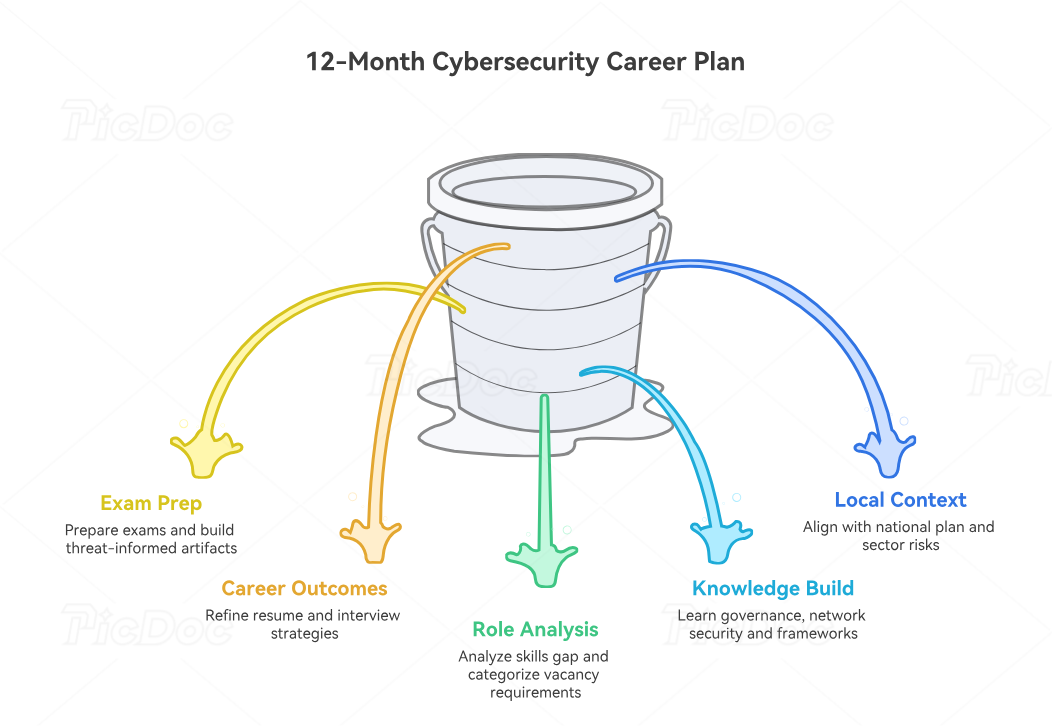
During month one, select a target role and perform a skills-gap analysis. Compare your profile with several Philippine cybersecurity vacancies, then divide the repeated requirements into technical, governance, communication, and experience categories. Use cybersecurity analyst roadmaps, threat intelligence pathways, incident responder pathways, cloud security career guidance, and compliance analyst guidance to understand each route.
During months two and three, build the knowledge foundation. Study governance, risk assessment, asset management, identity, network security, vulnerabilities, logging, incident response, privacy, cloud controls, third-party risk, awareness, and reporting. Connect these domains through access control models, security frameworks, vulnerability management, security auditing, and email security solutions.
During months four through six, prepare for the selected examination and create a parallel portfolio. For every major topic, produce a work sample. Convert risk-management study into a risk register. Convert incident-response study into an investigation timeline. Convert cloud study into a configuration-review checklist. Convert compliance study into a control matrix. Convert SOC study into a detection-use-case document.
This approach prevents exam preparation from becoming disposable memorization. Build artifacts informed by ransomware evolution, AI-powered attacks, cloud security threats, insider threats, and critical-infrastructure risks.
During months seven through nine, strengthen Philippine context. Study the National Cybersecurity Plan, Data Privacy Act, NPC guidance, breach-notification processes, privacy engineering, internal response expectations, and sector-specific risk. DICT’s wider 2026 ICT development agenda continues to treat the National Cybersecurity Plan as an important part of secure digital infrastructure and national digital development.
Apply that context to financial-sector cybersecurity, healthcare cybersecurity, government cybersecurity, education-sector security, and retail cybersecurity. Sector knowledge makes interview answers more precise because the risks facing a bank, university, hospital, online retailer, and government agency differ substantially.
During months ten through twelve, convert preparation into career outcomes. Rewrite your résumé around measurable contributions, prepare six interview stories, refine your LinkedIn profile, and rehearse a concise explanation of your specialization. Use global cybersecurity salary research, entry-level-to-CISO progression, remote cybersecurity salary analysis, cybersecurity freelance trends, and future role demand to prepare evidence-based career discussions.
Good résumé statements describe impact. “Monitored SIEM alerts” communicates a duty. “Investigated priority alerts, documented escalation criteria, and improved triage consistency” communicates contribution. “Helped with compliance” is vague. “Mapped control evidence, tracked remediation owners, and reduced unresolved audit items” gives the hiring team something concrete to assess.
5. Turning Certification Into Salary Growth and Leadership Credibility
Certification creates leverage when it changes the problems you can solve. Employers pay more for professionals who can take ownership of costly uncertainty: breaches, regulatory exposure, cloud misconfiguration, identity abuse, supplier risk, service interruption, weak controls, and unclear incident accountability.
Build your value around data breach mitigation, endpoint security strategy, SIEM modernization, privileged access management, and security-awareness programs. The goal is to become capable of evaluating choices, identifying implementation risks, and explaining which investment should receive priority.
For internal promotion, translate technical activities into management outcomes. Vulnerability scanning becomes exposure reduction and remediation governance. Log analysis becomes detection coverage and incident readiness. Policy review becomes control clarity and accountability. Awareness training becomes human-risk reduction. Cloud assessment becomes secure transformation support.
Develop this language through cybersecurity program management, manager-to-director advancement, security leadership transitions, VP-level cybersecurity development, and CISO career progression.
The National Privacy Commission’s 2026 public messaging describes privacy and cybersecurity as shared national responsibilities and links responsible artificial-intelligence governance with innovation and protection. Professionals who can integrate security, privacy, AI risk, governance, and business enablement will therefore have a stronger leadership narrative than candidates confined to one tool.
Long-term credibility comes from repeatable judgment. Study application security platforms, cloud security products, endpoint security providers, network security tools, and penetration-testing companies. Learn to compare cost, capability, staffing requirements, integration, false-positive burden, reporting quality, and operational fit.
A certificate may help you enter a conversation. Your ability to diagnose risk, choose an appropriate response, lead execution, and communicate results determines how far that conversation takes your career.
6. FAQs About Advanced Cybersecurity & Management Certification in the Philippines
-
The strongest choice matches your intended role. A management-focused ACSMI certification may suit professionals pursuing governance, security management, cyber programs, or leadership. CISSP supports broad senior security work, CISM focuses on management, CISA supports audit, CRISC supports risk, CCSP supports cloud security, and OSCP supports hands-on penetration testing.
Compare options through the cybersecurity certification directory, certification career-impact research, certification salary analysis, and future certification trends. Select one primary credential that addresses your largest skills gap.
-
Certification can strengthen your profile, while projects and transferable experience show that you can perform the work. An IT support professional can demonstrate identity management, endpoint protection, troubleshooting, ticket documentation, and user-risk awareness. A network administrator can demonstrate segmentation, monitoring, firewall administration, and secure configuration.
Combine a foundational certification with IT support transition guidance, SOC analyst preparation, security analyst development, and free cybersecurity training. Build two or three portfolio projects that resemble junior-role tasks.
-
A strong management path can combine advanced cybersecurity and management education with CISSP, CISM, CRISC, ISO 27001, and project-management knowledge. The exact combination depends on whether the role emphasizes operations, risk, compliance, architecture, or transformation.
Study cybersecurity manager requirements, security director development, cybersecurity program leadership, and CISO progression. Develop evidence involving team leadership, risk prioritization, metrics, budgeting, incident ownership, and stakeholder management.
-
An experienced professional may need approximately two to four months for a focused management or security certification. A career changer may need four to eight months because foundational knowledge, hands-on exercises, and portfolio work must develop together. Advanced practical examinations can require longer preparation.
Create a weekly plan using cybersecurity books, cybersecurity podcasts, industry research organizations, and cybersecurity conferences. Reserve time for revision, practice assessments, labs, and work samples.
-
CISA, CRISC, CISM, ISO 27001, privacy-professional training, privacy engineering education, and DPO development can all support this route. The right combination depends on whether your role focuses on audit, risk, technical safeguards, privacy operations, or program leadership.
Build expertise through cybersecurity compliance trends, future privacy regulation, future audit practices, and security audit procedures. Study the Data Privacy Act and current NPC issuances directly because certification content may not capture every Philippine requirement.
-
Attach the credential to evidence. Prepare a risk register, incident report, cloud review, security roadmap, control matrix, privacy impact assessment, vulnerability-prioritization memo, or board briefing. Explain what decision the document supports, which evidence it uses, and how its recommendations reduce exposure.
Strengthen your positioning with future cybersecurity skills, specialized-role demand, automation and cybersecurity careers, and future job-market trends. Employers remember candidates who can show how they think, prioritize, document, and communicate under realistic constraints.
