
The Ultimate Guide to Getting Advanced Cybersecurity & Management Certification in Malaysia: Everything You Need to Know in 2026-2027
Malaysia’s cybersecurity market increasingly rewards professionals who can investigate threats, secure cloud environments, interpret regulation, manage operational risk, and communicate security priorities to leadership. Building that profile requires a more deliberate strategy than collecting unrelated badges. Whether you are following an IT-support-to-cybersecurity pathway, targeting incident-response roles, developing GRC expertise, or preparing for security leadership, this guide explains how to turn certification into credible career leverage during 2026-2027.
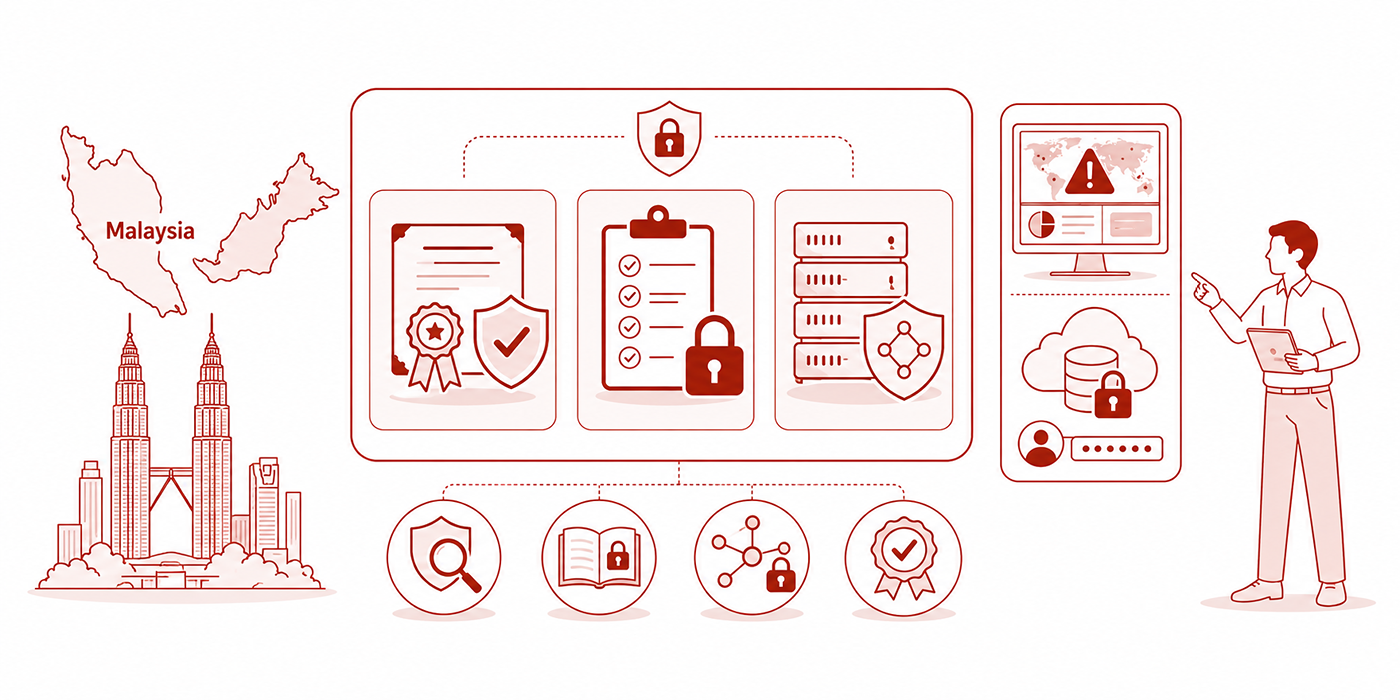
1. Why Advanced Cybersecurity and Management Certification Matters in Malaysia in 2026-2027
Malaysia’s Cyber Security Act 2024 entered into operation on August 26, 2024, creating clearer responsibilities around National Critical Information Infrastructure, cybersecurity incidents, sector leadership, risk assessment, audits, and the licensing of designated cybersecurity service providers. For professionals, this raises the value of capabilities explored in a critical-infrastructure threat assessment, cybersecurity incident-response analysis, cybersecurity policy career pathway, and risk-management specialist roadmap. Professionals who can translate statutory obligations into operational controls become useful across far more than purely technical teams.
The pressure becomes more concrete inside NCII environments. Malaysia’s incident-notification regulations require an authorized person to notify the relevant authority immediately after an incident becomes known, submit specified initial information within six hours, and provide supplementary information within fourteen days. That operational reality creates demand for people who understand incident-responder career requirements, threat-intelligence analysis, SOC-to-engineering progression, and security-program management. A delayed, incomplete, or poorly coordinated response can expose weaknesses in evidence preservation, escalation, communication, asset ownership, and executive decision-making.
Malaysia’s data-protection environment also demands deeper professional judgment. The Personal Data Protection (Amendment) Act 2024 introduced direct security obligations for data processors, formal data-protection-officer provisions, breach-notification duties, data-portability rights, expanded treatment of biometric data, and changes affecting cross-border transfers. Candidates working toward a privacy-analyst career, chief privacy officer pathway, regulatory-specialist career, or cybersecurity-auditor transition therefore need evidence that they can manage accountability, breach workflows, processor oversight, sensitive data, and defensible documentation.
The market pain point is rarely a total lack of knowledge. Many Malaysian professionals already troubleshoot networks, administer identities, review logs, support audits, manage vendors, or maintain production systems. Their résumé still presents them as general IT staff because the work has never been translated into a security narrative. A focused credential can connect existing experience to a senior analyst pathway, cloud-threat specialization, cybersecurity consulting career, or director of information-security roadmap. Certification supplies the strongest leverage when it clarifies what responsibility you are ready to own.
An integrated program such as ACSMI’s Advanced Cybersecurity & Management Certification covers multiple domains, including governance, risk, compliance, network defense, cloud security, SOC operations, incident response, threat hunting, ethical hacking, malware analysis, and security management. ACSMI positions the program as professional training rather than a degree, licence, or substitute for legal authority. That distinction matters when comparing it with a penetration-testing qualification path, cybersecurity compliance career, chief security architect roadmap, or cybersecurity product-management pathway. Training breadth should support your role strategy rather than replace it.
Malaysia Cybersecurity Certifications and Career Impact: 26-Credential Decision Matrix
| Certification or Credential | Best Career Stage | Strongest Malaysian Career Use | Proof to Build Alongside It |
|---|---|---|---|
| ISC2 Certified in Cybersecurity | Entry level | Baseline transition into junior security work | Asset inventory, phishing review and basic risk summary |
| CompTIA Security+ | Entry to early career | SOC support, access administration and security operations | Hardening checklist, ticket examples and access-control review |
| CompTIA Network+ | Foundation stage | Network-to-security transition | Network diagram, traffic analysis and segmentation proposal |
| CompTIA CySA+ | Early blue-team career | Detection, monitoring, triage and vulnerability analysis | SIEM queries, alert timeline and prioritization log |
| CompTIA PenTest+ | Early offensive career | Structured vulnerability testing and assessment | Rules of engagement, sanitized findings and remediation plan |
| Certified Ethical Hacker | Foundation to intermediate | Ethical-hacking vocabulary and methodology | Lab evidence, attack-path explanation and risk-rated report |
| OSCP | Intermediate offensive career | Hands-on penetration testing and red-team progression | Detailed methodology, exploitation notes and executive summary |
| GIAC Penetration Tester | Intermediate to advanced | Enterprise penetration-testing depth | Assessment plan, validation evidence and remediation guidance |
| GIAC Certified Incident Handler | Intermediate defensive career | Incident handling, containment and recovery coordination | Incident playbook, decision log and post-incident review |
| GIAC Certified Intrusion Analyst | Intermediate blue-team career | Network monitoring and intrusion analysis | Packet analysis, detection logic and investigation narrative |
| CISSP | Experienced practitioner | Senior security, architecture, consulting and leadership | Security roadmap, control mapping and risk-treatment memo |
| CISM | Management track | Security governance and program leadership | KPI dashboard, policy review and executive risk briefing |
| CISA | Audit and assurance track | Technology audit, compliance and control assurance | Audit plan, evidence request list and control-gap tracker |
| CRISC | Risk-management track | Enterprise technology risk and control ownership | Risk register, treatment decision and residual-risk statement |
| CCSP | Experienced cloud practitioner | Cloud governance, architecture and security management | Shared-responsibility map, cloud-risk review and control baseline |
| AWS Certified Security – Specialty | Platform-specialist track | AWS identity, logging, workload and data protection | IAM review, logging design and encryption decision record |
| Microsoft Azure Security Engineer | Cloud-security track | Azure, Entra ID, Defender and hybrid enterprise security | Conditional-access design, privilege review and alert workflow |
| Google Professional Cloud Security Engineer | Cloud specialist | Google Cloud security architecture and operations | Identity design, data-control map and monitoring plan |
| ISO/IEC 27001 Lead Implementer | GRC and management track | Information-security management-system implementation | Scope statement, risk methodology and corrective-action plan |
| ISO/IEC 27001 Lead Auditor | Assurance track | Internal audit, supplier assurance and certification readiness | Audit programme, evidence sample and nonconformity report |
| COBIT Foundation | Governance foundation | Connecting security controls with enterprise governance | Governance objectives map and accountability matrix |
| CDPSE | Privacy engineering track | Privacy-by-design and secure data processing | Data-flow map, privacy-risk assessment and design requirements |
| CIPM | Privacy management track | Operational privacy programmes and DPO support | Processing inventory, breach workflow and accountability plan |
| IEC 62443 Training | Industrial-security track | Manufacturing, operational technology and critical systems | Zone-and-conduit model, asset criticality and recovery plan |
| SABSA Certification | Architecture track | Business-aligned security architecture | Business-attribute profile, architecture map and traceability model |
| Advanced Cybersecurity & Management Certification | Career changer to leadership | Multi-domain technical, governance and management development | Portfolio combining technical work, risk decisions and executive communication |
2. How to Choose the Right Cybersecurity Certification Track in Malaysia
Start with a target responsibility rather than a credential name. “I want to work in cybersecurity” does not tell you whether to develop detection, penetration testing, cloud assurance, privacy, audit, architecture, or management capability. A candidate pursuing a cybersecurity analyst career needs different proof from someone building a red-team career, entering cybersecurity compliance, or becoming a security automation engineer. Review ten realistic job descriptions and identify the responsibilities appearing repeatedly. Those recurring responsibilities should control your certification choice.
For SOC and defensive roles, prioritize networking, endpoint visibility, SIEM investigation, alert triage, identity events, threat behavior, escalation, evidence preservation, and clear incident notes. Combine foundational learning with a security-analyst-to-engineer roadmap, threat-intelligence analyst guide, incident-response career plan, and insider-threat analysis. Your portfolio should demonstrate how you distinguish noise from urgency, reconstruct events, document assumptions, recommend containment, and preserve information needed by technical, legal, privacy, and management stakeholders.
For offensive security, employers need evidence that you can test safely, remain inside scope, validate findings, communicate exploitability, and recommend practical remediation. A candidate using an OSCP penetration-testing roadmap, network-administrator-to-ethical-hacker transition, red-team specialist guide, or penetration-testing manager pathway should produce sanitized reports containing scope, methodology, evidence, business impact, severity reasoning, remediation, and retest criteria. Tool screenshots alone reveal activity; a disciplined report reveals professional judgment.
For governance, risk, compliance, privacy, and audit, build capability around control interpretation, evidence quality, risk treatment, third-party oversight, incident governance, data flows, policy implementation, and executive reporting. Relevant routes include the GRC specialist career, cybersecurity auditor pathway, privacy analyst roadmap, and cybersecurity regulatory specialist career. This track suits professionals who can ask precise questions, detect weak evidence, explain residual risk, coordinate remediation owners, and keep governance work connected to operational reality.
For cloud security, avoid treating the cloud-provider badge as the entire pathway. Malaysia’s digital economy and growing cloud adoption create opportunities for people who understand identity, secrets, encryption, logging, workload protection, network design, data residency, supplier risk, and incident readiness. Combine platform depth with the cloud-threat environment, digital-identity specialist roadmap, AI-security analyst pathway, and cybersecurity data-scientist career. A cloud candidate becomes stronger by showing how technical configurations support risk, compliance, resilience, and business continuity.
3. Malaysian Cybersecurity Roles Where Certification Creates the Fastest Leverage
Certification can create immediate leverage for IT professionals whose current work already overlaps with security. System administrators manage privileges, patching, backups, endpoint configurations, and service accounts. Network administrators manage segmentation, remote access, firewalls, and traffic visibility. Service-desk staff handle identity verification, suspicious messages, compromised accounts, and device incidents. These professionals can use an IT-support transition guide, ethical-hacking transition plan, analyst advancement roadmap, and cybersecurity engineer pathway to reposition existing work as security evidence rather than restarting from zero.
Management-focused credentials create substantial value for experienced practitioners who are already coordinating people, vendors, projects, incidents, audits, or budgets. The next promotion may depend on demonstrating prioritization, accountability, metrics, governance, and executive communication. Strong routes include the IT-management-to-security-leadership transition, cybersecurity program-manager guide, VP of cybersecurity roadmap, and CISO advancement pathway. These candidates should show how they reduce exposure, improve operating discipline, resolve ownership gaps, and help leadership make defensible decisions.
Specialized sectors create additional opportunities. Financial institutions need control assurance, identity security, fraud awareness, third-party risk, incident coordination, and resilient operations. Healthcare environments require strong privacy, access, availability, vendor, and ransomware controls. Manufacturing and critical infrastructure introduce operational-technology, safety, uptime, and recovery constraints. Use the financial-sector incident analysis, healthcare threat report, critical-infrastructure assessment, and incident-response effectiveness report to understand the business conditions surrounding each technical role.
Malaysia also offers geographic and regional leverage. Kuala Lumpur, Selangor, Cyberjaya, Penang, and Johor can expose candidates to financial services, technology operations, shared services, manufacturing, consulting, cloud, and managed-security environments. Professionals pursuing regional work should compare Malaysia with the Singapore certification market, Hong Kong career environment, Australian cybersecurity pathway, and Philippine certification landscape. Regional comparison reveals which skills travel well across borders: cloud security, incident response, governance, privacy, audit, identity, architecture, and stakeholder communication.
Quick Poll: What Is Actually Blocking Your Cybersecurity Career Growth in Malaysia?
Choose the pressure point that should control your 2026-2027 certification strategy.
4. Step-by-Step Plan for Earning Cybersecurity and Management Certification in Malaysia
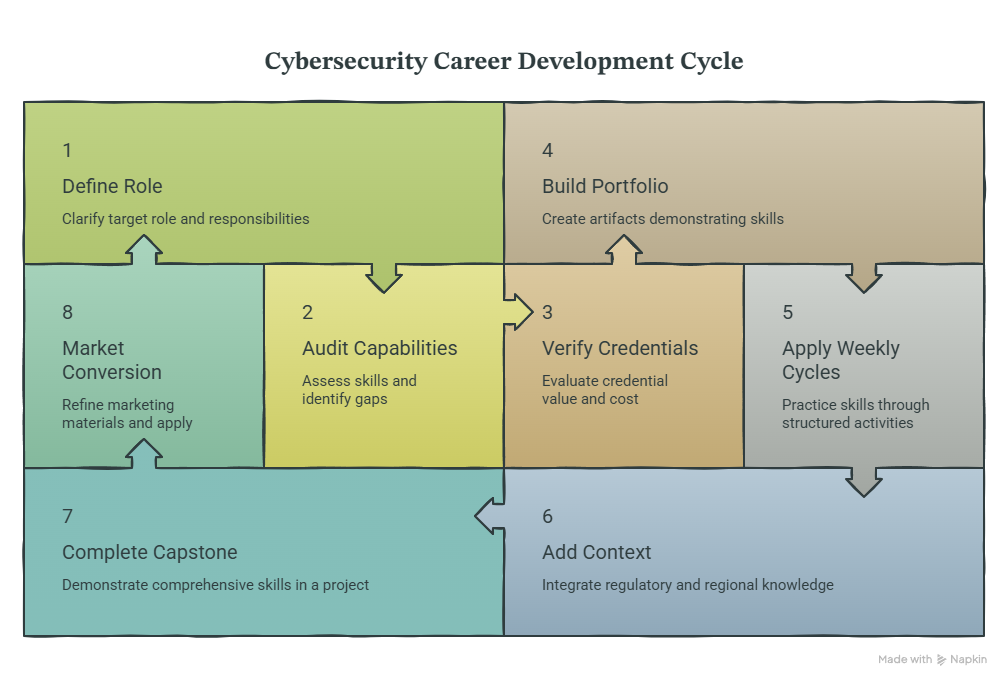
Step 1: Define the role, sector, and responsibility. Write a one-sentence target such as: “Within twelve months, I want to qualify for a SOC analyst role handling alert triage and incident documentation,” or “I want to move from infrastructure management into security governance.” Use a security-analyst roadmap, GRC career guide, cloud-threat analysis, and security-leadership pathway to understand what the target role actually owns. This prevents expensive certification choices driven by prestige, social-media hype, or vague fear of falling behind.
Step 2: Conduct a capability audit. Score yourself across networking, operating systems, endpoint security, cloud, identity, vulnerability management, logging, incident response, governance, privacy, audit, risk, technical writing, stakeholder communication, and leadership. Use three ratings: unfamiliar, usable with guidance, and independently defensible. Compare the results with a senior cybersecurity analyst pathway, incident-responder roadmap, cybersecurity risk career, and chief security architect guide. Select training that closes the specific gaps preventing credible performance in your chosen role.
Step 3: Verify the credential before paying. Check the official syllabus, examination format, practical requirements, experience conditions, renewal obligations, continuing-education rules, retake policy, identity-verification process, and current total cost. International examination fees can become painful after currency conversion, tax, rescheduling, retakes, training materials, and lab subscriptions. Compare the credential’s actual role value with an OSCP career plan, cybersecurity auditor pathway, policy-director career, and cybersecurity product-manager roadmap. A difficult examination can still produce weak returns when employers in your chosen lane rarely request it.
Step 4: Build one portfolio artifact for every major learning block. After incident-response study, produce an incident timeline and escalation matrix. After cloud-security study, produce an identity review and shared-responsibility map. After risk study, produce a risk register and treatment recommendation. After offensive-security study, produce a sanitized assessment report. Connect these artifacts to an incident-response effectiveness framework, financial-sector incident analysis, insider-threat prevention report, and healthcare threat assessment. Each artifact should show context, assumptions, decisions, evidence, consequences, owners, and next actions.
Step 5: Study through applied weekly cycles. A useful cycle contains concept review, lab practice, scenario analysis, written documentation, verbal explanation, and retrieval testing. Passive video completion can create the illusion of progress while leaving the learner unable to investigate an unfamiliar event or defend a control decision. Candidates following an ethical-hacking career transition, threat-intelligence pathway, cybersecurity automation career, or blockchain security roadmap should repeatedly convert theory into documented analysis. Employers evaluate whether your decisions remain coherent when the scenario changes.
Step 6: Add Malaysian regulatory context. Review Act 854, NCII incident reporting, current NACSA directives, the National Cyber Security Baseline, PDPA amendments, breach notification, DPO expectations, processor obligations, and cross-border data considerations. NACSA’s current legal resources include directives addressing baseline self-assessment, risk assessment, cybersecurity audits, incident notification, codes of practice, crisis management, and post-quantum migration preparation. Link this knowledge to a cybersecurity policy career, regulatory-specialist pathway, privacy-analyst guide, and quantum-security analyst roadmap.
Step 7: Complete a role-specific capstone. A SOC capstone could investigate a simulated credential-compromise incident. A GRC capstone could map organizational controls to regulatory and contractual obligations. A cloud capstone could assess identity, logging, data exposure, and recovery. A management capstone could produce a twelve-month security-improvement roadmap. Strengthen it with an AI-security analyst pathway, cybersecurity programme-management guide, chief security architect career, and digital-identity specialist roadmap. The finished project should demonstrate prioritization, technical reasoning, governance awareness, and communication.
Step 8: Run a 30-day market-conversion sprint. Rewrite your résumé, LinkedIn profile, portfolio, and interview stories around the target responsibility. Create three versions of your résumé for adjacent roles rather than distributing one generic document everywhere. Compare your positioning with the Malaysian regional alternative in Singapore, Australian certification pathway, Indian cybersecurity market, and UAE certification landscape. Apply selectively, track rejection patterns, improve weak evidence, and repeat.
5. Turning Certification into Interviews, Promotions, and Compensation Leverage
A certification belongs in your résumé beside evidence of application. Replace “Completed cybersecurity certification” with a result-oriented statement such as: “Built a simulated incident-response workflow covering detection, six-hour regulatory escalation preparation, evidence preservation, containment ownership, and executive reporting.” Strengthen the narrative through a cybersecurity analyst career guide, incident-responder pathway, cybersecurity compliance roadmap, and cloud-threat analysis. Hiring teams should immediately understand the environment, problem, action, security judgment, and organizational value.
Prepare six interview stories: a threat you investigated, a control weakness you identified, a difficult tradeoff you managed, a stakeholder disagreement you resolved, a process you improved, and a mistake that changed your approach. Candidates pursuing a senior security analyst role, penetration-testing manager career, security leadership transition, or director of information-security position should explain how they gather facts, assess impact, choose priorities, communicate uncertainty, assign ownership, and verify closure. Memorized definitions cannot replace that decision trail.
For an internal promotion, connect your credential to an unresolved organizational problem. Offer to improve incident runbooks, privileged-access reviews, vulnerability prioritization, supplier assessments, audit evidence, security metrics, awareness feedback, or management reporting. Use a cybersecurity programme-manager pathway, VP of cybersecurity roadmap, CISO advancement guide, and chief privacy officer career to identify responsibilities one level above your current position. Promotion becomes easier to justify after you have already reduced uncertainty at that level.
Compensation leverage comes from expanded scope, scarcity, measurable contribution, and credible alternatives. Document where your work reduced response time, improved audit readiness, removed excessive access, increased detection coverage, closed high-risk vulnerabilities, strengthened recovery, or improved third-party oversight. Professionals can also study the cybersecurity freelance and consulting market, cybersecurity consultant pathway, cybersecurity content-creator career, and cybersecurity educator pathway. Negotiate around the responsibility you can carry and the business exposure you can reduce.
Maintain a quarterly evidence file containing updated projects, metrics, feedback, incident contributions, audit results, training, presentations, process improvements, and leadership examples. This prevents valuable work from disappearing when performance-review or job-search time arrives. Candidates building a certification-trainer career, bootcamp-instructor pathway, cybersecurity research career, or cybersecurity content-writing career should also preserve teaching samples, research notes, technical explanations, and learner outcomes. Career credibility compounds when evidence is captured continuously.
6. Frequently Asked Questions About Cybersecurity Certification in Malaysia
-
The best starting credential depends on the first role you intend to pursue. ISC2 Certified in Cybersecurity or CompTIA Security+ can support broad foundational development, while a future SOC analyst should add networking, endpoint, logging, SIEM, and investigation practice. Use an IT-support-to-analyst guide, security-analyst career roadmap, incident-responder pathway, and threat-intelligence analyst guide. A beginner should finish with practical evidence, including a phishing investigation, basic hardening review, access-control analysis, and incident summary.
-
It can provide a structured multi-domain pathway, although beginners must give foundational topics enough time. Networking, operating systems, identity, cloud concepts, risk, and security operations cannot be rushed without creating dangerous knowledge gaps. Combine broader training with an IT-support transition pathway, network-administrator-to-ethical-hacker guide, GRC specialist roadmap, and cybersecurity analyst advancement guide. ACSMI describes its programme as self-paced, multi-domain professional training spanning foundational through advanced areas, which lets learners adjust the pace to their background.
-
CISM, CISSP, CRISC, CISA, ISO/IEC 27001 credentials, cloud-security qualifications, and broader management-oriented programmes can support different leadership responsibilities. CISM aligns closely with security programme management, CRISC with technology risk, CISA with assurance, and CISSP with broad senior-practitioner knowledge. Compare these routes with a cybersecurity manager transition, director of information-security roadmap, VP of cybersecurity pathway, and CISO career guide. Management candidates should also build budgets, risk dashboards, governance models, incident briefings, vendor reviews, and security roadmaps.
-
Your timeline should reflect the credential’s depth, your existing experience, available weekly hours, laboratory requirements, and the amount of career evidence you need to build. A foundational credential may fit into a focused multi-month plan, while advanced offensive, cloud, audit, architecture, or management paths may require considerably more preparation. Structure the process with an OSCP-certified penetration-tester roadmap, cybersecurity auditor career guide, chief security architect pathway, and cybersecurity programme-manager guide. Budget time for study, labs, documentation, portfolio development, exam practice, résumé revision, and interviews.
-
Certification can improve recognition across borders when it is paired with strong English communication, documented projects, role-specific depth, and familiarity with internationally used frameworks. Compare employer expectations through the Singapore cybersecurity guide, Australian certification roadmap, UAE cybersecurity pathway, and Saudi Arabian certification guide. International employers will still evaluate practical capability, work authorization, time-zone compatibility, communication, sector experience, and the quality of your evidence.
-
The most damaging mistake is purchasing a credential before defining the role, capability gap, and evidence strategy. The candidate finishes the course, adds one line to the résumé, and discovers that employers still cannot determine what work they can perform. Prevent this by connecting every credential to a specific analyst pathway, defined offensive-security track, clear compliance career, or leadership destination. Before enrolling, write down the target job, five required responsibilities, current gaps, planned portfolio assets, total cost, and expected career outcome.
