
The Ultimate Guide to Getting Advanced Cybersecurity & Management Certification in Bahrain: Everything You Need to Know in 2026-2027
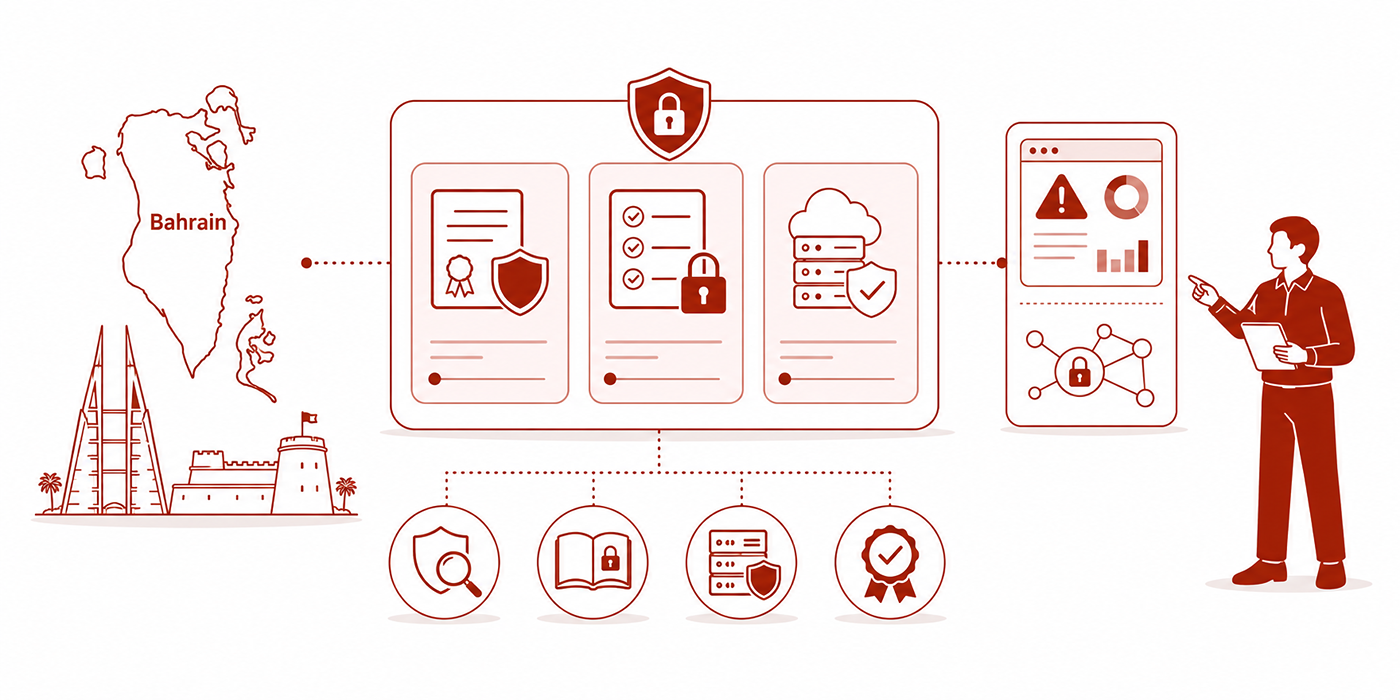
Bahrain’s cybersecurity market increasingly rewards professionals who can connect technical controls with risk ownership, regulatory evidence, incident leadership, and business continuity. The country’s 2025–2028 National Cyber Security Strategy prioritizes resilience, governance, workforce development, collaboration, and cyber innovation, giving qualified professionals several routes into security operations, cloud protection, compliance, finance, and leadership.
A strong certification plan should combine cybersecurity career progression, future security skills, practical security frameworks, and management-ready evidence rather than treating exam completion as the entire goal.
1. Why Advanced Cybersecurity & Management Certification Matters in Bahrain
Bahrain’s current cybersecurity direction creates a clear distinction between professionals who operate individual tools and professionals who can manage cyber risk across an organization. The National Cyber Security Strategy 2025–2028 includes advanced cyber resilience, robust governance, extended partnerships, workforce development, and research-led innovation. These pillars reward candidates who understand incident response effectiveness, cybersecurity governance frameworks, future cybersecurity workforce skills, threat intelligence careers, and cybersecurity innovation trends.
The career pressure becomes especially visible in regulated financial environments. The Central Bank of Bahrain’s operational-risk rules require conventional bank licensees to maintain robust cybersecurity risk-management policies, establish clear accountability, use a NIST-aligned framework, report security maturity to boards, maintain trained cyber personnel, and develop incident-response capabilities. Candidates pursuing financial-sector cybersecurity careers, cybersecurity compliance roles, security audit careers, SOC management, and CISO progression therefore need evidence of judgment, reporting, and control ownership.
Cloud expertise also has unusually strong career relevance in Bahrain. The government’s Cloud First policy has shaped public-sector digital transformation, while continuing government cloud initiatives have increased the importance of architecture, identity, configuration, data protection, backup, monitoring, and resilience skills. Professionals can build valuable specialization through a cloud security engineer roadmap, cloud security tools directory, cloud threat analysis, future cloud security trends, and privileged-access management guidance.
An advanced certification can also solve a painful promotion problem. Many experienced professionals have years of technical exposure, yet their résumé shows tasks instead of ownership. They installed controls, investigated alerts, supported audits, or resolved tickets, while another candidate receives the leadership opportunity because that person can explain risk, priorities, business impact, and remediation. Studying cybersecurity management pathways, security-manager-to-director progression, cybersecurity program management, information-security director careers, and VP-level security leadership helps convert experience into advancement language.
The most valuable outcome is career compression. A carefully selected credential can consolidate years of fragmented exposure into a recognizable professional identity: cloud-security engineer, GRC specialist, incident-response lead, security architect, audit professional, or cyber manager. That identity becomes credible when supported by cybersecurity salary-growth analysis, emerging-role predictions, specialized-role demand, global salary benchmarks, and certification career-impact research.
ISC2 currently positions credentials across foundational, operational, governance, cloud, and senior-leadership pathways, while ISACA’s portfolio covers audit, risk, management, privacy, operations, governance, and emerging AI specializations. AWS and the Cloud Security Alliance maintain dedicated cloud-security credentials.
Cybersecurity Certifications and Career Impact in Bahrain: 28-Credential Advancement Matrix
| Certification | Best Career Stage | Strongest Career Use | Bahrain-Relevant Proof to Build |
|---|---|---|---|
| ISC2 Certified in Cybersecurity (CC) | Entry level | Establishes security fundamentals for career changers | Build a beginner risk register using an IT-support-to-cybersecurity roadmap. |
| CompTIA Security+ | Entry level | Supports analyst, support, infrastructure, and junior security applications | Document controls through access-control models and basic incident scenarios. |
| CompTIA CySA+ | Early career | Strengthens defensive analysis, detection, and response positioning | Create a triage workbook using a SOC analyst career guide. |
| CompTIA PenTest+ | Early career | Builds structured offensive-security and reporting credibility | Produce a sample assessment with penetration-testing tools. |
| CompTIA SecurityX | Senior technical | Supports security architecture and advanced practitioner roles | Draft an architecture decision record using a security-architect roadmap. |
| ISC2 SSCP | Early to mid career | Validates operational security administration and control implementation | Create an operational-control checklist from security-audit best practices. |
| ISC2 CISSP | Experienced professional | Supports senior security, architecture, consulting, and leadership roles | Build an enterprise roadmap using a specialist-to-CISO pathway. |
| ISC2 CCSP | Experienced cloud professional | Demonstrates advanced cloud architecture, operations, data, and compliance knowledge | Create a cloud-control matrix using the cloud security tools directory. |
| ISC2 CGRC | Mid career | Supports governance, control assessment, authorization, and compliance roles | Map controls through a cybersecurity compliance pathway. |
| ISACA CISM | Management track | Strengthens security-program leadership and governance positioning | Prepare a 12-month program plan with a cybersecurity manager roadmap. |
| ISACA CRISC | Mid to senior career | Develops enterprise technology-risk and control-design authority | Create a treatment plan using cybersecurity compliance trends. |
| ISACA CISA | Audit and assurance track | Supports IT audit, control testing, assurance, and advisory roles | Build an evidence request list from a cybersecurity auditor guide. |
| ISACA CGEIT | Senior leadership | Builds credibility for enterprise governance and strategic technology oversight | Design board-level reporting through a director-level security pathway. |
| ISACA CDPSE | Privacy and engineering track | Connects privacy requirements with technical implementation | Build a data-flow review using privacy-regulation trends. |
| ISACA CCOA | Early to mid career | Targets cyber operations, threat evaluation, and vulnerability analysis | Create an investigation report with a cybersecurity analyst advancement guide. |
| ISACA AAISM | Experienced security manager | Adds AI-security governance and management capability | Develop an AI-risk register using AI adoption research. |
| EC-Council CEH | Early to mid career | Provides broad ethical-hacking methodology recognition | Create a legal testing methodology through an ethical-hacker roadmap. |
| EC-Council CHFI | Incident and forensic track | Supports evidence handling, investigation, and post-incident analysis | Build a chain-of-custody template through an incident-response pathway. |
| OffSec OSCP | Hands-on offensive track | Demonstrates practical penetration-testing discipline | Produce a sanitized report using the OSCP penetration-testing roadmap. |
| PNPT | Practical offensive track | Builds real-world testing, reporting, and presentation practice | Create a client-ready report through a penetration-testing consulting pathway. |
| GIAC GSEC | Technical foundation | Strengthens practical security knowledge across multiple domains | Build a control-validation pack using vulnerability-assessment techniques. |
| GIAC GCIH | Incident-response track | Supports detection, containment, attacker-method analysis, and recovery | Develop a ransomware playbook from ransomware threat analysis. |
| GIAC GCIA | Network-defense specialist | Builds packet-analysis, traffic-monitoring, and intrusion-detection depth | Create a detection workbook with network-monitoring tools. |
| CSA CCSK | Cloud foundation | Provides vendor-neutral cloud governance, risk, and control knowledge | Map cloud controls using future cloud-security trends. |
| AWS Certified Security – Specialty | Experienced cloud track | Validates security design and implementation in AWS environments | Build an IAM and logging design through a cloud-security engineer roadmap. |
| Microsoft Azure Security Engineer Associate | Cloud security practitioner | Supports identity, network, workload, and security-operations roles | Create an Azure hardening checklist using cloud-security tool comparisons. |
| Google Professional Cloud Security Engineer | Experienced cloud practitioner | Supports secure cloud design, access, monitoring, and compliance | Build a data-protection model using data-loss-prevention guidance. |
| ISO/IEC 27001 Lead Implementer | GRC and consulting track | Supports information-security management system implementation | Create an ISMS implementation plan from security-audit processes. |
| ISO/IEC 27001 Lead Auditor | Audit and assurance track | Develops audit planning, evidence evaluation, and findings-management capability | Prepare an audit file with a future cyber-audit framework. |
Credential availability, exam outlines, experience requirements, renewal policies, and testing options can change. Confirm current requirements with the issuing organization before purchasing training or an exam voucher.
2. How to Choose the Right Certification Path for Bahrain
Begin with the role you need employers to consider you for during the next 12–18 months. A candidate pursuing entry-level defensive work should compare a SOC analyst career guide, an IT-support transition pathway, a senior analyst progression plan, SIEM solution requirements, and endpoint-detection capabilities. This prevents an early-career professional from paying for a leadership credential whose experience requirements and exam logic exceed the candidate’s present needs.
Experienced practitioners should identify the exact ceiling blocking advancement. A technically strong analyst may need governance language. An IT manager may need security-specific authority. A compliance professional may need deeper technical control knowledge. A penetration tester may need consulting, architecture, or team-management ability. Compare the cybersecurity manager pathway, IT-management transition guide, penetration-testing manager roadmap, chief security architect pathway, and cybersecurity consultant progression against the responsibilities in your target job descriptions.
Sector alignment should shape the decision. Financial institutions need professionals who can explain risk tolerance, control maturity, board reporting, incident escalation, data classification, third-party exposure, and resilience. Energy and critical-infrastructure employers need segmentation, operational continuity, asset visibility, crisis response, and supply-chain risk. Government and cloud-heavy environments need identity, configuration, architecture, data protection, and audit evidence. Use financial cybersecurity incident analysis, critical-infrastructure threat assessment, energy-sector cybersecurity providers, government cybersecurity predictions, and cloud-environment threat research to define the proof employers will expect.
Pay close attention to eligibility. Some advanced credentials allow candidates to sit an exam before completing the full experience requirement, while the final certification may depend on documented professional experience, endorsement, application approval, continuing education, or annual maintenance. CISSP and CCSP, for example, have formal experience requirements, and ISACA candidates complete certification applications after passing relevant exams. Review the provider’s current rules alongside top cybersecurity certifications, certification salary analysis, future employer preferences, and cybersecurity training providers.
Your final choice should pass a four-part test: the credential appears in or supports your target roles; its domains close a real skill gap; you can meet its certification requirements; and you can create practical evidence while studying. A credential becomes substantially more useful when paired with a vulnerability-management plan, incident-response playbook, cloud-security architecture, compliance-control matrix, or executive cybersecurity roadmap.
3. Requirements, Costs, Study Planning, and Exam Preparation
Create a total-cost estimate before enrolling. Include the exam voucher, formal training, books, practice platforms, lab subscriptions, rescheduling risk, travel to a testing center when applicable, taxes, membership fees, renewal costs, and continuing-professional-education obligations. Exam pricing can vary by location and provider, and ISC2 specifically notes that regional pricing and taxes may depend on exam administration location. Reduce unnecessary spending by combining free cybersecurity courses, cybersecurity books, cybersecurity YouTube channels, industry podcasts, and research organizations.
A study plan should begin with a diagnostic assessment. Score every exam domain as strong, usable, weak, or unfamiliar. Then assign study hours according to weakness and exam weighting rather than reading the official guide from page one to the end. Candidates preparing for management-oriented credentials should devote extra time to scenario judgment, governance, risk treatment, communication, and control ownership. Support this work with NIST framework adoption, security-audit methodology, access-control models, cybersecurity compliance trends, and privacy-regulation forecasts.
Use three learning layers. The first layer builds conceptual understanding through official objectives and structured reading. The second layer applies knowledge through labs, diagrams, risk assessments, policy drafting, packet analysis, cloud configuration, or incident exercises. The third layer develops examination judgment through timed questions and post-test analysis. For technical tracks, use penetration-testing tools, vulnerability scanners, application-security tools, network-monitoring platforms, and endpoint-security providers to connect theory with operational decisions.
Build one portfolio asset for every major domain. Risk management can become a risk register. Identity becomes an access-review workbook. Incident response becomes a tabletop exercise. Cloud security becomes an architecture diagram and hardening checklist. Governance becomes a board-reporting template. Audit becomes an evidence-request list and findings tracker. These assets should reflect issues covered in phishing prevention research, insider-threat analysis, data-breach mitigation, ransomware evolution, and AI-powered attack trends.
Quick Poll: What Is Blocking Your Cybersecurity Career Growth in Bahrain?
Choose the obstacle creating the greatest career pressure. Your certification and portfolio strategy should attack that barrier first.
4. How to Convert Certification Into Career Impact in Bahrain
Your résumé must connect certification knowledge to organizational outcomes. Replace descriptions such as “responsible for monitoring alerts” with evidence such as “prioritized authentication alerts, documented escalation criteria, and reduced avoidable case handoffs.” Replace “assisted with audits” with “mapped evidence owners, tracked control gaps, and improved remediation visibility.” The strongest examples combine SOC analyst responsibilities, incident-response reporting, audit best practices, compliance analyst duties, and cybersecurity manager expectations.
Prepare five interview stories before applying. The first should explain how you prioritized a technical risk. The second should show how you handled incomplete information during an incident. The third should demonstrate stakeholder communication. The fourth should show control improvement after a finding. The fifth should explain how you balanced security, cost, usability, and operational continuity. Build these stories from cloud-security incidents, financial-sector cyber events, insider-threat cases, phishing trends, and endpoint-security effectiveness.
A portfolio should remain concise enough for a hiring manager to review quickly. Include a one-page profile, two case studies, one architecture or process diagram, one management document, and a short index of tools or frameworks used. Remove confidential employer information, client names, private infrastructure details, credentials, and exploitable findings. Strong portfolio themes include SIEM detection design, cloud-security controls, penetration-testing methodology, DLP strategy, and privileged-access governance.
Professionals seeking internal promotion should create a business case instead of relying on the certificate announcement. Show the current risk, the operational consequence, the proposed improvement, the resources required, the measurement method, and the expected result. A strong promotion packet may contain a security-maturity snapshot, outstanding-risk backlog, training proposal, vendor-risk scorecard, and 30/60/90-day plan. Align it with security leadership progression, director-level responsibilities, program-management capability, cybersecurity policy leadership, and VP-of-security career growth.
Networking should also be evidence-led. When speaking with recruiters, practitioners, conference attendees, or online communities, describe the problem you are learning to solve rather than announcing that you are “passionate about cybersecurity.” Share a sanitized diagram, a short control lesson, an incident-analysis insight, or a practical certification takeaway. Use cybersecurity conferences, industry news sites, cybersecurity podcasts, research institutes, and content-creator career guidance to develop informed professional visibility.

5. A 90-Day Bahrain-Focused Certification and Career Plan
Days 1–15: Select the Role and Establish the Baseline
Collect 20–30 realistic job descriptions from Bahrain and the wider Gulf market. Record repeated skills, requested credentials, tools, sectors, experience levels, and management responsibilities. Count how frequently employers mention cloud, governance, incident response, SIEM, vulnerability management, audit, data privacy, architecture, or leadership. Compare those patterns with future cybersecurity job trends, specialized-role demand, remote career trends, cybersecurity workforce shortages, and salary-progression data.
Choose one target role, one primary credential, and one portfolio outcome. A SOC candidate could choose a detection credential and build an alert-triage playbook. A GRC candidate could pursue risk or audit certification and build a control matrix. A cloud candidate could pursue a cloud-security credential and produce a hardened reference architecture. A manager could pursue governance or security-management certification and produce an annual program roadmap. Use the SOC manager pathway, cloud engineer roadmap, compliance officer pathway, cybersecurity auditor guide, and security-manager progression plan.
Days 16–45: Learn, Apply, and Document
Study in weekly cycles. Spend the first part of each cycle learning concepts, the second applying them, and the third explaining the result in plain business language. Every domain should produce an artifact: a diagram, checklist, risk statement, detection rule, policy section, audit test, or incident decision. Technical candidates can use vulnerability-scanning comparisons, penetration-testing tools, endpoint-security solutions, network-security platforms, and application-security tools for realistic analysis.
Keep an error log for practice questions. Record the topic, your incorrect assumption, the correct principle, and the clue you overlooked. This converts practice testing into judgment development. Management examinations frequently present several technically plausible answers, while the strongest answer reflects governance sequence, risk ownership, organizational authority, or business context. Improve that judgment through NIST framework analysis, cybersecurity audit practices, regulatory-trend forecasts, security standards predictions, and privacy-regulation evolution.
Days 46–70: Build Management Credibility
Translate each technical artifact into a management document. Convert vulnerability findings into a prioritized remediation plan. Convert alert statistics into operational metrics. Convert cloud misconfigurations into a risk-treatment decision. Convert audit gaps into owners, deadlines, dependencies, and residual risk. Convert an incident timeline into an executive summary. This phase should draw from incident-response effectiveness research, ransomware impact analysis, cloud-threat research, data-breach mitigation strategies, and critical-infrastructure assessments.
Prepare a five-minute leadership briefing. Explain the risk, affected business service, current control weakness, realistic consequence, recommended treatment, cost or resource implication, responsible owner, and success metric. Record yourself delivering it until the explanation becomes clear and economical. Support your approach with CISO career planning, security-director progression, chief security architect guidance, cybersecurity program management, and security-leadership transition advice.
Days 71–90: Complete the Exam and Convert the Result
During the final phase, take timed practice exams, close high-frequency weaknesses, confirm identification and testing requirements, and protect the final 48 hours from panic-driven resource switching. After the exam, update your résumé, professional profile, portfolio, and interview stories immediately. Compare your positioning with cybersecurity salary benchmarks, remote-versus-on-site salaries, certification salary growth, freelance cybersecurity income, and career-advancement findings.
Avoid credential stacking without conversion. Beginning a second certification immediately can delay the résumé improvements, networking, applications, internal proposal, and interview preparation that produce returns from the first. Spend several weeks converting the completed credential into opportunities. Apply selectively, ask for role-expansion conversations, publish safe portfolio insights, and track employer responses. Use future certification forecasts, future cybersecurity skills, automation workforce predictions, AI-security innovation, and next-generation SIEM trends to choose the next skill only after the first credential has been activated.
6. FAQs About Advanced Cybersecurity & Management Certification in Bahrain
-
Yes, particularly for professionals targeting regulated industries, cloud-heavy environments, cyber operations, audit, compliance, architecture, or leadership. Bahrain’s 2025–2028 strategy explicitly emphasizes cyber resilience, governance, partnerships, workforce capability, and innovation, while the Central Bank of Bahrain requires structured cybersecurity risk management and role-specific training within regulated banking environments. The strongest return comes from pairing certification with career-impact evidence, salary-growth analysis, future job-market research, and leadership progression planning.
-
CISM, CISSP, CRISC, CGEIT, CGRC, and ISO/IEC 27001 credentials can support different management, governance, risk, architecture, audit, and compliance goals. The correct choice depends on your present experience and target authority. A security-program manager needs different evidence from an auditor, enterprise-risk professional, or architect. Compare a cybersecurity manager roadmap, security-director pathway, CISO progression guide, cybersecurity auditor pathway, and security architect roadmap before choosing.
-
A beginner can begin preparing for an advanced career path, while the first credential should usually match the candidate’s current foundation. Start with security principles, networking, operating systems, cloud concepts, identity, vulnerability management, logging, and incident handling. Then progress toward specialization or leadership. Useful starting resources include free cybersecurity courses, cybersecurity bootcamps, global training providers, cybersecurity books, and an IT-support-to-security transition guide.
-
Cloud security, financial-sector security, GRC, SOC operations, incident response, data protection, identity, security architecture, and critical-infrastructure protection all align with Bahrain’s digital and regulatory environment. Cloud First initiatives support demand for cloud governance and architecture skills, while CBB requirements highlight risk management, board oversight, SIEM, SOC capabilities, resilience, awareness, and incident reporting. Candidates can explore cloud-security engineering, financial cybersecurity, SOC careers, incident response, and compliance careers.
-
A working professional with relevant experience may need approximately 8–16 focused weeks for many credentials, while career changers and candidates pursuing deeply technical examinations may require several months. Preparation time depends on prior knowledge, exam breadth, hands-on requirements, weekly study capacity, and the gap between your current work and the credential’s domains. Plan through a SOC analyst roadmap, ethical-hacking pathway, OSCP preparation guide, cloud-security career plan, or compliance analyst roadmap.
-
Create controlled, legal, and well-documented projects. Build a small SIEM lab, write an incident-response playbook, assess a deliberately vulnerable application, design a cloud-security baseline, map controls to a framework, or produce a mock audit workbook. Explain the problem, assumptions, methodology, findings, business impact, and remediation priorities. Use SIEM solution comparisons, penetration-testing tools, cloud-security tools, vulnerability-assessment methods, and cybersecurity frameworks to structure credible work.
