
The Ultimate Guide to Getting Advanced Cybersecurity & Management Certification in Qatar: Everything You Need to Know in 2026-2027
Qatar is becoming a serious test case for cybersecurity careers because its national direction, regulated sectors, smart infrastructure, energy economy, financial services, and public-sector digitization all demand professionals who can connect technical control with business risk. Qatar’s National Cyber Security Strategy 2024–2030 emphasizes cyber resilience, regulation, workforce culture, data-driven growth, and international cooperation, which makes advanced certification valuable for professionals who want leadership-ready credibility in 2026–2027.
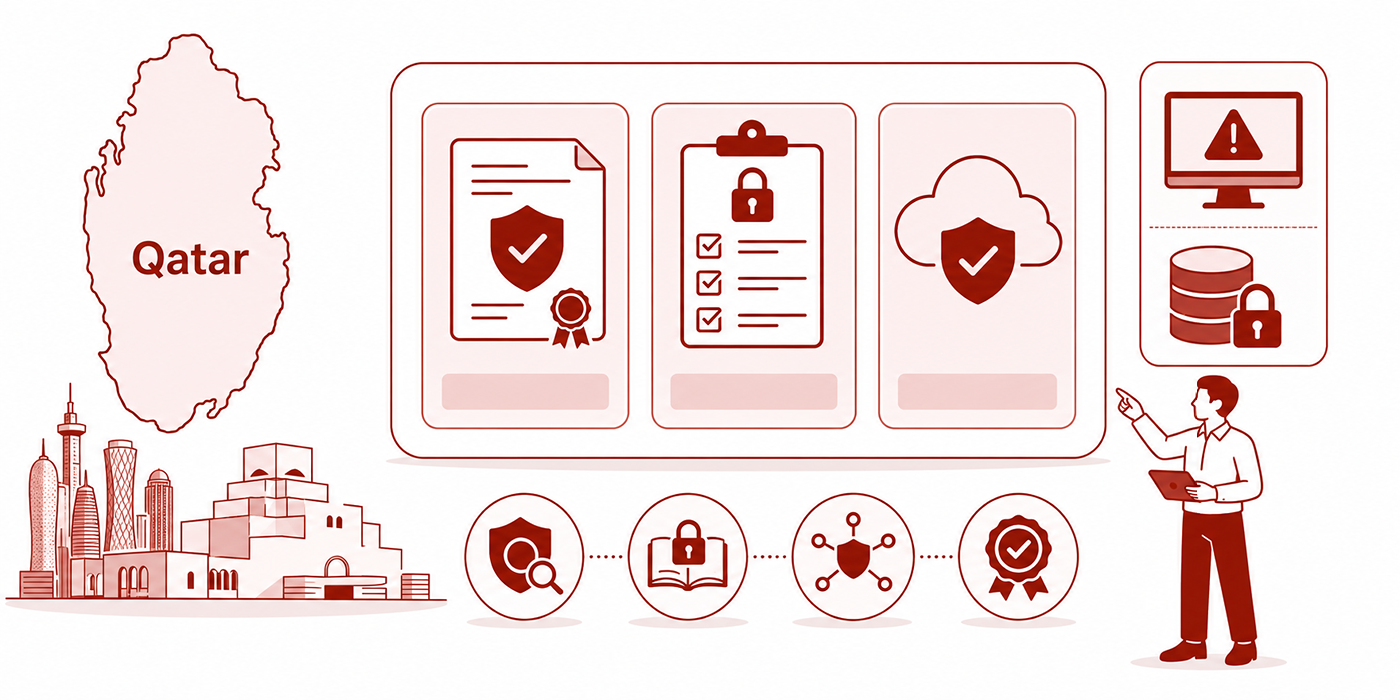
1. Why Advanced Cybersecurity & Management Certification Matters in Qatar in 2026-2027
Getting an advanced cybersecurity and management certification in Qatar should be treated as a career-positioning move, because the strongest candidates are no longer judged only on tool familiarity. Employers want people who understand endpoint security, SIEM operations, vulnerability assessment, cloud security, and cybersecurity frameworks as one connected risk system.
Qatar’s market rewards professionals who can translate technical weakness into executive action. A firewall misconfiguration, weak identity control, poor email filtering, delayed incident response, or missing audit evidence can become a board-level issue fast. That is why candidates studying cybersecurity compliance, security audits, NIST adoption, data breach mitigation, and ransomware impact can speak the language hiring managers care about.
The strongest advantage of advanced certification is career compression. A professional who already has IT, SOC, audit, network, cloud, or governance experience can use certification to package scattered experience into a clean promotion story. That matters for candidates moving from IT support to cybersecurity analyst, SOC analyst to SOC manager, security analyst to cybersecurity engineer, security manager to director, or cybersecurity specialist to CISO.
Qatar’s privacy and regulatory environment also raises the value of management-focused cyber skills. Qatar’s Personal Data Privacy Protection Law gives individuals rights over personal data processing, while the National Cyber Security Agency publishes privacy guidance for regulated entities. Candidates who understand privacy regulations, GDPR-style compliance pressure, healthcare compliance, financial-sector cybersecurity, and government-sector cybersecurity can compete for roles beyond pure monitoring.
Advanced Cybersecurity & Management Certification in Qatar: 28-Pathway Career Matrix
| # | Career Target | Certification Focus | Qatar Career Leverage | Proof Project to Build |
|---|---|---|---|---|
| 1 | SOC Analyst | SIEM, alert triage, incident escalation | Useful for managed security, finance, public-sector monitoring | Create a mini detection lab using SIEM solutions and map alerts to a SOC analyst roadmap. |
| 2 | SOC Manager | Team metrics, escalation design, playbooks | Helps move from shift work into ownership | Build KPI dashboards using the SOC manager pathway and incident response metrics. |
| 3 | Cybersecurity Analyst | Threats, controls, reporting, risk evidence | Strong fit for regulated organizations needing practical defenders | Create a risk register from future threat trends and analyst career planning. |
| 4 | Cloud Security Engineer | IAM, logging, workload protection, misconfiguration control | High value for digital transformation and hybrid infrastructure | Design a cloud control checklist using cloud security engineering and cloud security trends. |
| 5 | Compliance Analyst | Policies, evidence, control mapping, audit readiness | Useful for privacy, finance, healthcare, education, and government vendors | Map controls through a compliance analyst roadmap and future compliance trends. |
| 6 | Cybersecurity Auditor | Audit scope, evidence quality, risk validation | Strong for consulting, internal audit, and vendor assurance | Build an audit checklist with cybersecurity auditor guidance and audit best practices. |
| 7 | Penetration Tester | Testing methodology, reporting, exploit validation | Useful for banks, telecom, enterprise apps, and consulting firms | Create a sample assessment report using penetration testing tools and the OSCP pathway. |
| 8 | Ethical Hacker | Reconnaissance, web testing, network testing, responsible reporting | Helps candidates prove offensive capability without vague claims | Follow an ethical hacker roadmap and compare with the CEH pathway. |
| 9 | Red Team Specialist | Adversary emulation, stealth, command chain reporting | Creates senior credibility when paired with business-safe documentation | Build an emulation plan using red-team specialist guidance and consulting progression. |
| 10 | Incident Responder | Containment, forensics coordination, executive updates | Powerful fit for organizations facing ransomware and cloud incidents | Create a tabletop exercise from incident responder skills and ransomware analysis. |
| 11 | Threat Intelligence Analyst | Actor tracking, intelligence requirements, executive briefs | Valuable for finance, energy, public sector, and managed services | Write a quarterly threat brief using threat intelligence guidance and cloud threat research. |
| 12 | Application Security Analyst | Secure SDLC, API testing, code risk, developer coaching | Useful for banks, e-commerce, digital services, and SaaS teams | Build a secure review checklist with application security tools and vulnerability assessment techniques. |
| 13 | Endpoint Security Lead | EDR tuning, policy hardening, endpoint incident visibility | Strong for distributed enterprise workforces and critical devices | Compare EDR tools with endpoint security effectiveness. |
| 14 | Email Security Specialist | Phishing controls, DMARC, user protection, response playbooks | Directly supports executive protection and fraud reduction | Design a phishing reduction plan with email security solutions and phishing trends. |
| 15 | Network Security Engineer | Segmentation, monitoring, access control, secure routing | Useful for telecom, infrastructure, campus networks, and industrial sites | Build a monitoring plan with network monitoring tools and access control models. |
| 16 | DLP / Data Security Analyst | Classification, leakage paths, insider risk, data handling | Useful for privacy-driven organizations and regulated records | Create a data-loss prevention map using DLP software and insider threat research. |
| 17 | IAM / PAM Specialist | Privileged access, least privilege, account review, secrets control | Strong fit for banks, energy, healthcare, and government vendors | Build a privileged access review using PAM solutions and security frameworks. |
| 18 | Security Awareness Lead | Human risk, executive training, phishing simulations, culture metrics | Matches Qatar’s workforce cyber-culture priorities | Design a 12-month program using awareness training platforms and future skills. |
| 19 | Healthcare Security Specialist | Patient data protection, vendor risk, medical device security | Useful for hospitals, clinics, insurers, and health-tech providers | Create a risk model from healthcare cybersecurity tools and healthcare threat data. |
| 20 | Financial Cybersecurity Specialist | Fraud controls, resilience, third-party risk, reporting | High-value pathway for banking and fintech environments | Prepare a control map using financial services cyber firms and financial incident analysis. |
| 21 | Energy & Utilities Security Specialist | OT risk, critical infrastructure, segmentation, incident continuity | Highly relevant to Qatar’s strategic infrastructure environment | Build an OT resilience brief using energy-sector providers and critical infrastructure risk. |
| 22 | IoT Security Specialist | Device inventory, firmware risk, network isolation, monitoring | Strong for smart-city, industrial, logistics, and facility environments | Build a device risk register using IoT security companies and IoT career planning. |
| 23 | Cybersecurity Manager | Budgeting, risk ownership, policy execution, team leadership | Turns technical credibility into promotion-ready management authority | Build a department roadmap with cybersecurity manager guidance and IT-to-security leadership. |
| 24 | Director of Cybersecurity | Enterprise strategy, governance, risk appetite, board reporting | Best for professionals already managing teams or major programs | Prepare a board brief using director career guidance and VP leadership planning. |
| 25 | CISO Track Candidate | Enterprise risk, executive communication, resilience, accountability | Creates a leadership narrative beyond certifications alone | Build a CISO transition file using the CISO roadmap and CISO certification pathway. |
| 26 | Security Architect | Architecture patterns, control design, platform security, resilience | Ideal for senior engineers moving into design authority | Draft a reference architecture using security architect guidance and chief architect planning. |
| 27 | Cybersecurity Program Manager | Roadmaps, delivery governance, stakeholder alignment, risk tracking | Strong for transformation programs across large organizations | Create a 12-month roadmap with program manager guidance and market outlook. |
| 28 | Cybersecurity Trainer | Curriculum, labs, learner assessment, workforce capability | Useful as Qatar expands cyber capability and workforce culture | Design a training module using cybersecurity instructor guidance and curriculum developer planning. |
2. How to Choose the Right Advanced Cybersecurity & Management Certification in Qatar
The best certification choice starts with your current bottleneck. A beginner needs credibility, an analyst needs specialization, a senior engineer needs leadership proof, and a manager needs governance authority. Candidates who treat every certification as equal usually waste months. A smarter plan compares top cybersecurity certifications, salary growth by certification, career advancement impact, job market trends, and entry-level to CISO salary progression before paying for an exam.
For Qatar, certification should also match sector pressure. A candidate targeting energy, telecom, banks, healthcare, education, or government contracting should build evidence around the risks those sectors actually face. That means using critical infrastructure cybersecurity, healthcare cybersecurity predictions, cybersecurity in finance, education-sector cybersecurity, and government public-sector cybersecurity as study context.
A useful rule is simple: your certification should answer the hiring manager’s biggest doubt. If they doubt your technical depth, build labs around penetration testing companies, vulnerability scanners, EDR tools, application security tools, and cloud security tools. If they doubt your leadership maturity, build proof around risk registers, roadmaps, budgets, policies, vendor scorecards, and incident briefings.
The strongest candidates combine certification with one portfolio asset per domain. For example, a SOC candidate should submit a triage playbook, an incident responder should submit a tabletop exercise, a GRC candidate should submit a control-mapping workbook, and a management candidate should submit a 90-day improvement plan. Pair your learning with free cybersecurity courses, cybersecurity bootcamps, training providers, cybersecurity books, and cybersecurity podcasts.
3. The Qatar-Ready Roadmap: From Technical Competence to Management Credibility
Start with a role audit. Write down your strongest technical evidence, your weakest missing domain, your target sector, and the promotion you want within 12–18 months. Someone aiming for SOC roles should prioritize alert logic, triage notes, SIEM dashboards, and escalation judgment through the SOC analyst career guide, SOC manager progression, incident response effectiveness, ransomware evolution, and AI-powered attack trends.
Next, translate your certification study into workplace language. A manager in Doha, Lusail, Al Wakrah, Ras Laffan, or a multinational office does not want textbook summaries; they want evidence that you can reduce exposure. Instead of saying you studied access control, show how DAC, MAC, and RBAC reduce privilege sprawl. Instead of saying you know vulnerability scanning, show how vulnerability techniques, scanner rankings, network monitoring tools, and PAM solutions lower exploitable risk.
Then build a management layer over your technical work. Every advanced cybersecurity and management certification candidate should learn to produce four documents: a risk register, a control map, an incident brief, and a board-friendly improvement roadmap. These documents connect cybersecurity frameworks, security audit processes, compliance trends, privacy regulation predictions, and future cybersecurity standards into promotion-ready proof.
Your final roadmap should include a clear specialization. Qatar’s cybersecurity demand touches cloud, data, identity, critical infrastructure, endpoint defense, security awareness, and AI-enabled threat detection. Choose one primary lane and one adjacent lane. A cloud-security candidate can pair cloud security engineering with AI-driven cybersecurity tools. A governance candidate can pair cybersecurity compliance officer roles with cybersecurity auditor roles. A leadership candidate can pair security management with director-level cybersecurity.
Quick Poll: What Is Your Biggest Career Block Before Getting Certified in Qatar?
Pick the pain point that feels most expensive right now. Your certification strategy should attack this first.
4. How to Turn Certification Into Real Career Impact in Qatar
A certification produces career impact when it changes the way employers describe you. You want to move from “candidate with a credential” to “person who can reduce risk in our environment.” The fastest way to do that is to attach certification learning to evidence. Use cybersecurity workforce shortage data, workforce demographics research, remote cybersecurity salary insights, global salary benchmarks, and freelance cybersecurity market data to understand how your skill set is valued.
For résumés, replace soft claims with operational proof. “Studied incident response” is weak. “Built a containment playbook for phishing-led credential compromise with executive update templates and post-incident control improvements” is stronger. A candidate can back that with phishing prevention strategies, email security providers, incident responder pathways, SOC analyst development, and threat intelligence analyst development.
For interviews, build five Qatar-relevant stories. One story should cover a technical control failure, one should cover risk prioritization, one should cover stakeholder communication, one should cover compliance evidence, and one should cover incident decision-making. These stories can pull from cloud environment threats, endpoint security effectiveness, data breach industries at risk, insider threat prevention, and AI in cybersecurity adoption.
For promotions, show that your certification improved your decision quality. Managers care about what you can own without constant supervision. A strong internal promotion packet includes a before-and-after control maturity snapshot, a prioritized risk backlog, a training plan, a vendor improvement note, and a 30/60/90-day roadmap. Use cybersecurity manager pathways, security leadership transition guidance, director of information security planning, policy director pathways, and VP of security progression.

5. The 90-Day Plan for Getting Certified and Building Qatar-Ready Proof
Days 1–15 should focus on positioning. Choose your target role, target sector, certification track, and proof asset before buying study resources. A candidate targeting cyber management in Qatar could choose a governance-heavy route using cybersecurity compliance officer guidance, cybersecurity audit guidance, NIST framework adoption, future audit practices, and small business legislation impact.
Days 16–45 should be technical build time. Study the certification objectives, then turn each major topic into a usable workplace artifact. Identity becomes an access review. Logging becomes a detection dashboard. Vulnerability management becomes a remediation tracker. Cloud security becomes a misconfiguration checklist. Use cloud tools, SIEM tools, endpoint providers, penetration testing tools, and application security tools to give your study practical shape.
Days 46–70 should be management translation time. For each technical artifact, add impact language: risk reduced, stakeholder affected, business process protected, evidence created, and next control improvement. This is where many candidates lose the room. They know the topic, yet they fail to explain why it should receive budget, leadership attention, or operational priority. Strengthen this with cybersecurity market outlook, Middle East-adjacent Asia-Pacific cyber trends, North America benchmarks, Europe cybersecurity trends, and future specialized role demand.
Days 71–90 should prepare exam confidence and career conversion. Schedule mock exams, refine your résumé, update LinkedIn, prepare five interview stories, and package your proof assets into a clean PDF or portfolio folder. Use cybersecurity blogs and news sites, YouTube learning channels, research organizations, cybersecurity conferences, and cybersecurity content creator pathways to keep your professional presence current.
The biggest mistake is collecting credentials without a career argument. A Qatar-focused candidate should be able to say: “I am pursuing this certification because it helps me protect regulated data, improve resilience, strengthen incident response, and lead controls across technical and business teams.” That one sentence becomes more powerful when backed by future zero-trust trends, deepfake cybersecurity threats, quantum cybersecurity risks, blockchain cybersecurity use cases, and future cybersecurity certifications.
6. FAQs About Advanced Cybersecurity & Management Certification in Qatar
-
Yes. It is most valuable when paired with job-ready proof. Qatar’s cyber strategy emphasizes resilience, regulation, workforce culture, data-driven development, and trusted partnerships, so professionals who combine technical depth with management communication are better positioned for senior roles. Use career advancement certification data, cybersecurity salary benchmarks, salary progression analysis, and cybersecurity job market predictions before choosing a track.
-
The strongest fit includes SOC analysts, network engineers, IT managers, auditors, compliance analysts, penetration testers, cloud engineers, incident responders, and security leads who want promotion-ready credibility. The path is especially useful for people moving through SOC management, cloud security engineering, ethical hacking, cybersecurity compliance, and security leadership.
-
Beginners can prepare for it, but they should build foundations first. A beginner should study networking, Linux, Windows security, basic cloud, access control, threat types, vulnerability management, and incident handling before expecting leadership-level returns. Start with free cybersecurity courses, cybersecurity bootcamps, security awareness platforms, cybersecurity books, and cybersecurity training providers.
-
Master risk prioritization, incident communication, vendor review, audit evidence, security architecture basics, budget reasoning, stakeholder reporting, and control ownership. Technical skills still matter, especially around SIEM solutions, EDR tools, cloud security tools, PAM solutions, and DLP software, but management roles demand decision quality.
-
Show proof. Create a one-page risk register, a control-mapping example, a mock incident executive brief, a cloud hardening checklist, a vulnerability remediation tracker, or a phishing response playbook. Then connect those assets to phishing prevention, incident response reporting, vulnerability assessment, security audit practices, and cybersecurity frameworks.
-
Choose a certification that solves an expensive employer problem. Salary leverage grows when your skill set touches breach prevention, compliance readiness, cloud risk, identity control, incident response, or leadership accountability. Compare CISSP, CEH, and Security+ salary growth, remote versus on-site salaries, global cybersecurity salaries, freelance income trends, and CISO progression data.
