
The Ultimate Guide to Getting Advanced Cybersecurity & Management Certification in South Carolina: Everything You Need to Know in 2026-2027
South Carolina cybersecurity careers are becoming more role-specific, which means a generic certification plan can leave candidates certified, under-positioned, and still stuck in the same salary band. A stronger path connects the credential to the employer’s risk environment, whether the target is SOC analysis, cloud security, GRC, healthcare compliance, manufacturing security, public-sector cybersecurity, or leadership. This guide gives South Carolina professionals a practical certification strategy using ACSMI resources on cybersecurity certifications, career advancement impact, salary growth, and cybersecurity job market trends.
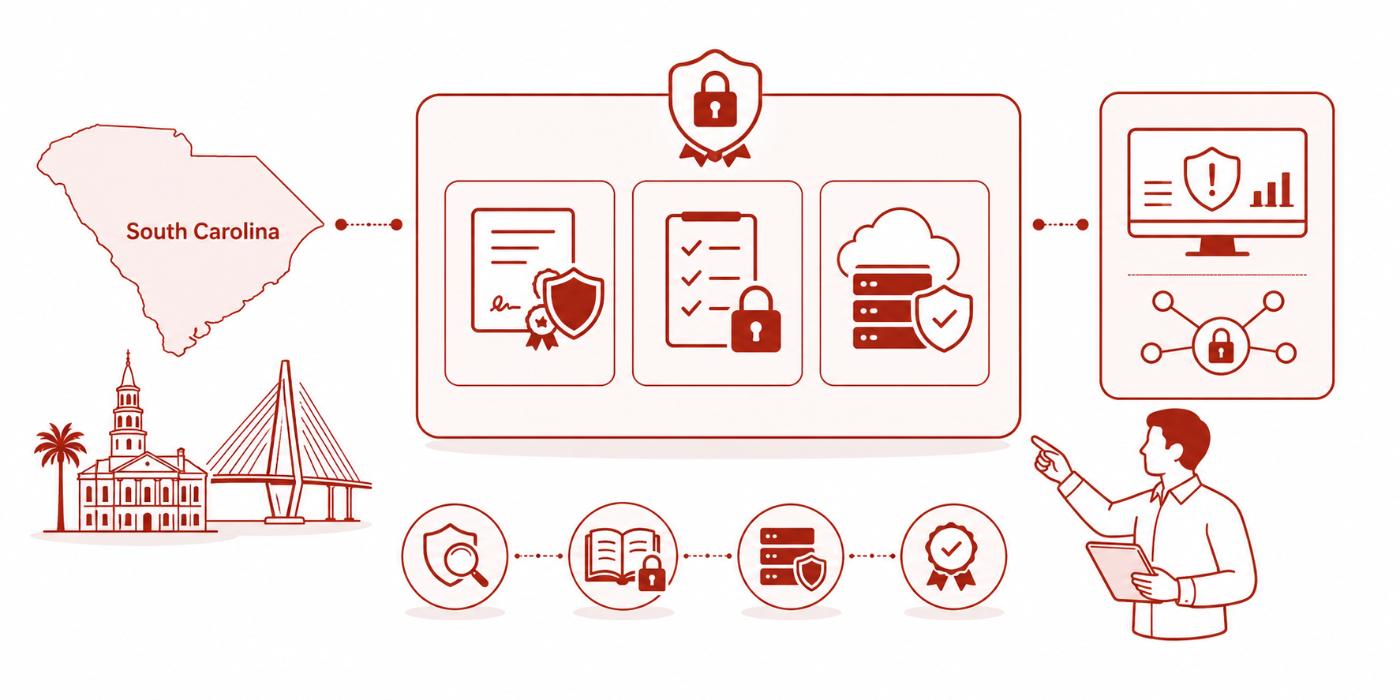
1. What Advanced Cybersecurity & Management Certification Means in South Carolina in 2026-2027
Advanced cybersecurity and management certification in South Carolina should be treated as a career-alignment tool. The right credential helps a candidate prove readiness for a defined responsibility: monitoring threats, securing cloud systems, supporting compliance, testing applications, managing security programs, or leading risk decisions. The wrong credential creates a résumé line that looks active yet fails to answer the employer’s real question: can this person reduce risk in our environment?
South Carolina candidates should begin by mapping their credential choice to the state’s major employer patterns. A Columbia candidate may see more government, education, healthcare, and compliance-heavy work. A Charleston candidate may find security opportunities around defense-adjacent employers, logistics, ports, healthcare, and technology firms. Greenville-Spartanburg candidates may see manufacturing, automotive, industrial operations, and enterprise IT needs. That is why a serious certification plan should connect with ACSMI guides on manufacturing cybersecurity solutions, healthcare cybersecurity threats, government and public-sector cybersecurity, cloud security tools, and cybersecurity compliance trends.
The career stage matters as much as the exam name. Entry-level candidates need to reduce hiring doubt through Security+, ISC2 CC, Network+, CySA+, labs, and SOC-ready proof. Early-career candidates need sharper specialization through cloud security, incident response, GRC, or ethical hacking. Mid-career professionals need credentials that show judgment, risk ownership, leadership, and architecture depth. South Carolina professionals should compare the SOC analyst career guide, IT support to cybersecurity analyst pathway, cloud security engineer guide, cybersecurity manager pathway, and cybersecurity compliance officer roadmap before choosing a paid exam.
For management-track professionals, certifications such as CISSP, CISM, CISA, CRISC, CGRC, CCSP, and CASP+ work best when they support a real promotion story. Employers need evidence that the candidate can prioritize risks, explain controls, lead teams, handle audits, improve incident response, or translate technical findings into business decisions. That makes ACSMI’s security manager to director roadmap, CISO pathway, director of information security guide, chief security architect roadmap, and cybersecurity leadership to VP guide essential reading.
South Carolina Cybersecurity Certifications and Career Impact: 26-Credential Advancement Matrix
| Certification | Best South Carolina Career Stage | Most Likely Advancement Effect | Where It Creates Real Leverage |
|---|---|---|---|
| ISC2 Certified in Cybersecurity CC | Entry level | Reduces beginner-risk perception | Useful with the IT support to cybersecurity analyst pathway |
| CompTIA Security+ | Entry level | Builds baseline security credibility | Pairs with the SOC analyst step-by-step guide |
| CompTIA Network+ | Entry to early career | Strengthens network and troubleshooting proof | Supports the network administrator to ethical hacker transition |
| CompTIA CySA+ | Early career | Improves detection, triage, and SOC credibility | Strong for the incident responder career path |
| CompTIA PenTest+ | Early offensive security | Signals testing and assessment readiness | Connects to the red team specialist roadmap |
| CompTIA CASP+ | Mid career | Shows advanced practitioner depth | Fits the security analyst to engineer path |
| SSCP | Early to mid career | Validates operational security skill | Helpful for cybersecurity analyst advancement |
| CISSP | Mid to senior career | Creates leadership and architecture credibility | High leverage for the specialist to CISO pathway |
| CISM | Manager track | Frames security as risk ownership | Strong fit for the cybersecurity manager pathway |
| CISA | Audit and compliance | Improves control-testing credibility | Useful with the cybersecurity auditor guide |
| CRISC | Risk leadership | Strengthens enterprise risk language | Supports future compliance trends |
| CGRC | GRC specialist | Helps prove governance and authorization skill | Fits the cybersecurity compliance officer roadmap |
| CCSP | Cloud security | Connects security architecture to cloud systems | Relevant to the cloud security engineer guide |
| AWS Certified Security Specialty | Cloud practitioner | Signals platform-specific security depth | Useful when comparing cloud security tools |
| Microsoft Azure Security Engineer | Cloud and enterprise IT | Improves identity, platform, and policy credibility | Pairs with PAM solution knowledge |
| Google Professional Cloud Security Engineer | Cloud specialist | Shows modern cloud control skill | Supports study of future cloud security trends |
| GIAC GSEC | Foundation to practitioner | Validates broad hands-on security knowledge | Supports candidates using the free cybersecurity courses directory |
| GIAC GCIH | Incident response | Strengthens handling, triage, and escalation proof | Strong with the incident responder skills pathway |
| GIAC GCIA | Network detection | Builds packet and intrusion-analysis credibility | Useful with network monitoring and security tools |
| GIAC GPEN | Penetration testing | Improves offensive testing proof | Fits the junior pentester to senior consultant path |
| GIAC GWAPT | Application security | Shows web-app testing readiness | Works with application security tool research |
| OSCP | Offensive security | Proves practical exploitation discipline | Directly tied to the OSCP penetration tester guide |
| PNPT | Practical red team | Highlights reporting and real-world attack flow | Useful for the red team operator career path |
| CEH | Ethical hacking entry | Creates recognized offensive-security vocabulary | Best read with the CEH step-by-step guide |
| PMP with cybersecurity experience | Program management | Turns security execution into delivery leadership | Strong for the cybersecurity program manager guide |
| CIPM / privacy management track | Privacy and governance | Improves privacy-risk leadership credibility | Useful for the chief privacy officer path |
2. Choosing the Right Certification Path by Career Stage
South Carolina candidates should choose certification by career stage first, then by brand recognition. Entry-level professionals need a foundation credential that helps employers trust their security vocabulary and operational discipline. Security+, ISC2 CC, Network+, and practical SOC training can help when the résumé already shows troubleshooting, customer support, ticketing, networking, or systems exposure. Candidates starting from help desk or IT support should pair certification study with ACSMI’s IT support to cybersecurity analyst transition, SOC analyst step-by-step guide, complete SOC analyst roadmap, free cybersecurity courses directory, and global cybersecurity training providers.
Early-career professionals should choose a specialization before buying another broad exam. A SOC analyst who wants stronger detection credibility may benefit from CySA+, GCIH, GCIA, or SIEM-focused training. A candidate drawn to offensive security may choose PenTest+, CEH, PNPT, GPEN, or OSCP. A candidate working near Microsoft, AWS, Google Cloud, identity, or endpoint administration may gain more from cloud security and IAM-focused credentials. This is where ACSMI’s incident responder pathway, threat intelligence analyst guide, ethical hacker roadmap, cloud security engineer guide, and senior cybersecurity analyst pathway can prevent scattered decisions.
Mid-career professionals need credentials that prove decision quality. CISSP, CISM, CISA, CRISC, CGRC, CCSP, CASP+, and advanced GIAC certifications help when the candidate can connect them to actual outcomes: audit readiness, better incident response, reduced recurring vulnerabilities, improved cloud controls, stronger identity governance, safer vendor access, or clearer risk reporting. A South Carolina candidate chasing security leadership should study the cybersecurity manager pathway, security manager to director roadmap, program manager career guide, cybersecurity product manager roadmap, and policy director pathway.
The biggest pain point for many candidates is certification without conversion. They pass the exam, update LinkedIn, apply to dozens of roles, and still receive weak responses because their résumé does not translate the credential into employer language. To fix that, every certification plan should include three outputs: a role-matched résumé, a proof artifact, and interview stories. The candidate studying CySA+ should create incident notes. The candidate studying CISA should create a control-testing example. The candidate studying CCSP should create a cloud risk diagram. The candidate studying OSCP should create a clean report. Use ACSMI’s vulnerability assessment guide, security audit best practices, access control models, cybersecurity frameworks guide, and certification impact report to build that proof.
3. South Carolina Cybersecurity Career Tracks: SOC, Cloud, GRC, Ethical Hacking, and Leadership
The SOC route gives South Carolina candidates one of the clearest entry points because it rewards alert discipline, documentation, pattern recognition, and escalation judgment. A good SOC certification plan should cover SIEM searches, EDR alerts, phishing triage, endpoint behavior, identity events, vulnerability context, and incident timelines. Security+, CySA+, GCIH, GCIA, and focused SIEM training can help, but the candidate needs proof that turns study into interview language. Start with the SOC analyst roadmap, then study EDR tools, SIEM solutions, email security solutions, and phishing attack prevention.
The cloud security route fits candidates who already touch infrastructure, identity, endpoint administration, SaaS tools, DevOps workflows, or enterprise IT modernization. CCSP, AWS Security Specialty, Azure Security Engineer, and Google Professional Cloud Security Engineer can help when the candidate can explain IAM, logging, key management, encryption, cloud segmentation, secrets handling, and incident response. South Carolina employers with distributed teams, healthcare operations, manufacturing systems, and public-sector vendors need professionals who can secure cloud environments without slowing operations. Build the plan with ACSMI’s cloud security tools directory, future cloud security analysis, emerging cloud threats report, PAM solutions guide, and AI-driven cybersecurity tools forecast.
The GRC route is powerful in South Carolina because regulated and risk-sensitive environments need people who can connect controls, evidence, vendors, audits, privacy obligations, and executive reporting. CISA, CGRC, CRISC, CISM, CISSP, and privacy-management credentials can help candidates move into compliance analyst, security auditor, risk analyst, vendor-risk, and governance roles. The strongest GRC professionals understand that evidence quality matters as much as policy language. Study ACSMI’s cybersecurity compliance officer roadmap, cybersecurity auditor guide, NIST framework adoption report, healthcare compliance report, and future audit practices.
The ethical hacking route requires a sharper proof standard. PenTest+, CEH, PNPT, GPEN, GWAPT, and OSCP can support offensive-security careers, yet employers will still look for methodology, reporting quality, scoping awareness, remediation clarity, and professional judgment. South Carolina candidates targeting penetration testing or red team roles should avoid vague “hands-on labs” claims and build clean sample reports instead. Use ACSMI’s ethical hacker roadmap, CEH guide, OSCP penetration tester guide, red team operator path, and penetration testing tools comparison.
Quick Poll: What South Carolina Cybersecurity Career Result Are You Really Chasing?
Pick the outcome that matters most. Your certification strategy should follow the career result, not the loudest exam name.
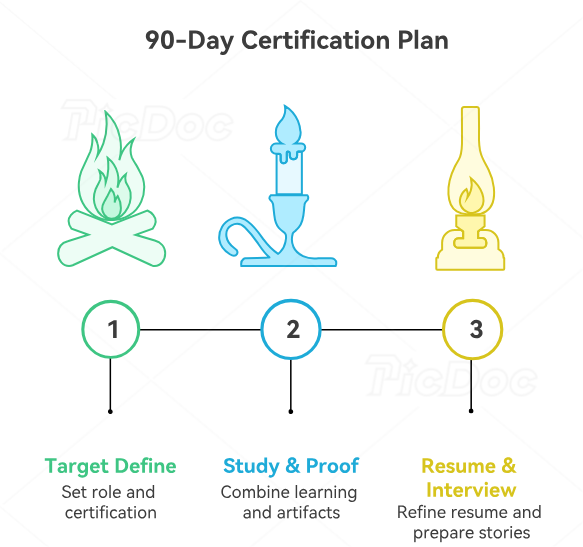
4. How to Build a 90-Day South Carolina Certification Plan That Converts
A useful 90-day certification plan starts with job-description extraction. Pick five South Carolina roles you would actually accept, then highlight the repeated tools, tasks, frameworks, industries, and verbs. A SOC role may repeat SIEM, EDR, phishing, ticketing, escalation, and incident handling. A GRC role may repeat NIST, HIPAA, policies, evidence, audits, vendors, risk registers, and compliance reporting. A cloud role may repeat IAM, Azure, AWS, logging, encryption, network controls, and automation. Use ACSMI’s cybersecurity job market trends guide, workforce shortage study, future skills guide, future job market predictions, and specialized roles demand forecast.
Days 1-15 should define the target. Create a one-page certification decision sheet with four boxes: target role, missing proof, best certification, and portfolio artifact. A beginner targeting SOC may choose Security+ or CySA+ and build phishing triage notes. A compliance candidate may choose CISA or CGRC and build a control evidence matrix. A cloud candidate may choose CCSP or a vendor credential and build an IAM hardening summary. A penetration testing candidate may choose PNPT or OSCP and build a formal report. Pull structure from ACSMI’s complete career roadmap for compliance analysts, incident responder skills pathway, cloud security engineer guide, OSCP roadmap, and senior analyst path.
Days 16-60 should combine study with proof creation. For every major exam domain, create something a hiring manager can understand. If the domain covers incident response, write a mock incident timeline. If it covers access control, map DAC, MAC, RBAC, and IAM use cases. If it covers vulnerability management, create a prioritization note with business impact. If it covers auditing, draft a control test and evidence request list. If it covers cloud security, diagram logging, key management, and network segmentation. Use ACSMI’s access control models guide, vulnerability assessment techniques, security audit processes, cybersecurity frameworks guide, and NIST cybersecurity framework analysis.
Days 61-90 should focus on résumé conversion and interview readiness. Replace passive certification language with proof language. “Studying for CySA+” is weaker than “built incident triage notes using phishing indicators, endpoint alerts, and escalation logic.” “Completed cloud security training” is weaker than “mapped IAM risk, logging coverage, and encryption controls for a sample cloud workload.” Prepare five interview stories: one troubleshooting story, one documentation story, one risk decision, one stakeholder communication moment, and one learning-under-pressure example. Compare your positioning with ACSMI’s salary growth analysis, entry-level to CISO salary progression, remote versus on-site salary report, global salary benchmarks, and career advancement impact report.
5. How South Carolina Professionals Turn Certification into Promotions, Better Interviews, and Salary Leverage
Certification creates career leverage when it explains why the candidate is ready for a larger responsibility. A South Carolina SOC analyst seeking promotion should connect CySA+, GCIH, GCIA, or CISSP study to alert quality, incident timelines, documentation, and mentorship. A GRC candidate should connect CISA, CRISC, CGRC, or CISM to audit readiness, evidence quality, risk ownership, and policy improvement. A cloud candidate should connect CCSP or vendor credentials to IAM, logging, encryption, and workload security. Tie the story to ACSMI’s cybersecurity analyst advancement guide, SOC analyst to SOC manager guide, security manager to director roadmap, cybersecurity program manager guide, and senior analyst to VP guide.
Industry targeting makes the credential more believable. A candidate applying to healthcare security roles should discuss HIPAA-aware controls, endpoint protection, phishing risk, identity access, and incident response. A candidate applying to manufacturing security roles should discuss uptime, network segmentation, OT exposure, vendor access, and ransomware resilience. A candidate applying to education or public-sector roles should discuss identity, endpoint sprawl, awareness training, audit readiness, and privacy obligations. Build that targeting with ACSMI’s healthcare cybersecurity tools directory, healthcare compliance report, manufacturing cybersecurity predictions, education cybersecurity solutions, and public-sector cybersecurity providers.
Salary conversations require proof beyond exam completion. The candidate should show how the credential supports measurable value: fewer unresolved alerts, cleaner audit evidence, stronger cloud controls, better vulnerability prioritization, improved tabletop readiness, safer vendor access, or clearer executive reporting. A salary-focused certification strategy should align the credential, job title, market demand, résumé outcomes, and interview stories. Use ACSMI’s certification salary growth analysis, global cybersecurity salary report, cybersecurity gender pay gap analysis, cybersecurity freelance income report, and remote cybersecurity salary report to frame compensation with stronger logic.
6. FAQs About Advanced Cybersecurity & Management Certification in South Carolina
-
The best certification depends on the target role. CISSP fits senior security, architecture, and leadership. CISM fits management and security program ownership. CISA fits audit and control testing. CRISC and CGRC fit risk, governance, and compliance. CCSP and cloud-vendor credentials fit cloud security roles. OSCP, PNPT, GPEN, and PenTest+ fit offensive-security careers. Compare the cybersecurity certifications directory, career impact report, future certifications guide, and job market forecast.
-
Security+, ISC2 CC, Network+, and CySA+ are practical options for candidates moving from IT support into cybersecurity. The strongest route combines certification with SOC proof, ticketing experience, troubleshooting examples, basic networking, incident notes, and phishing-analysis practice. South Carolina candidates should use the IT support to cybersecurity analyst guide, SOC analyst step-by-step guide, complete SOC analyst roadmap, and free cybersecurity courses directory.
-
CISSP can be valuable for South Carolina professionals with enough experience to connect security domains to real risk decisions. It helps most when the candidate is moving toward senior analyst, architect, consultant, manager, director, or CISO-track work. The credential becomes stronger when paired with leadership proof, incident ownership, control design, audit support, or program maturity work. Review the specialist to CISO guide, CISO roadmap, chief security architect path, and director of information security guide.
-
CISM is often stronger for candidates targeting security management, governance, risk ownership, metrics, stakeholder communication, and program leadership. CISSP provides broader technical and managerial credibility, especially for candidates moving toward architecture or senior leadership. The right choice depends on the job descriptions you are targeting. Compare the cybersecurity manager pathway, security manager to director roadmap, IT manager to security leadership guide, and cybersecurity leadership to VP guide.
-
CCSP, AWS Certified Security Specialty, Microsoft Azure Security Engineer, and Google Professional Cloud Security Engineer are strong options. The best choice depends on the platform used by target employers and the candidate’s current exposure. Cloud security candidates should show proof around IAM, logging, encryption, network controls, secrets management, and incident response. Study the cloud security engineer guide, cloud security tools directory, future cloud security trends, and emerging cloud threats report.
-
CISA is strong for audit and control testing. CGRC helps with governance, risk, authorization, and compliance work. CRISC supports enterprise risk roles. CISM helps candidates moving into security management and program ownership. South Carolina candidates targeting healthcare, government, education, finance, or vendor-risk roles should study controls, evidence requests, frameworks, policies, and risk reporting. Start with the cybersecurity compliance officer roadmap, cybersecurity auditor guide, NIST framework analysis, and compliance trends report.
