
The Ultimate Guide to Getting Advanced Cybersecurity & Management Certification in Rhode Island: Everything You Need to Know in 2026-2027
Rhode Island may be small, yet its cybersecurity career market touches dense, high-risk sectors: healthcare, higher education, finance, public agencies, defense-adjacent work, nonprofits, and small businesses that cannot afford a messy breach. Advanced cybersecurity and management certification matters here because employers need people who can move past tool familiarity and handle risk, evidence, incidents, vendors, compliance, and leadership communication. The right credential should make your next role easier to justify, whether you are entering security, moving into management, or rebuilding your career around higher-value cyber work.
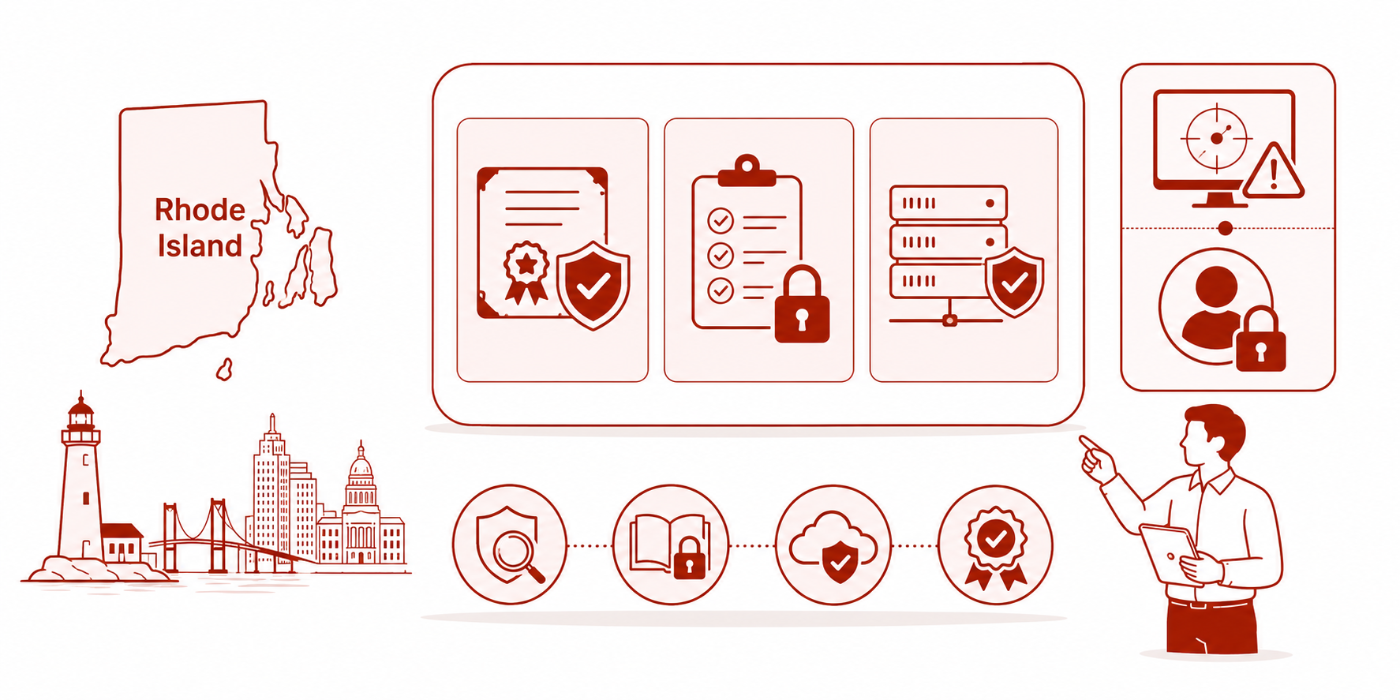
1. Why Advanced Cybersecurity & Management Certification Matters in Rhode Island in 2026-2027
Rhode Island cybersecurity candidates face a practical credibility problem: a resume can list tools, courses, and certificates, while still leaving hiring managers unsure whether the person can handle real incidents, explain risk, or take ownership under pressure. That gap matters in Providence, Warwick, Cranston, Newport, Pawtucket, and remote-friendly roles where lean teams need defenders who can investigate, document, communicate, and improve security processes. A smart path should connect your certificate to a role target through the cybersecurity certifications directory, the cybersecurity job market trends report, the cybersecurity workforce shortage study, and the entry-level to CISO salary progression analysis.
The pressure is strongest for professionals stuck between “technical enough to help” and “trusted enough to lead.” Rhode Island employers may need one person to support endpoint security, phishing response, cloud access, compliance evidence, incident escalation, and vendor review. That makes advanced cybersecurity and management certification useful when it proves both security judgment and operational maturity. Candidates should study practical career paths such as the SOC analyst career guide, the security analyst advancement roadmap, the cybersecurity manager pathway, and the CISO roadmap.
Rhode Island also rewards specialization because regulated and data-heavy organizations care about proof. Healthcare teams need HIPAA-aware security operations. Financial employers need identity, logging, fraud-risk awareness, and audit evidence. Schools and colleges need phishing defense, endpoint coverage, and account-protection discipline. Public-sector teams need frameworks, documentation, continuity planning, and policy alignment. A candidate can build stronger market fit by connecting certification to the healthcare cybersecurity tools directory, the financial services cybersecurity firms guide, the education-sector cybersecurity solutions directory, and the government cybersecurity firms directory.
The strongest candidates use certification as a career argument, then support that argument with projects. A beginner can show alert triage, vulnerability reports, access-control basics, and phishing workflows. A mid-career analyst can show incident timelines, dashboard improvements, audit support, and cloud-risk reduction. A leadership-track professional can show budget-aware decisions, risk summaries, vendor accountability, and policy maturity. Build that proof with the incident response effectiveness report, the state of ransomware analysis, the NIST cybersecurity framework adoption study, and the cybersecurity compliance trends report.
| Certification / Skill Path | Best Rhode Island Career Stage | Most Likely Advancement Effect | Where It Creates Real Leverage |
|---|---|---|---|
| ISC2 Certified in Cybersecurity (CC) | Entry level | Builds beginner credibility without requiring deep prior experience | First cybersecurity role, IT support transition, junior security interviews |
| CompTIA Security+ | Entry level to early career | Strengthens baseline security employability | SOC roles, analyst screening, public-sector support, defense-adjacent pathways |
| CompTIA CySA+ | Early career | Improves blue-team and detection credibility | SIEM work, alert triage, vulnerability follow-up, security operations |
| CompTIA PenTest+ | Early to mid career | Supports offensive-security positioning | Testing, assessment support, vulnerability validation, red-team-adjacent work |
| CompTIA SecurityX | Advanced practitioner | Signals architecture and senior engineering readiness | Secure design, enterprise architecture, hybrid environments, senior technical leadership |
| CISSP | Mid to senior career | Builds broad leadership and governance trust | Security management, director-track roles, enterprise risk, cross-functional leadership |
| CISM | Management track | Strengthens governance, risk, and program-management credibility | Security leadership, policy ownership, incident governance, executive reporting |
| CEH | Early offensive track | Frames ethical hacking fundamentals | Junior testing roles, security awareness, vulnerability discussions |
| OSCP | Hands-on offensive track | Proves practical exploitation and reporting discipline | Penetration testing, consulting, red-team work, offensive engineering |
| GRC / Compliance Certification Path | IT, audit, risk, legal-adjacent professionals | Creates cybersecurity entry leverage outside pure SOC work | Policy, audits, HIPAA, NIST, vendor risk, compliance evidence |
| Cloud Security Certification Path | Systems, network, DevOps, and infrastructure professionals | Moves the profile toward modern infrastructure protection | IAM, cloud logging, misconfiguration risk, Azure/AWS security, SaaS governance |
| Incident Response Certification Path | SOC and analyst professionals | Shows breach-handling maturity | Containment, escalation, timeline writing, evidence handling, lessons learned |
| Threat Intelligence Certification Path | Analyst to specialist | Improves research-led security value | Actor tracking, phishing analysis, ransomware briefings, executive threat summaries |
| Cybersecurity Auditor Path | Audit, risk, and compliance professionals | Builds assurance and control-testing authority | Internal audits, control mapping, audit evidence, board-level reporting support |
| Cybersecurity Manager Certification Path | Team lead to manager | Converts technical experience into leadership proof | Roadmaps, staffing, metrics, prioritization, budget-aware security planning |
| CISO Roadmap Path | Senior manager to executive | Builds executive-level security language | Enterprise risk, board communication, resilience planning, governance ownership |
| Endpoint Security Specialist Path | SOC and infrastructure defenders | Improves workstation and server defense value | EDR tuning, malware containment, device hardening, endpoint coverage reporting |
| SIEM Specialist Path | SOC analyst to detection engineer | Strengthens monitoring and investigation impact | Log analysis, detections, correlation rules, alert-quality improvement |
| Email Security Specialist Path | IT security and SOC teams | Builds phishing-defense credibility | Email gateways, phishing response, DMARC support, employee reporting workflows |
| Application Security Path | Developers, QA, DevOps, and security engineers | Creates high-value specialization | Secure SDLC, code review, SAST/DAST, API security, AppSec governance |
| IoT / OT Security Path | Manufacturing, utilities, and infrastructure professionals | Builds niche defensibility | Industrial systems, device risk, segmentation, asset discovery |
| Healthcare Cybersecurity Path | Healthcare IT and compliance professionals | Connects security work to patient-data protection | HIPAA, EHR security, ransomware readiness, vendor risk, access reviews |
| Financial Services Security Path | Banking, fintech, fraud, audit, and risk teams | Improves regulated-industry credibility | Identity controls, logging, fraud support, audit evidence, incident documentation |
| Government / Public Sector Security Path | Public agencies and contractors | Strengthens framework and policy readiness | NIST alignment, access control, resilience, documentation, procurement support |
| Security Awareness Training Path | Analysts, trainers, HR-adjacent security staff | Shows ability to reduce human-risk exposure | Phishing education, reporting culture, user behavior change, training metrics |
| Cybersecurity Instructor Path | Experienced practitioners | Turns expertise into teaching authority | Bootcamps, workforce training, corporate learning, curriculum development |
| Cybersecurity Product Manager Path | Security plus business professionals | Moves security experience into product and platform strategy | Security tools, feature planning, customer risk, roadmap decisions |
| Advanced Cybersecurity & Management Certification | Mid-career to leadership-track professionals | Combines technical judgment with management credibility | Promotion cases, program ownership, risk leadership, cross-functional security authority |
2. How to Choose the Right Rhode Island Certification Path for Your Career Stage
The right certification path starts with the job you want, because a certificate should remove a specific objection. Entry-level candidates need baseline security fluency, project proof, and interview clarity. Analysts need stronger detection, response, cloud, or compliance depth. Managers need risk ownership, reporting discipline, governance language, and decision-making proof. Rhode Island candidates should map their current stage against the IT support to cybersecurity analyst guide, the career path from SOC analyst to SOC manager, the cybersecurity compliance analyst roadmap, and the security manager to director roadmap.
For beginners, the first goal is trust. Employers need to believe you understand basic security principles, access control, network risk, operational security, and incident fundamentals. ISC2 CC, Security+, and structured beginner training can support that trust, yet the real advantage comes from pairing study with artifacts. Create a phishing investigation summary, a simple vulnerability report, an access-control checklist, and a short incident escalation guide. Support your foundation with free cybersecurity courses, cybersecurity bootcamps and academies, cybersecurity books, and cybersecurity YouTube learning channels.
For early-career analysts, the decision should come down to the kind of problems you want to solve. If you like logs, detections, alerts, and investigations, lean into SOC and SIEM skills. If you like misconfigurations and infrastructure, cloud security may give you stronger momentum. If you like policy, evidence, audits, and regulated workflows, GRC can be a powerful path in Rhode Island’s healthcare, education, finance, nonprofit, and government environments. Compare the complete SOC analyst guide, the SIEM solutions directory, the cloud security engineer guide, and the cybersecurity auditor career guide.
For mid-career professionals, choose a credential that helps you gain ownership. A certificate should help you ask for bigger work: leading a vulnerability review, improving incident response, preparing audit evidence, managing vendor risk, mentoring analysts, or translating technical problems for executives. Rhode Island organizations value people who can keep security moving without turning every issue into chaos. Build management depth with the cybersecurity program manager guide, the director of information security roadmap, the VP of cybersecurity career guide, and the chief security architect roadmap.
3. Rhode Island Career Roadmap: From Cybersecurity Entry Point to Leadership
A strong Rhode Island career roadmap moves through four stages: foundation, specialization, operational proof, and leadership readiness. Foundation means you can discuss security principles, user risk, access control, vulnerabilities, phishing, logs, and incident response without sounding vague. That matters because many candidates say they want cybersecurity while their resume still reads like general IT support. Build a sharper base with the access control models guide, the security audits best practices guide, the cybersecurity frameworks explainer, and the vulnerability assessment techniques guide.
Specialization gives the hiring manager a reason to remember you. Rhode Island candidates should choose a lane based on market fit and personal strengths. SOC candidates should focus on detection logic, SIEM workflows, endpoint telemetry, phishing analysis, and escalation. Offensive candidates should focus on legal testing, scope, reporting, remediation guidance, and clean documentation. Cloud candidates should focus on IAM, misconfigurations, logging, encryption, and SaaS risk. Compliance candidates should focus on controls, frameworks, audits, and evidence. Use the endpoint detection and response tools guide, the penetration testing tools comparison, the cloud security tools directory, and the application security tools directory to connect your path to real tooling.
Operational proof separates serious candidates from certificate collectors. If you want SOC work, show a log-review workflow or mock investigation. If you want GRC, create a control mapping sample. If you want cloud security, build a cloud-risk checklist. If you want leadership, write a one-page security roadmap with priorities, timelines, dependencies, and trade-offs. Rhode Island employers can feel the difference between someone who studied terms and someone who can reduce risk next Monday. Strengthen your proof stack with the incident responder career path, the threat intelligence analyst roadmap, the vulnerability researcher starter guide, and the senior cybersecurity analyst pathway.
Leadership readiness begins before the title arrives. Start writing cleaner risk summaries, explaining security trade-offs, tracking decisions, and connecting technical findings to business outcomes. This is where advanced cybersecurity and management certification can become a promotion weapon: it helps you show that you can run a security process, not simply participate in one. Build that executive path through the cybersecurity leadership to VP guide, the chief privacy officer career path, the policy director pathway, and the CISO career advancement guide.
Pick the outcome that matters most, because the best certification strategy depends on the career pressure you need to solve.
4. How to Turn Certification Into Interviews, Promotions, and Salary Growth
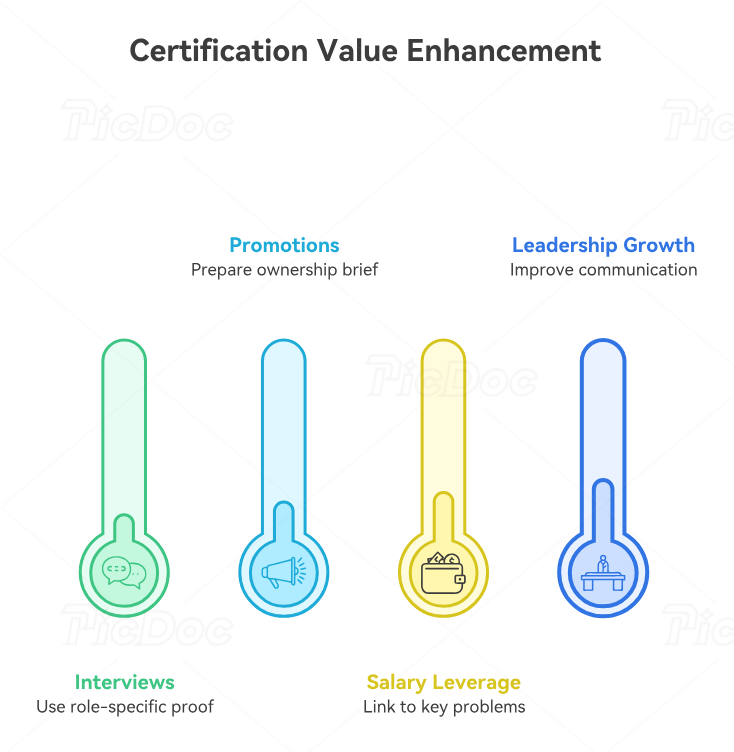
Certification should change how employers understand your value. For interviews, your resume needs role-specific proof near the top. Instead of listing “cybersecurity fundamentals,” show “created phishing triage workflow,” “mapped access-control risks,” “documented vulnerability remediation status,” or “built a sample incident timeline.” The credential opens the door, and the evidence keeps the conversation alive. Rhode Island candidates can sharpen that story through the salary growth analysis for CISSP, CEH, and Security+, the remote versus on-site cybersecurity salary report, the cybersecurity freelance and consulting income report, and the cybersecurity gender pay gap analysis.
For promotions, prepare a security ownership brief before asking for the title. Include the risks you already help reduce, the operational problems you understand, the certification path you completed, and the next responsibility you can own. Good promotion evidence includes improved alert handling, better audit documentation, clearer patch reporting, tighter access reviews, stronger endpoint coverage, and cleaner incident escalation. Build examples through the phishing attacks trends report, the 2025 data breach report, the state of endpoint security report, and the annual insider threats report.
For salary leverage, connect your certification to expensive problems. Hiring managers and leaders care about breach exposure, downtime, audit failures, ransomware readiness, cloud misconfigurations, identity abuse, data loss, and response delays. A candidate who can discuss those problems with evidence has a stronger compensation case than someone relying on certificate prestige alone. Rhode Island professionals can build industry-relevant arguments with the healthcare cybersecurity threat report, the financial sector cybersecurity incidents analysis, the emerging cloud threats analysis, and the critical infrastructure cybersecurity report.
For leadership-track growth, your communication style matters as much as your technical knowledge. Learn to summarize risk without panic, explain controls without jargon, and recommend decisions with trade-offs. A manager wants to know what needs action now, what can wait, what evidence supports the decision, and what the business impact could be. Advanced cybersecurity and management certification can support that shift when paired with practice. Study the future cybersecurity compliance predictions, the privacy regulations cybersecurity trends guide, the future cybersecurity audit practices report, and the next-generation cybersecurity standards predictions.
5. Mistakes Rhode Island Candidates Should Avoid Before Choosing a Program
The first mistake is choosing the flashiest certification before defining the target role. A beginner who wants a SOC role may need Security+, CC, logs, endpoint basics, and practical alert triage before chasing a senior credential. A working analyst who wants management may need CISM-style governance, risk communication, and program ownership language. A technical senior engineer may need architecture depth through a SecurityX-style path. Compare real career lanes through the ethical hacker roadmap, the junior penetration tester to senior consultant path, the cloud security engineer guide, and the cybersecurity compliance officer roadmap.
The second mistake is collecting credentials without building artifacts. Employers want to see how you think. A certificate says you studied; a project shows you can produce security work. Build a small portfolio with a risk register, incident timeline, vulnerability remediation plan, phishing investigation report, cloud security checklist, and executive summary. Each artifact should answer a painful employer question: Can this person investigate? Can they write? Can they prioritize? Can they explain risk? Use the vulnerability scanners guide, the DLP software directory, the email security solutions directory, and the network monitoring tools directory.
The third mistake is ignoring Rhode Island’s industry mix. A generic cybersecurity plan may miss the most useful local angles. Healthcare needs HIPAA-aware controls, identity discipline, vendor risk review, and ransomware readiness. Finance needs logging, access control, audit evidence, fraud-adjacent thinking, and incident response. Education needs phishing defense, account protection, endpoint visibility, and student-data protection. Public-sector employers need policy, frameworks, documentation, and continuity planning. Study the healthcare compliance cybersecurity report, the best cybersecurity firms for financial services, the cybersecurity solutions directory for small businesses, and the public-sector cybersecurity predictions.
The fourth mistake is treating management as a future concern. If you want advancement, begin practicing management behavior now. Write better summaries, improve documentation, mentor junior staff, track metrics, explain risk, and volunteer for structured security process improvements. A manager-level credential works best when your daily behavior already points toward leadership. Candidates can build that mindset through the IT manager to security leadership guide, the senior security analyst to VP guide, the cybersecurity product manager roadmap, and the cybersecurity content creator career guide.
6. FAQs About Advanced Cybersecurity & Management Certification in Rhode Island
-
The best choice depends on your current stage and target role. Entry-level candidates usually need baseline credentials and practical proof first. Analysts may benefit from CySA+, cloud security, incident response, GRC, or penetration testing depending on their desired lane. Management-track professionals should consider CISSP, CISM, SecurityX for senior technical paths, or advanced cybersecurity management training that supports leadership, risk, and program ownership. Compare the top cybersecurity certifications directory, the security manager certification pathway, the CISO roadmap, and the future certifications employers will value.
-
IT support can be a strong starting point because it gives you experience with users, systems, access issues, tickets, outages, and troubleshooting. The next step is to translate that background into security work: phishing triage, access reviews, endpoint hardening, vulnerability tracking, and incident escalation. Certification helps when it gives structure to that transition. Build your plan with the IT support to cybersecurity analyst roadmap, the network administrator to ethical hacker transition guide, the SOC analyst guide, and the security analyst to engineer pathway.
-
A management-focused certification can help before the title when you already perform work that touches risk, documentation, incident coordination, compliance, vendor management, or team support. The value comes from showing that you can think beyond tasks and help run a security process. Start building proof through better reporting, metrics, stakeholder communication, and ownership of small improvements. Use the cybersecurity manager roadmap, the security manager to director guide, the program manager career guide, and the director of information security pathway.
-
SOC, cloud security, GRC, incident response, healthcare cybersecurity, and financial-services security can all be strong depending on your background. Choose based on the problems you can prove you can solve. A healthcare IT worker may gain faster traction through compliance and ransomware readiness. A systems administrator may move naturally into cloud or endpoint security. A help desk professional may start with SOC and phishing response. Explore the healthcare cybersecurity threat report, the cloud security career guide, the incident responder pathway, and the financial sector incident analysis.
-
Tie the certification to evidence. Add a short “security projects” section with practical artifacts: vulnerability tracker, incident timeline, phishing report, cloud risk checklist, access-review sample, or security metrics dashboard. Use action language that shows investigation, documentation, prioritization, and risk reduction. Employers should see what you can do with the knowledge. Build project ideas from the vulnerability assessment guide, the endpoint security tools guide, the SIEM tools directory, and the penetration testing companies guide.
-
Move quickly from certificate completion to career proof. Update your resume, rewrite your LinkedIn headline around the target role, organize your project artifacts, prepare three interview stories, and ask for security ownership at work. A strong next step could be improving an incident process, creating an audit evidence tracker, helping with a vendor review, documenting a cloud-risk checklist, or building a small security awareness plan. Keep learning through the cybersecurity conferences directory, the cybersecurity research organizations directory, the cybersecurity podcasts directory, and the future cybersecurity skills guide.
