
The Ultimate Guide to Getting Advanced Cybersecurity & Management Certification in South Dakota: Everything You Need to Know in 2026-2027
South Dakota cybersecurity careers punish vague ambition. A certificate only helps when it proves you can protect real systems, explain risk to decision-makers, and move security work forward without waiting for a perfect enterprise team. In 2026-2027, the strongest candidates will connect advanced training with cybersecurity management career paths, SOC advancement, security audits, and NIST framework adoption.
The real advantage comes from choosing a certification that matches the job you want, the employer you are targeting, and the business risk you can reduce. That is where advanced cybersecurity and management certification becomes valuable for South Dakota professionals.
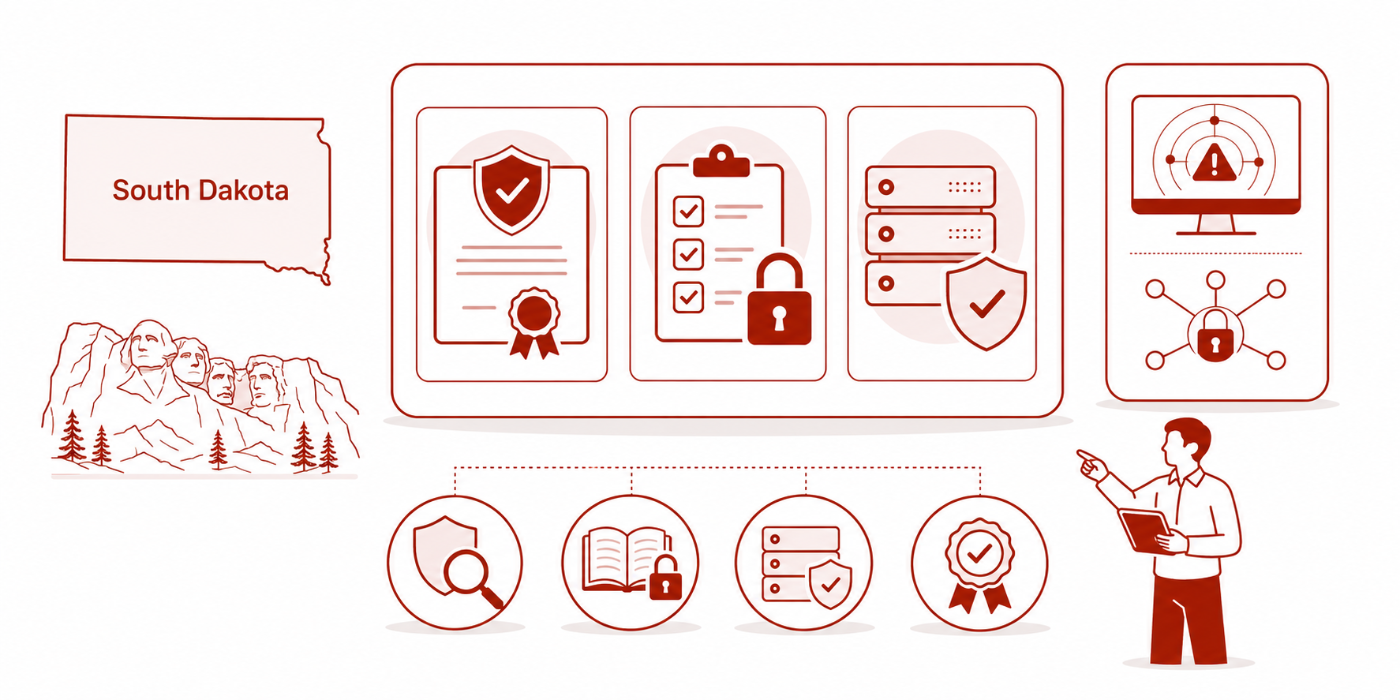
1. Why Advanced Cybersecurity & Management Certification Matters in South Dakota in 2026-2027
South Dakota’s cybersecurity market has a different pressure profile than larger coastal tech hubs. Many employers need people who can stretch across operations, compliance, vendor risk, cloud exposure, endpoint security, and leadership communication. That means a candidate who studies only tools can stall, while a candidate who connects endpoint security strategy, cloud security risk, cybersecurity compliance trends, vulnerability assessment, and incident response effectiveness can become useful faster.
The pain point is simple: many professionals earn a certificate, update LinkedIn, and still struggle to explain what business problem they solve. South Dakota hiring managers in healthcare, education, finance, government, energy, agriculture, and SMB environments often need practical security owners, not résumé collectors. If your certification path supports healthcare cybersecurity compliance, financial services cybersecurity, education-sector cybersecurity, small business cybersecurity, and government cybersecurity pathways, you can speak directly to the environments where security gaps become expensive.
Advanced certification also matters because the promotion conversation changes as you move up. Entry-level proof says you can follow security procedures. Mid-career proof says you can investigate, harden, report, and coordinate. Management proof says you can turn messy risk into prioritized action. A strong pathway may combine Security+ salary growth context, cybersecurity certification impact, security analyst advancement, CISO roadmap thinking, and director-level security leadership.
| Certification / Credential Area | Best South Dakota Career Stage | Most Likely Career Impact | Where It Creates Real Leverage |
|---|---|---|---|
| ISC2 Certified in Cybersecurity (CC) | Entry transition | Reduces beginner-risk perception | First cybersecurity role, internal IT-to-security move, interview credibility |
| CompTIA Security+ | Entry to early career | Builds baseline security employability | IT support, junior analyst, defense-adjacent roles, managed services |
| CompTIA CySA+ | Early SOC / analyst | Strengthens detection and triage credibility | SOC analyst work, threat monitoring, alert investigation, SIEM workflows |
| CompTIA PenTest+ | Early offensive track | Shows testing and assessment readiness | Internal assessments, red-team-adjacent work, vulnerability validation |
| CompTIA CASP+ | Mid-career practitioner | Signals advanced technical depth | Security engineering, architecture support, senior analyst progression |
| CISSP | Mid to senior career | Improves leadership and governance credibility | Security manager, architect, consultant, director pathway |
| CISM | Management track | Turns technical experience into risk leadership | Security manager, GRC lead, program owner, policy leadership |
| CISA | Audit / compliance track | Builds control-testing and assurance credibility | Internal audit, compliance analyst, vendor risk, regulated employers |
| CRISC | Risk leadership | Improves enterprise risk conversation | Risk registers, board reporting, control ownership, governance planning |
| GIAC Security Essentials (GSEC) | Technical foundation upgrade | Deepens hands-on security understanding | Analyst roles, system hardening, practical blue-team confidence |
| GIAC Certified Incident Handler (GCIH) | Incident response track | Supports response leadership | Containment, escalation, attack lifecycle analysis, playbook execution |
| GIAC Certified Forensic Analyst (GCFA) | Advanced investigation | Strengthens forensic response credibility | Breach analysis, endpoint artifacts, evidence handling, IR consulting |
| OSCP | Offensive security | Proves practical exploitation skill | Penetration testing, red-team work, offensive security consulting |
| CEH | Early ethical hacking | Creates recognizable offensive-security signal | Security testing, entry pentesting interviews, attack-method awareness |
| CCSP | Cloud security | Signals cloud governance and control readiness | SaaS risk, cloud architecture, cloud compliance, hybrid environments |
| AWS Security Specialty | Cloud practitioner | Validates platform-specific security skill | AWS IAM, logging, network controls, cloud threat detection |
| Microsoft SC-100 / SC-200 Path | Microsoft security ecosystem | Supports security operations and architecture roles | Defender, Sentinel, identity, enterprise monitoring, Microsoft-heavy employers |
| Azure Security Engineer | Cloud and identity track | Improves cloud-control implementation proof | Azure environments, Entra ID, conditional access, posture management |
| Google Professional Cloud Security Engineer | Cloud specialization | Shows cloud-native security competence | GCP controls, IAM, monitoring, data protection, cloud-native design |
| ISO 27001 Lead Implementer | Governance / compliance | Builds information security management credibility | Policy design, audits, risk treatment, management system ownership |
| ISO 27001 Lead Auditor | Audit / assurance | Strengthens formal audit readiness | External audits, internal audits, vendor assurance, compliance evidence |
| Privacy / Data Protection Credential | Compliance expansion | Adds privacy-risk fluency | Data mapping, vendor reviews, privacy controls, regulated records |
| Project Management Certification | Security leadership | Improves delivery credibility | Tool rollout, awareness programs, remediation programs, cross-team execution |
| Cybersecurity Leadership Certificate | Senior specialist to manager | Bridges technical work and people leadership | Budget requests, staffing plans, executive communication, roadmap ownership |
| GRC-Focused Certificate | Risk and compliance track | Turns control knowledge into career leverage | Audit readiness, policy mapping, control evidence, risk reporting |
| Advanced Cybersecurity & Management Certification | Mid-career to leadership | Combines technical credibility with management readiness | Promotion cases, manager interviews, cross-functional security ownership |
2. Which Certification Path Fits Your South Dakota Career Stage?
The best certification for South Dakota depends on where your credibility gap sits. If you are moving from IT support, you need proof that you understand security fundamentals, alert logic, access control, and risk language. Pairing IT-to-cybersecurity transition guidance, SOC analyst career steps, access control models, SIEM solution knowledge, and free cybersecurity courses gives you a cleaner entry story than listing acronyms.
If you already work in security, your problem changes. Recruiters and managers need to see whether you can specialize, lead, or own a measurable risk area. A blue-team candidate may build around CySA+ style detection skills, threat intelligence analyst pathways, incident responder careers, endpoint detection and response tools, and phishing prevention strategy. An offensive candidate needs a portfolio aligned with ethical hacking roadmaps, OSCP preparation, penetration testing tools, vulnerability scanner fluency, and red-team specialist growth.
For management, the credential must support judgment. You need to explain what gets fixed first, which controls deserve funding, how security work reduces operational drag, and how leadership should measure progress. That makes cybersecurity manager certification pathways, CISO progression, security manager to director roadmaps, cybersecurity program manager guidance, and VP of cybersecurity growth especially useful for South Dakota professionals trying to move from “strong employee” to “security owner.”
The biggest mistake is selecting a certification because it sounds powerful. Choose the credential that removes the biggest objection against you. If employers wonder whether you can handle real incidents, pursue incident response proof. If leaders wonder whether you can manage risk, pursue management and governance proof. If hiring teams wonder whether you can operate in cloud-heavy environments, align with future cloud security trends, cloud security tools, AI-driven cybersecurity tools, zero trust security predictions, and future cybersecurity skills.
3. How to Build a Certification Roadmap That Actually Produces Career Movement
A strong 2026-2027 South Dakota roadmap starts with the target role, then works backward. For a SOC analyst track, map the role to log analysis, escalation, detection logic, endpoint telemetry, and reporting. For a compliance track, map the role to control testing, policy evidence, vendor reviews, audit readiness, and privacy risk. For a leadership track, map the role to risk prioritization, budget justification, staffing, governance, and executive reporting. This is where NICE-aligned career thinking, cybersecurity job market trends, workforce shortage analysis, remote cybersecurity careers, and salary progression benchmarks help you make decisions.
Your roadmap should contain three layers: certification, project proof, and language proof. Certification proves structured learning. Project proof shows you can do the work. Language proof shows you can explain it to humans who control budgets and hiring decisions. A South Dakota candidate can build project proof through a home lab, cloud security assessment, mock incident report, tabletop exercise, policy gap review, vulnerability scan write-up, SIEM detection rule, or vendor-risk checklist. That type of evidence becomes stronger when tied to security audit best practices, DLP software reviews, network monitoring tools, application security tools, and privileged access management solutions.
Use a 90-day roadmap if you need momentum. In the first 30 days, pick the target role, audit your skill gaps, choose one certification, and build a study calendar. In days 31-60, complete labs, produce two portfolio artifacts, and rewrite your résumé around outcomes. In days 61-90, apply selectively, request informational interviews, and prepare stories that show how you reduced risk. This structure works better than vague studying because it connects cybersecurity bootcamps, training provider directories, cybersecurity books, cybersecurity podcasts, and YouTube learning channels into one execution plan.
The best roadmap also respects South Dakota’s employer mix. A hospital may value HIPAA-aware risk thinking. A school district may need identity controls and phishing resilience. A bank or credit union may prioritize audit evidence, vendor risk, and incident reporting. A manufacturer may care about uptime, OT exposure, and endpoint discipline. A state or local government employer may need policy alignment, procurement awareness, and public-sector security judgment. Your roadmap becomes more persuasive when it connects healthcare cyber threats, education cyber evolution, financial-sector incident analysis, manufacturing security trends, and government cyber predictions.
4. How to Choose Training, Projects, and Portfolio Evidence Employers Can Trust
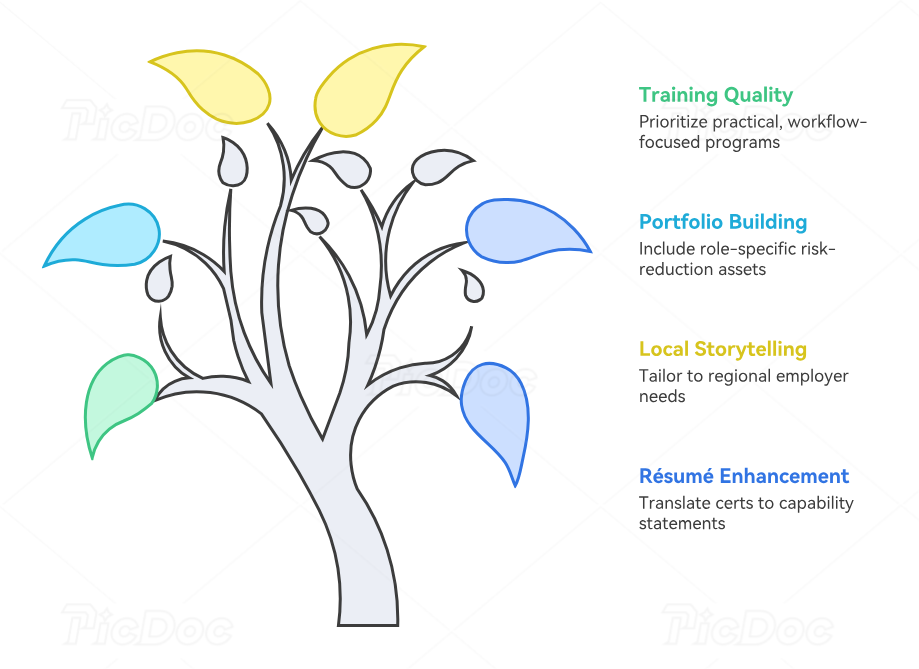
Training quality matters more when your local market has fewer roles to waste. A weak course gives you videos and a certificate. A useful program gives you labs, scenarios, feedback, role mapping, and artifacts you can discuss in interviews. Before you enroll, check whether the provider teaches real workflows: ticket triage, phishing investigation, vulnerability prioritization, incident reporting, policy mapping, access reviews, cloud misconfiguration analysis, and executive summaries. Strong training should connect cybersecurity academies, security awareness platforms, cybersecurity research organizations, cybersecurity conferences, and industry news sites to active skill growth.
Your portfolio should answer one question: “Can this person reduce risk without constant hand-holding?” For an analyst, include a sample alert investigation with timeline, evidence, hypothesis, escalation logic, and recommended containment. For a compliance candidate, include a control-mapping sheet that connects policy, evidence, owner, and remediation. For a manager, include a 12-month security roadmap with budget categories, risk themes, maturity targets, and communication cadence. These assets support security analyst career growth, cybersecurity compliance analyst pathways, cybersecurity auditor careers, security leadership advancement, and chief security architect roadmaps.
South Dakota candidates should also practice employer-specific storytelling. A Sioux Falls finance employer may respond to audit readiness and third-party risk. A Rapid City healthcare employer may care about ransomware resilience and patient data access. A public-sector employer may value policy clarity, procurement discipline, and incident coordination. A small business may want practical controls that reduce exposure without enterprise-level spending. Use your certification to frame those conversations through ransomware threat analysis, data breach mitigation, insider threat prevention, SMB cybersecurity legislation impact, and nonprofit cybersecurity providers.
A polished résumé should translate certification into capability. Replace “completed advanced cybersecurity training” with stronger proof: “built incident-response playbook for phishing escalation,” “mapped controls to NIST CSF categories,” “prioritized vulnerabilities using exploitability and business impact,” or “created executive dashboard for top security risks.” These statements feel stronger because they show work, judgment, and business relevance. They also connect naturally to NIST, ISO, and COBIT frameworks, GDPR cybersecurity compliance, privacy regulation trends, future audit practices, and cybersecurity standards predictions.
5. What Certification Can Do for Salary, Promotion, and Long-Term Mobility
Certification can improve salary leverage when it changes how employers perceive your risk, readiness, and scope. A credential alone rarely forces a raise. A credential combined with measurable responsibilities, sharper résumé language, and proof of business impact gives you a stronger case. In South Dakota, that may mean positioning yourself as the person who can reduce ransomware exposure, improve audit readiness, lead cloud security reviews, tighten endpoint controls, or manage a security roadmap. That case becomes clearer when you study global cybersecurity salary benchmarks, remote versus on-site salaries, certification salary growth, freelance cybersecurity income, and career advancement survey insights.
Promotion usually requires proof beyond technical work. You need to show that people trust your decisions, that you can prioritize under pressure, and that your work reduces organizational uncertainty. A future manager should be able to discuss security metrics, tool gaps, staffing needs, compliance timelines, vendor risk, and executive communication. That is why advanced cybersecurity and management certification can support movement into SOC manager roles, penetration testing management, IT manager to security leadership, senior analyst to VP of security, and cybersecurity policy director paths.
Long-term mobility comes from stacking transferable proof. A South Dakota professional who can operate across frameworks, tools, incidents, compliance, and leadership has options beyond one local employer. You can move into remote roles, consulting, training, curriculum, product management, privacy, or architecture if your evidence supports the shift. That makes certification more valuable when paired with cybersecurity instructor pathways, curriculum developer careers, cybersecurity content creator careers, cybersecurity product manager roadmaps, and chief privacy officer careers.
The best outcome is controlled optionality. You want enough technical proof to stay credible, enough management proof to earn trust, and enough industry context to choose roles intelligently. In 2026-2027, cyber risk will keep moving through AI abuse, cloud complexity, ransomware adaptation, deepfakes, endpoint exposure, and regulatory pressure. A strong certification plan keeps you current through AI-powered cyberattack trends, deepfake cybersecurity threats, next-gen SIEM trends, endpoint security advances, and cybersecurity threats by 2030.
6. FAQs About Advanced Cybersecurity & Management Certification in South Dakota
-
The best certification depends on the role you want next. For management, CISSP, CISM, CRISC, and advanced cybersecurity management programs carry strong relevance because they support governance, risk, controls, and leadership credibility. For analyst growth, CySA+, GCIH, GCFA, and platform-specific security credentials can be stronger. For offensive security, OSCP, PenTest+, and CEH-style pathways can help when paired with real testing evidence. South Dakota candidates should choose based on target roles, then support the choice with cybersecurity certification directories, ethical hacking paths, incident responder pathways, and security manager guidance.
.
-
Yes, especially if your current IT experience involves systems, networks, cloud tools, identity, help desk escalation, or infrastructure support. The certification becomes valuable when it helps you translate IT experience into security outcomes: fewer risky permissions, stronger endpoint hygiene, better incident escalation, cleaner vulnerability tracking, and clearer policy enforcement. The move becomes stronger when you combine network administrator to ethical hacker guidance, IT support to cyber analyst steps, cloud security engineering, and IoT security specialization.
-
A certification can help, especially when it is paired with labs, projects, and résumé language that proves capability. Employers worry about hiring someone who knows definitions but cannot investigate, document, prioritize, or communicate. You can reduce that fear with a portfolio showing alerts, risk findings, control mapping, incident reports, or cloud security reviews. This is especially useful when combined with free cybersecurity learning resources, SOC analyst guides, vulnerability assessment techniques, and security awareness training platforms.
-
Start with industries where security failure has visible operational, legal, or trust consequences: healthcare, finance, education, government, energy, manufacturing, retail, and SMB services. Each sector has different pain points, so tailor your résumé and interview stories. Healthcare needs privacy and ransomware resilience. Finance needs audit readiness and vendor risk. Education needs identity, phishing, and endpoint discipline. Government needs policy alignment and incident coordination. Manufacturing and energy need uptime-aware security. Study healthcare cybersecurity firms, financial services security firms, energy and utilities predictions, and manufacturing cybersecurity solutions.
-
A realistic timeline is 90 to 180 days if you study consistently, build proof artifacts, and apply strategically. The certificate may be earned faster, but career movement requires positioning. Use the first month to choose the role and begin study, the second month to build labs and documentation, the third month to revise résumé materials and apply selectively, then keep improving interview stories and project depth. Career results accelerate when your plan connects job market trends, salary progression, specialized role demand, and automation workforce trends.
-
Write down the exact role you want next, then list the three objections an employer might have about you. Maybe you lack management proof. Maybe your cloud skills look thin. Maybe your résumé shows tools without business impact. Maybe you have IT experience but weak incident-response evidence. Choose the certification that attacks the biggest objection first. Then build two portfolio artifacts before you finish the course. This approach protects your time, money, and confidence while helping you connect career roadmaps, future cybersecurity skills, cybersecurity compliance roadmaps, and advanced leadership pathways
