
The Ultimate Guide to Getting Advanced Cybersecurity & Management Certification in South Africa: Everything You Need to Know in 2026–2027
South African cybersecurity professionals face a difficult credentialing decision: employers want technical depth, business judgment, regulatory awareness, and evidence of practical delivery, while certification providers market dozens of overlapping options. The right pathway depends on whether you are moving from IT support into cybersecurity, strengthening an existing cybersecurity analyst career, entering governance, risk, and compliance, or preparing for security leadership.
1. Why Cybersecurity and Management Certification Matters in South Africa in 2026–2027
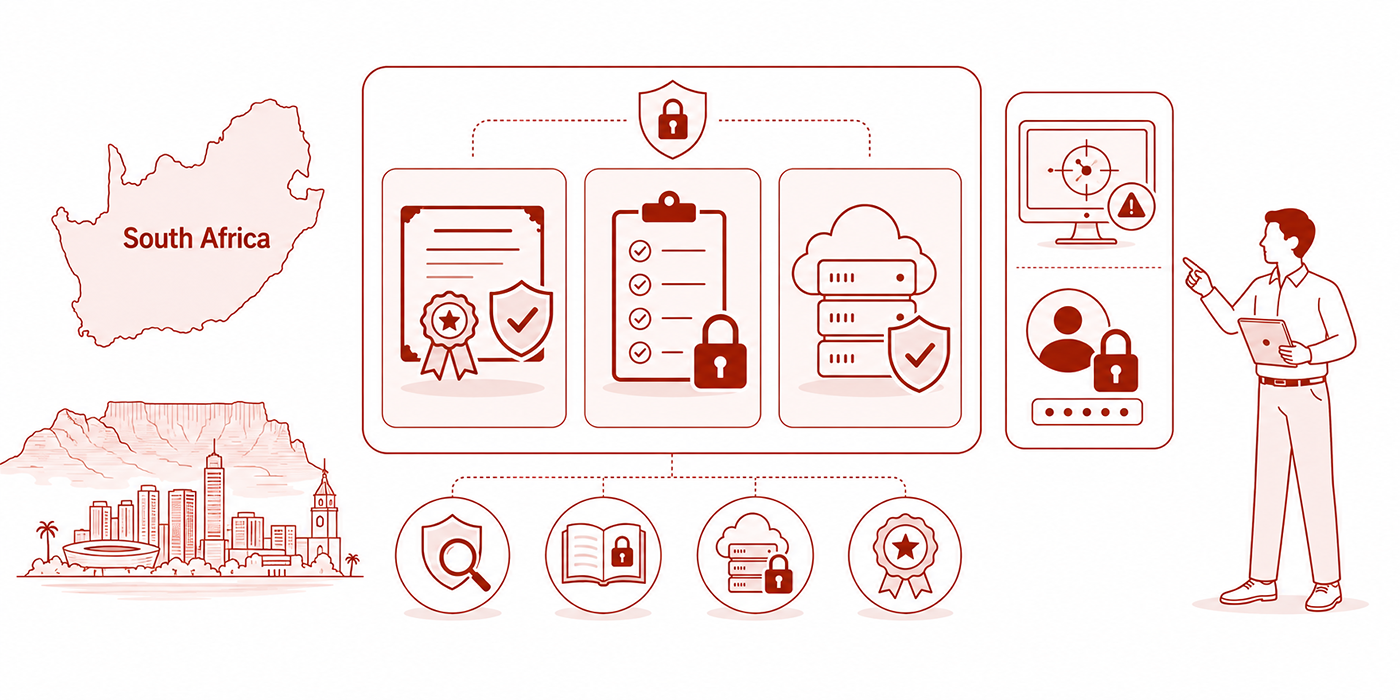
South Africa’s cybersecurity environment increasingly demands professionals who can connect technical controls to legal duties, operational resilience, financial risk, and executive accountability. The Protection of Personal Information Act applies to personal information processed by public and private bodies, while the Cybercrimes Act establishes cyber-related offences, investigative powers, reporting obligations, and capacity-building provisions. Since 1 April 2025, security-compromise notifications under POPIA must be submitted through the Information Regulator’s eServices portal. The Regulator has also clarified that POPIA does not establish a risk threshold that allows organisations to ignore supposedly minor compromises.
These obligations create practical demand for people who understand cybersecurity incident response, insider-threat prevention, financial-sector security incidents, and critical-infrastructure risk. A credential becomes commercially useful when it helps you demonstrate competence in these employer problems rather than merely adding another acronym to your CV.
Professional certification and an NQF qualification serve different purposes
A globally recognised professional certification usually validates knowledge or experience against a certification body’s examination framework. Examples include CISSP, CISM, Security+, CRISC, CCSP, OSCP+, and AWS Certified Security – Specialty. A South African qualification registered on the National Qualifications Framework follows national quality-assurance and registration structures overseen by SAQA and the relevant quality council.
South Africa’s NQF contains ten levels, and SAQA maintains information on registered qualifications through its national systems. Registered cybersecurity pathways include an Occupational Certificate for Cybersecurity Analysts and advanced occupational pathways for Cybersecurity Practitioners. A global certification should therefore be assessed separately from an NQF qualification; each can strengthen a career through a different form of recognition.
For example, an NQF-aligned programme may support structured education, articulation, learnership opportunities, or formal qualification requirements. A professional credential may provide stronger portability when pursuing cloud-security opportunities, international consulting, cybersecurity freelance work, specialist engineering, or cybersecurity research roles.
The highest-value credential depends on your intended work
A junior analyst needs evidence of operating-system knowledge, networking fundamentals, log analysis, alert triage, and basic incident handling. An aspiring penetration tester needs lab-based proof across enumeration, exploitation, privilege escalation, documentation, and remediation. A security manager needs governance, budgeting, risk treatment, policy ownership, stakeholder communication, and programme oversight.
That distinction explains why a candidate pursuing a threat-intelligence analyst career should build a different certification stack from someone following a cybersecurity policy career, a penetration-testing management pathway, or a chief security architect roadmap.
The following matrix helps you compare credentials according to their likely career function rather than brand popularity.
Cybersecurity Certifications and Career Impact: 30-Credential South Africa Advancement Matrix
| Certification or Qualification | Best Career Stage | Primary Capability Signal | Where It Creates Career Leverage |
|---|---|---|---|
| ISC2 Certified in Cybersecurity | Entry level | Security concepts and foundational terminology | Career changes, internships, junior-security applications |
| CompTIA Security+ | Entry level | Broad defensive-security foundation | Junior analyst, support-security and government-contractor pathways |
| Microsoft SC-900 | Entry level | Security, compliance and identity fundamentals | Microsoft-focused workplaces and identity-support roles |
| Occupational Certificate: Cybersecurity Analyst | Entry to early career | Structured occupational preparation | South African NQF-aligned learning and analyst development |
| Advanced Occupational Certificate: Cybersecurity Practitioner | Early career | Applied practitioner competence | Structured progression toward practitioner and engineering work |
| ISC2 SSCP | Early career | Security administration and operations | Security administrator, analyst and infrastructure-security roles |
| CompTIA CySA+ | Early to mid-career | Detection, analysis and vulnerability response | SOC, threat monitoring and blue-team progression |
| Microsoft Security Operations Analyst Associate | Early to mid-career | Threat hunting and Microsoft security operations | Sentinel, Defender and Microsoft SOC environments |
| GIAC Security Essentials | Early to mid-career | Applied security knowledge | Security operations, engineering and technical consulting |
| GIAC Certified Incident Handler | Mid-career | Incident investigation and containment | Incident-response teams, DFIR support and SOC escalation |
| CompTIA PenTest+ | Early to mid-career | Penetration-testing methodology | Vulnerability assessment and junior offensive-security work |
| eJPT | Entry to early offensive career | Practical junior penetration testing | Portfolio development and first offensive-security interviews |
| OSCP+ | Mid-career technical | Hands-on penetration testing | Penetration tester, offensive engineer and red-team pathways |
| Certified Ethical Hacker | Early to mid-career | Broad ethical-hacking knowledge | Employers requesting named ethical-hacking credentials |
| GIAC Penetration Tester | Mid-career technical | Advanced penetration-testing capability | Red-team, assessment and specialist consulting work |
| CISSP | Experienced professional | Broad security leadership and architecture knowledge | Senior engineering, consulting, architecture and management |
| CISM | Experienced manager | Security governance and programme management | Security manager, programme head and leadership progression |
| CRISC | Mid to senior career | Technology risk and control management | Enterprise risk, advisory and control-assurance functions |
| ISC2 CGRC | Early to mid-career | Governance, authorisation and risk frameworks | GRC analyst, control-assessment and compliance roles |
| CISA | Mid-career | Information-systems auditing | Internal audit, external assurance and technology controls |
| ISO/IEC 27001 Lead Implementer | Mid-career | Information-security management system implementation | Consulting, compliance programmes and ISMS ownership |
| ISO/IEC 27001 Lead Auditor | Mid to senior career | ISMS audit and conformity assessment | Audit, certification-readiness and regulatory assurance |
| CCSP | Experienced cloud professional | Vendor-neutral cloud-security architecture | Cloud governance, architecture and security leadership |
| AWS Certified Security – Specialty | Mid to senior technical career | AWS workload and service security | AWS engineering, DevSecOps and cloud-security consulting |
| Microsoft Cybersecurity Architect Expert | Senior technical career | Enterprise security architecture | Microsoft architecture, Zero Trust and multicloud strategy |
| CompTIA SecurityX | Advanced practitioner | Enterprise security engineering | Senior practitioner, architecture and technical leadership |
| COBIT Foundation | Management transition | Enterprise IT governance concepts | Governance, assurance and cyber-programme management |
| Project Management Professional | Experienced project leader | Project planning and delivery governance | Cybersecurity transformation and implementation programmes |
| PRINCE2 Practitioner | Project and programme career | Controlled project-delivery methodology | Public-sector, consulting and structured change programmes |
| CGEIT | Senior leadership | Enterprise information-technology governance | Executive governance, strategy and board-facing responsibility |
2. How to Select the Right Cybersecurity Certification Path
Start with the job description you want to qualify for
Collect 20 realistic job advertisements from employers in Johannesburg, Cape Town, Pretoria, Durban, or organisations hiring remotely across South Africa. Separate the requirements into five columns: recurring technical tools, security functions, certifications, experience expectations, and business responsibilities.
A candidate targeting a SOC position may repeatedly find SIEM investigation, endpoint detection, alert triage, Microsoft Sentinel, KQL, threat intelligence, and incident documentation. That evidence supports a pathway involving CySA+, SC-200, SSCP, or GCIH alongside an incident-responder career plan, threat-intelligence roadmap, senior analyst progression plan, and cybersecurity engineering pathway.
A candidate targeting governance may find POPIA, ISO/IEC 27001, audit evidence, policy development, third-party risk, control testing, and executive reporting. That pattern supports CISA, CRISC, CGRC, CISM, or an ISO/IEC 27001 credential combined with a cybersecurity regulatory specialist roadmap, cybersecurity auditor pathway, privacy analyst career guide, and risk-management specialist plan.
Check experience eligibility before paying
Several advanced credentials allow candidates to take the examination before completing the required professional experience, although full certification is awarded only after the experience and application requirements are satisfied. ISC2 currently lists no experience requirement for CC, one year for SSCP, two years for CGRC, and five or more years for CISSP. CISSP experience must span at least two of its eight domains. CCSP ordinarily requires five years of IT experience, including specified security and cloud-domain experience.
ISACA requires relevant verified experience for full CISM and CRISC certification. CISM currently requires five years of information-security management experience across the applicable job-practice areas, while CRISC requires at least three years of relevant information-systems audit, control, or security experience.
These requirements make sequencing important. An early-career candidate could pursue analyst-level development, collect practical experience, move toward cybersecurity engineering, and then pursue CISSP or CISM when the credential aligns with actual responsibilities. This sequence creates stronger credibility than an exam pass unsupported by workplace examples.
Evaluate the credential against four filters
Employer recognition: Search the credential in vacancies for your target role, seniority, sector, and location. Recognition can vary between banks, telecommunications firms, consultancies, managed-security providers, government contractors, healthcare organisations, and multinational technology companies. Candidates entering regulated sectors should study healthcare cybersecurity threats, financial-sector incidents, critical-infrastructure exposure, and insider-risk controls.
Skills correspondence: Compare the exam outline with the daily activities of the job. A multiple-choice governance examination offers limited preparation for an offensive role requiring timed exploitation. A practical penetration-testing credential offers limited preparation for board reporting, policy governance, or regulatory interpretation. Build toward red-team specialisation, penetration-testing management, security architecture, or security programme management according to the work you intend to perform.
Total ownership cost: Calculate the examination, training, laboratory access, books, currency conversion, taxes, possible retake, annual maintenance fee, continuing education, and renewal requirements. A comparatively inexpensive exam may become costly when supported by unnecessary training packages. An advanced credential with strong employer relevance may justify a larger budget when it supports a defined promotion or contract opportunity.
Evidence requirement: Decide what portfolio item will accompany the certification. Suitable examples include a sanitised incident report, cloud threat model, ISO/IEC 27001 gap assessment, vulnerability-management dashboard, detection rule, risk register, access-control review, tabletop exercise, or penetration-test report. Candidates pursuing cybersecurity consulting, security content creation, cybersecurity education, or certification training especially need visible proof that they can explain and apply their knowledge.
3. A Step-by-Step Plan for Earning Your Certification
Step 1: Choose one destination role
Write a one-sentence target such as: “Within 12 months, I want to qualify for an entry-level SOC analyst role,” or “Within 18 months, I want to move from IT audit into cybersecurity assurance.” Precision prevents random credential accumulation.
Use a focused roadmap for becoming a cybersecurity analyst, incident responder, GRC specialist, or offensive-security engineer. Your destination role determines the laboratory environment, certification, portfolio, and networking strategy.
Step 2: Complete a baseline assessment
Score yourself from zero to five across networking, Windows, Linux, cloud services, identity, scripting, security operations, risk, privacy, documentation, and stakeholder communication. Any score below three in a prerequisite area becomes a study priority.
Someone following a network-administrator-to-ethical-hacker transition may already possess strong networking knowledge and need more web exploitation, Active Directory attack paths, and reporting practice. Someone following an IT-management-to-security-leadership pathway may understand budgets and stakeholders while needing deeper security architecture, risk quantification, and incident-governance knowledge.
Step 3: Verify the current exam version
Certification programmes change frequently. In 2026, this check is especially important:
The ISC2 CC examination changes to a new outline from 1 September 2026.
Microsoft’s Azure Security Engineer Associate credential and AZ-500 examination retire on 31 August 2026.
Microsoft’s SC-100 Cybersecurity Architect content received a July 2026 update.
ISACA’s revised CISM examination content takes effect on 3 November 2026.
Candidates should download the official outline immediately before purchasing study materials or scheduling an examination.
This verification prevents a painful scenario: spending months memorising retired objectives while employers have already moved toward updated cloud, AI, identity, and governance expectations. Professionals entering AI-security careers, cybersecurity automation, digital identity management, or cloud-security work should pay particular attention to fast-changing blueprints.
Step 4: Build a 12-week preparation cycle
Use four phases:
Weeks 1–3: Coverage. Read the complete outline and establish conceptual understanding.
Weeks 4–6: Application. Complete labs, configurations, investigations, or governance exercises.
Weeks 7–9: Diagnosis. Use practice questions to identify weak domains and reasoning errors.
Weeks 10–12: Simulation. Complete timed examinations, revise weak areas, and prepare for exam-day logistics.
Allocate more time to weak domains instead of dividing study hours equally. A candidate scoring 85% in identity management and 52% in network security gains little from another week of identity revision. Candidates pursuing threat-intelligence work, vulnerability research, blockchain security, or quantum-security analysis should also reserve time for specialist foundations outside the examination blueprint.
Step 5: Create an evidence portfolio during preparation
Every major study domain should produce one employer-facing artefact. A SOC candidate might create an alert-triage decision tree, three detection rules, an incident timeline, and an executive incident summary. A GRC candidate might create a POPIA-aligned data-flow map, control matrix, risk register, and supplier-security questionnaire. A cloud candidate might create an identity architecture, logging strategy, shared-responsibility assessment, and threat model.
This approach strengthens applications for cybersecurity data-science positions, security product management, policy analyst work, and cybersecurity consulting. The hiring manager receives evidence of judgment, communication, and execution alongside the credential.
Step 6: Budget for the complete certification lifecycle
Use the following calculation:
Total credential budget = exam fee + training + labs + study materials + currency costs + tax + retake reserve + maintenance + continuing education
Keep a retake reserve even when you expect to pass. Register with a personal email address, retain invoices, confirm identification requirements, test online-proctoring equipment early, and check the certification provider’s rescheduling policy. AWS, for example, provides examinations globally through Pearson VUE and offers testing-centre or online options for supported exams.
Employer sponsorship can reduce the financial burden. Present the request as a business case tied to incident-response improvement, cloud-risk reduction, regulatory readiness, or cybersecurity programme delivery.
Step 7: Plan the post-exam conversion before sitting the exam
Schedule four actions for the first seven days after passing:
Add the credential and verification link to your CV and professional profiles.
Publish or refine two portfolio projects linked to the credential.
Contact recruiters or hiring managers working in your target specialisation.
Request responsibilities at work that allow you to apply the new capability.
A credential loses momentum when it remains disconnected from work. Link it immediately to an analyst-to-engineer progression plan, ethical-hacker-to-consultant pathway, senior-analyst-to-VP roadmap, or specialist-to-CISO strategy.
Quick Poll: What Is Blocking Your Cybersecurity Career Progress?
Choose the barrier causing the greatest frustration. Your result will suggest the certification strategy that addresses it most directly.
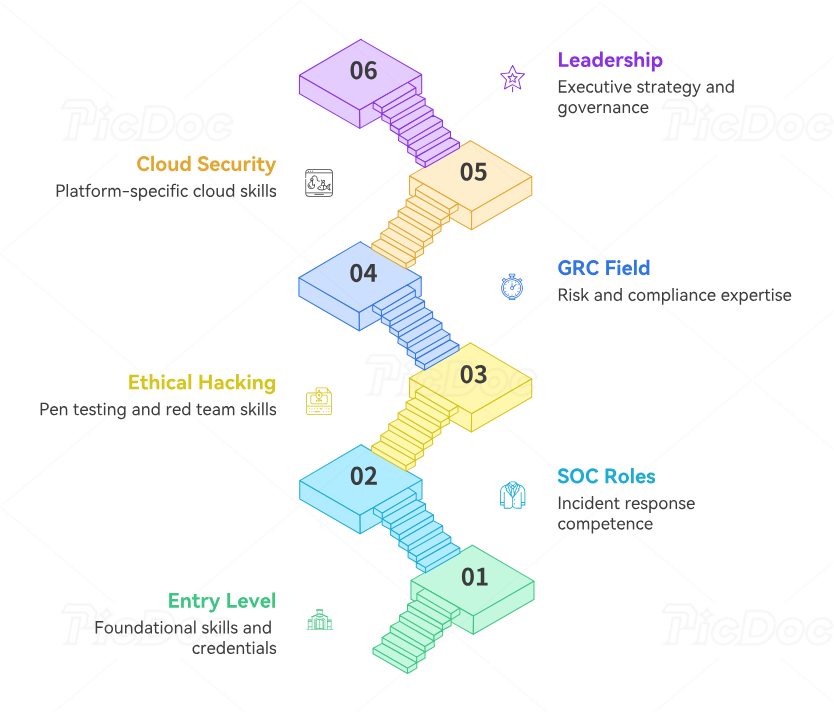
4. The Best Certification Stacks for Major Career Goals
Entry-level cybersecurity analyst
A strong entry stack combines foundational knowledge, operating-system practice, networking, and security operations. A suitable sequence is ISC2 CC or Security+, followed by hands-on SIEM work and then SSCP, CySA+, or Microsoft Security Operations Analyst Associate.
The credential should sit beside a home laboratory containing Windows and Linux hosts, centralised logging, basic endpoint telemetry, vulnerability scanning, and simulated incident investigations. Follow a structured IT-support transition plan, study the analyst-to-engineer pathway, understand incident-response effectiveness, and build toward a senior analyst career.
A candidate who already holds a computing diploma or degree may skip an introductory certificate when the target vacancies place greater value on CySA+, SSCP, SC-200, or equivalent operational evidence. The decision should reflect demonstrated gaps rather than a desire to collect every foundational badge.
SOC analyst and incident responder
The SOC pathway requires deeper competence in event interpretation, threat hunting, escalation, containment, evidence preservation, and post-incident improvement. Useful credentials include CySA+, SC-200, GCIH, and eventually CISSP for broader progression.
Build investigations around identity compromise, phishing, ransomware, cloud-account abuse, malicious PowerShell, privilege escalation, unusual outbound traffic, and insider activity. Each case should include a timeline, affected assets, evidence sources, containment decisions, recovery steps, and lessons learned. This portfolio connects naturally to an incident-responder career path, threat-intelligence analyst development, insider-threat prevention, and critical-infrastructure defence.
Ethical hacking, penetration testing, and red teaming
Begin with networking, Linux, web applications, scripting, and Active Directory. PenTest+ or eJPT can structure early learning, while OSCP+ or specialised GIAC credentials can provide stronger advanced evidence. The strongest portfolio includes reconnaissance notes, exploit reasoning, privilege-escalation paths, attack-chain diagrams, remediation guidance, and professionally written reports.
A legal lab environment is essential. Keep written authorisation for every real assessment and maintain clear rules of engagement. Use the OSCP penetration-tester guide, red-team specialist roadmap, network-administrator transition plan, and vulnerability-research career guide to select progressively harder capabilities.
Professionals who eventually want management responsibility should add risk, scoping, project delivery, stakeholder communication, and commercial estimation. Those skills support movement toward penetration-testing management, cybersecurity consulting, or the broader ethical-hacker-to-security-officer pathway.
Governance, risk, compliance, audit, and privacy
A practical GRC stack could begin with ISO/IEC 27001 foundations or implementation training, followed by CGRC, CISA, CRISC, or CISM according to the target responsibility. South African candidates should understand POPIA security safeguards, compromise reporting, information-officer responsibilities, third-party processing risk, evidence management, and policy governance.
Create a portfolio containing a risk register, statement of applicability, control-testing workbook, supplier assessment, security policy, breach-response workflow, and executive risk report. These artefacts support GRC specialist roles, cybersecurity audit careers, privacy analyst positions, and regulatory specialist progression.
Candidates should also practise translating technical findings into business exposure. “MFA is missing” describes a control gap. “Compromised credentials could provide unauthorised access to payroll and employee records, creating operational, fraud, privacy, and notification consequences” gives decision-makers a risk narrative they can act upon.
Cloud-security engineer and architect
Cloud credentials create the greatest value when they match the platforms used by target employers. AWS Certified Security – Specialty supports AWS-focused work, Microsoft Security Operations Analyst Associate supports Microsoft detection environments, and CCSP provides broader vendor-neutral cloud-security coverage. AWS positions its Security – Specialty credential for experienced professionals securing AWS workloads, with its current exam documentation describing a target audience possessing several years of relevant cloud-security experience.
Build practical evidence across identity, least privilege, network segmentation, encryption, secrets management, logging, posture management, workload protection, incident response, and infrastructure as code. Connect this work to cloud-threat analysis, cybersecurity automation engineering, digital identity management, and chief security architecture.
Cybersecurity management and executive leadership
CISM, CISSP, CRISC, CGEIT, COBIT, PMP, and architecture credentials can support leadership progression when paired with relevant experience. Senior employers expect evidence of strategy development, budget ownership, programme governance, risk acceptance, talent development, supplier oversight, crisis communication, metrics, and board reporting.
A manager seeking promotion should prepare a leadership portfolio: a three-year security roadmap, investment case, operating model, incident-governance structure, risk dashboard, workforce plan, and board presentation. Those artefacts strengthen movement toward director of information security, VP of cybersecurity, cybersecurity policy director, or chief security officer.
5. How to Turn Certification Into Employment, Promotion, and Higher-Value Work
Rewrite your CV around outcomes
Place the certification near the top when it directly matches the vacancy. Beneath each job, describe measurable security outcomes rather than listing generic responsibilities.
Weak wording:
Responsible for cybersecurity monitoring and incident response.
Stronger wording:
Investigated endpoint and identity alerts, improved escalation documentation, and reduced unresolved high-priority cases through a structured triage workflow.
A candidate pursuing security analyst advancement, incident-response roles, cybersecurity risk management, or security architecture should ensure that every bullet demonstrates relevant capability.
Translate the credential into interview evidence
Prepare six stories:
A technical problem you diagnosed.
A risk you identified and prioritised.
An incident or simulated incident you handled.
A control you improved.
A stakeholder disagreement you resolved.
A failure that changed your approach.
Each answer should explain the context, your analysis, the action taken, the outcome, and what you learned. Professionals moving toward cybersecurity programme management, security product management, chief privacy officer work, or security leadership should emphasise decisions, trade-offs, and organisational outcomes.
Use a 90-day conversion plan
Days 1–30: Update your CV, professional profile, portfolio, and credential-verification links. Identify 30 target employers and map their most common requirements.
Days 31–60: Submit carefully matched applications, contact specialist recruiters, attend relevant professional events, and request informational conversations with people performing the role.
Days 61–90: Review rejection patterns, strengthen weak portfolio areas, practise technical and behavioural interviews, and approach employers with targeted evidence.
Candidates interested in independent work can also develop a narrowly defined service offering around cybersecurity freelancing, security consulting, cybersecurity content writing, or certification instruction.
Compare regional and international portability
South African professionals pursuing multinational or remote opportunities should examine how their target credential appears in other labour markets. ACSMI’s guides to certification in Australia, India, Singapore, and Hong Kong can reveal how the same credential supports different sector, immigration, contracting, and employer contexts.
Professionals targeting Gulf opportunities can compare certification strategies in the United Arab Emirates, Saudi Arabia, Qatar, and Bahrain.
Avoid the certification-collection trap
Pause before purchasing another exam when you already possess two or more unconverted credentials. Ask whether the next investment closes a specific capability gap, satisfies a repeated vacancy requirement, supports a promotion, or enables a billable service.
Someone with Security+, CySA+, and SSCP may gain more from six months of SOC evidence than another foundational exam. Someone with CISSP and CISM may gain more from board-reporting practice, financial acumen, cloud architecture, or programme ownership. Someone with OSCP+ may gain more from client reporting and Active Directory depth than another introductory ethical-hacking credential.
Advanced development may eventually lead into AI security, blockchain security engineering, quantum-security analysis, or cybersecurity data science. Those transitions should follow a clear technical and commercial rationale.
6. Frequently Asked Questions About Cybersecurity Certification in South Africa
-
ISC2 CC and CompTIA Security+ are widely used foundational options. Microsoft SC-900 can also help candidates entering Microsoft-heavy identity, security, and compliance environments. A South African occupational qualification may offer a more structured learning pathway for candidates seeking nationally registered education.
The strongest choice depends on your existing knowledge. Someone with networking and system-administration experience may move directly toward SSCP, CySA+, or SC-200. Someone entering technology from another profession may benefit from a broader foundation and a structured IT-support-to-cybersecurity plan, analyst career roadmap, incident-response pathway, and digital identity specialisation.
-
CISSP can provide strong value for experienced professionals targeting senior analyst, engineering, architecture, consulting, or management positions. Its current experience requirement is five years of cumulative full-time work across at least two CISSP domains, subject to applicable experience-waiver rules. Candidates can pass the examination before meeting the full experience requirement and follow the relevant ISC2 associate pathway.
Its value rises when your work history demonstrates the scope expected from an experienced professional. Use CISSP as part of a specialist-to-CISO roadmap, chief security architect pathway, information-security director plan, or cybersecurity consulting career.
-
An international professional certification does not automatically become an NQF-registered qualification. NQF registration, professional certification, institutional certificates, and vendor credentials represent different forms of learning recognition.
Before enrolling, search the official SAQA qualification databases for the exact qualification title and registration information. Ask the provider for the SAQA identification number, NQF level, credit value, registration status, quality council, and delivery accreditation when the programme is marketed as an NQF qualification. SAQA states that registered qualifications and part-qualifications are recorded through the NQF’s official systems.
Use this distinction when planning a cybersecurity trainer career, bootcamp instructor pathway, cybersecurity educator role, or security research career.
-
Choose according to responsibility:
CISSP: broad security leadership, architecture, engineering, and management.
CISM: information-security governance, programme management, risk, and incident management.
CRISC: enterprise technology risk and control design.
CISA: information-systems audit and assurance.
A security manager may eventually benefit from CISSP and CISM. A technology-risk professional may prioritise CRISC. An auditor may obtain greater immediate value from CISA. Connect the selection to a GRC specialist pathway, cybersecurity auditor career, risk-management roadmap, or security leadership transition.
-
Certification can help you pass initial screening and establish foundational credibility. Employers may still require proof that you can investigate, configure, analyse, document, and communicate. Build experience through labs, volunteer projects with clear authorisation, internships, internal security responsibilities, capture-the-flag exercises, open-source contributions, and portfolio projects.
A strong entry-level application might combine Security+ or CC with three incident investigations, a SIEM dashboard, a vulnerability report, a cloud-security review, and a concise POPIA breach-response workflow. This evidence supports an IT-support transition, security analyst career, threat-intelligence pathway, or incident-responder roadmap.
-
eJPT can suit beginners seeking practical exposure, PenTest+ can provide structured methodology, CEH may satisfy employers that specifically request it, and OSCP+ can support more advanced practical penetration-testing goals. The correct choice depends on job-advertisement patterns, your laboratory ability, and your reporting quality.
Develop the underlying skills before relying on the credential: TCP/IP, Linux, Windows, Active Directory, web applications, scripting, privilege escalation, tunnelling, documentation, and remediation. Use an ethical-hacking transition guide, OSCP career roadmap, red-team operator pathway, and penetration-testing manager guide.
