
The Ultimate Guide to Getting Advanced Cybersecurity & Management Certification in North Dakota: Everything You Need to Know in 2026-2027
North Dakota cybersecurity careers require practical defenders who can protect lean teams, distributed systems, regulated data, energy operations, healthcare networks, government services, and growing digital businesses. A strong certification plan should help you prove technical skill, management judgment, and risk communication at the same time. ACSMI’s Advanced Cybersecurity & Management Certification can support learners targeting cybersecurity management, SOC analyst growth, security audits, cybersecurity compliance, and future cybersecurity skills.
1. Why North Dakota Is a Strong Market for Advanced Cybersecurity & Management Certification
North Dakota has a different cybersecurity reality than huge coastal tech markets. Many teams are smaller, roles are broader, and one professional may touch endpoints, cloud accounts, vendor reviews, incident response notes, audit evidence, and user awareness in the same month. That makes management-aware cybersecurity training valuable because employers need people who understand access control models, NIST cybersecurity framework adoption, vulnerability assessment techniques, cybersecurity compliance trends, and incident response improvement without needing every decision escalated.
The biggest pain point for North Dakota candidates is role compression. A job title may say analyst, administrator, engineer, auditor, IT lead, or compliance specialist, yet the actual work may demand security maturity across several domains. Fargo, Bismarck, Grand Forks, Minot, Williston, and remote-first employers need professionals who can explain why a weak identity process raises ransomware exposure, why incomplete logging damages investigations, why vendor risk affects business continuity, and why security training must connect to daily behavior. ACSMI can help candidates build that bridge through cybersecurity certification planning, security analyst advancement, cybersecurity audit careers, cloud security engineering, and CISO career preparation.
North Dakota Advanced Cybersecurity & Management Certification: 26-Point Career Action Matrix
| Career Situation | What to Prove During Certification | North Dakota Career Leverage | Best Internal Resource |
|---|---|---|---|
| IT support professional entering security | Translate troubleshooting, account support, patching, and tickets into security outcomes | Strong fit for smaller teams that need practical defenders | IT support to cybersecurity analyst |
| Junior SOC analyst | Show alert triage, escalation judgment, documentation, and incident follow-through | Useful for Fargo, Bismarck, remote SOC, and managed security roles | SOC analyst career guide |
| SOC analyst seeking leadership | Prove shift ownership, metrics, reporting discipline, and mentoring readiness | Supports SOC lead and SOC manager promotion paths | SOC analyst to SOC manager |
| Network administrator | Connect segmentation, firewall rules, monitoring, and hardening to risk reduction | Useful for hybrid infrastructure-security jobs | access control models |
| Cloud administrator | Show identity governance, logging, configuration control, and cloud risk awareness | Supports remote cloud security and local cloud operations roles | cloud security engineer roadmap |
| GRC beginner | Understand evidence, policies, risk registers, control mapping, and remediation ownership | Helpful for healthcare, education, finance, and government-facing employers | cybersecurity compliance officer roadmap |
| Audit-focused candidate | Map technical controls to evidence, exceptions, findings, and corrective action | Builds credibility for assurance, compliance, and internal audit roles | cybersecurity auditor guide |
| Healthcare security candidate | Explain ransomware, patient data risk, access control, vendor exposure, and incident readiness | Useful for hospitals, clinics, insurers, and healthcare vendors | healthcare compliance report |
| Education-sector security candidate | Protect mixed users, endpoint fleets, learning systems, identity, and budget-limited environments | Strong fit for K-12, colleges, and university support environments | education cybersecurity directory |
| Energy or utility security candidate | Connect IT, OT, monitoring, segmentation, uptime, and incident containment | Relevant to utility, energy, and critical infrastructure work | energy and utilities cybersecurity |
| Financial-services candidate | Show fraud awareness, audit evidence, identity control, monitoring, and reporting discipline | Helpful for banks, credit unions, fintech, and compliance-heavy employers | financial services cybersecurity firms |
| Endpoint security specialist | Explain prevention, detection, response, tuning, asset coverage, and policy exceptions | Useful for distributed teams and device-heavy organizations | EDR tools guide |
| SIEM-focused learner | Show log-source reasoning, correlation logic, detection quality, and escalation workflows | Supports SOC, MDR, monitoring, and analyst roles | best SIEM solutions |
| Incident response candidate | Explain containment, eradication, recovery, evidence handling, and after-action improvement | Useful wherever downtime, safety, public trust, or service continuity matters | incident responder pathway |
| Threat intelligence learner | Connect indicators, actor behavior, sector exposure, and executive-ready reporting | Helpful for government-facing, defense-adjacent, and critical-sector roles | threat intelligence analyst guide |
| Penetration testing learner | Pair findings with scope discipline, remediation priority, and business impact | Improves consulting credibility and report quality | junior penetration tester to consultant |
| Ethical hacking candidate | Show responsible testing, scope control, vulnerability explanation, and remediation communication | Reduces the “tool-only” perception in interviews | ethical hacker roadmap |
| Application security candidate | Prove secure SDLC awareness, vulnerability context, developer communication, and prioritization | Helpful for software, cloud, and product-security environments | application security tools |
| DLP and data protection candidate | Show data classification, monitoring, policy tuning, and insider-risk awareness | Useful for regulated employers and sensitive data environments | DLP software directory |
| PAM and identity candidate | Explain privileged access, least privilege, break-glass access, and monitoring | Important for high-trust environments and administrative systems | PAM solutions guide |
| AI security candidate | Connect AI-enabled attacks, governance, automation, model risk, and detection strategy | Builds relevance for future-facing security teams | AI-powered cyberattacks |
| Cybersecurity manager | Prove governance, roadmap planning, prioritization, vendor oversight, and people leadership | Direct fit for security lead and manager interviews | cybersecurity manager pathway |
| IT manager moving into security | Learn enough cyber language to challenge risk, budget, staffing, and vendor decisions | Useful for leadership roles where IT and security overlap | IT manager to security leadership |
| Security analyst targeting engineering | Show automation thinking, architecture awareness, and durable control implementation | Supports movement from monitoring into building secure systems | security analyst to engineer |
| Future CISO candidate | Connect risk to budget, resilience, governance, executive communication, and compliance pressure | Builds long-term executive language early | CISO roadmap |
| Long-term leadership candidate | Build a portfolio showing technical judgment, risk language, and management maturity | Supports movement from specialist to architect, director, or executive roles | specialist to CISO guide |
2. What ACSMI’s Advanced Cybersecurity & Management Certification Helps You Prove
The strongest value of ACSMI’s Advanced Cybersecurity & Management Certification is proof of cross-domain judgment. Employers already see plenty of candidates who can name tools, repeat acronyms, or list video courses. The harder hiring question is whether the candidate can prioritize risk, explain controls, document decisions, support audits, communicate with non-technical teams, and handle pressure during incidents. That is why learners should connect ACSMI study to cybersecurity certification rankings, certification career impact, salary growth for security certifications, cybersecurity workforce shortage analysis, and cybersecurity job market trends.
For North Dakota learners, the certification should be treated as a career proof system. Every module should produce something usable: an interview answer, a résumé bullet, a portfolio artifact, a scenario response, or a management explanation. If you study identity, produce an access-control example. If you study incident response, produce a containment decision tree. If you study compliance, produce a control-evidence checklist. If you study cloud security, produce a misconfiguration-risk summary. This method turns learning into evidence across security audits, cybersecurity frameworks, cloud security tools, state of endpoint security, and future cybersecurity standards.
The most useful outcome is language control. A technical teammate may care about telemetry gaps, alert logic, and failed authentication patterns. A manager may care about response time, service continuity, and staffing. An executive may care about downtime, legal exposure, customer trust, and budget. Advanced certification should help you translate one security issue across all three levels. That skill matters for SOC management, cybersecurity compliance analyst work, security awareness training, vendor risk management thinking, and director-level security careers.
3. North Dakota Career Paths Where This Certification Creates Immediate Leverage
The first path is IT-to-cybersecurity transition. North Dakota employers often value dependable, practical people who understand systems already in production. If you have supported users, networks, devices, accounts, software, or cloud tools, you already have raw material for cybersecurity. The missing layer is framing. Password resets become identity control. Patch cycles become vulnerability management. Troubleshooting becomes incident triage. Device setup becomes endpoint hardening. Vendor tickets become third-party risk awareness. ACSMI can strengthen that story alongside IT support to analyst guidance, cybersecurity analyst advancement, network security tools, endpoint detection and response, and email security solutions.
The second path is governance, risk, compliance, and audit. This track matters for healthcare systems, education environments, public-sector services, banks, credit unions, energy organizations, and vendors that must prove security controls to customers. The common pain point is evidence weakness. Many organizations have policies, tools, and screenshots, yet struggle to prove control effectiveness during audits or investigations. A learner who can connect logs, tickets, exceptions, risk ratings, ownership, and remediation timelines becomes valuable quickly. Build this track with ACSMI resources on cybersecurity compliance officer careers, cybersecurity auditor roles, GDPR and cybersecurity practices, privacy regulation predictions, and future audit practices.
The third path is security operations, incident response, and threat detection. Smaller security teams cannot afford analysts who only watch dashboards. They need people who can ask better questions: Is this alert real? Which asset is affected? What evidence confirms the behavior? Who owns the system? What should be contained first? What must be documented for leadership and audit? ACSMI learners can use that discipline to prepare for SOC analyst careers, incident responder pathways, threat intelligence roles, SIEM solution evaluation, and phishing prevention strategy.
Quick Poll: What North Dakota Cybersecurity Career Problem Are You Trying to Solve First?
Pick the pressure point that matters most, because your smartest certification strategy depends on the role you want next.
4. How to Prepare for ACSMI Certification Without Wasting Months
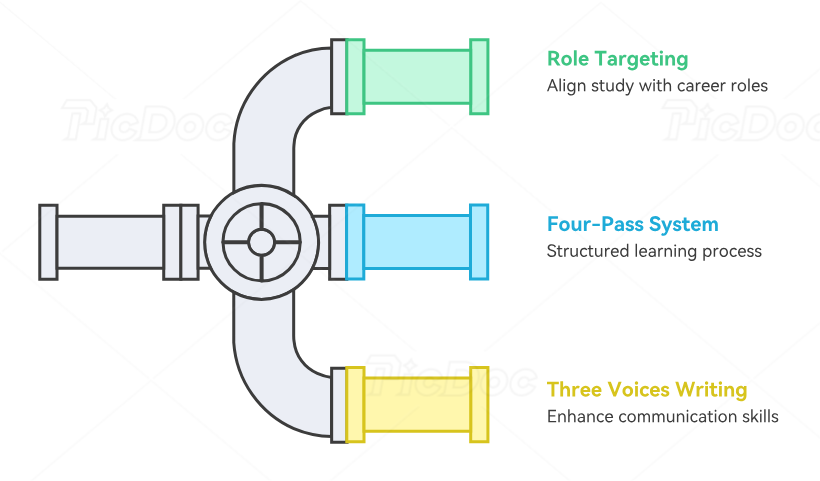
Preparation should begin with role targeting. Random study creates a messy résumé, even when the learner works hard. A North Dakota learner targeting SOC work should prioritize logs, endpoint behavior, triage, phishing, escalation, and documentation. A learner targeting compliance should prioritize controls, evidence, risk registers, policies, audits, and vendor reviews. A learner targeting leadership should prioritize budgets, staffing, frameworks, metrics, roadmaps, and executive communication. This role-first approach works better when supported by free cybersecurity courses, cybersecurity bootcamps, global cybersecurity training providers, cybersecurity books, and cybersecurity YouTube channels.
Use a four-pass study system. First, build vocabulary around assets, threats, vulnerabilities, controls, identity, risk, impact, likelihood, and governance. Second, map each topic to a real employer function such as SOC monitoring, healthcare compliance, endpoint management, cloud operations, or vendor security. Third, practice scenarios: “How would I contain ransomware on a critical workstation?” “How would I explain MFA failure to a manager?” “How would I prioritize vulnerabilities with limited staff?” Fourth, convert the work into portfolio assets. Strong scenario practice can use ACSMI resources on ransomware trends, data breach mitigation, IoT security breaches, cloud threat analysis, and critical infrastructure cybersecurity.
The highest-value habit is writing every concept in three voices. Write it for an analyst, then for a manager, then for an executive. For example, a failed privileged-login pattern means suspicious authentication behavior to an analyst, account-risk escalation to a manager, and business-continuity exposure to an executive. This builds the communication skill that separates future leaders from pure tool operators. It also prepares candidates for interviews involving privileged access management, DLP software, application security tools, cloud security tools, and AI-driven cybersecurity tools.
5. How to Turn Certification Into Interviews, Promotions, and Long-Term Cybersecurity Growth
Certification becomes powerful when it changes how employers read your profile. A weak résumé line says “completed cybersecurity certification.” A stronger line says “built a risk-based cybersecurity portfolio covering access control, incident response, vulnerability management, audit evidence, cloud security, and leadership communication.” A stronger interview answer then proves how those capabilities apply to the employer’s environment. North Dakota candidates should pair ACSMI with global salary benchmarks, remote versus on-site salaries, entry-level to CISO salary progression, freelance cybersecurity income trends, and specialized role demand.
For promotions, turn the certification into a manager-ready growth brief. Include your current responsibilities, new cybersecurity-management capabilities, risks you can help reduce, projects you can own, metrics you can improve, and teams you can support. This works especially well for IT leads, analysts, administrators, auditors, and compliance staff who already carry security responsibility without the title. The discussion becomes stronger when tied to security manager advancement, director of information security pathways, VP of cybersecurity growth, chief security architect careers, and cybersecurity program manager guidance.
For long-term growth, build one specialization stack after ACSMI. SOC candidates can add SIEM labs, detection notes, phishing cases, and incident timelines. GRC candidates can add control matrices, audit checklists, evidence folders, and policy samples. Cloud candidates can add IAM diagrams, misconfiguration case studies, and logging plans. Offensive-security candidates can add remediation-focused reports and scope examples. Leadership candidates can add risk dashboards, tabletop exercises, roadmap drafts, and budget narratives. That keeps your profile coherent across future cybersecurity certifications, automation and cybersecurity workforce trends, zero trust predictions, next-gen SIEM technologies, and future cloud security trends.
6. FAQs
-
Yes. It is especially useful for candidates who need to prove both technical understanding and management judgment. North Dakota roles can involve smaller teams, public-sector services, healthcare systems, education environments, energy operations, remote employers, and regulated data. The strongest candidates can connect cybersecurity frameworks, incident response, compliance analysis, and security leadership to real workplace outcomes.
-
Good candidates include IT support professionals, system administrators, network administrators, SOC analysts, auditors, compliance beginners, IT managers, cloud administrators, military-transition candidates, and cybersecurity specialists preparing for leadership. The certification can support movement into SOC analyst roles, ethical hacking, cloud security engineering, cybersecurity auditing, and cybersecurity compliance.
-
Yes. The key is translating your current work into security proof. Password resets become identity-control experience. Patch management becomes vulnerability-reduction experience. Troubleshooting becomes incident triage. Device configuration becomes endpoint hardening. User support becomes awareness and phishing-prevention experience. Strengthen that transition with IT support to cybersecurity analyst guidance, vulnerability assessment, phishing attack prevention, and security analyst career growth.
-
List the certification, then add a proof-focused project section. Include examples such as “created an incident response scenario plan,” “mapped controls to audit evidence,” “built a vulnerability prioritization matrix,” “summarized cloud identity risks,” or “developed a security leadership briefing.” This makes the credential stronger alongside certification career impact research, salary growth analysis, job market trends, and future cybersecurity skills.
-
Choose the specialization based on the work you want to perform weekly. SOC and incident response fit people who like investigation, urgency, and escalation. GRC fits people who like evidence, controls, audits, and policies. Cloud security fits people who like identity, architecture, and configuration risk. Offensive security fits people who like testing and reporting. Compare options through ACSMI’s guides on threat intelligence, incident response, cloud security, red team careers, and audit practices.
-
The biggest mistake is earning a credential without building a clear role story. Employers need to know which risks you can reduce, which tools you understand, which decisions you can support, and which role you are ready to perform. Certification should become a bridge into workforce demand, career advancement, security operations, cybersecurity consulting, and long-term leadership.
