
The Ultimate Guide to Getting Advanced Cybersecurity & Management Certification in Ohio: Everything You Need to Know in 2026-2027
Ohio has a serious cybersecurity advantage for professionals who want room to grow: the market spans healthcare, insurance, manufacturing, logistics, finance, universities, public agencies, cloud teams, defense-adjacent employers, and mid-market companies that need stronger security leadership. The right certification can help you move from scattered applications to a focused career lane. Use this guide with ACSMI’s cybersecurity certification directory, cybersecurity salary research, workforce shortage study, and certification career-impact report to build a credential plan that earns trust.
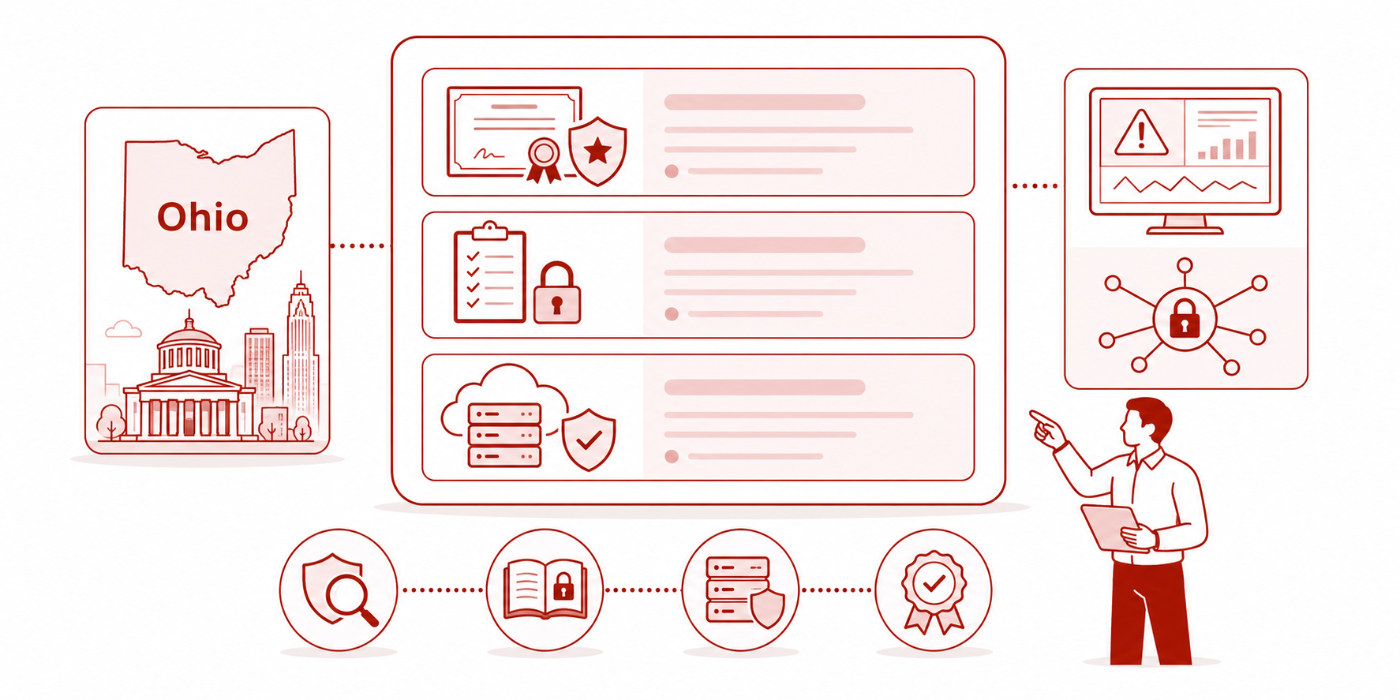
1. Why Advanced Cybersecurity & Management Certification Matters in Ohio
Ohio employers need cybersecurity professionals who can protect systems, explain risk, document controls, and support decisions under pressure. A certificate becomes valuable when it connects directly to a role: SOC analyst work, cloud security engineering, cybersecurity compliance, security auditing, or CISO leadership. A candidate who only lists tools can sound replaceable. A candidate who can explain incident priority, business exposure, control gaps, and remediation ownership creates much stronger hiring confidence.
The Ohio career problem is usually signal quality. Many applicants have some IT experience, a few labs, a basic certificate, and broad interest in security. Hiring teams still need evidence that the person can handle real work: alert triage, vulnerability prioritization, access reviews, vendor conversations, cloud misconfiguration risk, audit evidence, and executive updates. That is why an advanced cybersecurity and management plan should connect ACSMI’s IT support to cybersecurity analyst guide, security analyst to engineer roadmap, ethical hacking career guide, cybersecurity manager pathway, and security leadership roadmap into one role-specific story.
| Certification / Credential Direction | Best Career Stage | Ohio Career Leverage | Proof to Build Before Applying |
|---|---|---|---|
| ISC2 Certified in Cybersecurity | Entry transition | Helps new candidates show baseline security commitment for analyst and support-security pathways. | Security glossary notes, phishing analysis samples, basic home lab documentation. |
| CompTIA Security+ | Entry to early career | Useful for IT support, junior analyst, government-adjacent, and defense-support openings. | Access-control review, vulnerability summary, risk-rated ticket examples. |
| CompTIA CySA+ | Early blue team | Supports SOC, detection, monitoring, triage, and managed security service roles. | SIEM searches, alert analysis, incident timeline, false-positive tuning notes. |
| CompTIA PenTest+ | Early offensive track | Helps candidates enter assessment, vulnerability validation, and junior penetration testing tracks. | Scope document, safe lab report, remediation-focused vulnerability finding. |
| OSCP | Hands-on offensive career | Strong signal for penetration testing, red-team, consulting, and offensive security roles. | Methodology notes, exploit path, evidence screenshots, clean executive summary. |
| CEH | Ethical hacking foundation | Works best when paired with practical labs, tool fluency, and business-safe reporting. | Recon checklist, vulnerability validation, severity explanation, remediation note. |
| CISSP | Experienced practitioner | Strong for senior analyst, architect, consultant, manager, and security leadership credibility. | Control mapping, risk-treatment memo, security program improvement sample. |
| CISM | Management track | Helpful for security managers, governance leads, risk owners, and program leaders. | KPI dashboard, policy review, risk brief, stakeholder communication sample. |
| CISA | Audit and assurance | Useful for healthcare, finance, insurance, higher education, and compliance-heavy teams. | Audit checklist, evidence request list, control-gap tracker, finding summary. |
| CRISC | Risk leadership | Helps candidates move from control execution into enterprise risk and decision support. | Risk register, likelihood-impact model, mitigation options, residual-risk note. |
| CCSP | Cloud security | Strong for SaaS teams, healthcare cloud environments, hybrid enterprises, and managed services. | Cloud IAM review, storage-risk assessment, shared-responsibility memo. |
| AWS Security Specialty | Cloud engineer track | Useful for AWS-heavy teams that need stronger identity, logging, and workload protection. | IAM policy review, CloudTrail detection notes, encryption configuration checklist. |
| Azure Security Engineer | Microsoft cloud teams | Strong fit for enterprise identity, Microsoft Defender, Entra ID, and hybrid infrastructure. | Conditional access plan, privileged access review, alert triage documentation. |
| Application Security Certifications | AppSec and product security | Valuable for software companies, fintech teams, e-commerce platforms, and internal product groups. | Threat model, API-risk notes, secure code review summary, developer guidance. |
| NIST / ISO Framework Training | Governance and controls | Helps professionals explain security maturity, control gaps, audit readiness, and remediation sequencing. | Control map, gap analysis, executive remediation roadmap. |
| Privacy and Compliance Credentials | Regulated industries | Useful for healthcare, insurance, education, public-sector, legal, and vendor-risk roles. | Data-flow map, vendor-risk checklist, compliance evidence folder. |
| Incident Response Training | Blue team specialization | Shows readiness for containment, investigation, escalation, post-incident review, and resilience planning. | Incident timeline, containment plan, communications draft, lessons-learned report. |
| Threat Intelligence Credentials | Intel and defense | Useful for ransomware defense, fraud context, executive risk briefings, and sector-specific threat tracking. | Threat profile, IOC context, actor-technique mapping, priority assessment. |
| Insider Threat Training | Enterprise defense | Valuable for organizations protecting sensitive employee, customer, financial, and operational data. | Behavioral indicator matrix, least-privilege review, escalation workflow. |
| PAM / Identity Security Training | IAM and infrastructure security | Strong for healthcare networks, manufacturers, finance teams, and enterprise IT environments. | Privileged account inventory, rotation plan, access review sample. |
| EDR / Endpoint Security Training | Security operations | Supports SOC, endpoint defense, ransomware prevention, and incident response roles. | EDR alert analysis, endpoint-hardening checklist, containment playbook. |
| SIEM Training | SOC and detection | Helps prove you can turn noisy logs into practical investigation and escalation outcomes. | Detection query, dashboard screenshot, false-positive tuning note. |
| Vulnerability Management Training | Analyst to engineer | Supports manufacturing, healthcare, consulting, compliance, and security engineering roles. | Risk-ranked remediation plan, owner matrix, patch-priority memo. |
| Email Security Training | Security operations | Useful because phishing, impersonation, and credential theft create constant operational pressure. | Phishing triage example, header analysis, user-awareness feedback loop. |
| AI Security Training | Future-facing security | Helps candidates address AI misuse, automated attacks, sensitive data leakage, and governance gaps. | AI risk register, prompt-abuse scenario, model-access control notes. |
| Advanced Cybersecurity & Management Certification | Mid-career to leadership | Best for professionals who need technical credibility plus management, governance, and risk language. | Strategic security roadmap, metrics pack, stakeholder-ready risk narrative. |
2. How to Choose the Right Certification Track for an Ohio Cybersecurity Career
Start with the job outcome, then choose the credential. A Columbus SOC candidate needs stronger detection, ticket triage, endpoint investigation, and escalation proof, so the best support comes from ACSMI’s SOC analyst guide, SIEM solution directory, EDR tools guide, incident responder pathway, and phishing trends report. The certificate should give employers a reason to believe you can work alerts, explain priority, and document decisions.
A Cleveland healthcare-security candidate needs a different mix. Healthcare employers care about uptime, patient data, vendor systems, access controls, incident response, and audit evidence. That makes ACSMI’s healthcare cybersecurity tools directory, healthcare compliance report, healthcare cybersecurity predictions, insider threat report, and data breach mitigation guide directly useful. The right certification story should show that you understand sensitive systems, operational disruption, control documentation, and stakeholder communication.
A Cincinnati finance or insurance candidate should build around governance, third-party risk, cloud controls, audit readiness, and executive reporting. Strong support comes from ACSMI’s financial-services cybersecurity firms directory, financial sector incident analysis, compliance trends report, remote versus on-site salary research, and salary growth analysis for certifications. The strongest candidates can explain risk in business terms while still understanding logs, access, vulnerabilities, and controls.
A Dayton, Toledo, Akron, or manufacturing-focused candidate should think carefully about operational risk. Manufacturing cybersecurity rewards people who understand endpoint visibility, network monitoring, identity controls, vendor access, vulnerability remediation, and incident containment. Use ACSMI’s manufacturing cybersecurity solutions guide, network monitoring tools directory, endpoint security report, vulnerability assessment guide, and ransomware threat analysis to shape your certification plan. This path needs practical proof because downtime, safety, production delays, and vendor access create pressure beyond textbook security.
3. The Ohio Skill Stack Employers Reward Most in 2026-2027
The best Ohio cybersecurity candidates combine technical depth with management readiness. Technical depth means you can investigate alerts, read logs, understand identity events, validate vulnerabilities, evaluate cloud permissions, and explain endpoint activity. Management readiness means you can prioritize, document, escalate, brief stakeholders, and connect technical findings to organizational risk. ACSMI’s access control models guide, security audits guide, NIST cybersecurity framework analysis, cloud security tools directory, and cybersecurity frameworks guide can help turn study into job-ready language.
The skill that separates candidates is translation. An Ohio employer may ask about a vulnerability, but the real concern is business exposure. They may ask about MFA, but the real concern is identity abuse. They may ask about a phishing alert, but the real concern is credential theft and lateral movement. They may ask about a cloud storage issue, but the real concern is sensitive data exposure. Your certification should sharpen this translation muscle with ACSMI’s email security directory, privileged access management guide, cloud threat report, IoT breach report, and AI in cybersecurity research.
Build a proof pack before applying. A proof pack should include one technical artifact, one risk artifact, and one communication artifact. The technical artifact could be a SIEM query, incident timeline, hardening checklist, vulnerability report, or cloud IAM review. The risk artifact could be a control gap analysis, risk register, vendor-risk checklist, or remediation roadmap. The communication artifact could be a one-page executive update that explains what happened, why it matters, who owns the fix, and what decision is needed. Support that portfolio with ACSMI’s future cybersecurity skills guide, specialized cybersecurity role forecast, job market trends report, entry-level to CISO salary progression, and cybersecurity workforce demographics report.
Pick the pressure point that feels most urgent, because your certification strategy should solve the career blocker you actually have.
4. Step-by-Step Certification Plan for Ohio Professionals in 2026-2027
Begin with a role target instead of a random credential list. Choose one primary lane: SOC, cloud security, GRC, audit, incident response, AppSec, offensive security, or management. Then compare the lane against your current proof. A SOC track needs alert triage and SIEM evidence. A cloud track needs IAM and configuration evidence. A GRC track needs control mapping and audit evidence. An offensive track needs safe testing reports and remediation language. Use ACSMI’s certification future guide, cybersecurity job market predictions, remote cybersecurity career forecast, future compliance trends, and future audit practices to choose with intent.
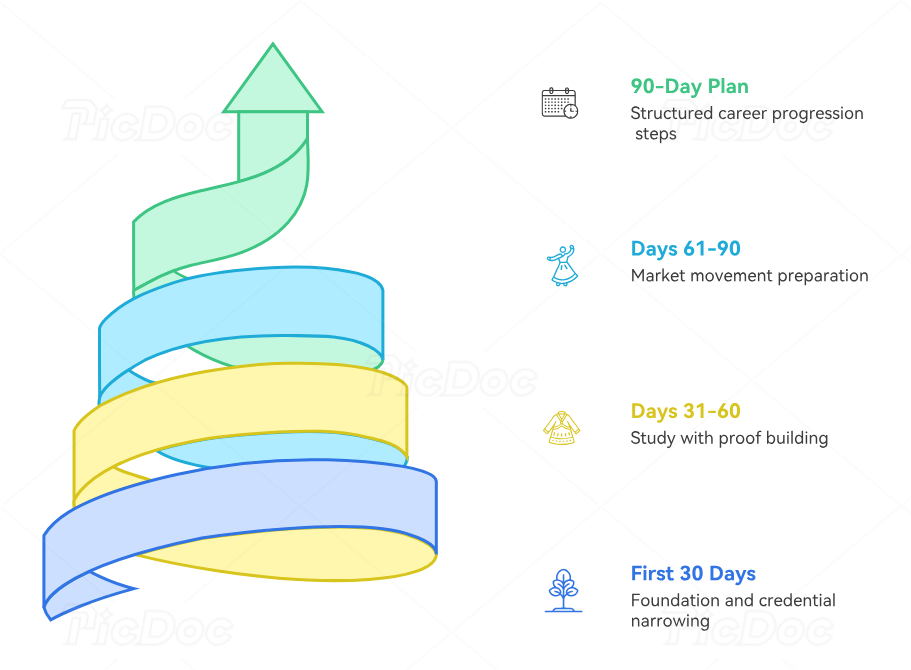
For the first 30 days, build foundation and narrow the credential. Use ACSMI’s free cybersecurity resources, cybersecurity bootcamp directory, global training provider directory, cybersecurity books directory, and cybersecurity YouTube channel guide to create a study schedule. In this phase, define the exact job titles you want, collect job descriptions, highlight repeated skills, and remove every study activity that does not support the target role.
For days 31-60, study while building proof. A cloud candidate can complete a sample IAM review and write a shared-responsibility memo. A SOC candidate can write an incident timeline from a simulated alert. A compliance candidate can build a mini evidence folder. A penetration testing candidate can write a remediation-focused lab report. Support the work with ACSMI’s cloud security predictions, next-gen SIEM guide, endpoint security innovation forecast, AI-driven security tools forecast, and zero-trust future analysis.
For days 61-90, turn the credential into market movement. Rewrite résumé bullets around problems solved, risks reduced, controls improved, incidents investigated, or stakeholders supported. Prepare three interview stories: one technical story, one risk story, and one communication story. Then apply to aligned roles across Ohio instead of blasting generic applications. Use ACSMI’s analyst advancement guide, senior cybersecurity analyst pathway, SOC analyst to SOC manager guide, security manager to director roadmap, and VP cybersecurity leadership guide to plan the next level.
5. How to Convert Certification Into Interviews, Promotions, and Salary Growth
A certification creates leverage when it changes the employer’s perception of your readiness. The weak version says, “I passed an exam.” The strong version says, “I can use this knowledge to investigate incidents, reduce risk, support compliance, secure cloud assets, and explain security decisions.” Build résumé bullets that match Ohio employer pain: ransomware readiness, access control, vendor risk, cloud misconfiguration, endpoint containment, phishing response, vulnerability prioritization, and audit evidence. Strengthen those bullets with ACSMI’s ransomware evolution forecast, critical infrastructure report, cloud security threat report, DLP software directory, and security awareness training platform directory.
For promotions, show leadership before the title changes. Volunteer to improve a process, document a recurring issue, create a control checklist, clean up a dashboard, draft a tabletop scenario, or help translate security findings for another team. Managers promote people who lower confusion. A certified professional who can brief risk clearly, manage priorities, and improve evidence quality has a stronger argument than someone who only collects acronyms. Use ACSMI’s cybersecurity manager guide, program manager career guide, security specialist to CISO guide, chief security architect roadmap, and policy director pathway to frame leadership growth.
For salary, connect certification to scope. Ohio employers pay more when your work touches high-value systems, regulated data, incident ownership, cloud risk, leadership responsibility, security architecture, or business continuity. Compensation improves when the credential supports a broader responsibility story. Before negotiating, compare ACSMI’s global salary benchmarks, remote versus on-site salary analysis, freelance and consulting income report, gender pay gap analysis, and entry-level to CISO salary progression. Then negotiate around responsibility, risk reduction, and measurable contribution.
6. FAQs
-
Yes, especially for professionals targeting SOC roles, healthcare security, manufacturing security, finance, insurance, cloud security, compliance, audit, incident response, consulting, or leadership. The value comes from connecting certification to practical proof. A hiring team needs evidence that you can investigate alerts, reduce risk, document controls, support audits, protect cloud assets, or brief stakeholders. Start with ACSMI’s cybersecurity certification directory, certification career-impact report, workforce shortage study, salary report, and job market trends analysis.
-
A beginner should choose based on the first target role. For SOC work, start with a baseline credential and pair it with ACSMI’s SOC analyst guide, SIEM guide, EDR guide, and incident response pathway. For compliance, use ACSMI’s cybersecurity frameworks guide, security audits guide, and compliance analyst roadmap. For offensive security, study ACSMI’s ethical hacking roadmap.
-
A focused candidate can build a serious 90-day plan, although advanced credentials tied to management, cloud, audit, risk, or offensive security may take longer. The first month should clarify the target role and exam domains. The second month should combine study with portfolio proof. The third month should focus on résumé rewriting, interview stories, and targeted applications. Use ACSMI’s free cybersecurity courses directory, bootcamp directory, training provider directory, cybersecurity books directory, and cybersecurity podcasts directory to support the schedule.
-
Healthcare, manufacturing, insurance, finance, higher education, public-sector organizations, logistics, SaaS companies, and managed service providers all reward cybersecurity management skills. These employers need professionals who can prioritize risk, coordinate remediation, manage evidence, brief stakeholders, and keep security work aligned with business operations. The strongest preparation combines ACSMI’s healthcare cybersecurity tools guide, manufacturing cybersecurity guide, financial-services cybersecurity guide, education-sector cybersecurity directory, and government cybersecurity firms guide.
-
Stand out by proving applied judgment. Build three assets: a technical artifact, a risk artifact, and a communication artifact. The technical artifact can be a SIEM query, incident timeline, vulnerability report, cloud IAM review, or hardening checklist. The risk artifact can be a control gap analysis, vendor-risk scorecard, or remediation roadmap. The communication artifact can be a one-page executive brief. Strengthen your thinking with ACSMI’s phishing attack report, data breach report, AI cybersecurity report, insider threat report, and cloud threat analysis.
-
The biggest mistake is choosing a credential without a job strategy. A SOC candidate needs detection proof. A cloud candidate needs identity and configuration proof. A compliance candidate needs control and evidence proof. An offensive candidate needs safe testing and remediation proof. A leadership candidate needs risk, communication, and prioritization proof. Before investing time and money, compare ACSMI’s future certification analysis, specialized role demand forecast, future skills guide, job market predictions, and career advancement report.
