
The Ultimate Guide to Getting Advanced Cybersecurity & Management Certification in Vietnam: Everything You Need to Know in 2026-2027
Vietnam’s cybersecurity market increasingly rewards professionals who can connect technical security with risk governance, regulatory compliance, cloud architecture, incident leadership, and business continuity. Certification can strengthen that profile, though candidates must choose carefully. International examination prices, weak training providers, limited hands-on experience, English-language testing, and unclear career direction can turn an ambitious plan into an expensive collection of credentials. This guide explains how to select, finance, complete, and convert advanced cybersecurity and management certification into meaningful career progress in Vietnam during 2026–2027.
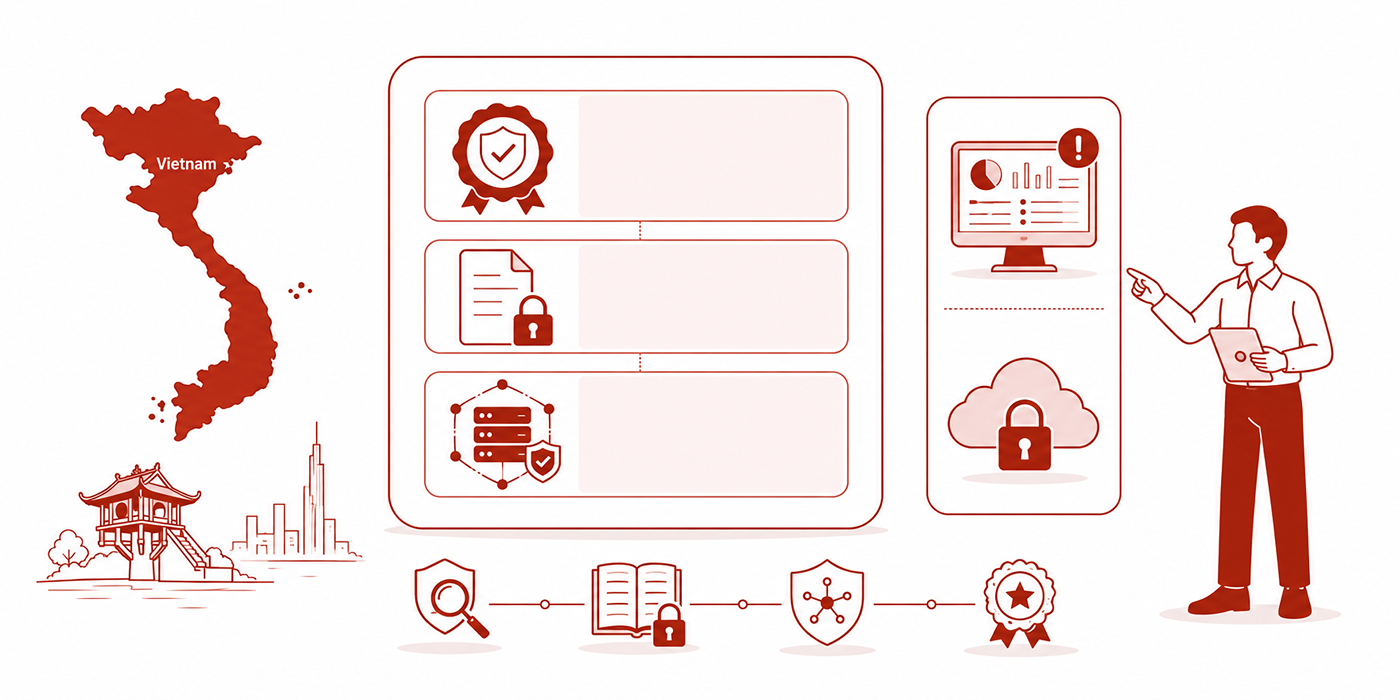
1. Why Advanced Cybersecurity and Management Certification Matters in Vietnam
Vietnam’s digital expansion is creating a wider security surface across banking, e-commerce, manufacturing, telecommunications, healthcare, government services, cloud infrastructure, and technology outsourcing. Organizations need professionals who can operate endpoint security platforms, assess weaknesses through vulnerability assessment techniques, improve SIEM detection capabilities, and manage incidents using evidence-driven processes.
The regulatory environment also became more demanding during 2026. Vietnam’s Law on Personal Data Protection took effect on January 1, 2026, with Decree 356/2025/ND-CP providing implementation details and replacing the earlier Decree 13 framework. Organizations handling personal data therefore need stronger capability in governance, technical safeguards, processing accountability, incident notification, and coordination with relevant authorities.
Vietnam’s new Law on Cybersecurity, Law No. 116/2025/QH15, took effect on July 1, 2026. That timing makes 2026–2027 especially important for professionals working in security management, compliance, infrastructure protection, incident response, data governance, and regulated digital services.
Candidates who understand cybersecurity compliance trends, conduct defensible security audits, apply established cybersecurity frameworks, and choose appropriate access-control models can support employers facing these evolving obligations.
Vietnam’s National Cyber Safety and Security Strategy, approved under Decision 964/QĐ-TTg, sets national direction through 2025 with a vision toward 2030. Its broader emphasis on cyber resilience, national capacity, incident readiness, and workforce development reinforces the value of professionals who can combine operational security with governance and leadership.
The workforce opportunity is significant, although candidates should interpret headline numbers cautiously. Industry discussions at the Vietnam Security Summit 2025 projected a future shortage exceeding 700,000 cybersecurity professionals. The figure represents a broad forecast rather than a guaranteed number of immediate vacancies, yet it signals substantial concern about the supply of qualified talent.
That gap will not be solved through certificates alone. Employers still need people who can investigate alerts, protect cloud workloads, assess supplier risk, write security requirements, brief executives, and coordinate recovery. Someone following a SOC analyst career roadmap must eventually learn the responsibilities associated with becoming a SOC manager, while an infrastructure professional may need a pathway from security analyst to cybersecurity engineer.
Vietnam’s expanding critical-infrastructure focus also increases demand for advanced operational and managerial capability. The European Union and Vietnam conducted advanced cybersecurity training in 2025 to strengthen critical-infrastructure resilience, illustrating the importance placed on incident coordination, technical capacity, and cross-organizational preparedness.
Professionals targeting these environments should understand the critical-infrastructure threat landscape, future cybersecurity standards, evolving incident-response practices, and emerging cloud-environment threats.
The strongest certification strategy begins with a target responsibility. A candidate seeking penetration-testing work needs a different credential and portfolio from someone targeting cloud security, cyber risk, audit, privacy, SOC leadership, or executive management. Comparing cybersecurity certification options, examining future employer preferences, and reviewing cybersecurity job-market trends can prevent costly misalignment.
Advanced Cybersecurity Certification Matrix for Vietnam: 30 Career Routes
| Certification or Path | Best-Fit Career Stage | Primary Career Use | Practical Evidence to Build |
|---|---|---|---|
| ISC2 Certified in Cybersecurity | Entry level | Foundational career transition | Home lab, access review, basic risk register |
| CompTIA Security+ | Entry level | Junior defensive-security roles | Hardening checklist and incident ticket |
| ISC2 SSCP | Early career | Operational security administration | Access controls and operational procedures |
| CompTIA CySA+ | Early career | SOC and security analytics | Alert investigation and detection rule |
| CompTIA PenTest+ | Early career | Vulnerability and testing foundations | Authorized lab report with remediation |
| CompTIA SecurityX | Mid career | Advanced enterprise security | Architecture proposal and risk decisions |
| EC-Council CEH | Early to mid career | Broad ethical-hacking concepts | Legal lab evidence and findings report |
| EC-Council CHFI | Mid career | Digital forensics and investigation | Evidence-handling and case timeline |
| OffSec OSCP | Technical mid career | Hands-on penetration testing | Enumeration notes and professional report |
| OffSec OSEP | Advanced offensive | Enterprise attack simulation | Attack-chain and control-gap analysis |
| OffSec OSWE | Advanced offensive | Web application exploitation | Code review and vulnerability write-up |
| GIAC GSEC | Early to mid career | Practical enterprise defence | Hardening and monitoring implementation |
| GIAC GCIH | Mid career | Incident handling | Containment playbook and review report |
| GIAC GCIA | Technical mid career | Network intrusion analysis | Packet analysis and detection logic |
| GIAC GPEN | Mid career | Professional penetration testing | Scope, evidence, findings, and retest |
| ISC2 CISSP | Experienced professional | Broad senior-level security responsibility | Risk, architecture, and programme examples |
| ISACA CISM | Mid to senior career | Security programme management | Strategy, KPIs, governance, and reporting |
| ISACA CRISC | Mid career | Technology-risk management | Risk scenarios, treatments, and KRIs |
| ISACA CISA | Mid career | IT audit and assurance | Audit programme and evidence matrix |
| ISACA CGEIT | Senior career | Enterprise IT governance | Governance model and board dashboard |
| ISACA CDPSE | Mid career | Privacy engineering | Data map and privacy-impact assessment |
| ISC2 CCSP | Mid career | Cloud-security governance | Cloud-control matrix and architecture |
| ISC2 CSSLP | Mid career | Secure software lifecycle | Threat model and secure-SDLC workflow |
| ISC2 ISSMP | Senior career | Advanced security management | Strategy and executive reporting pack |
| ISO/IEC 27001 Lead Implementer | Mid to senior career | ISMS implementation | Scope, risk register, and control plan |
| ISO/IEC 27001 Lead Auditor | Mid to senior career | Information-security auditing | Audit plan, evidence, and findings |
| AWS Certified Security – Specialty | Cloud practitioner | AWS security engineering | Secure landing zone and logging design |
| Microsoft Cybersecurity Architect Expert | Mid to senior career | Enterprise and zero-trust architecture | Identity, endpoint, data, and cloud design |
| Google Professional Cloud Security Engineer | Cloud practitioner | Google Cloud security | IAM, encryption, and monitoring model |
| Certified Kubernetes Security Specialist | Cloud-native specialist | Kubernetes and container security | Cluster-hardening and policy lab |
2. How to Choose the Right Certification for Your Vietnam Career Path
Begin with the role you intend to hold within 12 to 24 months. Gather at least 20 current job descriptions from Vietnamese employers, regional companies, outsourcing providers, and remote organizations. Record the responsibilities, technologies, frameworks, certifications, language expectations, and experience requirements that recur. This produces a role-gap map grounded in employer demand.
A SOC candidate should focus on log analysis, endpoint telemetry, alert validation, escalation, containment, incident documentation, and detection improvement. Security+, SSCP, CySA+, GSEC, GCIH, or GCIA may support different levels of that pathway. Pair the credential with exposure to leading SIEM platforms, modern EDR solutions, effective network-monitoring tools, and current endpoint-security research.
A common pain point is the experience loop. Junior candidates encounter job descriptions requesting experience, yet they need employment to acquire it. The practical response is to build evidence through safe lab investigations, simulated incidents, detection rules, technical documentation, internships, authorized competitions, and supervised projects. Use the IT support-to-security analyst roadmap, the detailed SOC analyst pathway, and the guide to becoming a senior cybersecurity analyst to sequence that development.
Offensive-security candidates should distinguish conceptual coverage from demonstrated execution. CEH and PenTest+ can organize terminology, testing stages, attack categories, and defensive context. OSCP and other performance-based credentials require deeper hands-on problem-solving. The candidate must be able to enumerate, validate, exploit within authorization, document evidence, explain business impact, and recommend remediation.
A testing portfolio should reflect the quality expected by commercial clients. Study leading penetration-testing tools, examine how penetration-testing companies structure their services, follow an ethical-hacking career roadmap, and plan progression from junior tester to senior consultant.
Cloud-security candidates should select credentials based on the environments appearing in target vacancies. CCSP provides broad vendor-neutral coverage, while AWS, Microsoft, and Google credentials demonstrate platform-specific knowledge. CKS becomes valuable when responsibilities involve Kubernetes and containerized applications.
Cloud employability depends on more than passing an architecture exam. Candidates should prove competence in identity, secrets, encryption, logging, segmentation, posture management, workload protection, data classification, resilience, and incident response. Build the pathway using a cloud-security engineer roadmap, a comparison of cloud-security platforms, analysis of the future of cloud security, and research into cloud security threats.
Management candidates should identify the kind of decisions they want to own. CISM commonly supports security-programme leadership. CISSP offers broad security-domain coverage. CRISC develops technology-risk capability. CISA supports audit and assurance. CGEIT targets enterprise governance. ISO/IEC 27001 credentials can support implementation, auditing, and consulting.
A technically strong candidate may still struggle in management because leadership requires prioritization, stakeholder negotiation, budgeting, metrics, policy ownership, supplier oversight, and executive communication. Review the cybersecurity manager pathway, the progression from security manager to director, the route toward becoming a cybersecurity programme manager, and the longer CISO career roadmap.
Privacy, GRC, and audit candidates should pay particular attention to Vietnam’s 2026 legal environment. The personal-data law and its implementing decree strengthen the career relevance of data mapping, impact assessments, processing controls, incident procedures, retention, vendor governance, and evidence management.
CISA, CRISC, CISM, CDPSE, CISSP, and ISO/IEC 27001 can support different parts of that work. Pair certification with a cybersecurity compliance-officer roadmap, a compliance analyst career guide, an advanced cybersecurity auditor pathway, and research into future audit practices.
Sector alignment should influence the final choice. Vietnam’s banking, manufacturing, telecommunications, e-commerce, public-sector, healthcare, logistics, and energy environments have different risk priorities. Financial-sector candidates should understand cybersecurity incidents in finance, emerging financial cyber risks, and leading financial-services security providers.
Manufacturing candidates should learn operational technology, asset visibility, segmentation, supplier access, ransomware resilience, and safety dependencies. Useful supporting research includes manufacturing cybersecurity solutions, predicted manufacturing-sector security trends, the IoT security breach landscape, and leading IoT security companies.
3. Training Providers, Costs, Eligibility, and Examination Preparation
The true certification cost includes more than tuition. Vietnam-based candidates should calculate the official examination fee, currency conversion, taxes or banking charges, practice material, lab access, travel, identification requirements, possible rescheduling, renewal fees, and retake exposure. A course advertised in Vietnamese đồng may exclude an internationally priced examination voucher.
Create three financial scenarios before enrolling. The minimum plan should cover essential self-study resources, labs, and the examination. The supported plan may include instructor-led training and feedback. The contingency plan should account for rescheduling or one retake. This prevents the painful outcome of completing training without enough money to attempt the official examination.
Provider quality varies considerably. Ask for the complete syllabus, instructor biography, delivery language, total live hours, practical-lab time, class size, mock-examination approach, voucher inclusion, recording access, learner support, refund rules, and course-update date. Compare the offer with a global directory of training providers, reputable cybersecurity bootcamps, accessible free cybersecurity courses, and leading cybersecurity books.
The provider should teach the advertised certification’s current objectives and explain how concepts apply in practice. A management instructor should be able to discuss risk appetite, programme governance, audit evidence, business impact, incident authority, board reporting, and control effectiveness. A technical instructor should demonstrate troubleshooting, evidence handling, safe testing, reporting, and remediation.
Warning signs include guaranteed employment, guaranteed examination success, undisclosed instructors, minimal lab access, outdated screenshots, and heavy dependence on memorized question banks. A candidate who passes through unauthorized examination dumps may struggle immediately when asked to investigate an alert, defend a risk ranking, or design a secure architecture.
Language planning is also important. Some learners understand technical English well enough to read documentation but lose time when interpreting long scenario-based questions. Build a glossary containing governance, risk, audit, networking, identity, cloud, incident-response, and legal vocabulary. Read credible cybersecurity industry publications, listen to professional cybersecurity podcasts, follow quality cybersecurity learning channels, and review reports from cybersecurity research institutes.
A strong 12-to-16-week plan has four stages:
Concept development: Learn the examination domains, terminology, processes, and relationships.
Application: Complete labs, scenarios, architecture diagrams, risk decisions, and written reports.
Assessment: Use fresh timed questions and explain why each rejected option is weaker.
Correction: Rebuild weak domains and repeat tasks without guided instructions.
Every study domain should produce evidence. A SOC learner can create an incident timeline and detection recommendation. A cloud learner can design a secure landing zone. An audit learner can create an evidence matrix. A management candidate can produce an executive risk dashboard. An offensive-security candidate can write a remediation-focused report from an authorized lab.
Scenario practice should use realistic threat conditions. Candidates can draw lessons from ransomware trends, phishing attack analysis, the annual insider-threat report, and predictions concerning AI-powered cyberattacks.
For each scenario, answer six questions: What asset is at risk? What evidence supports the conclusion? What action comes first? Who owns the decision? What business process could fail? What residual exposure remains after treatment? This method prepares candidates for advanced examinations and senior interviews.
Quick Poll: What Is Blocking Your Cybersecurity Career Progress in Vietnam?
Choose the obstacle currently costing you the most time, money, or professional momentum.
4. Step-by-Step Certification Roadmap for Vietnam-Based Candidates
Step 1: Select one target role. Choose a single primary destination for the next 12 to 24 months. Options include SOC analyst, incident responder, cloud-security engineer, penetration tester, threat-intelligence analyst, GRC specialist, auditor, privacy professional, security manager, or architect.
Use a dedicated incident-responder pathway, threat-intelligence career guide, red-team specialist roadmap, or chief security architect pathway according to the destination.
Step 2: Audit your existing evidence. Divide your skills into technical execution, governance, business understanding, communication, and leadership. Rate only what you can perform independently. Recognizing terminology should receive less weight than completing a task and explaining the decision.
Step 3: Choose one anchor credential. Select the qualification most closely aligned with the target role. Add another credential only when it closes a distinct gap. A cloud candidate might combine CCSP with one platform certification. A manager might combine CISSP or CISM with ISO/IEC 27001. A SOC candidate may choose CySA+ or GCIH before pursuing broader leadership certification.
Review the career impact of certifications, compare CISSP, CEH, and certification salary growth, examine future certification demand, and study the future cybersecurity skills employers may prioritize.
Step 4: Calculate the complete budget. Include training, voucher, currency conversion, labs, books, travel, renewal, rescheduling, and contingency. Delay expensive instructor-led training until you have verified that it solves a genuine preparation problem.
Step 5: Validate the provider. Ask for written details about the syllabus, instructor, labs, learning language, recordings, voucher, support, and refund terms. Speak with former learners when possible. Reject providers whose main selling point is access to examination dumps.
Step 6: Build a weekly execution system. Use shorter, repeatable study sessions rather than depending on irregular weekend marathons. Each week should contain concept review, retrieval practice, lab work, scenario questions, and one written artifact.
Step 7: Produce three portfolio projects. A defensive portfolio can include an alert investigation, detection recommendation, and incident summary. A GRC portfolio can include a risk register, control matrix, and management dashboard. A cloud portfolio can include an identity model, threat model, and logging architecture. An offensive portfolio can include an authorized assessment report.
Candidates can improve these projects using application-security tools, vulnerability scanners, privileged-access management platforms, and data-loss prevention solutions.
Step 8: Practise bilingual professional communication. Prepare concise technical explanations in Vietnamese and English. International clients and regional employers may expect English documentation, while local stakeholders may need clear Vietnamese summaries. Explain the finding, evidence, business impact, recommended action, ownership, and urgency without unnecessary jargon.
Step 9: Book the examination after meeting readiness thresholds. Use stable performance across several fresh mock assessments. For practical credentials, complete unfamiliar systems without a walkthrough. For management credentials, justify why one action should precede another in a scenario.
Step 10: Build the employment package before passing. Prepare the résumé, professional profile, portfolio, and interview stories before the result arrives. Develop examples covering incident response, troubleshooting, risk prioritization, stakeholder disagreement, process improvement, and leadership.

5. Turning Certification Into Employment, Promotion, and Salary Growth
Certification creates leverage when it changes the work an employer trusts you to perform. Add the credential to your résumé, then connect it with projects, decisions, and outcomes. A line stating “CISM certified” is weaker than evidence that you created security metrics, improved incident governance, led a supplier review, and translated technical exposure into management decisions.
Entry-level candidates should reduce the employer’s perception of risk. Hiring managers worry that inexperienced analysts may exceed authorization, mishandle evidence, communicate poorly, overlook escalation, or expose confidential information. Your portfolio should demonstrate safe scope, careful documentation, verification, confidentiality, and professional judgment.
Use the IT support-to-cybersecurity pathway, guidance for advancing as a cybersecurity analyst, the roadmap toward becoming a cybersecurity engineer, and the pathway to a senior cybersecurity analyst role.
Mid-career candidates should demonstrate expanded ownership. Explain how the certification allows you to coordinate remediation, improve detection coverage, manage risk, design controls, mentor analysts, audit suppliers, secure cloud deployments, or lead incidents. Connect the credential with a responsibility the organization currently struggles to assign.
Management candidates should show commercial and governance value. A strong promotion case may include improvements to audit readiness, incident-response time, risk visibility, vendor oversight, policy compliance, or executive reporting. Study the route from IT manager to security leadership, the progression toward director of information security, and the pathway from senior analyst to VP of security.
Salary negotiations should focus on additional value and responsibility. Present evidence that you can reduce external consulting dependence, lead a security programme, protect regulated data, shorten incident handling, improve cloud controls, or support larger clients. Use the global cybersecurity salary report, entry-level-to-CISO salary progression, remote-versus-on-site salary analysis, and specialized-role demand forecasts as contextual references rather than guaranteed local salary promises.
Remote and regional roles require reliable written communication, independent execution, secure working practices, documentation, and time-zone discipline. Build a portfolio that can be reviewed without exposing employer or client information. Follow remote cybersecurity career trends, the cybersecurity freelance market, and broader Asia-Pacific cybersecurity developments.
Professionals serving international clients should understand that compliance requirements can overlap. A Vietnamese organization may need to address domestic cybersecurity and personal-data rules while also meeting contractual obligations linked to ISO 27001, NIST, GDPR, payment-card security, or customer-specific controls. Relevant study areas include GDPR cybersecurity challenges, NIST framework adoption, emerging privacy-regulation trends, and the future of global compliance.
6. Frequently Asked Questions
-
ISC2 Certified in Cybersecurity and CompTIA Security+ are common foundational choices. The stronger option depends on your target role, existing IT knowledge, English proficiency, and budget.
A future SOC analyst should combine certification with networking, Windows and Linux fundamentals, log analysis, endpoint security, and incident documentation. Use a SOC analyst career guide, quality free cybersecurity resources, a comparison of SIEM platforms, and practical endpoint-security tools.
-
CISM generally aligns with security-programme management. CISSP supports broader senior-level security responsibilities. CRISC focuses on technology risk, CISA supports audit, CGEIT supports enterprise governance, and ISO/IEC 27001 credentials support implementation or assurance.
Choose according to the responsibility you want next. Compare a cybersecurity manager roadmap, security director pathway, CISO advancement guide, and chief security architect roadmap.
-
CISSP can support experienced professionals pursuing architecture, consulting, security engineering, governance, or leadership. Its career value depends on whether the candidate can connect the domains with real projects, decisions, and risk outcomes.
Candidates should verify current experience and endorsement requirements with ISC2 before registration. Earlier-career professionals may receive more immediate value from a focused operational, cloud, audit, or testing credential.
-
CEH offers broad ethical-hacking coverage, while OSCP emphasizes practical testing, independent problem-solving, and reporting. Candidates with limited networking, Linux, scripting, web, or Active Directory experience may need additional preparation before attempting a demanding performance-based examination.
Follow a structured CEH certification pathway, examine the OSCP penetration-tester roadmap, study the route toward becoming a red-team operator, and understand progression to penetration-testing management.
-
CCSP supports vendor-neutral cloud-security knowledge. AWS Certified Security – Specialty, Microsoft Cybersecurity Architect Expert, and Google Professional Cloud Security Engineer serve platform-specific pathways. CKS is relevant for Kubernetes security.
Build evidence in identity, network segmentation, encryption, secrets, logging, workload security, resilience, and incident response. Use the cloud-security career guide, cloud-security tool directory, and future cloud-security analysis.
-
Vietnam’s Personal Data Protection Law and Decree 356 took effect on January 1, 2026, while the new Law on Cybersecurity took effect on July 1, 2026. These developments increase the relevance of professionals who understand privacy governance, security controls, incident procedures, evidence, risk, and accountability.
CISA, CISM, CRISC, CDPSE, CISSP, and ISO/IEC 27001 can support different parts of that work. Candidates should still seek role-specific legal guidance where formal interpretation is required.
