
The Ultimate Guide to Getting Advanced Cybersecurity & Management Certification in China: Everything You Need to Know in 2026–2027
China’s cybersecurity environment rewards professionals who can operate across technology, regulation, risk, and management. A certification can strengthen that profile when it develops practical competence in security operations, cloud protection, governance, incident response, and executive communication. Candidates planning for 2026–2027 must also understand China’s evolving cybersecurity, personal-information, network-data, and cross-border data requirements. This guide explains how to select an appropriate certification pathway, build employer-ready evidence, control study costs, and convert advanced cybersecurity education into credible career progression.
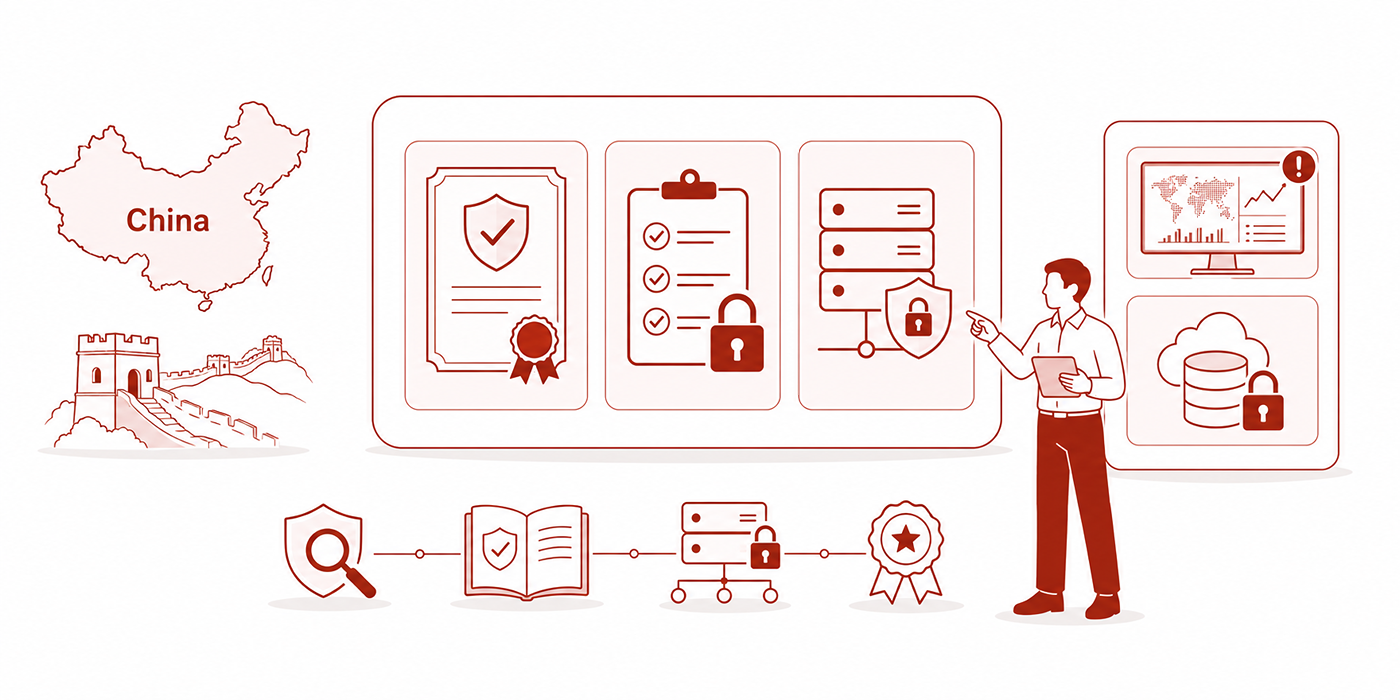
1. Why Advanced Cybersecurity and Management Certification Matters in China
Cybersecurity work in China increasingly requires professionals to connect technical controls with regulatory obligations and business operations. China’s legal framework includes the Cybersecurity Law, Data Security Law, Personal Information Protection Law, and related implementation measures. The Regulations on Network Data Security Management took effect on January 1, 2025, covering network-data processing, personal-information protection, important data, platform responsibilities, and security-management duties.
The Cybersecurity Law was also amended in 2025, with the revised provisions taking effect on January 1, 2026. The amendment strengthens alignment with China’s wider data-security framework and introduces provisions addressing the secure development and application of artificial intelligence.
These developments increase the value of professionals who understand cybersecurity compliance trends, NIST, ISO and COBIT frameworks, security audit processes, access-control models, and vulnerability-assessment practices. Employers need practitioners who can identify weaknesses, determine their business relevance, document them clearly, and support remediation that satisfies technical and governance requirements.
China’s cross-border data rules also create demand for professionals who can distinguish personal information, sensitive personal information, important data, ordinary operational data, and data subject to transfer mechanisms. The 2024 Provisions on Promoting and Regulating Cross-Border Data Flows refined the application of security assessments, standard contracts, and personal-information protection certification. A 2026 CAC review stated that the measures had narrowed certain assessment requirements while supporting lawful and orderly data transfers.
This environment makes privacy-regulation knowledge, future compliance expertise, cybersecurity auditing capability, compliance-officer preparation, and data-loss prevention knowledge especially valuable for professionals working with multinational companies, cloud platforms, e-commerce businesses, financial institutions, manufacturers, technology companies, and organizations processing large volumes of personal information.
Technical specialists face a separate career problem. Many can configure security tools or investigate alerts, yet struggle to communicate risk to managers. Management professionals may understand policy and budgets while lacking enough technical depth to challenge weak controls. Advanced certification should close this divide by developing competence in security operations, cloud-security engineering, incident response, cybersecurity program management, and security leadership.
The strongest candidates therefore pursue certification as part of a wider competence system. That system should include formal learning, practical labs, written case studies, framework familiarity, role-specific projects, bilingual communication where relevant, and a clear professional specialization.
| Certification | Best Career Stage | Primary Capability | Strongest Career Application |
|---|---|---|---|
| Advanced Cybersecurity & Management Certification | Early career to management | Broad technical, risk and leadership development | SOC, security management, consulting, governance and career transition |
| CompTIA Security+ | Entry level | Security fundamentals | Junior analyst, security support and internal career transition |
| CompTIA CySA+ | Early career | Defensive analysis | SOC analysis, detection, vulnerability management and threat response |
| CompTIA PenTest+ | Early career | Structured offensive-security foundations | Security assessment and penetration-testing support |
| CompTIA SecurityX | Mid career | Advanced enterprise-security practice | Architecture, engineering and senior technical roles |
| ISC2 SSCP | Early career | Operational security administration | Monitoring, access control, systems security and SOC operations |
| ISC2 CISSP | Experienced professional | Enterprise-security breadth | Senior engineering, architecture, consulting and management |
| ISC2 CCSP | Mid career | Cloud-security governance | Cloud architecture, platform security and assurance |
| ISACA CISM | Management track | Security-program management | Security manager, governance lead and program owner |
| ISACA CRISC | Mid to senior career | Technology-risk management | Risk analysis, control design and enterprise governance |
| ISACA CISA | Audit track | Information-systems assurance | Internal audit, supplier review and compliance assessment |
| ISACA CGEIT | Senior leadership | Enterprise IT governance | Director, governance head and executive advisory positions |
| Certified Ethical Hacker | Early to mid career | Ethical-hacking methodology | Security testing, consulting and vulnerability assessment |
| OSCP | Hands-on offensive track | Practical exploitation and reporting | Penetration testing, red teaming and offensive engineering |
| GIAC GSEC | Early to mid career | Applied defensive security | Security operations, systems protection and technical consulting |
| GIAC GCIH | Incident-response track | Incident handling | Investigation, containment, response coordination and recovery |
| GIAC GPEN | Offensive mid career | Professional penetration testing | Consulting, adversarial testing and technical assessment |
| ISO/IEC 27001 Lead Implementer | Mid career | Information-security management systems | ISMS design, control implementation and certification readiness |
| ISO/IEC 27001 Lead Auditor | Audit and consulting track | Structured control auditing | Internal audit, supplier assurance and readiness assessment |
| ISO/IEC 27701 Practitioner | Privacy and compliance track | Privacy-information management | Personal-information governance and privacy-control integration |
| Certificate of Cloud Security Knowledge | Early to mid cloud career | Vendor-neutral cloud-security concepts | Shared-responsibility analysis and cloud-control assessment |
| AWS Certified Security – Specialty | Experienced cloud practitioner | AWS security engineering | Cloud identity, logging, encryption and incident response |
| Microsoft AZ-500 | Cloud practitioner | Azure security implementation | Workload, identity, network and platform security |
| Microsoft SC-100 | Architecture track | Enterprise cybersecurity architecture | Zero trust, governance, identity and security design |
| Google Professional Cloud Security Engineer | Cloud-security track | Google Cloud protection | Workload security, monitoring, access and data protection |
| IAPP CIPM | Privacy-management track | Privacy-program management | Privacy operations, accountability and leadership |
2. How to Choose the Right Certification Path in China
Begin with a job outcome rather than a credential name. Examine ten to twenty vacancies matching your preferred location, sector, seniority, and working language. Record the repeated responsibilities, technologies, frameworks, and experience requirements. This analysis reveals whether you need a broad foundation, a technical specialization, or management-level credibility.
Candidates pursuing security operations should concentrate on networking, Windows and Linux administration, log analysis, endpoint telemetry, identity events, phishing investigation, SIEM workflows, escalation, and incident documentation. A suitable plan can combine the SOC analyst career pathway, SIEM solutions directory, endpoint detection guide, email-security comparison, and incident-responder roadmap.
A common failure occurs when candidates earn an analyst credential without developing investigative judgment. Employers may ask how you distinguish malicious activity from administrative behavior, prioritize alerts, preserve evidence, select containment actions, and communicate uncertainty. Your study plan must therefore include realistic scenarios rather than memorized tool definitions.
Offensive-security candidates need sustained practice in enumeration, web testing, Active Directory, privilege escalation, exploitation, scope management, evidence collection, and remediation writing. Build this track through the ethical-hacking roadmap, penetration-testing tool comparison, OSCP career pathway, red-team specialist guide, and vulnerability-research career plan.
A certificate containing offensive-security terminology provides little leverage when the candidate cannot explain authorization, rules of engagement, testing boundaries, evidence integrity, business impact, or safe retesting. Technical depth and professional discipline must develop together.
Governance, risk, compliance, privacy, and audit candidates should learn asset classification, risk assessment, control mapping, policy design, evidence testing, data inventories, vendor assurance, retention, incident governance, and cross-border data considerations. Relevant preparation includes the compliance analyst roadmap, cybersecurity auditor guide, future audit practices, next-generation security standards, and privacy-regulation analysis.
Cloud-security candidates should match their certification to the platforms used by target employers while retaining vendor-neutral knowledge. Study identity and access management, encryption, key management, network controls, workload security, containers, centralized logging, security posture management, secrets protection, and cloud incident response. Use the cloud-security career guide, cloud-security tools directory, application-security tools guide, privileged-access management comparison, and cloud-threat analysis.
Management-track candidates should prioritize governance, budgeting, metrics, staffing, third-party risk, incident leadership, board communication, and security-program design. Strong preparation can draw from the cybersecurity manager pathway, security manager-to-director roadmap, director of information security guide, VP of cybersecurity pathway, and CISO career roadmap.
3. Eligibility, Enrollment and a Practical 12-Week Study Strategy
Advanced cybersecurity programs differ in admission requirements. Some accept beginners, while credentials such as CISSP, CISM, CISA, and certain GIAC or architecture-focused certifications are most valuable when supported by relevant experience. Review the current eligibility, examination, identification, renewal, language, and testing-center requirements directly with each certification provider before paying.
Start with a capability audit. Score yourself from one to five across networking, Windows, Linux, cloud, scripting, identity, security operations, vulnerability management, incident response, governance, risk, audit, privacy, report writing, and stakeholder communication. Use the free cybersecurity resource directory, global training-provider guide, cybersecurity book directory, YouTube learning guide, and industry podcast directory to close foundational gaps.
Weeks 1–2: Systems, networks and identity
Study TCP/IP, DNS, HTTP, segmentation, authentication, authorization, Windows services, Linux permissions, directories, cloud service models, and common attack surfaces. Reinforce theory through the network-monitoring tools directory, access-control model guide, endpoint-security provider comparison, state of endpoint security report, and vulnerability-scanner directory.
Weeks 3–4: Detection and incident response
Practice reviewing authentication events, endpoint alerts, suspicious processes, phishing messages, network anomalies, privilege changes, and data-exfiltration indicators. Create an investigation timeline and document assumptions, evidence, severity, containment, and escalation. Reference the phishing-attack analysis, ransomware threat report, insider-threat analysis, incident-response effectiveness report, and data-breach risk study.
Weeks 5–6: Vulnerability and offensive-security practice
Use authorized laboratories to practice reconnaissance, enumeration, vulnerability validation, exploitation, privilege escalation, evidence capture, remediation writing, and retesting. Connect these exercises with the penetration-testing company directory, ethical hacker-to-consultant pathway, penetration tester-to-manager roadmap, red-team operator pathway, and application-security tools directory.
Weeks 7–8: Governance, Chinese data obligations and audit
Create a sample asset register, data inventory, risk register, control matrix, incident policy, vendor questionnaire, and audit-evidence list. Learn how China’s Cybersecurity Law, Data Security Law, Personal Information Protection Law, Network Data Security Management Regulations, and cross-border data rules affect security governance. Current legal obligations should always be validated through official Chinese sources or qualified counsel.
Support your technical study with the cybersecurity framework guide, security-audit methodology, future compliance report, GDPR and cybersecurity analysis, and NIST adoption research.
Weeks 9–10: Cloud security and management communication
Design a secure cloud environment covering identity, network segmentation, encryption, secrets, logging, backups, privileged access, vulnerability management, and incident response. Then convert the technical design into an executive briefing covering business exposure, priorities, ownership, cost, implementation sequence, and residual risk.
Develop this capability through the future of cloud security, zero-trust forecast, data-loss prevention directory, PAM solutions guide, and chief security architect roadmap.
Weeks 11–12: Exam readiness and portfolio completion
Take timed assessments, analyze every incorrect answer, rebuild failed labs without instructions, and finish three role-aligned portfolio projects. Each project should explain the environment, problem, evidence, analysis, decision, remediation, and measurable security improvement.
A strong portfolio might include a SOC investigation, vulnerability assessment, cloud architecture review, privacy-impact analysis, incident-response plan, or mini information-security management system. Use the security analyst advancement guide, threat-intelligence analyst pathway, compliance analyst roadmap, cloud engineer guide, and cybersecurity program manager pathway to align evidence with job expectations.
Quick Poll: What Is Blocking Your Cybersecurity Career Progress in China?
Select the barrier creating the greatest pressure so you can identify the right certification and evidence strategy.
4. China-Specific Skills and Portfolio Evidence Employers Can Evaluate
Certification becomes valuable when employers can connect it to work they need completed. Your portfolio should therefore demonstrate technical judgment, regulatory awareness, communication quality, and decision-making discipline.
A China-focused governance project could begin with a fictional technology company processing employee, customer, and application data. Build a data inventory, classify data by sensitivity and operational importance, identify processing purposes, map access, document retention, list third parties, and assess possible cross-border access. Then create a control plan covering encryption, identity, logging, incident response, vendor oversight, deletion, and evidence retention.
This project can draw on privacy-regulation analysis, data-loss prevention tools, privileged-access management, security-audit best practices, and compliance analyst development. Legal conclusions should remain within the scope of your expertise and be validated by qualified professionals where required.
A security-operations project could analyze a simulated account-compromise incident. Include authentication logs, endpoint events, suspicious inbox rules, unusual downloads, privilege changes, and outbound connections. Produce an incident timeline, severity assessment, containment plan, recovery tasks, lessons learned, and detection improvements.
Strengthen this evidence through the SOC career guide, SIEM comparison, EDR tools guide, phishing-prevention analysis, and incident-response report.
A cloud project should document architecture, trust boundaries, administrative access, service identities, storage protections, secrets, logging, backups, monitoring, and incident procedures. Include at least one misconfiguration review and explain why each recommended control reduces a specific attack path.
Relevant resources include the cloud-security tools directory, cloud-threat report, zero-trust analysis, application-security guide, and AI-driven security forecast.
Management candidates should create an executive risk briefing. Select five risks, define the affected assets, likely business scenarios, existing controls, gaps, owners, remediation priorities, estimated effort, target dates, and residual exposure. Add a one-page dashboard with indicators such as critical vulnerability age, privileged-account review completion, incident containment time, supplier-assessment coverage, and remediation closure.
Develop that portfolio through the cybersecurity manager roadmap, program manager guide, security director pathway, chief security architect guide, and specialist-to-CISO roadmap.
Language can also influence opportunity. Candidates working in Chinese environments should understand commonly used Chinese cybersecurity and regulatory terminology. Professionals targeting multinational roles benefit from clear English reporting and the ability to translate local requirements into internationally recognized risk and control language. A bilingual glossary covering assets, vulnerabilities, incidents, personal information, important data, security assessments, access control, encryption, audit evidence, and risk treatment can improve interview and workplace communication.

5. Costs, Return on Investment and a 90-Day Career Plan
Calculate certification cost as a complete investment. Include tuition, examination fees, taxes, retakes, laboratory subscriptions, cloud usage, books, practice tests, travel, testing-center expenses, renewal obligations, and study hours. A low-priced course can become expensive when it lacks labs, structured feedback, or recognized assessment. A costly credential can also underperform when it has weak alignment with your target role.
Evaluate expected return through five questions:
Which exact position will this certification support?
Which recurring job requirements does its curriculum address?
What practical evidence will you produce during study?
Which skill gaps will remain after completion?
How will you activate the credential through applications, networking and interviews?
Use the certification career-impact report, salary-growth analysis, entry-level-to-CISO progression guide, cybersecurity job-market analysis, and future specialized-role forecast to structure this evaluation.
Days 1–30: Define the target and close foundational gaps
Choose one primary role and one secondary option. Review relevant vacancies, create a skills matrix, select the certification, schedule weekly study blocks, and establish a progress tracker. Begin foundational laboratories and create a folder for project evidence, notes, screenshots, reports, and reflections.
Use the training-provider directory, free course collection, cybersecurity blog directory, research-organization directory, and cybersecurity conference guide to expand your learning network.
Days 31–60: Produce employer-ready evidence
Complete two practical exercises each week and convert the strongest work into case studies. Each case study should identify the problem, environment, methodology, evidence, result, limitations, and recommended action. Remove secrets, personal information, proprietary material, and unauthorized data.
Candidates can explore AI in cybersecurity, AI-powered cyberattacks, IoT security careers, blockchain-security use cases, and quantum-security risks when choosing forward-looking projects.
Days 61–90: Complete the assessment and activate the career strategy
Finish practice examinations, revisit weak domains, polish three portfolio projects, rewrite your résumé around the target role, and prepare eight interview stories. Include examples covering investigation, conflict, prioritization, failed assumptions, control improvement, stakeholder communication, time pressure, and measurable outcomes.
Begin focused applications and professional outreach. Ask practitioners for portfolio feedback and role-specific guidance. Candidates seeking multinational or remote work can use the remote cybersecurity career forecast, remote salary analysis, freelance cybersecurity report, future cybersecurity skills guide, and certification outlook.
6. Frequently Asked Questions
-
Yes. Beginners should select a program that teaches networking, operating systems, identity, cloud fundamentals, common threats, security operations, risk, and governance before moving into advanced material. The IT support transition guide, entry-level certification directory, SOC analyst pathway, and free cybersecurity course directory provide a useful starting framework.
-
The right specialization depends on your existing experience, target industry, location, language ability, and employer requirements. Security operations suits investigators. Cloud security suits infrastructure and platform professionals. Offensive security rewards deep technical practice. GRC and privacy suit candidates strong in analysis, documentation, regulation, and stakeholder coordination. Security management requires evidence of technical understanding and organizational ownership.
Compare the cloud-security pathway, threat-intelligence roadmap, incident-response career guide, red-team specialist pathway, and compliance analyst roadmap.
-
Technical professionals benefit from knowing how legal and regulatory obligations affect data classification, system design, logging, access, incident response, vendor management, and cross-border processing. The required depth varies by role. A SOC analyst may need operational awareness, while an auditor, privacy professional, security architect, or compliance manager may need deeper control-mapping capability.
China’s current framework includes the Cybersecurity Law, Data Security Law, Personal Information Protection Law, Network Data Security Management Regulations, and cross-border data measures. Applicable obligations should be confirmed through official sources and qualified legal advice.
-
Certification strengthens one part of your profile. Recruitment outcomes also depend on practical competence, previous experience, communication, portfolio quality, language, specialization, interview performance, and alignment with the vacancy. Improve your conversion rate through the security analyst advancement guide, senior analyst pathway, certification impact report, and cybersecurity workforce analysis.
-
A broad certification works well for career changers, early-career professionals, and technical employees moving toward management. A specialist credential is stronger when your target role is already clear and you possess the necessary foundations. Many candidates benefit from a broad program followed by a role-specific certification and portfolio.
Use the certification directory, future certification analysis, future skills guide, and emerging-role forecast before deciding.
-
Include three projects aligned with your target role. A SOC candidate could present an incident investigation, detection rule, and phishing-analysis workflow. A cloud candidate could show a secure architecture review, identity-control assessment, and logging design. A GRC candidate could present a risk register, control matrix, and data-governance assessment. An offensive candidate could provide authorized vulnerability and penetration-test reports.
Use the SIEM solutions guide, vulnerability-assessment guide, cloud-security tools directory, audit-practice guide, and penetration-testing tools comparison.
