
The Ultimate Guide to Getting Advanced Cybersecurity & Management Certification in West Virginia: Everything You Need to Know in 2026-2027
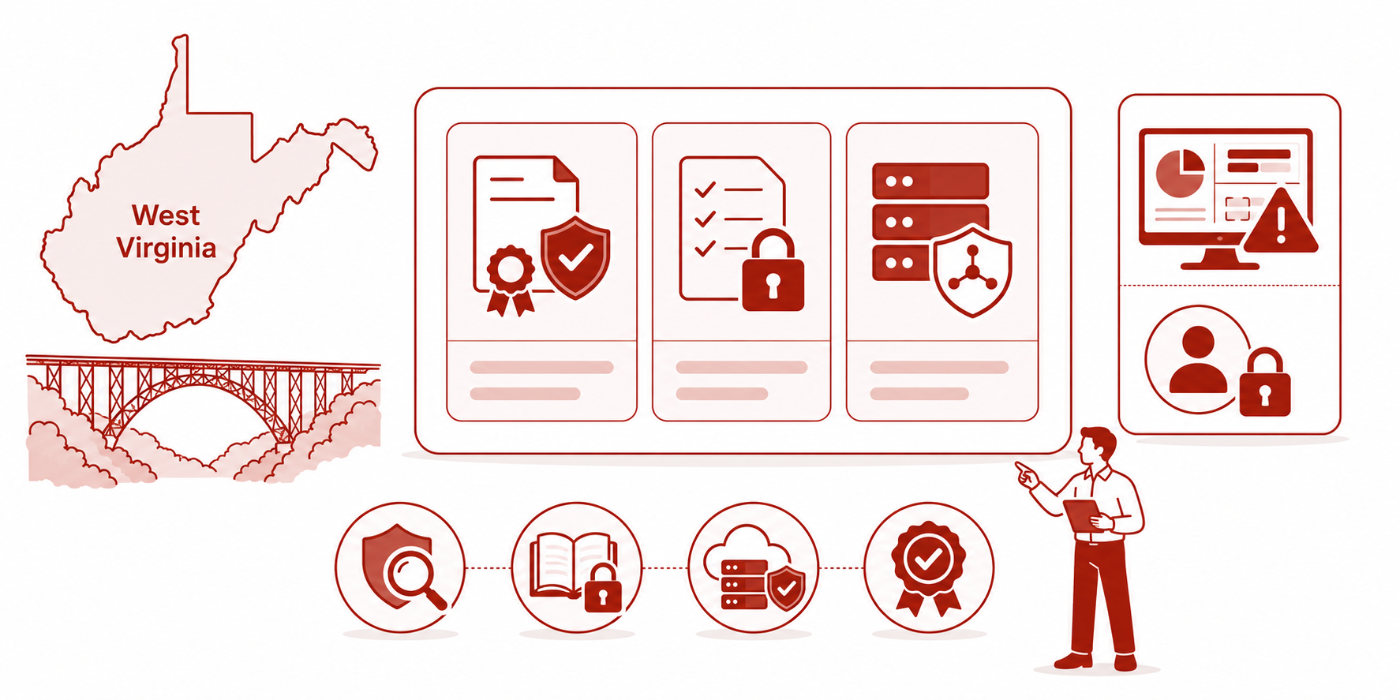
West Virginia cybersecurity careers are changing because employers need people who can do more than recognize threats. They need professionals who can manage risk, protect lean organizations, support audits, communicate with leadership, and make smart security decisions without unlimited budgets. An advanced cybersecurity and management certification can help you move from task-based security work into higher-trust roles, especially when paired with cybersecurity career advancement, security salary planning, cybersecurity manager pathways, and CISO career development.
1. Why Advanced Cybersecurity & Management Certification Matters in West Virginia in 2026-2027
West Virginia’s cybersecurity opportunity sits at the intersection of healthcare, government, education, energy, utilities, manufacturing, finance, small business, and remote work. These environments need security professionals who can protect real operations, not just talk about tools. A strong certification strategy helps candidates prove they understand risk, identity, incident response, compliance, endpoint protection, and executive communication. That matters for people targeting cybersecurity workforce demand, security analyst growth, cybersecurity compliance roles, security audits, and NIST cybersecurity framework adoption.
The hardest part for many West Virginia professionals is proving readiness before someone gives them the title. You may already handle access requests, phishing reports, endpoint alerts, vulnerability tickets, backup checks, vendor questionnaires, or incident notes, yet your résumé may still look junior. Advanced certification helps translate scattered responsibilities into a leadership story. The right credential can show that your work connects to business continuity, audit readiness, risk reduction, and strategic protection. That is where CISSP salary growth, cybersecurity management roles, security manager to director advancement, senior analyst pathways, and cloud security engineering become useful.
The best certification is the one that solves the career problem in front of you. If you need recruiter trust, start with a recognized baseline and build projects. If you want management authority, choose CISSP, CISM, CRISC, CISA, or ISO 27001 depending on your target role. If you want hands-on defense, choose CySA+, GCIH, GCIA, cloud security, or SecurityX. If you want offensive security, choose a path that includes real reports and lab proof. This is how certification becomes career leverage across SOC analyst growth, incident responder careers, SIEM solutions, endpoint detection tools, and ransomware readiness.
Advanced Cybersecurity & Management Certification Matrix for West Virginia Professionals: 26-Credential Career Map
| Certification | Best West Virginia Career Stage | Most Likely Advancement Effect | Where It Creates Real Leverage |
|---|---|---|---|
| ISC2 Certified in Cybersecurity | Entry transition | Builds baseline trust for first security conversations | Useful when moving from IT support into cybersecurity analyst roles. |
| CompTIA Security+ | Entry to early career | Strengthens core security employability | Supports help desk security, junior SOC, and SOC analyst pathways. |
| CompTIA CySA+ | Early career | Improves detection, triage, and defensive credibility | Strong fit for analysts working with SIEM solutions and alert workflows. |
| CompTIA PenTest+ | Early to mid career | Adds offensive testing and assessment positioning | Useful for vulnerability validation and penetration testing tools exposure. |
| CompTIA SecurityX | Mid to senior practitioner | Shows advanced enterprise security depth | Helps technical leads connect architecture, risk, and security engineer growth. |
| ISC2 CISSP | Mid to senior career | Strengthens broad security leadership credibility | High-value for manager, architect, consultant, and CISO advancement tracks. |
| ISC2 CCSP | Cloud-focused mid career | Validates cloud governance and architecture judgment | Useful for hybrid environments, SaaS risk, and cloud security tools. |
| ISACA CISM | Security management | Signals information security program leadership | Best for people moving toward budgets, metrics, policy, and cybersecurity manager roles. |
| ISACA CISA | Audit and assurance | Creates control testing and audit credibility | Useful for regulated employers, internal audit, and cybersecurity auditor roles. |
| ISACA CRISC | Risk leadership | Improves enterprise risk and control ownership | Valuable for GRC, vendor risk, board reporting, and compliance trends. |
| ISACA CDPSE | Privacy and data protection | Connects privacy design with cybersecurity governance | Strong for healthcare, education, SaaS, and privacy regulation work. |
| EC-Council CEH | Early offensive track | Introduces ethical hacking language and methodology | Helpful when combined with labs, reports, and ethical hacker career proof. |
| OffSec OSCP | Hands-on offensive career | Signals practical exploitation and reporting ability | Best for serious testing candidates following an OSCP penetration tester path. |
| GIAC GSEC | Technical baseline plus | Strengthens practitioner-level security breadth | Useful for analysts needing stronger fundamentals across access control models, operations, and defense. |
| GIAC GCIH | Incident response | Improves containment, attacker technique, and response credibility | Strong for responders building around incident response effectiveness. |
| GIAC GCIA | Network detection | Deepens traffic analysis and intrusion detection credibility | Useful for SOCs, MSPs, and network monitoring tools work. |
| GIAC GPEN | Professional penetration testing | Strengthens methodology-driven offensive credibility | Helpful for consulting, testing reports, and senior security consultant growth. |
| GIAC GREM | Malware and reverse engineering | Shows advanced malware analysis specialization | Best for threat research, malware triage, and threat intelligence analyst roles. |
| GIAC GSTRT | Security leadership | Connects security strategy with executive communication | Useful for leaders moving toward director of information security roles. |
| Certified Cloud Security Professional | Cloud security leadership | Builds credibility for cloud risk and architecture decisions | Useful for employers modernizing around future cloud security trends. |
| AWS Certified Security Specialty | Cloud platform specialist | Validates AWS-native security implementation | Strong for remote roles, cloud operations, and cloud threat mitigation. |
| Microsoft SC-100 | Security architecture | Supports identity, cloud, and enterprise architecture credibility | Useful for Microsoft-heavy environments, zero trust, and zero trust security. |
| Google Professional Cloud Security Engineer | Cloud engineering | Shows ability to secure cloud workloads and data | Works well for candidates targeting remote cybersecurity careers. |
| ISO 27001 Lead Implementer | Governance and compliance | Builds practical ISMS implementation credibility | Useful for audits, policy programs, and cybersecurity frameworks. |
| ISO 27001 Lead Auditor | Audit leadership | Strengthens control assessment and audit-readiness value | Helpful for consultants, compliance analysts, and security audit teams. |
| Certified Information Privacy Professional | Privacy-adjacent security | Adds privacy vocabulary to cybersecurity decisions | Strong for healthcare, education, vendor risk, and GDPR cybersecurity work. |
2. The Best Advanced Certification Pathways for West Virginia Cybersecurity Careers
West Virginia professionals should choose certification pathways by role target, not by popularity. A credential that looks impressive can still be weak if it does not match the job you want. The strongest plan begins with a specific target: security manager, SOC lead, cloud security engineer, GRC analyst, cybersecurity auditor, incident responder, penetration tester, or CISO-track leader. Once the target is clear, the certification becomes a proof tool. That approach supports advanced certification impact, cybersecurity job market trends, future skills, security leadership, and chief security architect growth.
For management-focused professionals, the most valuable stack often begins with security fundamentals, then moves toward CISSP, CISM, CRISC, CISA, ISO 27001, or privacy certification. This pathway works for people who want to own policies, control maturity, budget conversations, vendor risk, risk registers, security awareness, and board reporting. It is especially useful in smaller West Virginia organizations where one person may wear several security hats. The goal is to become the person who can explain risk clearly, prioritize limited resources, and reduce business exposure. Build around cybersecurity compliance officer guidance, cybersecurity auditor planning, healthcare compliance, financial sector cybersecurity, and public sector cybersecurity.
For defensive technical professionals, the best pathway usually combines analyst credibility with systems thinking. CySA+, GCIH, GCIA, SecurityX, CISSP, CCSP, AWS Security Specialty, Microsoft SC-100, and Google Cloud Security can work depending on your environment. The goal is to show that you can tune alerts, investigate suspicious activity, strengthen identity, reduce endpoint risk, improve logging, and brief leadership after incidents. These skills matter across healthcare networks, schools, utilities, managed service providers, and remote enterprise teams. This route connects directly to SOC analyst to SOC manager, security analyst to engineer, cloud security engineer, incident responder, and senior cybersecurity analyst careers.
For offensive security, West Virginia candidates need more than exam names. Employers want to know whether you can scope a test, follow rules of engagement, document findings, explain impact, avoid reckless behavior, and recommend practical remediation. PenTest+, CEH, GPEN, PNPT, OSCP, and related hands-on paths can help, but the proof has to include sample reports and lab evidence. A clean portfolio should include methodology notes, exploitation context, business impact, remediation guidance, and an executive summary. Use this track with ethical hacking roadmaps, junior penetration tester growth, OSCP preparation, red team specialization, and vulnerability assessment tools.
3. How West Virginia’s Employer Landscape Changes the Certification Decision
West Virginia’s cybersecurity needs are practical. Many organizations need professionals who can protect Microsoft 365, endpoints, remote users, cloud apps, sensitive data, backups, and vendor access without pretending every employer has a giant security department. That makes broad, operationally useful certifications valuable. CISSP, CISM, CISA, CRISC, CCSP, SecurityX, CySA+, and ISO 27001 can help candidates speak across technical and management layers. To match that reality, professionals should study endpoint security providers, email security solutions, data loss prevention tools, privileged access management, and security awareness platforms.
Healthcare and public-sector environments are especially important in West Virginia because they create real pressure around privacy, uptime, vendor systems, identity access, audit evidence, and incident reporting. A credential like CISM, CISA, CRISC, ISO 27001, CISSP, or privacy certification becomes stronger when you can show how it applies to real control problems. Employers care about whether you can reduce audit chaos, improve documentation, protect patient or citizen data, and coordinate response when systems are under pressure. Build context through healthcare cybersecurity tools, healthcare threat reporting, education sector cybersecurity, insider threat prevention, and data breach mitigation.
Energy, utilities, and manufacturing also make certification strategy more serious. These sectors care about uptime, safety, third-party connectivity, network segmentation, phishing resistance, backup resilience, access control, and incident response coordination. A candidate who understands both operational risk and security governance can become valuable quickly. Certifications in risk management, incident response, cloud security, network defense, and security leadership can support those goals. Pair your credential with knowledge of energy and utilities cybersecurity, manufacturing cybersecurity trends, critical infrastructure cybersecurity, IoT security breaches, and IoT security specialist careers.
Remote work gives West Virginia candidates a powerful advantage if they prepare correctly. You can compete for roles outside the state, but that also means competing with candidates from larger cybersecurity markets. Certification helps recruiters filter you in, while proof keeps you in the conversation. Your résumé needs to show ownership: improved alert triage, cleaner audit evidence, faster response documentation, stronger identity controls, hardened endpoints, tested backups, or better vendor reviews. This strategy supports remote cybersecurity salary positioning, global salary benchmarks, entry-level to CISO progression, remote cybersecurity careers, and specialized role demand.co
Quick Poll: What Career Result Are You Chasing With a West Virginia Cybersecurity Certification?
Pick the outcome that matters most, because your certification strategy should match the title, salary, and responsibility gap you want to close.
4. How to Choose the Right Advanced Certification for Your West Virginia Career Goal
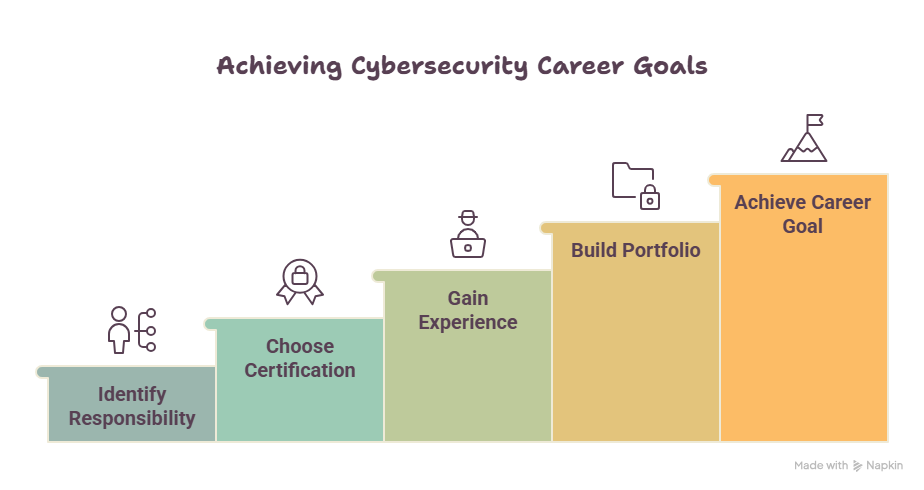
Start with the responsibility you want to own. If your next role requires security leadership across multiple domains, CISSP is usually the strongest broad credential. If your role is becoming more about program management, risk decisions, metrics, and executive communication, CISM may fit better. If the work is audit-heavy, CISA has stronger alignment. If your future is enterprise risk, CRISC can be powerful. If you are moving into cloud security, CCSP or platform-specific credentials may create stronger role fit. Use top cybersecurity certifications, certifications of the future, future cybersecurity workforce trends, security standards evolution, and cybersecurity market outlook to compare options.
Choose CISSP when you want to show broad security maturity. It helps professionals who have experience across operations, identity, risk, architecture, incident response, vendor security, policy, compliance, or software security. In West Virginia, CISSP can be especially useful for professionals trying to move from technical work into trusted advisory or management roles. The credential gives structure to experience that may otherwise look scattered. It becomes stronger when supported by examples of business risk reduction, leadership communication, control design, and response coordination. Pair it with security manager pathways, CISO roadmaps, chief security architect planning, director of cybersecurity growth, and cybersecurity leadership advancement.
Choose CISM when your career goal is security management rather than deeper technical specialization. CISM works well for people who want to lead programs, manage risk, write roadmaps, communicate with executives, guide incident governance, and build policy that people can follow. It is especially useful when your technical background is already credible and your next barrier is leadership trust. The best CISM candidates build practical artifacts: a security roadmap, policy improvement plan, incident escalation workflow, risk register, or security metrics dashboard. That portfolio connects well to cybersecurity compliance analyst growth, policy director pathways, audit best practices, compliance officer careers, and regulatory trend planning.
Choose CISA, CRISC, ISO 27001, or privacy certification when your opportunity is tied to governance, risk, compliance, audit, vendor assessment, or data protection. These paths can be strong in healthcare, education, financial services, public-sector, and vendor-heavy environments. The pain point they solve is evidence. Many organizations struggle to prove that controls exist, policies are followed, risk is tracked, and exceptions are managed. If you can make that evidence clear, you become valuable quickly. Build alongside cybersecurity frameworks, GDPR compliance challenges, healthcare HIPAA cybersecurity, small business cybersecurity legislation, and cybersecurity audit innovation.
Choose cloud, detection, or incident-response credentials when your target roles demand modern operational depth. Cloud certs matter when job descriptions mention IAM, logging, encryption, workload protection, SaaS risk, DevSecOps, Kubernetes, or zero trust. Incident-response certifications matter when roles mention containment, ransomware, playbooks, forensics coordination, detection engineering, and post-incident reporting. These tracks help West Virginia professionals compete for remote roles because they show current, transferable skills. Build around future cloud security, AI-driven cybersecurity tools, endpoint security trends, next-gen SIEM, and ransomware evolution.
5. A Practical 12-Month Certification Plan for West Virginia Professionals
Month one should be a market scan. Pull 20 job descriptions from West Virginia employers, nearby regional employers, federal contractors, remote-first companies, healthcare systems, higher education, utilities, manufacturers, and managed service providers. Highlight repeated requirements and sort them into five buckets: technical controls, risk management, compliance, cloud security, and incident response. Then choose one primary certification and one proof project that match the role you want. This prevents credential drift and connects your study plan to cybersecurity salary benchmarks, remote salary differences, career advancement data, workforce shortage analysis, and job market predictions.
Months two through four should focus on study and mapping. If you choose CISSP, map your experience to the major domains and identify weak areas. If you choose CISM, build a security program roadmap. If you choose CISA, create a control testing checklist. If you choose CRISC, build a risk register and treatment plan. If you choose CCSP, document a cloud security architecture review. Every study topic should create one résumé-ready outcome. Tie your work to NIST cybersecurity framework, access control models, vulnerability assessment, endpoint detection response, and email security.
Months five through seven should produce visible proof. Create sanitized work samples you can discuss in interviews without exposing employer data. Useful assets include an executive risk memo, incident response communication plan, vendor security questionnaire, cloud logging checklist, tabletop exercise plan, vulnerability remediation model, identity review workflow, or security awareness improvement plan. These assets show that you can turn certification knowledge into professional output. They support incident responder roles, threat intelligence careers, cybersecurity consulting, cybersecurity firms for SMBs, and nonprofit cybersecurity providers.
Months eight through ten should turn your certification into interview stories. Prepare six examples: one incident or near-miss, one access-control improvement, one vulnerability prioritization decision, one leadership communication moment, one audit or compliance evidence problem, and one cloud or endpoint hardening effort. Use a simple structure: context, risk, decision, action, result, lesson. Hiring managers remember specific security judgment more than generic certification claims. This strengthens applications for senior analyst advancement, security manager promotion, IT manager to security leadership, security specialist to educator, and cybersecurity content creator careers.
Months eleven and twelve should focus on conversion. Update your résumé with credential-aligned outcomes, revise LinkedIn, apply to roles with sharper fit, ask for internal responsibilities that match your certification, and prepare compensation talking points. Your strongest bullets should show measurable improvement: better audit readiness, reduced alert noise, faster incident documentation, stronger MFA coverage, improved endpoint visibility, cleaner vendor reviews, tested backups, or reduced vulnerability backlog. Certification creates the opening; evidence wins the role. For salary and title strategy, use CISSP salary analysis, entry-level to CISO salary progression, freelance cybersecurity income, remote cybersecurity opportunities, and future specialized role demand.
The final step is to keep the certification connected to career evidence. West Virginia employers need people who can protect operations, explain risk, manage limited resources, and respond when something goes wrong. Remote employers need proof that you can work independently and document clearly. Advanced certification gives you structure, vocabulary, and credibility. Your projects, artifacts, and measurable outcomes turn that credibility into advancement.
6. FAQs About Getting Advanced Cybersecurity & Management Certification in West Virginia
-
The best certification depends on your next role. CISSP is strong for broad leadership, architecture, consulting, and CISO-track growth. CISM is strong for security program management, risk communication, policy, and executive reporting. CISA fits audit and assurance. CRISC fits enterprise risk and control ownership. CCSP and cloud vendor credentials fit cloud-focused roles. West Virginia professionals should choose based on job descriptions, current experience, and proof projects rather than brand recognition alone. Compare options with top cybersecurity certifications, certification career impact, cybersecurity manager pathways, and CISO career planning.
-
CISSP can be very valuable for West Virginia professionals with meaningful security experience who want stronger leadership credibility. It helps most when your background includes security operations, risk management, access control, incident response, governance, compliance, vendor reviews, or architecture decisions. It is also useful for remote roles because many recruiters use it as a senior-level signal. The credential becomes stronger when paired with practical proof such as a risk memo, control improvement plan, incident review, or security roadmap. Support your plan with CISSP salary growth, security leadership advancement, director-level security careers, and chief security architect guidance.
-
Choose CISSP when you need broad security credibility across technical and management domains. Choose CISM when your next role is centered on program leadership, governance, metrics, policy, risk communication, incident governance, and executive reporting. CISSP can organize broad experience into a recognized security framework. CISM can help prove you are ready to manage a security function. The right choice depends on your current résumé gap. If your technical depth is strong and leadership proof is thin, CISM may be more targeted. Connect either path to cybersecurity compliance officer roles, security audit practices, security manager advancement, and cybersecurity program manager careers.
-
Start with Security+ or ISC2 Certified in Cybersecurity if you need baseline trust, then move toward CySA+ for defensive operations, PenTest+ for testing interest, or cloud security credentials if your current work involves identity, Microsoft 365, AWS, Google Cloud, endpoint tools, or SaaS administration. The strongest transition plan includes hands-on proof. Build a phishing triage workflow, vulnerability tracking sheet, basic SIEM investigation, access review checklist, or endpoint hardening plan. That evidence makes your move more believable. Use IT support to cybersecurity analyst, SOC analyst career guidance, free cybersecurity courses, and cybersecurity bootcamps.
-
CISA, CISM, CRISC, ISO 27001 Lead Implementer, ISO 27001 Lead Auditor, and privacy credentials are strong choices. CISA is especially useful for audit and control testing. CISM supports security program management. CRISC supports enterprise risk and control ownership. ISO 27001 credentials help with structured governance, audit readiness, and management systems. The best candidates also show evidence: policies, risk registers, audit checklists, vendor review templates, control maturity summaries, and remediation tracking. Build your foundation with cybersecurity frameworks, cybersecurity compliance trends, NIST framework adoption, and cybersecurity auditor careers.
-
Most working professionals need three to six months for a serious advanced certification, depending on experience, study time, and exam difficulty. CISSP, CISM, CISA, CRISC, CCSP, OSCP, and GIAC credentials usually require deeper preparation than entry-level exams. A practical plan includes weekly study blocks, domain notes, practice questions, lab work or documentation projects, and interview story development. The strongest candidates study in a way that improves their career materials while preparing for the exam. Use future cybersecurity skills, security analyst advancement, incident response careers, and cloud security career planning.
