
The Ultimate Guide to Getting Advanced Cybersecurity & Management Certification in Virginia: Everything You Need to Know in 2026-2027
Virginia is one of the strongest places in the United States to turn cybersecurity skill into serious career mobility, especially if you can connect technical depth with leadership judgment. A certification carries more weight when it helps you explain risk, guide teams, improve controls, and communicate with decision-makers. In 2026-2027, Virginia professionals should connect cybersecurity management certification pathways, SOC career advancement, security audit best practices, NIST cybersecurity framework adoption, and cybersecurity salary growth into one practical career plan.
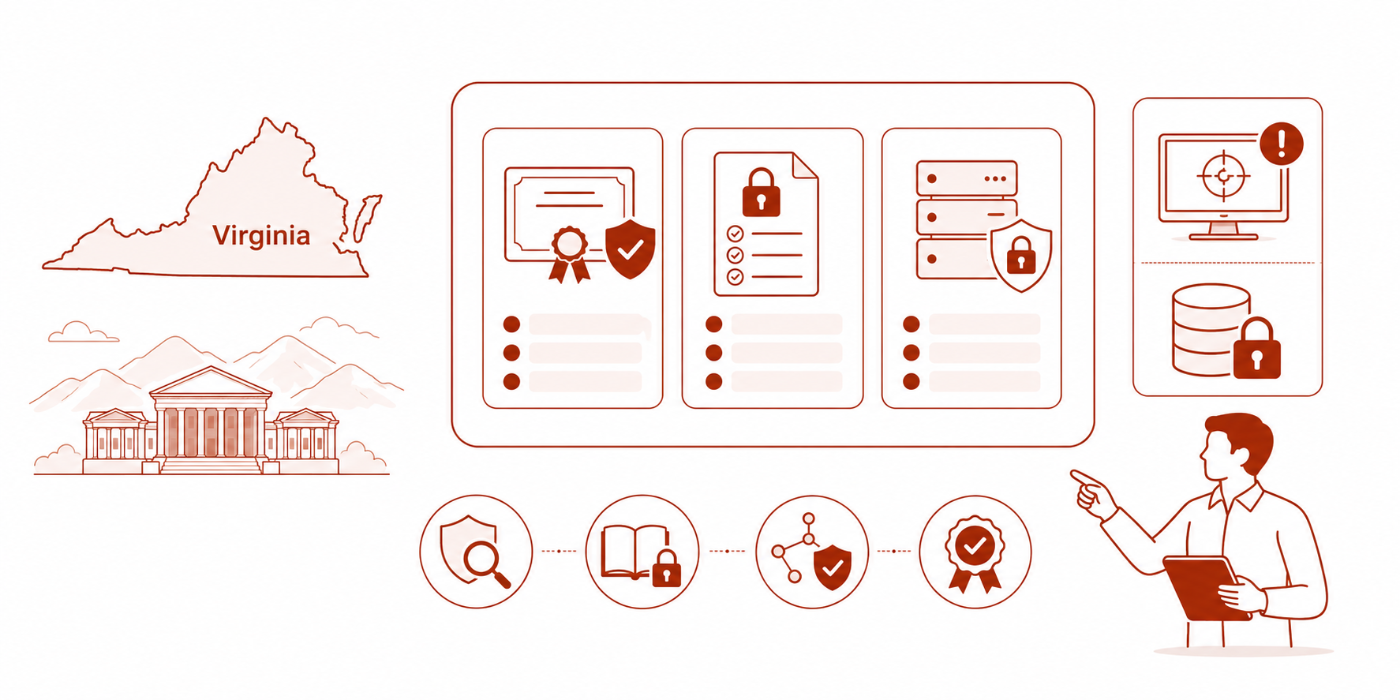
1. Why Advanced Cybersecurity & Management Certification Matters in Virginia in 2026-2027
Virginia rewards cybersecurity professionals who can operate across technical systems, compliance obligations, federal-style security expectations, cloud environments, and leadership conversations. A strong credential can help, although the real value comes from what it proves after the exam. Candidates who understand cybersecurity frameworks, vulnerability assessment methods, endpoint detection and response tools, cloud security tools, and cybersecurity compliance trends can speak to the actual problems employers feel.
The main pain point for many Virginia candidates is credibility compression. A résumé may list tools, coursework, and acronyms, yet the hiring manager still wonders whether the person can prioritize threats, protect sensitive data, lead remediation, or brief stakeholders under pressure. That is where advanced cybersecurity and management certification becomes useful. It can connect incident response effectiveness, phishing prevention strategy, ransomware threat analysis, data breach mitigation, and insider threat prevention into a stronger promotion or hiring case.
Virginia also has a demanding mix of career environments. Northern Virginia can pull candidates toward federal contracting, cloud security, identity, governance, and security architecture. Richmond can create openings around finance, healthcare, compliance, insurance, and enterprise risk. Hampton Roads can create security demand tied to defense-adjacent operations, logistics, maritime ecosystems, and infrastructure. Across the state, a useful certification strategy should support government cybersecurity pathways, financial services cybersecurity, healthcare cybersecurity compliance, transportation and logistics security, and critical infrastructure cybersecurity.
| Certification / Credential Area | Best Virginia Career Stage | Most Likely Advancement Effect | Where It Creates Real Leverage |
|---|---|---|---|
| ISC2 Certified in Cybersecurity (CC) | Entry transition | Reduces beginner-risk perception | First security role, IT support transition, help desk to cyber pathway |
| CompTIA Security+ | Entry to early career | Strengthens baseline employability | Analyst interviews, contractor-adjacent roles, junior security operations |
| CompTIA Network+ | Pre-cyber foundation | Builds network fluency before security specialization | SOC readiness, infrastructure security, firewall and routing conversations |
| CompTIA CySA+ | Early analyst | Improves detection and triage credibility | SOC work, alert analysis, SIEM investigation, blue-team progression |
| CompTIA PenTest+ | Early offensive track | Supports testing and assessment positioning | Vulnerability validation, internal assessments, pentest support work |
| CompTIA CASP+ | Advanced practitioner | Signals senior technical depth | Security engineering, architecture support, complex technical ownership |
| CISSP | Mid to senior career | Improves leadership and governance credibility | Security manager, architect, consultant, director pathway |
| CISM | Management track | Turns security experience into program leadership | Risk ownership, team leadership, executive security communication |
| CISA | Audit and compliance | Builds control-testing and assurance credibility | Internal audit, regulated industries, vendor risk, compliance evidence |
| CRISC | Risk leadership | Strengthens enterprise risk language | Risk registers, control prioritization, board reporting, governance planning |
| CCSP | Cloud security | Signals cloud governance and control readiness | SaaS risk, hybrid cloud, cloud compliance, security architecture |
| AWS Certified Security Specialty | Platform specialization | Validates AWS security implementation skill | IAM, logging, encryption, threat detection, cloud operations |
| Microsoft SC-100 | Security architecture | Supports enterprise design credibility | Zero trust, identity, Microsoft security strategy, architecture interviews |
| Microsoft SC-200 | SOC and detection | Improves Microsoft security operations proof | Sentinel, Defender, incident investigation, analyst specialization |
| Azure Security Engineer | Cloud and identity track | Shows cloud-control implementation ability | Azure environments, Entra ID, conditional access, posture management |
| Google Professional Cloud Security Engineer | Cloud specialization | Adds cloud-native security credibility | GCP IAM, monitoring, data protection, cloud architecture |
| GIAC Security Essentials (GSEC) | Technical upgrade | Deepens practitioner-level security knowledge | Analyst roles, systems hardening, blue-team confidence, lab-based proof |
| GIAC Certified Incident Handler (GCIH) | Incident response | Supports response and escalation credibility | Containment, attack lifecycle analysis, playbooks, IR coordination |
| GIAC Certified Forensic Analyst (GCFA) | Advanced investigation | Strengthens breach-analysis credibility | Endpoint artifacts, forensic timelines, evidence handling, IR consulting |
| OSCP | Offensive security | Proves practical exploitation ability | Penetration testing, red-team work, offensive consulting, exploit validation |
| CEH | Early ethical hacking | Creates recognizable offensive-security signal | Security testing, junior pentesting interviews, attack-method awareness |
| ISO 27001 Lead Implementer | Governance and compliance | Builds management-system credibility | Policy design, risk treatment, audit preparation, ISMS ownership |
| ISO 27001 Lead Auditor | Audit and assurance | Improves formal audit readiness | Internal audits, supplier assurance, compliance reporting, evidence reviews |
| Privacy / Data Protection Credential | Compliance expansion | Adds privacy-risk fluency | Data mapping, privacy reviews, regulated records, vendor assessments |
| Project Management Certification | Security leadership | Improves delivery and roadmap credibility | Tool rollouts, remediation programs, awareness campaigns, cross-team execution |
| Advanced Cybersecurity & Management Certification | Mid-career to leadership | Combines technical credibility with management readiness | Promotion cases, manager interviews, GRC ownership, security program leadership |
2. Which Virginia Cybersecurity Certification Path Fits Your Career Stage?
Your certification path should start with the job you want next, then work backward into proof. If you are moving from IT support, help desk, networking, military service, or systems administration, your first priority is employability evidence. That means pairing foundational credentials with IT support to cybersecurity analyst guidance, SOC analyst career steps, access control models, free cybersecurity courses, and global cybersecurity training providers so your résumé feels role-ready.
If you already work in cybersecurity, the goal becomes specialization. Blue-team candidates should build around detection, escalation, endpoint telemetry, threat hunting, and reporting. Offensive-track candidates should build around testing scope, methodology, reporting quality, exploit validation, and remediation language. GRC candidates should build around control mapping, audit evidence, risk treatment, and policy interpretation. This is where SOC analyst advancement, threat intelligence analyst pathways, incident responder career planning, ethical hacking roadmaps, and cybersecurity compliance officer pathways become useful.
For management-focused professionals, the certification must prove judgment. Employers want to know whether you can prioritize the right risks, lead remediation across teams, write useful policies, justify budget, and translate technical exposure into business impact. A management credential works best when tied to cybersecurity manager pathways, security manager to director growth, CISO career planning, cybersecurity program manager roles, and VP of cybersecurity advancement.
The weakest path is the scattered path. A candidate with five unrelated certificates can still look unfocused if the résumé does not point toward a role. A Virginia candidate with one targeted credential, two strong projects, and role-specific language can look far more serious. Build your path through cybersecurity certification directories, cybersecurity bootcamps, cybersecurity books, cybersecurity podcasts, and cybersecurity learning channels with one target outcome in mind.
3. How to Build a 2026-2027 Certification Roadmap That Employers Can Trust
Start with a role map. For a SOC analyst path, list the tools, workflows, and decisions you need to discuss: SIEM triage, endpoint alerts, phishing investigation, escalation notes, ticket quality, and containment logic. For a cloud security path, list IAM, logging, encryption, misconfiguration review, policy enforcement, and cloud-native detection. For a leadership path, list control ownership, risk scoring, budget communication, roadmap design, and cross-team accountability. That structure aligns your learning with SIEM solution knowledge, endpoint security effectiveness, future cloud security trends, zero trust security predictions, and future cybersecurity skills.
A practical roadmap should contain certification study, hands-on proof, and interview language. Certification study gives structure. Hands-on proof gives confidence. Interview language turns the work into career leverage. For example, an analyst can create a phishing investigation report with indicators, timeline, decision points, and escalation recommendation. A GRC candidate can create a control-evidence tracker mapped to a framework. A management candidate can create a 12-month security roadmap with priorities, owners, budget categories, and metrics. Those assets pair well with security audit processes, DLP software reviews, network monitoring tools, application security tools, and privileged access management solutions.
Use a 90-day execution plan. In days 1-30, choose one target role, pick one credential, gather job descriptions, and identify repeated skill patterns. In days 31-60, complete labs, write two proof artifacts, and revise your résumé around outcomes. In days 61-90, apply selectively, run mock interviews, and practice explaining risks in plain language. This approach works because it connects study to movement through cybersecurity job market trends, cybersecurity workforce shortage analysis, entry-level to CISO salary progression, remote cybersecurity salary data, and certification career impact.
A Virginia roadmap should also account for employer type. A federal contractor may care about policy discipline, security controls, identity, reporting, and mission awareness. A healthcare employer may care about privacy, ransomware resilience, endpoint discipline, and access reviews. A financial employer may care about audit readiness, third-party risk, and incident reporting. A logistics or infrastructure employer may care about operational continuity. Shape your projects around healthcare cybersecurity threats, financial-sector incident analysis, retail and e-commerce cybersecurity, energy and utilities cybersecurity, and government cybersecurity predictions.
4. How to Choose Training, Labs, and Portfolio Evidence in Virginia
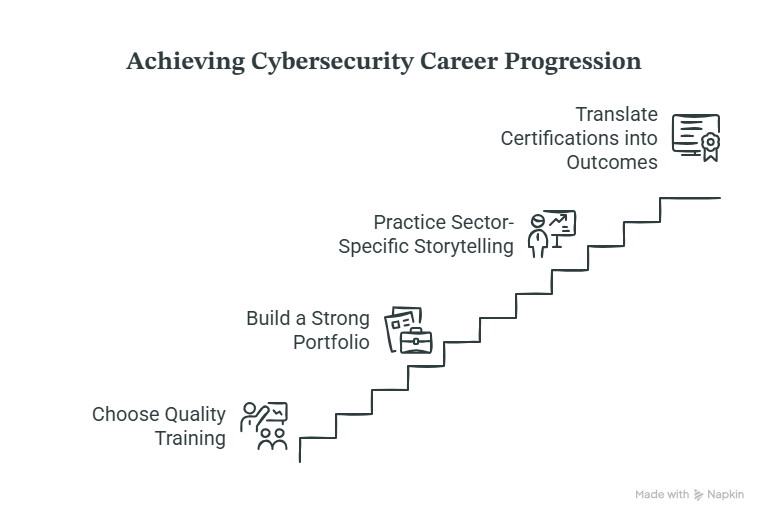
Training should create interview-ready evidence. A useful program gives you labs, case studies, reporting practice, and scenario-based judgment. A weak program leaves you with notes and a certificate that you struggle to defend. Before enrolling, check whether the training includes realistic alert triage, cloud misconfiguration review, vulnerability prioritization, policy mapping, incident reporting, executive summaries, and risk-based recommendations. Those features matter more when paired with cybersecurity bootcamp directories, security awareness training platforms, cybersecurity research institutes, cybersecurity conferences, and industry news resources.
Your portfolio should answer a hard employer question: can this person reduce risk with limited supervision? For an analyst, include a mock investigation with evidence, timeline, triage notes, hypothesis, containment recommendation, and final report. For a cloud candidate, include an IAM review, logging checklist, misconfiguration finding, and remediation note. For a GRC candidate, include a control matrix with owner, evidence, maturity level, and remediation status. For a management candidate, include a risk roadmap. These assets support security analyst to engineer progression, cloud security engineer careers, cybersecurity auditor pathways, cybersecurity compliance analyst roadmaps, and chief security architect careers.
Virginia candidates should practice sector-specific storytelling. A government-facing interview may reward clear documentation, access-control thinking, escalation discipline, and framework language. A healthcare interview may reward privacy protection, ransomware readiness, and endpoint hygiene. A finance interview may reward audit evidence, vendor risk, and incident reporting. A small business interview may reward practical controls that improve security without huge overhead. Build examples around healthcare cybersecurity firms, financial services cyber firms, SMB cybersecurity solutions, nonprofit cybersecurity providers, and education-sector cybersecurity.
Your résumé should translate certification into outcomes. Instead of writing “completed advanced cybersecurity certification,” write that you mapped controls to a framework, built an incident-response playbook, reduced vulnerability backlog noise through prioritization, documented access-review gaps, or created a leadership dashboard for security risk. Hiring teams trust verbs tied to decisions. Strong résumé language draws from GDPR cybersecurity compliance, privacy regulation trends, future audit practices, next-generation cybersecurity standards, and cybersecurity compliance reporting.
5. Salary, Promotion, and Long-Term Career Mobility After Certification
Advanced certification can improve salary leverage when it changes the perceived size of the role you can handle. A candidate who can only say “I passed an exam” has limited negotiation power. A candidate who can show stronger controls, cleaner audit evidence, better incident handling, cloud-risk reduction, or leadership-ready reporting has a stronger case. That is why certification should be paired with global cybersecurity salary benchmarks, certification salary growth analysis, remote cybersecurity salary trends, cybersecurity freelance income data, and career advancement survey insights.
Promotion requires trust. Your manager must believe you can make decisions that protect the organization, guide other people, and explain tradeoffs in plain business language. The higher you move, the more your work shifts from completing tickets to shaping priorities. Advanced cybersecurity and management certification supports that shift when it strengthens your grasp of risk ownership, governance, reporting, staffing, tool selection, and remediation planning. It can help with SOC manager progression, penetration testing manager pathways, IT manager to security leadership, senior analyst to VP of security, and cybersecurity policy director paths.
Long-term mobility comes from stacking durable proof. A Virginia professional with technical credibility, management language, framework fluency, cloud awareness, and incident-response judgment can move across employers, industries, and role families. That flexibility matters as security work keeps spreading into privacy, product, compliance, education, consulting, and executive strategy. Certification becomes more powerful when it opens adjacent routes through cybersecurity instructor careers, cybersecurity curriculum developer pathways, cybersecurity content creator careers, cybersecurity product manager roadmaps, and chief privacy officer careers.
The safest strategy is to build controlled optionality. Keep enough technical depth to stay credible, enough governance understanding to earn leadership trust, and enough industry awareness to choose roles intelligently. In 2026-2027, the strongest candidates will be ready for AI-enabled attacks, cloud sprawl, ransomware pressure, endpoint exposure, deepfake risk, and regulatory complexity. A future-ready plan should include AI-powered cyberattack trends, deepfake cybersecurity threats, next-gen SIEM trends, endpoint security advances, and top cybersecurity threats by 2030.
6. FAQs About Advanced Cybersecurity & Management Certification in Virginia
-
The best certification depends on the role you want next. For management and governance, CISSP, CISM, CRISC, ISO 27001, and advanced cybersecurity management programs can create strong career leverage. For analyst growth, CySA+, GCIH, GCFA, and Microsoft security credentials may fit better. For offensive security, OSCP, PenTest+, and CEH-style pathways can help when paired with strong reports and lab evidence. Compare options through cybersecurity certification rankings, CEH career guidance, OSCP penetration testing paths, and security manager certification planning.
-
Yes, especially for IT professionals who already understand systems, networks, cloud platforms, identity, support workflows, or infrastructure. The certification helps when it converts that background into security language: access reviews, endpoint hardening, incident escalation, vulnerability prioritization, control mapping, and risk reporting. The transition becomes stronger when supported by network administrator to ethical hacker guidance, IT support to cybersecurity analyst planning, cloud security engineering, and IoT security specialist pathways.
-
Certification can help in Northern Virginia when it supports the role environment you are targeting. Many candidates compete for roles where documentation, security controls, compliance awareness, identity, cloud security, incident handling, and professional communication matter heavily. Build proof that shows you can work in structured environments: framework mapping, access-control review, SIEM triage, incident notes, remediation plans, and executive summaries. Strengthen that positioning with government cybersecurity firms, federal-style security trends, NIST framework adoption, and cybersecurity standards predictions.
-
A degree can help, though many candidates build a credible path through IT experience, certifications, labs, projects, military background, internships, apprenticeships, or portfolio evidence. The key is reducing hiring risk. Show that you can investigate alerts, document findings, explain risk, use frameworks, and improve controls. A degree-free candidate needs stronger proof artifacts and cleaner role targeting. Start with free cybersecurity resources, SOC analyst steps, vulnerability assessment techniques, and cybersecurity workforce trends.
-
A focused candidate can create visible career movement in 90 to 180 days, although the exact timeline depends on current experience, target role, study discipline, portfolio quality, and market fit. The certificate is one part of the path. The stronger path includes job-description research, hands-on labs, two proof projects, résumé revision, mock interviews, and selective applications. Make the timeline practical through cybersecurity job market predictions, specialized role demand, automation workforce trends, and salary progression analysis.
-
Choose the target role first. Then list the objections a hiring manager might have about you: limited leadership proof, weak cloud evidence, little incident-response experience, thin compliance knowledge, or unclear technical depth. Pick the certification that removes the largest objection. Then create two portfolio artifacts before the course ends, such as an incident report, risk register, cloud security review, audit evidence tracker, or security roadmap. This protects your time and money while connecting your certification to security analyst advancement, cybersecurity compliance roadmaps, future cybersecurity skills, and chief security architect planning.
