
The Ultimate Guide to Getting Advanced Cybersecurity & Management Certification in New Mexico: Everything You Need to Know in 2026-2027
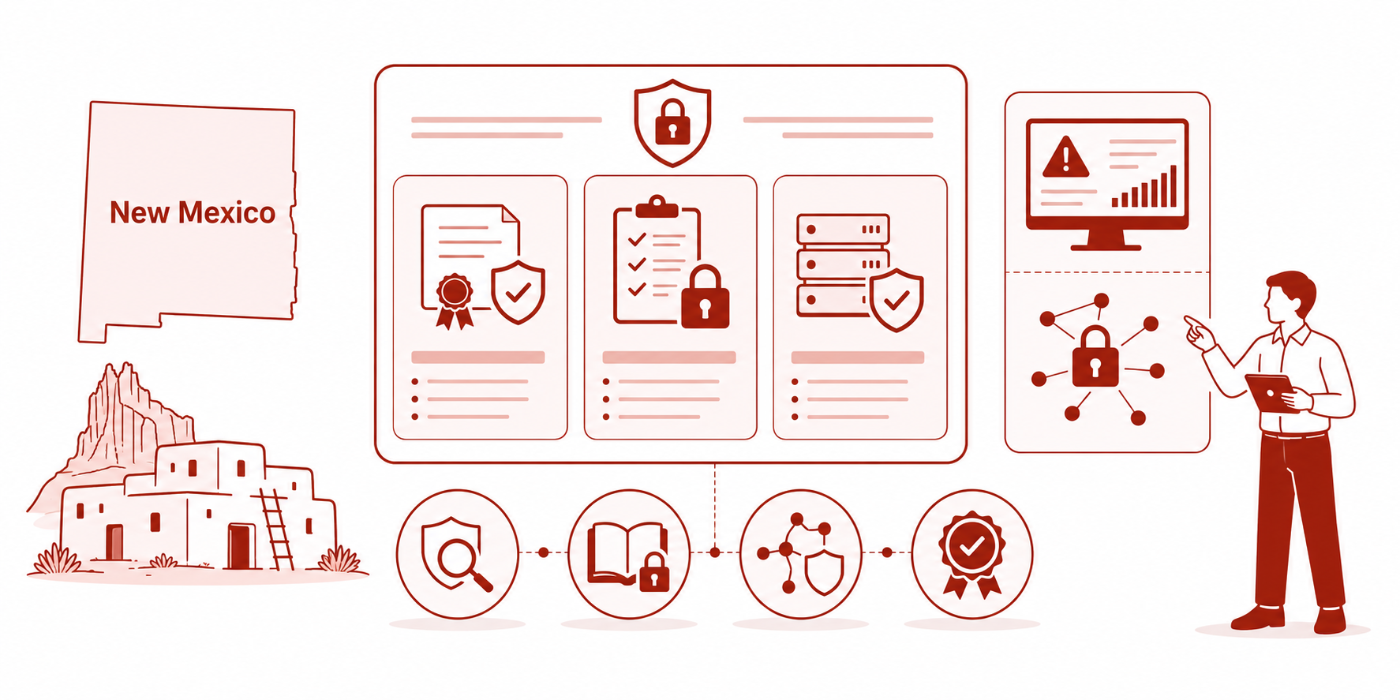
New Mexico cybersecurity careers reward people who can connect technical defense, operational risk, compliance pressure, and leadership judgment. Albuquerque, Los Alamos, Santa Fe, Rio Rancho, and federal-adjacent employers need professionals who understand more than alerts and tools. A strong certification plan should help you prove readiness for cybersecurity management, SOC advancement, security audits, and future cybersecurity skills with evidence employers can trust.
1. Why New Mexico Is a Smart Place to Build an Advanced Cybersecurity Management Career
New Mexico has a career pattern that many applicants underestimate: security roles often sit close to government work, research environments, critical infrastructure, healthcare, education, energy, defense contracting, and sensitive data operations. That makes a broad, management-aware credential valuable because hiring managers often need someone who can discuss NIST cybersecurity frameworks, security compliance trends, incident response effectiveness, and critical infrastructure risk without needing every sentence translated into business impact.
The biggest pain point for New Mexico candidates is credibility compression. A résumé may show IT support, network administration, help desk, military-adjacent experience, cloud exposure, or a few security tools, yet the employer still wonders whether the candidate can prioritize risk under pressure. ACSMI’s Advanced Cybersecurity & Management Certification can help bridge that gap when the learner connects the credential to a focused career story: security analyst growth, cloud security engineering, cybersecurity compliance officer pathways, audit readiness, and leadership advancement.
New Mexico Advanced Cybersecurity & Management Certification: 26-Point Career Action Matrix
| Career Situation | What to Prove During Certification | New Mexico Career Leverage | Best Internal Resource |
|---|---|---|---|
| IT support professional trying to enter security | Show ticket-to-risk thinking, access control judgment, and basic incident triage | Useful for Albuquerque analyst, support-security, and internal transition roles | IT support to cybersecurity analyst |
| Junior analyst with alert fatigue | Translate noisy alerts into escalation logic, business risk, and response priorities | Helps with SOC roles where teams need judgment, not dashboard babysitting | SOC analyst career guide |
| SOC analyst seeking promotion | Prove shift leadership, reporting discipline, metrics, mentoring, and escalation ownership | Supports SOC lead and SOC manager readiness | SOC analyst to SOC manager |
| Network administrator moving into security | Connect segmentation, logging, hardening, and access control to threat reduction | Strong fit for hybrid infrastructure-security roles | access control models |
| Cloud admin targeting cloud security | Build evidence around identity, misconfiguration control, logging, and shared responsibility | Useful for remote and local cloud security openings | cloud security engineer roadmap |
| GRC beginner with weak technical depth | Understand controls, evidence, risk registers, audit language, and technical validation | Helps with compliance roles across healthcare, education, and public-sector vendors | cybersecurity compliance officer roadmap |
| Technical worker entering audit | Map control failures to evidence, documentation, remediation, and accountability | Supports internal audit and security assurance roles | cybersecurity auditor guide |
| Penetration testing learner | Pair offensive findings with business impact and remediation priority | Improves consulting credibility and assessment communication | junior penetration tester to consultant |
| Ethical hacking candidate | Show scope control, reporting discipline, and responsible vulnerability handling | Reduces the “tool-only hacker” perception | ethical hacker roadmap |
| Incident response candidate | Explain containment, eradication, recovery, evidence handling, and after-action improvement | Useful where downtime, safety, or public trust matter | incident responder pathway |
| Threat intelligence learner | Connect indicators, actor behavior, industry exposure, and executive-ready reporting | Helpful for defense, research, and high-sensitivity environments | threat intelligence analyst guide |
| Security analyst targeting engineering | Show automation thinking, architecture awareness, and durable control implementation | Supports movement from monitoring into building secure systems | security analyst to engineer |
| Manager with shallow cybersecurity vocabulary | Learn enough technical language to challenge risk, budget, vendor, and staffing decisions | Useful for IT managers moving toward security leadership | IT manager to security leadership |
| Aspiring cybersecurity manager | Prove governance, roadmap planning, risk prioritization, and people leadership | Direct fit for security lead and manager interviews | cybersecurity manager pathway |
| Future CISO candidate | Connect cyber risk to budget, board communication, compliance, and enterprise resilience | Builds long-term executive language early | CISO roadmap |
| Healthcare security candidate | Understand patient data, HIPAA pressure, ransomware, identity, and vendor risk | Helpful for hospitals, clinics, insurers, and healthcare vendors | healthcare compliance report |
| Financial-services security candidate | Focus on fraud, monitoring, access control, audit evidence, and incident reporting | Works for banks, credit unions, fintech vendors, and compliance-heavy employers | financial services cybersecurity firms |
| Education-sector security candidate | Show ability to protect mixed user groups, budgets, endpoints, and identity systems | Useful for universities, school systems, and education technology vendors | education cybersecurity directory |
| Energy or utility security candidate | Connect IT, OT, segmentation, monitoring, and operational continuity | Strong fit for critical infrastructure conversations | energy and utilities cybersecurity |
| Endpoint security specialist | Explain prevention, detection, response, tuning, and asset coverage | Helps with hybrid workforce and enterprise endpoint roles | EDR tools guide |
| SIEM-focused learner | Show log-source reasoning, detection quality, triage workflows, and reporting | Useful for SOC, MDR, and analyst roles | best SIEM solutions |
| Application security candidate | Prove secure SDLC, vulnerability context, developer communication, and prioritization | Helpful for software, cloud, and product-security roles | application security tools |
| DLP and data protection candidate | Show data classification, monitoring, policy tuning, and insider-risk awareness | Useful for regulated employers and sensitive research environments | DLP software directory |
| PAM and identity candidate | Explain privileged accounts, least privilege, break-glass access, and monitoring | Important for federal-adjacent and high-trust environments | PAM solutions guide |
| AI security candidate | Connect AI-enabled attacks, model risk, automation, detection, and governance | Creates relevance for future-facing security teams | AI-powered cyberattacks |
| Long-term leadership candidate | Build a portfolio showing technical judgment, risk language, and management maturity | Supports movement from specialist to architect, director, or executive roles | specialist to CISO guide |
2. What the ACSMI Advanced Cybersecurity & Management Certification Actually Helps You Prove
The value of advanced cybersecurity certification comes from proof of judgment. Employers already know candidates can memorize acronyms, repeat tool names, and add “cybersecurity” to a LinkedIn headline. The harder question is whether a candidate can evaluate risk, defend priorities, understand controls, communicate tradeoffs, and manage a security function under real pressure. That is where ACSMI’s Advanced Cybersecurity & Management Certification should be positioned alongside the top cybersecurity certifications directory, certification career impact analysis, salary growth analysis for security certifications, and cybersecurity job market trends.
For New Mexico candidates, the strongest certification story usually combines four layers. The first layer is technical defense: networks, endpoints, cloud, identity, application security, and vulnerability management. The second layer is operational maturity: SOC workflows, incident response, escalation, documentation, and reporting. The third layer is governance: policies, audits, frameworks, privacy, vendor risk, and compliance. The fourth layer is leadership: prioritizing risk, explaining budgets, influencing stakeholders, and building repeatable programs. Candidates who can speak across those layers are stronger fits for security operations, cybersecurity compliance, cybersecurity auditing, cloud security, and director-level growth.
The wrong way to use certification is to treat it as a line item. The right way is to turn every module into interview evidence. Build a one-page “proof map” while studying. For every concept, capture one example: a control you would implement, a metric you would track, a tool category you understand, a risk scenario you can explain, and a management decision you would defend. That proof map becomes stronger when paired with ACSMI resources on vulnerability assessment techniques, cybersecurity frameworks, security audits, endpoint security effectiveness, and future cybersecurity standards.
3. New Mexico Career Paths: Where This Certification Creates Immediate Leverage
The clearest New Mexico use case is the candidate who already has technical experience but lacks security-management language. A system administrator in Albuquerque may understand patching and access control, yet struggle to explain risk ownership. A help desk professional may understand user behavior, password resets, MFA friction, and endpoint issues, yet struggle to frame those experiences as security outcomes. A junior analyst may know alerts and dashboards, yet struggle to show readiness for incident coordination. Certification can help these candidates connect lived experience to cybersecurity analyst advancement, incident responder roles, security engineer movement, and cybersecurity management pathways.
Another strong path is compliance and audit. New Mexico employers in healthcare, education, government-adjacent services, finance, and research-heavy environments often need people who can gather evidence, explain control failures, and work with non-security teams. This is where ACSMI can help candidates avoid a common trap: sounding either too technical for business teams or too generic for technical teams. The strongest candidates can explain why a missing log source weakens audit evidence, why weak identity governance raises insider-risk exposure, and why incident response plans need tabletop testing. Pair certification with GDPR and cybersecurity best practices, privacy regulation trends, healthcare cybersecurity tools, insider threat prevention, and cybersecurity compliance trends.
Offensive-security learners can also benefit, especially when they want to move beyond labs and into trusted consulting conversations. Penetration testing creates leverage only when findings become decisions: which vulnerability matters first, which business process is exposed, which remediation is realistic, and which executive summary will drive action. A candidate who combines ACSMI’s management lens with penetration testing company comparisons, penetration testing tools, OSCP preparation pathways, red team specialist roadmaps, and vulnerability researcher career guidance can show both technical curiosity and professional maturity.
Quick Poll: What New Mexico Cybersecurity Career Problem Are You Trying to Solve First?
Pick the pressure point that matters most, because the smartest certification strategy changes with the outcome you need.
4. How to Prepare Without Wasting Months on the Wrong Skills
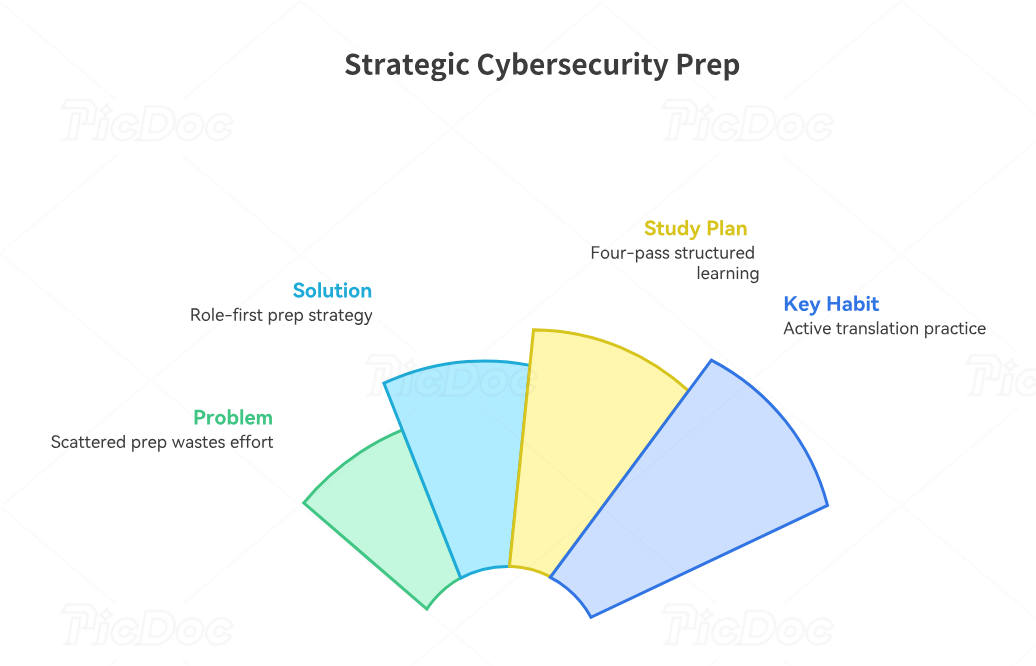
The most expensive mistake is scattered preparation. Many learners jump between Security+, CySA+, CEH, CISSP videos, cloud labs, Python scripts, SIEM dashboards, and governance templates without turning that activity into a coherent career asset. New Mexico candidates should prepare around a role target first, then use ACSMI to build the missing layer. A SOC target needs triage, logging, detection, endpoint behavior, and escalation. A GRC target needs controls, evidence, audit language, policy writing, and risk communication. A manager target needs metrics, budget logic, staffing judgment, and stakeholder communication. This role-first strategy should be supported by free cybersecurity courses, cybersecurity bootcamps, global training providers, top cybersecurity books, and cybersecurity YouTube channels.
A practical study plan should run in four passes. Pass one is vocabulary alignment: learn the language of risk, control, threat, vulnerability, identity, asset, impact, likelihood, and governance. Pass two is domain mapping: connect every concept to an employer function such as SOC monitoring, compliance, cloud operations, endpoint protection, or audit. Pass three is scenario practice: write short answers to real workplace questions, such as “Which control would you prioritize after a phishing incident?” or “How would you explain a critical vulnerability to a non-technical director?” Pass four is portfolio conversion: turn learning into interview stories, mini case studies, and résumé bullets. Use ACSMI resources on phishing prevention, ransomware impact, data breach risk, AI in cybersecurity, and cloud threat analysis to make scenarios sharper.
The study habit that separates serious candidates from certificate collectors is active translation. After each topic, write three versions of the same insight: one for a technical teammate, one for a manager, and one for an executive. For example, endpoint detection can be explained as telemetry coverage to an analyst, incident visibility to a manager, and reduced business interruption to an executive. This habit matters because real security work requires constant translation. It also helps candidates prepare for interviews tied to EDR tools, email security solutions, network monitoring tools, security awareness platforms, and cybersecurity podcasts.
5. How to Turn the Certification Into Interviews, Promotions, and Leadership Momentum
Certification creates leverage when it becomes visible proof. For job seekers, that means rewriting the résumé around outcomes instead of class topics. A weak bullet says “completed cybersecurity certification.” A stronger bullet says “built a risk-based security portfolio covering incident response, vulnerability management, access control, audit evidence, cloud security, and leadership communication.” A stronger interview answer explains how those skills apply to the employer’s environment. Candidates targeting New Mexico roles should connect ACSMI study with salary benchmarks, remote versus on-site salary trends, entry-level to CISO salary progression, cybersecurity freelance income trends, and workforce demographics.
For promotions, the certification should become a management conversation. Bring your manager a one-page growth brief: current responsibilities, new security-management capabilities, relevant projects you can own, metrics you can improve, and risks you can help reduce. This works especially well for analysts, administrators, auditors, and IT leads who already carry informal security responsibility without the title. The goal is to make the promotion feel operationally useful rather than personally requested. Tie the brief to security manager advancement, director of information security pathways, VP of cybersecurity growth, chief security architect careers, and cybersecurity program manager guidance.
For long-term momentum, build a specialization stack after ACSMI rather than collecting random credentials. SOC-focused candidates can add SIEM labs and detection projects. GRC candidates can add control-mapping samples and audit checklists. Cloud candidates can add identity and misconfiguration case studies. Offensive candidates can add remediation-focused reports. Leadership candidates can add risk dashboards, policy drafts, tabletop exercises, and budget narratives. This prevents the common career problem where a professional has many certificates and no clear market identity. Use ACSMI’s resources on specialized cybersecurity role demand, future cybersecurity certifications, automation and the cybersecurity workforce, zero trust predictions, and next-gen SIEM technologies.
6. FAQs
-
Yes. It is especially useful when you want to show both technical awareness and management maturity. New Mexico roles can involve healthcare security, public-sector vendors, education systems, critical infrastructure, defense-adjacent employers, and research environments. A candidate who can discuss cybersecurity frameworks, incident response, compliance analyst work, and security leadership has a stronger story than someone who only lists tools.
-
The best candidates include IT support professionals, system administrators, SOC analysts, compliance beginners, auditors, managers, military-transition candidates, cloud administrators, and security specialists preparing for leadership. It works well for people who want a broader cybersecurity identity across SOC analyst pathways, ethical hacking, cloud security, cybersecurity auditing, and cybersecurity compliance.
-
Yes, especially when the learner converts existing IT work into security language. Password resets become identity-control experience. Patch tickets become vulnerability-reduction experience. Device troubleshooting becomes endpoint-security experience. User education becomes awareness and phishing-prevention experience. The transition becomes stronger when paired with IT support to cybersecurity analyst guidance, security analyst career growth, vulnerability assessment techniques, and phishing prevention strategy.
-
Use it as proof of capability, then support it with role-specific bullets. Add a short project or portfolio section with examples such as “mapped controls to audit evidence,” “created incident response scenario notes,” “built a vulnerability prioritization matrix,” or “summarized cloud misconfiguration risk for leadership.” Strengthen the résumé with language from cybersecurity certification impact research, salary growth analysis, cybersecurity job market trends, and future skills guidance.
-
Choose based on the work you want to do every week. SOC and incident response fit people who like investigation, urgency, and structured escalation. GRC fits people who like controls, evidence, policy, and cross-team communication. Cloud security fits people who like architecture, identity, and configuration risk. Offensive security fits people who like testing and reporting. Compare paths using ACSMI guides on threat intelligence, incident response, cloud security, red team careers, and cybersecurity audit practices.
-
The biggest mistake is earning a credential without building a job-ready narrative. Employers need to understand the role you are ready for, the risks you can reduce, the tools you can discuss, and the decisions you can support. Certification should become a bridge into cybersecurity workforce demand, career advancement, security operations, cybersecurity consulting, and long-term leadership.
