
The Ultimate Guide to Getting Advanced Cybersecurity & Management Certification in Saudi Arabia: Everything You Need to Know in 2026-2027
Saudi Arabia is becoming one of the most demanding markets for cybersecurity professionals because regulation, cloud growth, critical infrastructure protection, and executive risk ownership are now moving together. A basic technical résumé can open a door; an advanced cybersecurity and management certification can help you speak the language of boards, auditors, SOC leaders, cloud teams, and hiring managers. For professionals comparing cybersecurity certifications, salary growth, career advancement, and Saudi-aligned cyber roles, the real question is simple: which credential will create measurable leverage in 2026-2027?
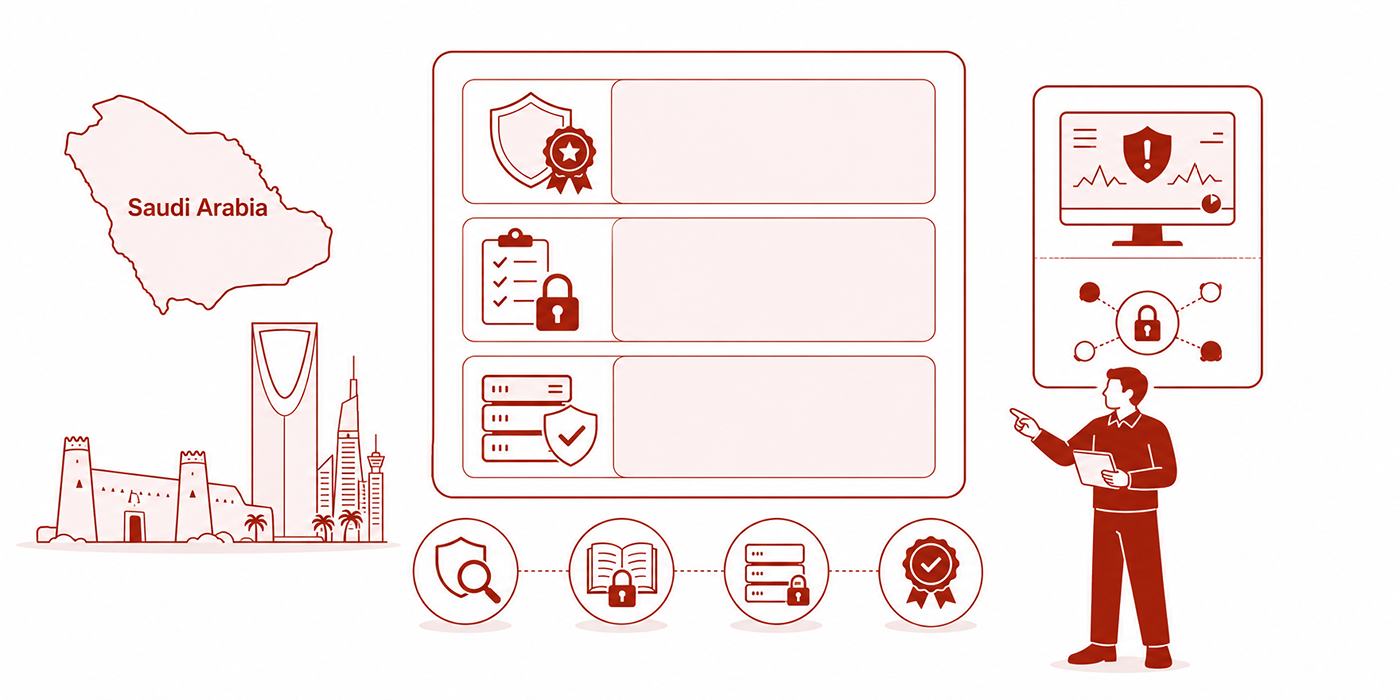
1. Why Advanced Cybersecurity & Management Certification Matters in Saudi Arabia in 2026-2027
Saudi Arabia’s cybersecurity hiring environment rewards professionals who can connect technical depth with governance, compliance, risk communication, and operational execution. The National Cybersecurity Authority lists ECC 2-2024 as updated to strengthen cybersecurity nationally and protect national entities’ information and technology assets, while CCC 2-2024 extends the control environment into cloud computing for service providers and tenants. That means a professional who only understands tools may struggle when the conversation shifts toward control ownership, board reporting, supplier assurance, NCA expectations, cloud residency, incident readiness, and measurable cyber maturity.
The strongest candidates in Saudi Arabia build a stack that blends cybersecurity frameworks, security audit practices, SOC career execution, cloud security engineering, and cybersecurity management pathways. The pain point is rarely “Which certificate is famous?” The real pain point is choosing a credential that helps you win interviews, survive technical screening, contribute to compliance conversations, and prove that you can manage risk inside real Saudi environments.
For 2026-2027, the advanced certification decision should match the career target. A SOC analyst chasing leadership needs more than alerts and dashboards; they need incident response capability, threat intelligence judgment, and SOC manager readiness. A compliance analyst needs stronger mapping across NCA controls, ISO, risk registers, supplier reviews, and cybersecurity compliance trends. A technical lead needs to show command over endpoint security, SIEM solutions, vulnerability assessment, and cloud threat exposure.
The most damaging mistake is collecting credentials with no role story. Recruiters, hiring panels, and promotion committees care about direction. A scattered certification profile can make an experienced professional look unfocused. A targeted profile says: “I can lead secure transformation, manage cyber risk, protect priority systems, and turn compliance into daily operational discipline.”
Cybersecurity Certifications and Career Impact in Saudi Arabia: 30-Credential Advancement Matrix
| Certification | Best Career Stage | Most Likely Advancement Effect | Where It Creates Real Leverage in Saudi Arabia | Best ACSMI Resource to Pair With It |
|---|---|---|---|---|
| ACSMI Advanced Cybersecurity & Management Certification | Mid to senior career | Builds management credibility across risk, people, controls, and execution | Cybersecurity manager, security lead, GRC lead, cyber program owner | Cybersecurity manager pathway |
| CISSP | Mid to senior career | Signals broad security leadership depth | Security architect, senior analyst, consulting, governance, leadership screening | CISSP salary growth |
| CISM | Mid to senior career | Strengthens security governance and management positioning | Security manager, governance lead, risk committee reporting | Security manager to director |
| CRISC | Mid career | Improves enterprise risk credibility | Risk registers, audit remediation, board-level cyber risk conversations | Compliance officer roadmap |
| CISA | Early to mid career | Builds audit and assurance authority | Internal audit, supplier assurance, control testing, regulatory evidence | Cybersecurity auditor guide |
| ISO/IEC 27001 Lead Implementer | Mid career | Supports ISMS implementation credibility | Policy ownership, control design, gap remediation, management systems | Security audit best practices |
| ISO/IEC 27001 Lead Auditor | Mid career | Improves control validation and audit readiness | Audit preparation, third-party reviews, compliance evidence | NIST, ISO, and COBIT frameworks |
| CompTIA Security+ | Entry level | Strengthens baseline security employability | IT-to-cyber transition, junior analyst, security support | IT support to cybersecurity analyst |
| CompTIA CySA+ | Early career | Builds defensive analysis credibility | SOC analyst, alert triage, detection workflows, blue-team growth | SOC analyst career guide |
| CompTIA PenTest+ | Early to mid career | Supports offensive-security positioning | Assessment teams, consulting, controlled testing, red-team-adjacent roles | Penetration testing tools |
| CompTIA CASP+ | Mid career | Signals advanced practitioner depth | Technical lead, security engineering, architecture support | Analyst to engineer roadmap |
| CEH | Early to mid career | Creates ethical hacking vocabulary and screening value | Junior penetration testing, vulnerability validation, security testing | CEH career guide |
| OSCP | Mid career | Provides hands-on offensive credibility | Penetration testing, red team operations, consulting proof | OSCP penetration tester guide |
| GPEN | Mid career | Strengthens structured penetration testing credibility | Consulting, external assessments, technical client reporting | Junior tester to senior consultant |
| GCIH | Early to mid career | Improves incident handling credibility | SOC escalation, DFIR entry, playbook execution | Incident responder career path |
| GCIA | Mid career | Deepens network detection and traffic analysis skill | Network monitoring, SOC engineering, advanced detection | Network monitoring tools |
| GCFA | Mid to senior career | Builds forensic investigation credibility | Breach investigation, evidence handling, response leadership | Incident response effectiveness |
| CCSP | Mid career | Strengthens cloud security leadership profile | Cloud migration, tenant controls, architecture review, cloud governance | Cloud security tools |
| CCSK | Early to mid career | Builds cloud security foundation | Cloud control mapping, shared responsibility, SaaS risk reviews | Future of cloud security |
| AWS Certified Security Specialty | Mid career | Improves cloud-platform security proof | Cloud workloads, IAM, logging, encryption, infrastructure security | Cloud security engineer guide |
| Microsoft Cybersecurity Architect Expert | Mid to senior career | Supports enterprise architecture and Microsoft security leadership | Microsoft-heavy enterprises, identity security, security operations architecture | PAM solutions guide |
| Certified Data Privacy Solutions Engineer | Mid career | Connects cybersecurity with privacy engineering | Data protection, privacy controls, regulated-sector projects | Privacy regulation trends |
| PMP | Mid to senior career | Improves delivery and program management credibility | Cyber transformation programs, implementation timelines, stakeholder control | Cybersecurity program manager |
| SABSA Foundation | Senior technical career | Builds business-driven architecture discipline | Security architecture, enterprise design, executive alignment | Chief security architect roadmap |
| TOGAF | Senior technical career | Improves enterprise architecture fluency | Architecture boards, transformation programs, cross-domain design | Chief security architect guide |
| OT Security Certification | Mid career | Creates industrial and critical-infrastructure relevance | Energy, utilities, manufacturing, OT risk, asset protection | Critical infrastructure threat report |
| IoT Security Certification | Early to mid career | Supports connected-device security specialization | Smart cities, industrial IoT, device risk, network segmentation | IoT security specialist roadmap |
| Security Awareness Training Specialist | Early to mid career | Builds human-risk reduction credibility | Phishing reduction, employee training, policy adoption | Security awareness platforms |
| Cyber Threat Intelligence Certification | Mid career | Improves adversary, geopolitical, and threat reporting value | Threat briefings, sector intelligence, executive reporting | Threat intelligence analyst roadmap |
| CISO Leadership Certification | Senior career | Signals executive readiness and strategic cyber ownership | CISO track, director roles, board reporting, budget ownership | CISO roadmap |
2. Best Certification Path by Saudi Cybersecurity Role
The right certification path starts with the role you want inside Saudi Arabia’s cybersecurity ecosystem. NCA describes its legal status as the national authority and reference for cybersecurity in the Kingdom, and its legal powers include identifying cybersecurity violations and related procedures. That gives local cyber roles a strong governance layer. A candidate who can connect cybersecurity frameworks, NIST adoption, compliance reporting, and security audits will usually sound more credible than someone who only lists tools.
For SOC and blue-team professionals, the highest-value track is Security+ or CySA+ first, then incident response, threat intelligence, SIEM, and management. The practical stack should include SOC analyst fundamentals, SOC manager progression, SIEM solution awareness, endpoint detection and response, and incident response improvement. The common pain point here is stagnation: analysts stay trapped in queue work because they never prove that they can tune detections, brief leadership, reduce false positives, and coordinate response.
For offensive security professionals, CEH can help with initial vocabulary, while OSCP, GPEN, or advanced penetration testing experience creates stronger proof. Saudi employers and consulting firms value practical reporting because a test that creates noise without business remediation can damage trust. Build around ethical hacking roadmaps, OSCP preparation, red team specialization, penetration testing tools, and vulnerability scanners. The candidate who can explain exploit impact in risk language will win more senior conversations than the candidate who only shows screenshots.
For governance, risk, compliance, and audit roles, the best stack usually blends ACSMI, CISM, CISA, CRISC, ISO 27001, and a working understanding of Saudi control requirements. Build toward cybersecurity compliance officer roles, cybersecurity auditor careers, GDPR and cybersecurity alignment, privacy regulations, and future compliance trends. This route suits professionals who want stable advancement, cross-department influence, and access to regulated-sector work.
For cloud security, the winning path combines CCSP or CCSK with AWS, Azure, identity, logging, encryption, and tenant-control knowledge. NCA states that CCC 2-2024 focuses on cloud computing services from the perspective of cloud service providers and cloud service tenants, with minimum cybersecurity requirements for secure cloud use. That makes cloud security engineering, cloud security tools, privileged access management, data loss prevention, and AI-driven cybersecurity tools especially useful for 2026-2027.
3. How to Choose an Advanced Cybersecurity & Management Certification Without Wasting Time or Money
A strong certification decision begins with your career bottleneck. Some professionals need recruiter traction. Some need credibility with auditors. Some need proof they can manage incidents. Some need leadership language. Some need compensation leverage. Matching the certificate to the bottleneck protects your time, budget, and motivation.
Use this decision filter: if your résumé gets ignored, strengthen baseline credibility with top cybersecurity certifications, free cybersecurity resources, bootcamps and academies, and global training providers. If interviews happen but offers disappear, your issue may be proof. Build portfolio evidence: risk register samples, incident timelines, control mappings, detection use cases, cloud security checklists, and board-style summaries. Pair the credential with security audit processes, vulnerability assessment techniques, phishing prevention strategy, and breach mitigation analysis.
If your blocker is promotion, choose a credential that changes how leadership sees you. Technical excellence alone can keep you busy while someone else owns the budget, roadmap, and decisions. An advanced cybersecurity and management certification gives you language for business impact, prioritization, risk appetite, stakeholder communication, and measurable outcomes. Combine it with cybersecurity leadership advancement, director of information security planning, CISO progression, and security architect planning. The pain point is brutal: many capable professionals become “the reliable technical person” while strategic roles go to people who can explain risk in executive terms.
If your blocker is specialization, choose the track that aligns with Saudi market demand. Finance needs financial-sector cybersecurity analysis, healthcare needs healthcare cybersecurity threat awareness, energy and utilities need critical infrastructure security, government work needs public-sector cybersecurity providers, and cloud-first businesses need cloud threat analysis. The best credential is the one that gives your next employer a reason to trust you with their highest-risk environment.
Quick Poll: What Career Result Are You Really Chasing With Advanced Cybersecurity & Management Certification in Saudi Arabia?
Pick the outcome that matters most, because your certification strategy should match the pressure you are trying to escape.
4. A 12-Month Roadmap to Get Certified and Build Saudi-Ready Career Proof
Month 1 should focus on role clarity. Choose one primary track: SOC leadership, GRC, cloud security, offensive security, incident response, cyber management, or architecture. Then map five job descriptions from Saudi employers and record repeated requirements. Look for patterns around cybersecurity analyst advancement, security engineer growth, cybersecurity manager skills, cloud security careers, and CISO readiness. This turns certification planning into market research.
Months 2-3 should build the knowledge base. Study core domains: governance, asset management, access control, vulnerability management, incident response, cloud security, risk management, awareness, supplier risk, and metrics. Use access control models, vulnerability assessment techniques, endpoint security analysis, email security solutions, and security awareness platforms to connect theory with daily cyber operations. Strong candidates explain why a control matters, who owns it, how evidence is collected, and how failure becomes business risk.
Months 4-6 should become exam and portfolio months. Prepare for the chosen certification, then create proof artifacts alongside study: a sample risk register, a mock incident report, a supplier security questionnaire, a cloud control checklist, a vulnerability prioritization memo, and a board-style security summary. These artifacts support interviews because they show practical thinking. Tie your work to cybersecurity workforce shortage realities, future cybersecurity skills, future certification demand, and automation’s workforce impact. The goal is to show judgment, ownership, and readiness for messy environments.
Months 7-9 should focus on Saudi-specific positioning. Study NCA control themes, cloud tenant responsibilities, critical infrastructure concerns, incident reporting expectations, and sector risk. NCA states that service providers offering cybersecurity solutions, services, or products in the Kingdom must register through its digital platform, a regulatory requirement since August 1, 2022. That makes local awareness important for consultants, vendors, MSSPs, and service delivery professionals. Strengthen your profile with cybersecurity consulting firms, managed security operations awareness, financial cybersecurity providers, and healthcare cybersecurity firms.
Months 10-12 should convert the certification into interviews, promotion evidence, or consulting credibility. Rewrite your résumé around outcomes: reduced incident handling time, improved audit readiness, mapped controls, improved phishing resilience, tuned detections, closed vulnerabilities, supported cloud reviews, or led cyber awareness sessions. Then prepare interview stories using the STAR format with risk, action, evidence, and business result. Support your positioning with remote cybersecurity salary insights, entry-level to CISO salary progression, freelance cybersecurity income trends, and cybersecurity gender pay gap analysis. Certification creates leverage when your story makes the business value impossible to miss.

5. How to Turn Certification Into Salary Growth, Promotion, and Long-Term Credibility
A certificate alone rarely creates the full career jump. The jump comes when the certificate becomes part of a clear professional narrative. In Saudi Arabia, that narrative should connect national cyber maturity, sector risk, business continuity, audit readiness, cloud transformation, and measurable protection. Saudi Arabia maintained first position in the IMD World Competitiveness Yearbook cybersecurity index for 2026, according to NCA, and NCA also cited the Kingdom’s Tier 1 “Role-modelling” classification in the ITU Global Cybersecurity Index 2026. That level of national ambition raises expectations for professionals entering management, consulting, compliance, and architecture roles.
To increase salary leverage, frame your credential around problems employers already feel. Security leaders worry about audit findings, breach exposure, ransomware readiness, third-party risk, identity sprawl, cloud misconfiguration, insider threats, and skills shortages. A certified professional who can discuss ransomware threat evolution, insider threat prevention, AI-powered attacks, data breach mitigation, and critical infrastructure cybersecurity immediately sounds more valuable.
To win promotion, translate every technical achievement into management language. “Closed 200 vulnerabilities” becomes “reduced exploitable exposure across business-critical systems through risk-based prioritization.” “Configured SIEM alerts” becomes “improved detection coverage for high-risk scenarios and reduced alert noise.” “Passed an audit” becomes “strengthened evidence discipline and control ownership.” This is where cybersecurity program management, director-level security planning, VP of cybersecurity growth, and security policy leadership become powerful internal links in your own career story.
To build long-term credibility, become known for repeatable judgment. Learn to evaluate tools across real operational needs using endpoint security provider comparisons, EDR tool guides, application security tools, PAM solutions, and network monitoring tools. Hiring managers trust professionals who can compare options, explain tradeoffs, and recommend a practical path under budget, staffing, and compliance constraints.
The highest-value professionals in Saudi Arabia will combine certification, portfolio evidence, local regulatory awareness, communication skill, and role-specific depth. That combination helps an analyst become a lead, a lead become a manager, a manager become a director, and a director become a serious CISO candidate. Treat certification as the beginning of proof, then keep stacking proof until your next move feels obvious.
6. FAQs About Advanced Cybersecurity & Management Certification in Saudi Arabia
-
The best choice depends on your target role. ACSMI-style advanced cybersecurity and management training is strongest for professionals who want leadership, governance, risk, and operational management credibility. CISSP suits broad senior security roles, CISM suits management, CISA suits audit, CRISC suits risk, CCSP suits cloud security, and OSCP suits offensive security. A Saudi-focused candidate should pair certification with career advancement data, certification rankings, salary benchmarks, and job market predictions.
-
Yes. It helps most when it supports a clear role story. Entry-level candidates need foundations and projects; mid-career professionals need specialization; senior professionals need leadership proof. Saudi employers may look for evidence across compliance, incident response, cloud, SOC operations, and governance. Build your path using SOC analyst guidance, cloud security engineering, compliance analyst roadmaps, and cybersecurity management pathways.
-
A strong management path usually includes ACSMI advanced cybersecurity and management training, CISSP or CISM, risk knowledge, audit awareness, and project delivery skill. Add PMP if you manage programs, CRISC if you own risk, and CISA or ISO 27001 if your role touches compliance. Strengthen your roadmap with security manager advancement, IT manager to security leadership, senior analyst to VP of security, and CISO pathway planning.
-
Most professionals need 8-16 weeks for a focused certification if they already have relevant experience, and 4-8 months if they are changing tracks. Management-oriented credentials require understanding governance, risk, communication, security operations, and business alignment. Technical credentials require labs and repeated practice. A smart preparation plan uses free cybersecurity learning resources, cybersecurity books, cybersecurity podcasts, and cybersecurity YouTube channels.
-
CCSP, CCSK, AWS Security Specialty, and Microsoft Cybersecurity Architect Expert can all help, depending on the employer’s cloud stack. Saudi Arabia’s cloud security environment places high value on governance, identity, logging, encryption, data protection, and control ownership. Pair certification with cloud security tools, future cloud security trends, AI-driven security tools, and data loss prevention software.
-
Build proof around the certificate. Create a one-page control mapping, a mock incident timeline, a cloud security checklist, a vulnerability prioritization memo, and a board-style risk summary. Use résumé bullets with outcomes, numbers, and business impact. Then align your profile with cybersecurity workforce trends, future cyber roles, specialized role demand, and future skills for cybersecurity professionals.
